NZD/USD Plummets as Escalating Iran War Tensions Fuel Safe-Haven Rush
BitcoinWorld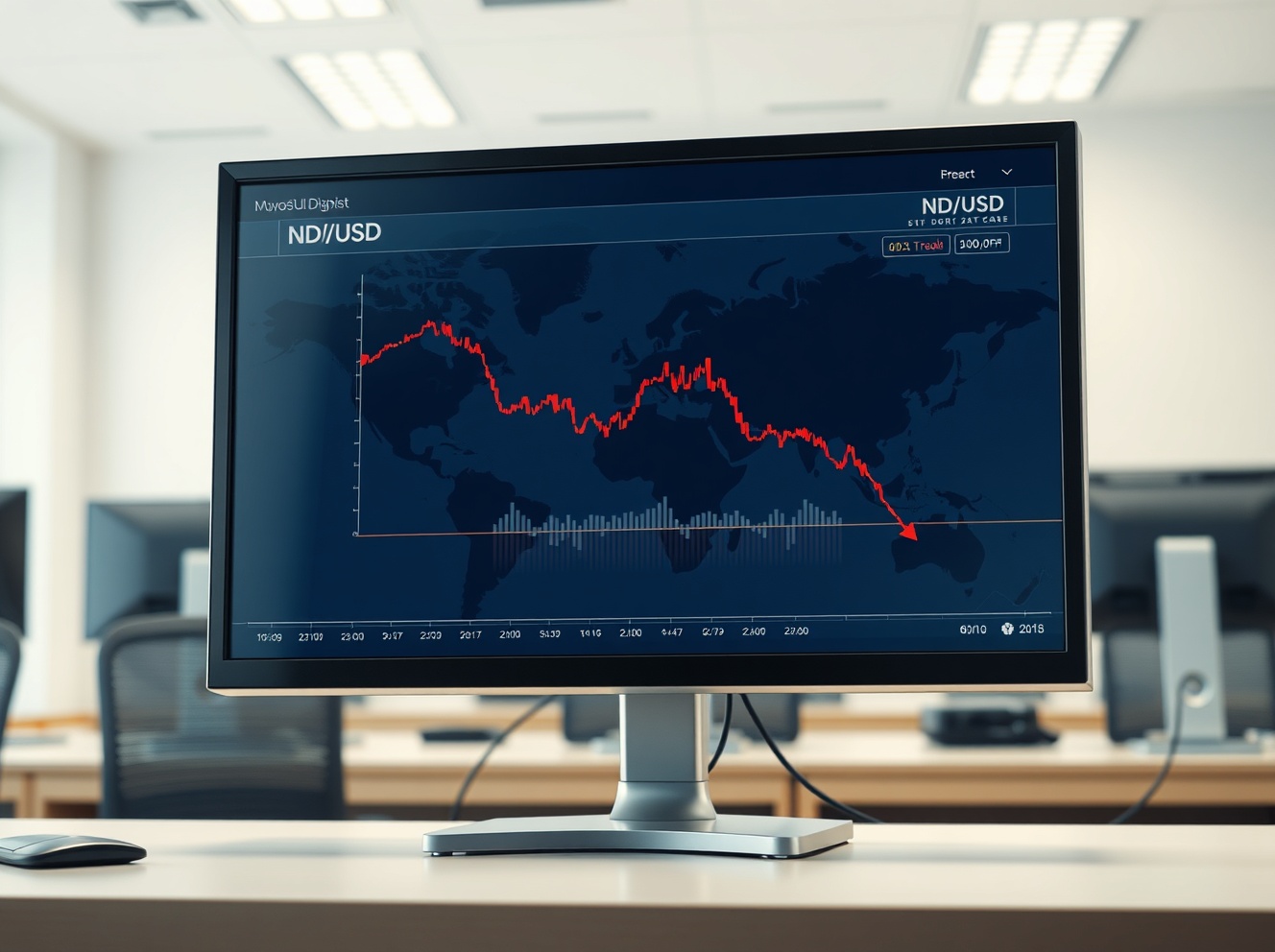
NZD/USD Plummets as Escalating Iran War Tensions Fuel Safe-Haven Rush
Global currency markets witnessed a sharp selloff in the New Zealand dollar on Monday, March 17, 2025, as the NZD/USD pair weakened significantly following a dangerous escalation of military tensions involving Iran. Consequently, investors rapidly sought the safety of the US dollar, triggering a classic risk-off move across forex pairs. This development underscores the profound sensitivity of commodity-linked currencies like the Kiwi to sudden geopolitical shocks.
NZD/USD Technical Breakdown and Immediate Market Reaction
Forex charts from major trading platforms recorded a decisive break below key technical support levels for the NZD/USD pair. Initially, the pair opened the Asian session with relative stability. However, subsequent news wires confirmed heightened military posturing in the Middle East. As a result, the Kiwi dollar faced immediate and sustained selling pressure. Market data shows the pair fell over 1.2% within a few hours, a substantial move for a major currency pair. This decline pushed the NZD/USD to its lowest level in several weeks. Analysts quickly identified the 0.6100 handle as a critical psychological level that was breached. The selling volume, furthermore, was notably higher than the 30-day average, confirming strong institutional participation in the move.
Understanding the Kiwi Dollar’s Vulnerability
The New Zealand dollar, often called the Kiwi, functions as a risk-sensitive, commodity-linked currency. Its value frequently correlates with global economic sentiment and agricultural export prices. Therefore, during periods of geopolitical instability, traders typically unwind positions in such currencies. They then allocate capital to traditional safe havens. The table below illustrates typical market reactions to geopolitical risk events:
| Asset Class | Typical Reaction to Geopolitical Risk |
|---|---|
| USD, JPY, CHF | Appreciate (Safe-Haven Demand) |
| Commodity Currencies (NZD, AUD, CAD) | Depreciate (Risk-Off Outflows) |
| Global Equity Indices | Decline |
| Gold & Government Bonds | Rally (Alternative Safe Havens) |
This dynamic explains the NZD/USD’s pronounced weakness. Investors are not just selling the Kiwi; they are actively buying the US dollar for its perceived stability. The US Dollar Index (DXY) concurrently rallied, confirming broad-based dollar strength.
The Geopolitical Catalyst: Rising Tensions in the Middle East
The immediate trigger for the forex market move was a significant deterioration in security conditions involving Iran. Reports from the region indicated a marked increase in military readiness and rhetoric. Historically, instability in the Middle East impacts global markets through several channels:
- Oil Price Volatility: The region is a critical hub for global oil production.
- Supply Chain Disruption: Key shipping lanes, like the Strait of Hormuz, face potential disruption.
- Global Growth Concerns: Higher energy prices and uncertainty can dampen economic outlooks.
For New Zealand, a nation distant from the conflict, the impact is primarily financial and sentiment-driven. The country’s export-driven economy relies on stable global trade. Hence, any threat to this stability negatively affects its currency’s appeal. Market participants are now pricing in a prolonged period of risk aversion. This sentiment is likely to keep pressure on the NZD/USD pair in the near term.
Expert Analysis on Central Bank Policy Divergence
Beyond geopolitics, monetary policy expectations are also influencing the currency pair. The Reserve Bank of New Zealand (RBNZ) has recently signaled a cautious approach to future rate hikes. Conversely, the US Federal Reserve maintains a focus on data-dependent policy, which often supports the dollar during uncertainty. This policy divergence creates a fundamental backdrop that favors USD strength over NZD strength. Financial strategists note that geopolitical events often accelerate existing market trends. In this case, the trend was a moderately stronger dollar. The sudden flight to safety has simply amplified this movement.
Historical Context and Comparative Market Movements
This episode is not an isolated event. Forex markets have reacted similarly during past geopolitical crises. For instance, the NZD/USD experienced notable declines during the initial phases of the Russia-Ukraine conflict in 2022 and during heightened US-China trade tensions. The speed of the current move, however, highlights the increased algorithmic trading in modern markets. These algorithms are programmed to detect risk-off keywords and execute sell orders automatically. Therefore, reactions are now faster and more pronounced than in previous decades. Comparing the Kiwi’s performance to its peer, the Australian dollar (AUD), shows a correlated but not identical drop. The AUD/USD also weakened, confirming the broad risk-off theme affecting the Pacific region.
Conclusion
The weakening of the NZD/USD pair serves as a clear barometer of rising global anxiety. Escalating Iran war tensions have triggered a classic flight to the safety of the US dollar, pressuring risk-sensitive currencies. This movement underscores the interconnected nature of geopolitics and global finance. Traders will now monitor diplomatic developments closely, as any de-escalation could prompt a sharp reversal in the NZD/USD. Until then, the path of least resistance for the pair remains skewed to the downside, dominated by safe-haven demand for the dollar.
FAQs
Q1: Why does the NZD/USD fall when geopolitical tensions rise?
The NZD is a risk-sensitive currency. During global uncertainty, investors sell assets perceived as risky and buy safe havens like the US dollar, causing the NZD/USD pair to decline.
Q2: How do Iran tensions specifically affect New Zealand’s currency?
New Zealand is not directly involved, but the tensions threaten global trade stability and economic growth, reducing demand for commodity exports and the Kiwi dollar.
Q3: What other assets are affected by this safe-haven move?
Typically, global stocks fall, gold and US Treasury prices rise, and other commodity currencies (AUD, CAD) also weaken against the USD and Japanese Yen.
Q4: Could the NZD/USD recover quickly?
A rapid recovery is possible if tensions de-escalate significantly, prompting investors to move back into risk assets. However, sustained uncertainty will likely prolong NZD weakness.
Q5: Where can traders find reliable charts and data for NZD/USD?
Major financial platforms like Bloomberg, Reuters, and trading terminals from brokers provide real-time forex charts, volume data, and technical analysis tools for the NZD/USD pair.
This post NZD/USD Plummets as Escalating Iran War Tensions Fuel Safe-Haven Rush first appeared on BitcoinWorld.


You May Also Like

Ripple CEO Reacts to BBB Rating for Ripple Prime, Lists Three Points It Validates

US Dollar Index (DXY) Forecast: Critical Double Top Pattern Looms at 100.60 Resistance