

Likas-kaya, pagbabagong-buhay: A Filipino rethinking of regenerative sustainability
Last March 27, the PHINMA-DLSU Center for Business and Society convened a working lunch dialogue between the UN Global Compact Network Philippines (GCNP) and the Ramon V. del Rosario College of Business. The conversation covered a lot of ground — from speakership integrations into our courses, writing case studies, to a shared observation that has stayed with me since: Philippine companies, especially small and medium enterprises (SMEs), that are doing sustainability work may not necessarily fit the typical sustainable development language.
One of the discussion points focused on exploring “bottom-up sustainability” among SMEs through a Filipino management lens. The idea is straightforward: most of our current sustainability discourse runs on frameworks designed in Geneva, New York, or Brussels. The Sustainable Development Goals, for all their ambition, carry the intellectual architecture of Western development economics. Even the way we count and report sustainability — the metrics, the materiality assessments, the GRI standards — assumes a kind of institutional infrastructure that most Philippine SMEs simply do not have.
Sustainability and Likas-kaya
I have previously reflected on likas-kaya as the Filipino word for sustainability that carries in its roots a meaning the English term cannot. Likas means natural or innate, the same root as kalikasan, nature itself. Kaya means capable. Put them together and you get something like “naturally capable” or “sustained by nature’s own capacity.” Unlike “sustainability,” which derives from a Latin word meaning to hold up (an engineering metaphor, essentially), likas-kaya locates the source of sustaining capacity in nature rather than in human management. This is not a trivial distinction. It is a different theory of where capability comes from.
The term has existed since at least 1989, when researchers at UP Los Baños first used it in the context of sustainable agriculture. It moved from there into government policy after the Rio Earth Summit, into DepEd curricula, and more recently into corporate sustainability discourse through scholar-practitioner Dr. Ramon Segismundo.
However, the international sustainability conversation has already moved beyond what likas-kaya was coined to capture.
Sustainability, as most of us know it, is essentially a maintenance concept. The Brundtland definition — meeting present needs without compromising future generations — asks us to stop making things worse. And after three decades of applying that logic, the honest verdict is that we are still largely failing to stop making things worse.
- [Good Business] Puso ng saging, puso ng tao: How loob shapes kapwa at Villa Socorro Farm
- [Good Business] Island Harvest Farm’s kaloob: A gift that keeps on giving
- [Good Business] Kaloob and kapwa: Agrabah Ventures on co-creating a bountiful tomorrow
- [Good Business] Sparking the Filipino diwa towards nation-building
Regeneration and Pagbabagong-Buhay
The emerging frontier in sustainability management research makes a harder ask. Regeneration shifts the question from “how do we avoid degradation?” to “how do we actively restore?” It is the difference between net-zero and net-positive. Recent sustainability scholarship is converging on the idea that regenerative business strategy represents a genuine paradigm shift, not just a rebranding. Firms with what researchers call a “regenerative orientation” design their operations to give back more than they take. They treat ecosystems, communities, and relationships as living systems to be actively cultivated rather than resources to be efficiently extracted.
This is a more demanding idea. And it turns out Filipino language already has a word for it.
Pagbabagong-buhay. Literally, the transformation or renewal of life. The word already circulates in Filipino. It appears in religious contexts (it is the term for spiritual rebirth), in ecological tourism materials, in conservation advocacy.
Pagbabagong-buhay maps onto regenerative sustainability more cleanly than any other candidate. We might look at other words like panunumbalik, which means returning to a prior state. This is too conservative; it does not capture the net-positive logic. Pagbabago is functional but generic. Pagbabagong-buhay carries something different: not merely a reversal, but the active return of vitality, the restoration of conditions for life to flourish again. That is precisely what regenerative business theory is reaching for.
If we are going to help Filipino businesses tell their sustainability stories, we need language they can actually inhabit. The gap between what Filipino companies actually do and what global frameworks recognize is partly an implementation problem. But it is also a language problem. And language problems can be addressed.
The 2025 RVR Siklab Awardees offer two concrete examples of what pagbabagong-buhay looks like in practice. Cherrie Atilano’s AGREA started from a single contradiction she witnessed as a child: farmers growing food for millions while going hungry themselves. Her answer was not a corporate social responsibility add-on but an entirely different logic of doing agriculture. She built AGREA around a “One Island Economy” model in Marinduque, designed as a zero-hunger, zero-waste, zero-insufficiency system anchored in what she calls an “Ecology of Dignity” — where soil health, farmer livelihood, and community belonging are treated as one interlocking system rather than competing tradeoffs. That is not sustainability in the maintenance sense; it is regeneration.
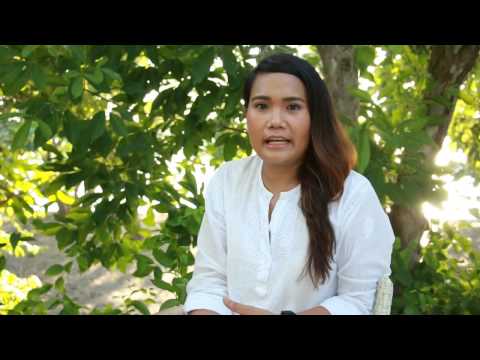
Then there is Juca Lacsina, whose GOEden addresses a different but equally structural problem. Filipino farmers regularly had to visit multiple stores just to complete a list of needed inputs — a supply chain fragmentation that quietly raises costs, wastes time, and keeps smallholders dependent on middlemen. GOEden built a consolidated e-commerce platform that has since reached nearly 100,000 farmers across 240 municipalities in 72 provinces, pairing product access with farmer education through Tech Caravans so that the knowledge to use inputs properly travels with the inputs themselves. Neither Atilano nor Lacsina frames work in the language of regenerative business theory. But both are doing exactly what that literature describes: actively restoring the conditions for farming communities to flourish rather than merely survive.

We have the words. The question is whether we are willing to use them seriously. We must build research, policy, and corporate reporting frameworks around our Filipino language rather than continuing to translate our experience into someone else’s vocabulary.
If we are to tell authentic Filipino sustainability stories, kailangan natin magbagong-buhay. – Rappler.com
Patrick Adriel “Patch” H. Aure, PhD, is the Founding Director of the PHINMA-DLSU Center for Business and Society and Associate Professor at the Department of Management and Organization, Ramon V. del Rosario College of Business, De La Salle University. patrick.aure@dlsu.edu.ph.


You May Also Like

Japanese Yen slides as fragile US-Iran ceasefire supports USD

High-Stakes Legal Drama Sees Artist Barred from Using Iconic NFT Imagery




