Silver Price Analysis: Recovery Stalls at Critical 100-day SMA as Sellers Eye $75 Target
BitcoinWorld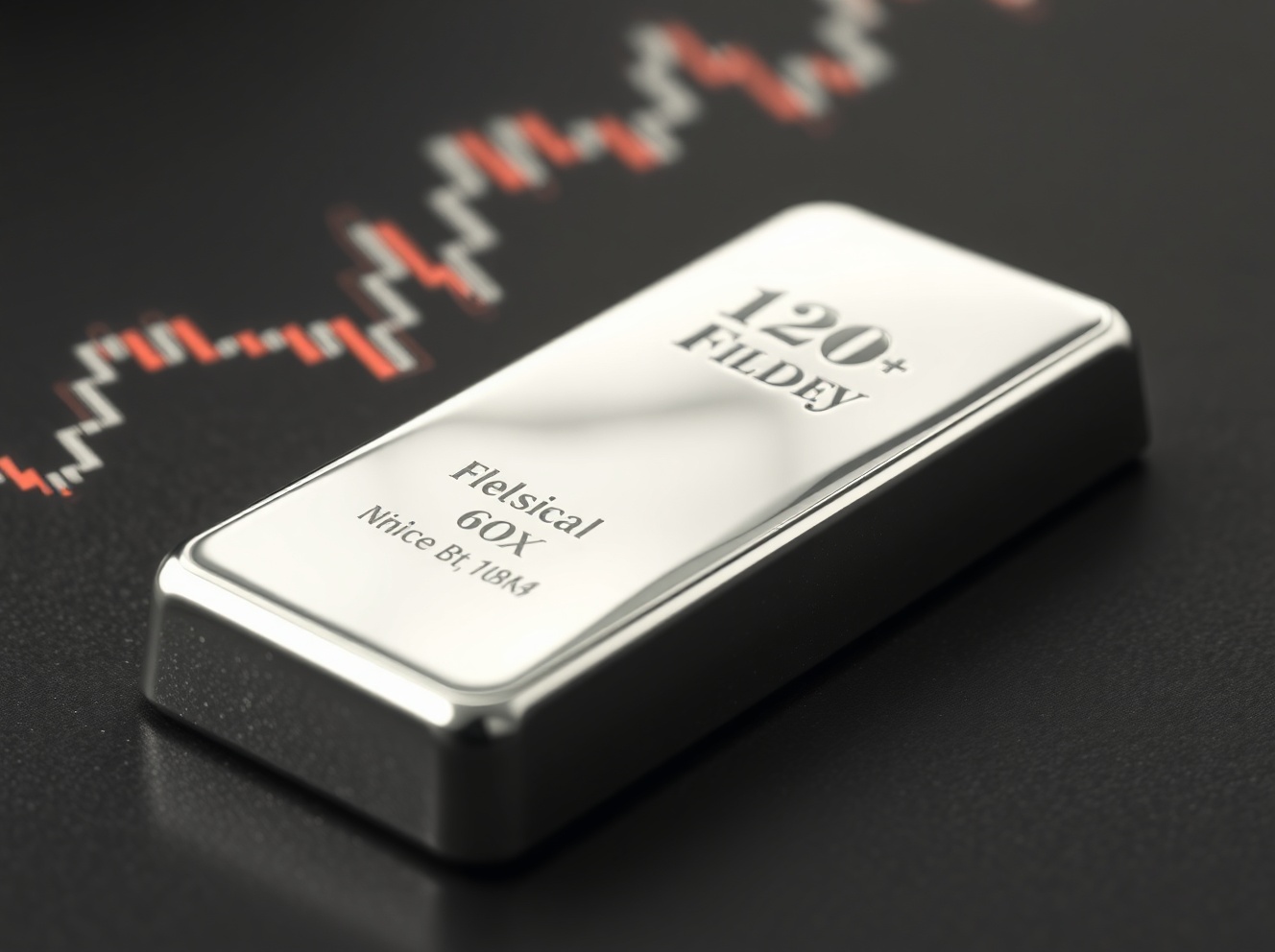
Silver Price Analysis: Recovery Stalls at Critical 100-day SMA as Sellers Eye $75 Target
Global silver markets face renewed pressure as a recent recovery attempt stalls decisively at a crucial technical barrier. The 100-day Simple Moving Average (SMA) has emerged as a formidable resistance level, triggering fresh selling activity that now targets the $75 per ounce threshold. This development occurs within a complex macroeconomic landscape characterized by shifting interest rate expectations and fluctuating industrial demand signals.
Silver Price Analysis: Technical Breakdown of the 100-Day SMA Barrier
The 100-day Simple Moving Average represents a critical medium-term trend indicator that market participants monitor closely. Consequently, silver’s failure to sustain momentum above this level signals underlying weakness in the current price structure. Technical analysts note that the $28.50-$29.00 zone, corresponding with the 100-day SMA, has repeatedly acted as both support and resistance throughout 2024.
Furthermore, the Relative Strength Index (RSI) currently hovers near 45, indicating neither overbought nor oversold conditions but suggesting bearish momentum may be building. Additionally, trading volume patterns show increased activity during recent declines compared to the preceding recovery attempt. This volume divergence often precedes further downward movement.
Key Technical Levels to Monitor
Market technicians identify several crucial price zones that will determine silver’s near-term trajectory:
- Immediate Resistance: 100-day SMA ($28.80-29.20)
- Primary Support: 200-day SMA ($26.50-27.00)
- Critical Breakdown Level: $26.00 psychological support
- Downside Target: $25.00-25.50 consolidation zone from Q1 2024
Macroeconomic Drivers Influencing Precious Metals Markets
Silver’s price action does not occur in isolation but responds to broader financial market dynamics. The Federal Reserve’s monetary policy stance remains the primary driver for non-yielding assets like precious metals. Recent commentary from Fed officials suggests a more cautious approach to rate cuts than markets previously anticipated. Higher-for-longer interest rate expectations typically strengthen the US dollar and increase opportunity costs for holding silver.
Simultaneously, industrial demand fundamentals present a mixed picture. Silver’s extensive use in photovoltaic solar panels, electronics, and automotive applications provides structural support. The global transition to renewable energy continues to accelerate, with solar installations projected to grow 15-20% annually through 2025. However, concerns about Chinese economic recovery and European manufacturing weakness have tempered immediate demand optimism.
Comparative Performance: Silver Versus Gold
The gold-silver ratio, a closely watched metric among precious metals investors, currently sits near 85 ounces of silver to purchase one ounce of gold. This ratio remains elevated compared to its 10-year average of approximately 75, suggesting silver may be relatively undervalued compared to its precious metal counterpart. Historically, periods of elevated ratios have often preceded silver outperformance during broader precious metals rallies.
| Metric | Silver (XAG/USD) | Gold (XAU/USD) |
|---|---|---|
| Year-to-Date Performance | +8.2% | +12.7% |
| 100-day SMA Position | Resistance | Support |
| Primary Market Driver | Industrial & Monetary | Monetary & Safe-Haven |
Historical Context and Market Psychology at Key Levels
The $75 price level represents more than just a round number for silver traders. This threshold corresponds with significant historical resistance from the 2011-2012 period when silver approached $50 per ounce. Adjusted for inflation using the Consumer Price Index, that previous peak equates to approximately $65-70 in today’s dollars. Therefore, the psychological significance of the $75 level extends beyond simple chart analysis.
Market sentiment data from the Commitments of Traders (COT) reports reveals that managed money positions have reduced net-long exposure in silver futures over the past three weeks. This positioning shift often precedes or accompanies technical breakdowns. Commercial hedgers, typically mining companies and industrial users, have simultaneously increased their short hedging activity, suggesting producer selling pressure may be emerging.
Expert Analysis on Silver’s Dual Nature
“Silver occupies a unique position as both a monetary metal and an industrial commodity,” explains Dr. Elena Rodriguez, Senior Commodities Analyst at Global Markets Research. “Currently, it’s caught between conflicting forces: supportive industrial demand from green energy transitions versus restrictive monetary policy from central banks. The failure at the 100-day SMA suggests monetary concerns are outweighing industrial fundamentals in the short term.”
Rodriguez further notes that silver’s higher volatility compared to gold often amplifies both upward and downward movements. “When silver breaks through key technical levels, the moves tend to be more pronounced. The $75 target represents a confluence of Fibonacci retracement levels and previous consolidation zones that would likely trigger algorithmic selling if approached.”
Potential Scenarios and Risk Factors for Silver Investors
Several developments could alter the current technical picture for silver prices. A decisive break above the 100-day SMA with sustained volume would invalidate the bearish setup and potentially target the $30-31 resistance zone. Such a move would likely require either a dovish pivot from the Federal Reserve or stronger-than-expected industrial demand data from major economies.
Conversely, a confirmed breakdown below the 200-day SMA around $26.50 would strengthen the bearish case and increase the probability of testing the $25 support level. Geopolitical tensions, while typically supportive of precious metals, have shown diminishing impact on silver compared to gold in recent months. This divergence suggests market participants view silver’s industrial component as a moderating factor during risk-off periods.
Monitoring Physical Market Indicators
Beyond futures markets, physical silver indicators provide additional context. Premiums for silver bullion products, particularly one-ounce coins and small bars, have remained elevated despite price weakness. This suggests continued retail investment demand that may provide a floor under prices. Meanwhile, silver inventories in COMEX-approved warehouses have shown modest declines over the past quarter, indicating some physical tightness despite paper market selling pressure.
Conclusion
Silver price analysis reveals a market at a critical technical juncture, with the failed recovery at the 100-day SMA opening the path toward the $75 target. The convergence of restrictive monetary policy, mixed industrial demand signals, and shifting market positioning creates a challenging environment for silver bulls. While long-term structural drivers from green energy transitions remain intact, short-term technical damage suggests further testing of lower support levels may be necessary before a sustainable recovery can begin. Market participants should monitor the interaction between the 100-day and 200-day SMAs closely, as a decisive break in either direction will likely determine silver’s trajectory through the remainder of 2025.
FAQs
Q1: What does the 100-day SMA represent in silver price analysis?
The 100-day Simple Moving Average calculates the average closing price of silver over the past 100 trading days. It serves as a key medium-term trend indicator. When price approaches this level, it often acts as dynamic support or resistance depending on the broader trend direction.
Q2: Why is the $75 level significant for silver prices?
The $75 level represents both a psychological round number and a technical target based on chart patterns. Furthermore, it corresponds with inflation-adjusted price levels from silver’s previous historical peaks in 2011-2012, making it a significant benchmark for long-term market participants.
Q3: How does Federal Reserve policy affect silver prices?
Silver, like gold, is a non-yielding asset. When the Federal Reserve raises interest rates or maintains them at elevated levels, it increases the opportunity cost of holding silver. This dynamic typically creates downward pressure on prices as investors seek yield-bearing alternatives.
Q4: What role does industrial demand play in silver’s price determination?
Approximately 50% of annual silver demand comes from industrial applications, including solar panels, electronics, and automotive manufacturing. This industrial component differentiates silver from gold and creates additional demand drivers tied to economic growth and technological adoption trends.
Q5: How reliable are technical price targets like the $75 level?
Technical targets provide probability-based frameworks rather than certain predictions. The $75 target derives from chart patterns, Fibonacci extensions, and previous support/resistance conversions. While useful for risk management, these targets should be considered alongside fundamental analysis and market context.
This post Silver Price Analysis: Recovery Stalls at Critical 100-day SMA as Sellers Eye $75 Target first appeared on BitcoinWorld.


You May Also Like
Gold Price Forecast: XAU/USD Bulls Face Critical $4,850 Resistance Barrier
TRON Energy vs Burning TRX: When Renting Resources Is the Better Option