

Former CFTC Chair Giancarlo Leaves Law for Crypto Advisory
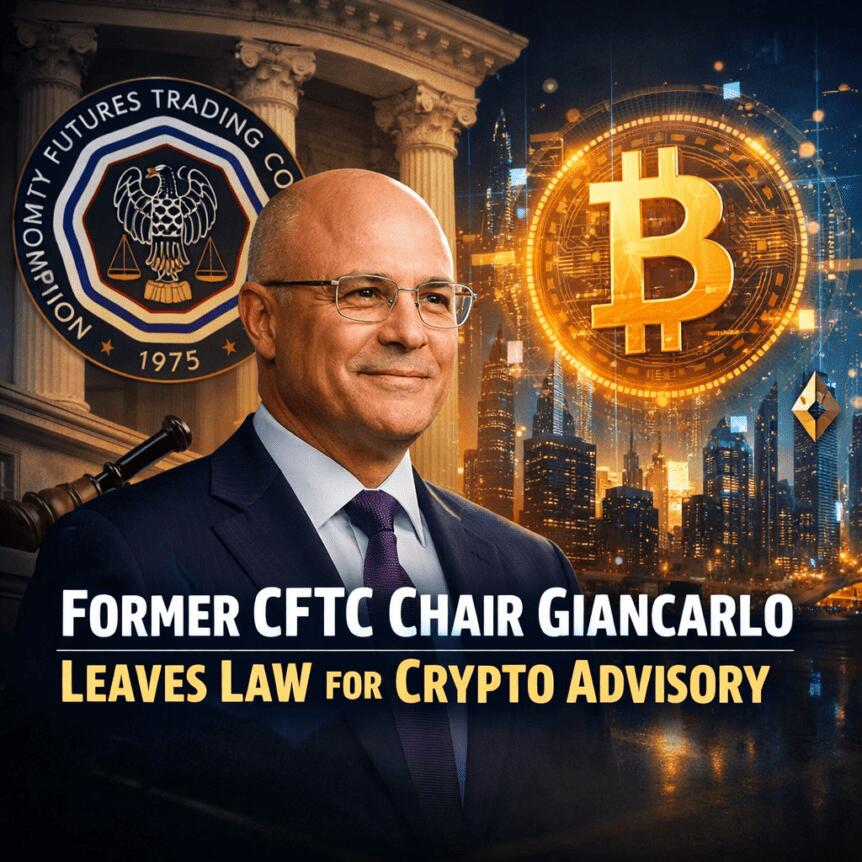
Former U.S. regulator Chris Giancarlo — the investor-friendly, crypto-advocating chair who was nicknamed “Crypto Dad” — is stepping away from the practice of law to become a full-time adviser to cryptocurrency and fintech firms. In a post on X, Giancarlo announced he would leave the law firm Willkie Farr & Gallagher and retire from legal work, dedicating his time to advising founders and builders of digital assets and financial technology, guiding CEOs and boards, and continuing research and writing on public policy issues, in addition to nonprofit engagements.
Giancarlo’s move comes from a position of longstanding influence on how policymakers and markets approach crypto. He was sworn in as a CFTC commissioner in 2014 under the Obama administration and later led the agency as chairman from August 2017 through July 2018, a period when the commission took landmark steps toward bringing cryptocurrency markets under a U.S. regulatory framework. His tenure culminated in the approval of the first regulated Bitcoin futures markets in the United States — a development many saw as a crucial stepping-stone for institutional involvement in digital assets. The label “Crypto Dad” stuck with him for his willingness to advocate for thoughtful regulation that could unlock innovation while protecting investors.
Beyond his time at the CFTC, Giancarlo has remained a visible voice in crypto policy debates. He has advised Sygnum, a crypto-native bank, helping steer the firm on global regulatory considerations and strategic partnerships. This ongoing engagement underscores a broader pattern of public- and private-sector cross-pollination as regulators transition into advisory roles within the crypto ecosystem. Cointelegraph’s coverage notes Giancarlo’s continued influence on industry standards and regulatory interpretation through such engagements.
In conversations and public appearances this year, Giancarlo has also argued that even if congressional progress lags on proposed crypto legislation, the U.S. regulators can still provide clarity. During a March appearance on Scott Melker’s The Wolf of All Streets podcast, he downplayed concerns that packages like the CLARITY Act would fail to advance in Congress, saying the CFTC and the Securities and Exchange Commission would still have room to establish rules that clarify the asset class. He stressed that while banks may be hesitant to deepen crypto exposure amid uncertain policy, the technology’s potential to modernize finance remains undeniable, and policymakers must shepherd that transition rather than resist it.
“I think there’s a recognition that this is the new architecture of finance and America, our financial institutions are the world’s dominant financial institutions. We need to modernize that. We need to adopt this technology,” Giancarlo said during the interview, according to notes of his remarks reported by crypto press outlets. His comments reflect a broader theme among reform-minded regulators: embrace the technology while building guardrails that reduce risk for investors and markets.
The industry context around Giancarlo’s latest career pivot includes a recent transition within the CFTC itself. In December, former acting chair Caroline Pham left the agency to become chief legal officer at MoonPay, highlighting a trend of senior regulators pivoting toward crypto firms after public service. The moves signify a continuing convergence of regulatory experience and private-sector crypto initiatives as firms seek guidance on navigating a rapidly evolving compliance landscape.
Beyond the personnel shift, Giancarlo’s stance on regulation continues to shape how market participants think about risk, opportunity, and governance in digital assets. His advocacy for modernization and clear rules is often cited by investors seeking a stable regulatory backdrop that can support product innovation, listed instruments, and mainstream adoption. Yet the path forward remains nuanced. While he anticipates regulatory clarity, the pace of Congressional action on expansive crypto legislation could constrain the speed at which new rules are adopted at the federal level. In the meantime, private-sector initiatives and international partnerships may proceed under existing or evolving regulatory frameworks, with policy guidance from seasoned figures like Giancarlo helping to chart acceptable pathways.
Key takeaways
- Chris Giancarlo is exiting his law practice to become a full-time adviser to crypto and fintech firms, focusing on founder guidance, policy research, and board-level support.
- He remains an influential policy interlocutor, having advised Sygnum on global regulations and partnerships, illustrating ongoing collaboration between policymakers and crypto banks.
- Giancarlo’s public stance emphasizes modernizing finance through crypto technology and developing guardrails, even if Congress stalls on broader crypto legislation.
- The move fits a broader pattern of former regulators transitioning into crypto leadership roles, highlighted by Caroline Pham’s December shift to MoonPay.
- Expect continued discourse on transparent regulatory frameworks that foster innovation while reducing systemic risk, with Giancarlo’s voice likely to shape industry expectations and corporate strategy.
From public office to private advisory: tracing Giancarlo’s trajectory
Giancarlo’s career arc mirrors a broader trend in which experienced regulators transition into advisory or leadership roles within crypto firms. As CFTC chair, his approach blended vigorous oversight with an openness to new financial architectures, a stance that earned broad crypto industry support even as it drew questions from some traditional market participants. The explicit focus on “advising founders and builders of FinTech & Digital Assets” signals a continued commitment to shaping how new products, networks, and business models align with a regulatory framework designed to support legitimate innovation while curbing risk.
The decision to retire from practicing law and devote himself to the crypto ecosystem is notable not just for Giancarlo’s renown but for the signal it sends about the convergence of policy expertise and market development. His post also reaffirms a practical reality in Washington: the most consequential regulatory thinking often travels between government service and private sector advising, creating a feedback loop that can accelerate both compliance readiness and product-market fit for crypto ventures.
Policy influence beyond the podium
Even after leaving the chair, Giancarlo has remained an active voice in debates over crypto regulation. His involvement with Sygnum as an adviser points to a continuing role in shaping how crypto-native banks interpret global rules and pursue strategic partnerships. The bank’s global footprint and regulatory navigation require insights that align with Giancarlo’s long-standing emphasis on clear, implementable standards rather than ambiguous, aspirational guidance. Statements and coverage from Cointelegraph highlight that his advisory work extends the reach of regulatory thinking into practical, cross-border applications for digital asset businesses.
His public remarks about regulatory clarity and the pace of legislative action also bear watching. If policymakers can deliver a stable, predictable framework — even if not as sweeping as some proposals — it could unlock a wave of institutional participation, product launches, and consumer-facing services. In Giancarlo’s view, the technology is here to stay, and the job is to shepherd it into a framework that preserves integrity without stifling innovation.
Industry impact and what comes next
The broader market implications of Giancarlo’s transition are twofold. First, they reinforce a pattern of regulatory veterans moving into crypto leadership roles, a trend that could help bridge the gap between public policy aims and business execution. Second, they underscore a persistent tension in the sector: the appetite for rapid innovation versus the need for robust oversight. Investors and builders should interpret Giancarlo’s move as a reminder that credible policy guidance may become more readily available through private channels as former regulators contribute their expertise to crypto firms.
As for what to watch next, observers should monitor how Giancarlo’s advisory work influences strategic decisions within the firms he supports and whether his policy writings and think-piece contributions translate into clearer regulatory expectations for the industry. Any notable shifts in regulatory messaging, or accelerations in global partnerships and product launches among Giancarlo-associated ventures, will be telling signs of how this career pivot translates into tangible market outcomes.
In the near term, market watchers should also keep an eye on ongoing regulatory developments, including potential updates to guidance for crypto assets and any new proposals that aim to clarify roles for exchanges, broker-dealers, and digital-asset custodians. While the Congressional timetable remains uncertain, Giancarlo’s perspective suggests that the industry could still gain much-needed clarity through coordinated actions from U.S. regulators, in parallel with international standards that encourage legitimate use cases while safeguarding consumers and markets.
Readers should stay tuned for further updates on policy proposals, regulatory guidance, and the evolving stance of former regulators who remain central to shaping crypto’s institutional pathway. The harmonization of policy intent and market execution—illuminated by Giancarlo’s ongoing work—will likely influence investors’ risk assessments, project funding, and the speed at which institutions embrace digital assets on a broader scale.
What remains uncertain is the pace and scope of regulatory clarity that can be delivered in a politically diverse environment. As Giancarlo embarks on this new chapter, his unique blend of regulatory experience and private-sector insight will be a useful barometer for how quickly the industry can align around well-understood rules that reduce ambiguity while expanding opportunity.
This article was originally published as Former CFTC Chair Giancarlo Leaves Law for Crypto Advisory on Crypto Breaking News – your trusted source for crypto news, Bitcoin news, and blockchain updates.


You May Also Like

JPMorgan CFO Flags Regulatory Arbitrage Risks From Stablecoins

XRP News Builds as ETFs Emerge While Pepeto Gains




