From Pudgy toys to the chain empire, the Fat Penguin ecosystem is rising.From Pudgy toys to the chain empire, the Fat Penguin ecosystem is rising.

How did "Penguin Chain" Abstract achieve over 1.3 million users and over 50 million transaction volume in just three months?

2025/05/03 11:42
7 min read

By Stacy Muur

Compiled by: Tim, PANews

In a field full of infrastructure-first blockchains, Abstract made a strong debut on January 27, 2025, with a bold adjustment to its core strategy: it will focus on end-user rather than developer testnets first, aiming to promote the real large-scale implementation of applications.

Overview

  • Start date: January 27, 2025
  • Development history: Abstract is the first consumer-oriented Layer 2 scaling solution in the Ethereum ecosystem, developed by the Igloo team that created the well-known NFT series "Pudgy Penguins".
  • Core Value Proposition: Designed for mass adoption, Abstract eliminates key barriers such as wallets, mnemonics, and gas fees
  • Application areas: games, social networking, NFT and prediction markets
  • Technical architecture: built on zkSync ZK Stack

Data as of April 22, 2025:

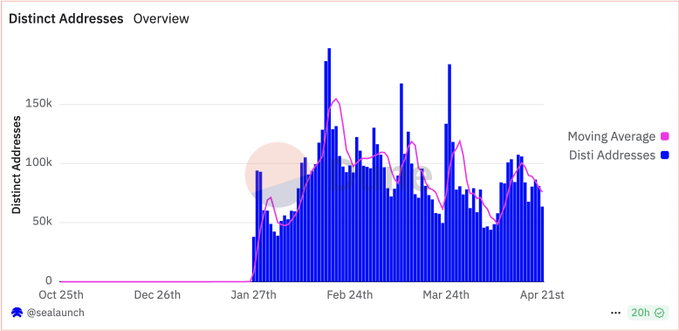
  • 1.31 million+ independent wallets
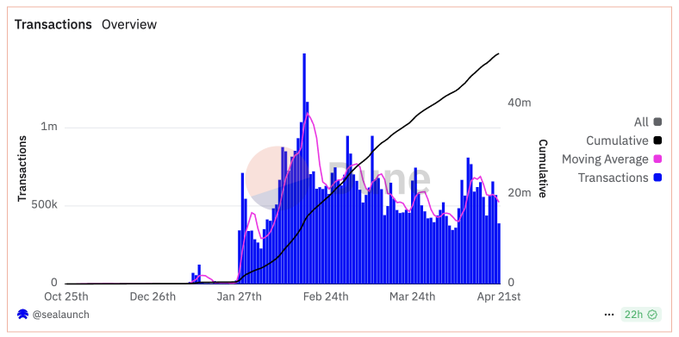
  • Total transaction volume exceeded 51.3 million
  • The number of contracts created reached 2.26 million
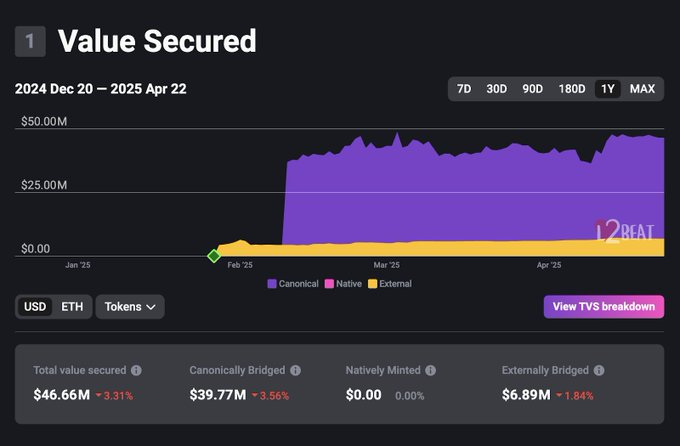
  • Total guaranteed value (TVS): US$46.66 million
  • DeFi TVL: $16.86 million
  • Average daily trading volume: 500,000 to 700,000
  • Daily active wallets: 50,000 to 100,000

User Experience Revolution: Real Consumer Chain Practice

Unlike most L2 models that first launch development tools and wait for the ecosystem to develop, Abstract reconstructs the user's full life cycle experience:

  1. Registration process: Built-in smart contract wallet (AGW), no need to rely on external tools such as MetaMask
  2. Discovery mechanism: Through the embedded consumer portal aggregation application, integrated live viewing and XP task system, to achieve closed-loop interaction within the site
  3. Retention system: a combination of streaming content + dynamic tasks + incentive mechanism

The “Pudgy Effect”: IP-driven large-scale distribution

Abstract’s onboarding process is not designed around incentives or airdrops, but rather around native IP distribution and real-world consumer traffic channels.

Pudgy’s consumer IP and product distribution system are the core strategies for Abstract to achieve autonomous user growth before launching any tokens:

  • Sequencer Release: The first node accurately matched the Pudgy Penguins marketing cycle, and achieved more than 700,000 transactions on the first day
  • On-chain reward system: Bind to Pudgy offline experience rights, NFT holders can enjoy bonus rewards
  • Native application matrix: Pudgy World, Pudgy Party and other core DApps are launched simultaneously
  • Virtual-real linkage innovation: physical toys come with QR codes that lead directly to the on-chain world, realizing the transformation of consumer goods to on-chain users
  • Channel leverage effect: Pudgy IP has over 1 million toy sales, $10 million in revenue, and 1.7 million Instagram followers
  • Optimize customer acquisition costs: Rely on IP assets to achieve low-cost cold start and quickly form network effects

App Usage: Where do users spend their time?

Unlike most emerging blockchains, whose usage is often concentrated in a single field such as cross-chain bridging, token exchange or test decentralized applications, Abstract Blockchain has demonstrated a broad and multi-level application ecosystem vitality, with application scenarios covering digital wallets, application frameworks, gaming and entertainment, transaction services and social networks.

Top 7 apps How did "Penguin Chain" Abstract achieve over 1.3 million users and over 50 million transaction volume in just three months?
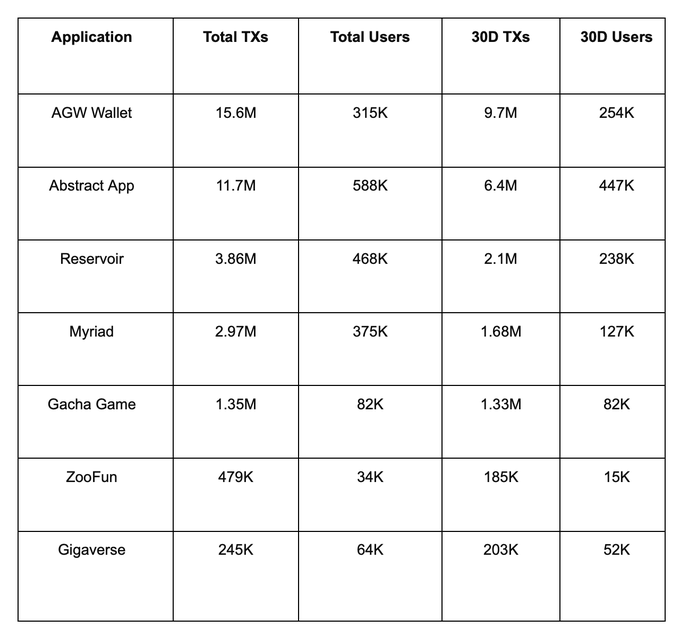
The wallet and core interface have driven over 27 million transactions and 700,000 users with infrastructure alone. In addition to infrastructure, applications such as Gachapon, Myriad, and Reservoir also continue to show user return behavior.

On-chain activity: insights from the data

  • Number of active wallets: peaked at over 150,000 per day in February, then gradually stabilized, remaining between 50,000 and 100,000
  • Engagement drivers: The surge in activity is closely related to application releases, community activities, and on-chain incentives.
  • Retention signal: A brief dip in March followed by a rebound - this suggests that users are truly sticky, rather than just engaging in utilitarian behavior.
How did "Penguin Chain" Abstract achieve over 1.3 million users and over 50 million transaction volume in just three months?

Total Locked Value (TVL) Trend Analysis

Currently, the locked amount of the Abstract protocol has reached 46.66 million US dollars. Since the rapid growth at the beginning of its launch, TVS has always remained above 45 million US dollars, and a significant growth peak appeared in early February. Although it experienced a slight decline in early April (about 3%), the scale of funds has rebounded rapidly, indicating that the protocol has a stable fund retention capacity and a low risk of short-term volatility.
How did "Penguin Chain" Abstract achieve over 1.3 million users and over 50 million transaction volume in just three months?

Trading trend analysis

  • Initial growth period: trading volume gradually increased after launch → peaked in February with an average daily trading volume of over one million
  • Operational stability period: From March to April, the average daily transaction volume remained between 500,000 and 700,000
  • Cumulative processing volume: The total transaction volume of the platform has exceeded 40 million and is showing a trend of continuous growth
How did "Penguin Chain" Abstract achieve over 1.3 million users and over 50 million transaction volume in just three months?

Infrastructure Technology Stack

Abstract is a vertically integrated blockchain built for a consumer-grade user experience. Its infrastructure architecture combines zero-knowledge proof (ZK) scalability technology with embedded client tools.

Product stack overview:

Four-layer architecture:

1. Abstract ZK-rollup

2.Abstract Global Wallet

3. Panoramic Governance (PG)

4. Consumer Portal

Based on the framework of architecture design and performance, each level is deconstructed and analyzed.

AGW: No MetaMask required, no mnemonics, no pop-ups

AGW will be issued as a basic function by default to all Abstract platform users. The product replaces traditional browser plug-ins, external accounts (EOAs) and complex login interaction processes through a smart contract wallet layer native to the blockchain.

Application scale:

Cumulatively processed more than 15.6 million transactions

The total number of registered users reached 315,000, of which 254,000 were active users in the past 30 days

Core features:

  • Quick registration with email/social account/passkey (using Privy)
  • Gas-free transactions (via paymasters)
  • Allow background silent execution of operations after session key authorization
  • Support batch transaction submission, eliminating multi-step interactive processes
  • Socialized account recovery mechanism based on the guardian module completely avoids the risk of losing traditional mnemonics

Consumer Portal

The Consumer Portal is the default user interface for all Abstract wallets. It integrates application discovery, asset exchange, streaming services, XP task system, and wallet management. It is the main entry point for users to use and retain applications.

Abstract App alone has processed more than 11.7 million transactions from 588,000 users, including 6.4 million transactions in the last 30 days, and has 447,000 active users.

Portal features:

  • Discover apps through curated app marketplaces
  • Live streaming center embedded directly in the application
  • Experience points and task systems improve application activity
  • Native support for token swaps and NFT minting
  • One-stop integration of AGW wallet management, identity authentication and activity records

Panoramic Governance (PG)

PG is a value redistribution mechanism based on actual usage. The sorter fee + token release amount flows to:

  • Active Users
  • High flow applications
  • Voters who participate in governance through staking and usage

Unlike most chains that adopt "passive governance" (weight is determined solely by the amount of coins held), PG requires participants to actually contribute to network activities in order to unlock benefits.

Developers can offer "vote bribes" to compete for token release based on voting weight (similar to the Aerodrome model), but the scale of the system is driven by activity rather than simply relying on the amount of coins held.

Encourage positive cycle:

  • User: Benefit from use
  • Application: Benefit from increased engagement
  • Governance: Benefit from promoting ecological activity

This is a radical innovation of the traditional "lock + idle" token model.

Live streaming as a growth engine

Most blockchain projects treat live streaming and creator content as a marketing layer outside the protocol. Abstract embeds it directly into the on-chain protocol through the consumer portal, making live streaming a native component of user registration, ecosystem discovery, and user growth.

What makes the Abstract platform unique:

  • The platform natively integrates live streaming capabilities similar to Twitch, rather than through external access.
  • The anchor's income adopts an on-chain payment mechanism, and its distribution is mainly based on the following indicators:
  • Views
  • Promotion effect on applications within the Abstract ecosystem
  • User subsequent behavior (recorded by AGW tracking system)

The platform will actively recommend popular video clips and live broadcast content, thereby building a complete traffic closed loop between creators, application developers and users.

How did "Penguin Chain" Abstract achieve over 1.3 million users and over 50 million transaction volume in just three months?

The flywheel effect in action

Streamers showcase new applications on the Abstract platform;

Viewers log in through AGW (Abstract Gateway) and experience these applications instantly;

The increase in app usage has attracted more creators to join and promoted funding for developer-streamer collaboration projects;

Abstract promotes high-quality content clips to inject more potential users' attention traffic into the platform.

This closed loop internalizes the entire chain of content → usage → growth within the platform, rather than dispersing it across multiple platforms.

Conclusion: Abstract’s current position

Abstract has demonstrated what a user-centric blockchain infrastructure looks like in real-world applications:

  • Wallet functions are built-in: not an external plug-in, but a deep integration
  • Discovery and interaction are native: functions are native to the platform, not fragmented
  • Content embedded ecosystem: content grows autonomously on the platform without relying on external channels such as Twitter
  • Behavior incentive orientation: rewarding user behavior contributions rather than simply token holders

Disclaimer: The articles reposted on this site are sourced from public platforms and are provided for informational purposes only. They do not necessarily reflect the views of MEXC. All rights remain with the original authors. If you believe any content infringes on third-party rights, please contact service@support.mexc.com for removal. MEXC makes no guarantees regarding the accuracy, completeness, or timeliness of the content and is not responsible for any actions taken based on the information provided. The content does not constitute financial, legal, or other professional advice, nor should it be considered a recommendation or endorsement by MEXC.

You May Also Like

Next Couple of Months Will Be Wild for XRP: Wealth Manager

Next Couple of Months Will Be Wild for XRP: Wealth Manager

Wealth manager Nate Geraci has reiterated his view that the coming months will be "wild" for XRP. This comes as the XRP community braces for another major milestone in the ETF space.Visit Website
Share
The Crypto Basic2025/09/18 17:09
Top 5 Cryptocurrency Data APIs: Comprehensive Comparison (2025)

Top 5 Cryptocurrency Data APIs: Comprehensive Comparison (2025)

Photo by Pierre Borthiry - Peiobty on Unsplash Cryptocurrency APIs are essential tools for developers building apps (e.g. trading bots, portfolio trackers) and for analysts conducting market research. These APIs provide programmatic access to historical price data, real-time market quotes, and even on-chain metrics from blockchain networks. Choosing the right API means finding a balance between data coverage, update speed, reliability, and cost. In this article, we compare five of the most popular crypto data API providers — EODHD, CoinMarketCap, CoinGecko, CryptoCompare, and Glassnode — focusing on their features, data types (historical, real-time, on-chain), rate limits, documentation, and pricing plans. We also highlight where EODHD’s crypto API stands out in this competitive landscape. Overview of the Top 5 Crypto Data API Providers
  1. EODHD (End-of-Day Historical Data) — All-in-One Multi-Asset Data EODHD is a versatile financial data provider covering stocks, forex, and cryptocurrencies. It offers an unmatched data coverage with up to 30 years of historical data across the global For crypto, EODHD supports thousands of coins and trading pairs (2,600+ crypto pairs against USD) and provides multiple data types under one service. Key features include:
Historical Price Data: Daily OHLCV (open-high-low-close-volume) for crypto assets, with records for major coins going back to 2009 eodhd.com (essentially as far back as Bitcoin’s history). This extensive archive facilitates long-term backtesting. Real-Time Market Data: Live crypto price quotes via REST API and WebSocket. EODHD’s “Live” plan delivers real-time (typically streaming) updates with high rate limits (up to 1,000 requests/minute on paid plans) Developers can also use bulk API endpoints to On-Chain & Fundamental Data: While not an on-chain analytics platform per se, EODHD provides crypto fundamental metrics such as market cap (actual and diluted), circulating/total/max supply, all-time high/low, and links to each project’s whitepaper, block explorer These fundamentals give context beyond price, though advanced on-chain metrics (e.g. active addresses) are not included. Additional Features: EODHD stands out for its ease of use and support tools. API responses are clean JSON by default (with an option for CSV), and the service offers no-code solutions like Excel and Google Sheets add-ons to fetch crypto data without programming Comprehensive documentation and an “API Academy” with examples help users get started EODHD also provides 24/7 live customer support, reflecting its 7+ years of reliable service Pricing & Limits: EODHD’s pricing is very competitive for the value. It has a free plan (registration required) which allows 20 API calls per day for trying out basic Paid plans start at $19.99/month for end-of-day and live crypto data, allowing up to 100,000 calls per day— a generous limit that far exceeds most competitors at that price. The next tier ($29.99/mo) adds real-time WebSocket streaming, and the top All-in-One plan ($99.99/mo) unlocks everything (historical, intraday, real-time, fundamentals, news, etc.) All paid plans come with high throughput (up to 1,000 requests/min) Enterprise or commercial licenses are available for custom needs, and students can even get 50% discounts for educational Overall, EODHD offers an excellent price-to-performance ratio, giving developers extensive crypto (and cross-asset) data for a fraction of the cost of some single-purpose crypto APIs. 2. CoinMarketCap — Industry-Standard Market Data CoinMarketCap (CMC) is one of the most well-known cryptocurrency data aggregators. It provides information on over 10,000 digital assets and aggregates data from hundreds of CMC’s API is a go-to choice for current market prices, rankings, and exchange statistics. Key features include: Real-Time Quotes & Global Metrics: The API offers real-time price quotes, market capitalization, trading volume, and rankings for thousands of cryptocurrencies. It also provides global market metrics like total market cap, total volume, Bitcoin dominance, etc., updated (CMC’s data updates roughly every 1–2 minutes by default; true streaming is not yet available via their API.) Historical Data: Paid tiers unlock access to historical price data. CMC has data going back to 2013 for many assets, and enterprise plans provide all historical OHLCV data since 2013.The API endpoints include daily and even intraday historical quotes, but note that the free tier does not include historical price retrieval(free users get only latest data). Exchange and Market Endpoints: CoinMarketCap’s API covers exchange-level data (e.g. exchange listings, trading pair metadata, liquidity scores) and derivative market data (futures, options prices) on higher plans. This is useful for monitoring exchange performance and volumes across both centralized and decentralized exchanges. However, on-chain analytics are not CMC’s focus — the API doesn’t provide blockchain metrics like address counts or transaction rates. Developer Support: CMC provides comprehensive documentation and a straightforward RESTful JSON API . The endpoints are well-documented with examples, and categories include latest listings, historical quotes, metadata/info (project details), exchange stats, and The service is known for its reliability and is used by major companies (Yahoo Finance, for example, uses CoinMarketCap’s data feeds in its crypto Pricing & Limits: CoinMarketCap offers a free Basic plan with 10,000 credits per month (approximately 333 calls/day) and access to 11 core endpoint. The free tier is suitable for simple apps that only need current market data on a limited number of assets. To get historical data or higher frequency updates, you must upgrade. The Hobbyist plan starts at around $29/month (paid annually) and offers a higher monthly call allowance (e.g. ~50,000 calls/month) and more endpoints. Mid-tier plans like Startup ($79/mo) and Standard ($199/mo) increase the rate limits and data access — e.g., more historical data and additional endpoints like derivatives or exchange listings. For example, Standard and above allow intraday historical quotes and more frequent updates. Professional/Enterprise plans ($699/mo and up, or custom) provide the highest limits (up to millions of calls per month), full historical datasets, and SLA . Rate limits on CMC are enforced via a credit system; different endpoints consume different credits, and higher plans simply grant more credits per month. In summary, CoinMarketCap’s API is very robust but can become expensive for extensive data needs — it targets enterprise use cases with its upper tiers. Smaller developers often stick to the free or Hobbyist plan for basic data (while accepting the lack of historical data in those tiers) 3. CoinGecko — Broad Coverage & Community Focus CoinGecko is another hugely popular cryptocurrency data provider known for its broad coverage and developer-friendly approach. CoinGecko’s API is often praised for having a useful free offering and covering not just standard market data but also categories like DeFi, NFTs, and community metrics. Notable features: Wide Asset Coverage: CoinGecko tracks over 13,000 cryptocurrencies (including many small-cap and emerging tokens). It also includes data on NFT collections and decentralized finance (DeFi) tokens and protocols. This makes it one of the most comprehensive datasets for the crypto market. If an asset is trading on a major exchange or DEX, CoinGecko likely has it listed. Market Data and Beyond: The API provides real-time price data, market caps, volumes, and historical charts for all these assets. Historical data can be retrieved in the form of market charts (typically with daily or hourly granularity depending on the time range). Additionally, CoinGecko offers endpoints for exchange data, trading pairs, categories (sectors), indices, and even asset contract info (mapping contract addresses to CoinGecko listings). They also expose developer and social metrics for each coin — e.g. GitHub repo stats (forks, stars, commits) and social media stats (Twitter followers, Reddit subscribers) This is valuable for analysts who want to gauge community interest or development activity alongside price. No WebSockets — REST Only: CoinGecko’s API is purely REST-based; there is no built-in WebSocket streaming. Data updates for price endpoints are cached at intervals (typically every 1–5 minutes for free users, and up to every 30 seconds for Pro users). So while you can get near-real-time data by polling, ultra-low-latency needs (like high-frequency trading) are better served by other providers or exchange-specific APIs. Documentation & Use: The API is very straightforward to use — in fact, for the free tier no API key was required historically (though recently CoinGecko introduced an optional “Demo” key for better tracking). A simple GET request to an endpoint like /simple/price returns current prices. CoinGecko’s documentation is clear, and they even highlight popular endpoints and provide examples. Because of its simplicity and generous free limits, CoinGecko’s API has been integrated into countless projects and tutorials. Pricing & Limits: CoinGecko operates a freemium model. The free tier (now referred to as the “Demo” plan) allows about 10–30 calls per minute (the exact rate is dynamic based on system load) In practical terms, that’s roughly up to 1,800 calls/hour if usage is maxed out — very sufficient for small applications. The free API gives access to most endpoints and data (including historical market charts) but with lower priority and slower update frequency. For higher needs, CoinGecko offers paid plans: Analyst, Lite, and Pro. For example, the Analyst plan (~$129/mo) offers 500,000 calls per month at 500 calls/minute rate limit, the Pro plan (~$499/mo) offers 2,000,000 calls/mo at the same rate, and an Enterprise plan (~$999/mo and up) can be tailored for even larger volumes. Paid plans also use a separate pro API endpoint with faster data updates (prices cached every 30 seconds) and come with commercial usage rights and support SLA Notably, CoinGecko’s free plan is one of the best among crypto APIs in terms of data offered for $0, but if you need heavy usage or guaranteed uptime, the cost can ramp up — at the high end, large enterprise users might negotiate custom plans beyond the listed Pro tier.
  1. CryptoCompare — Full Market Data + More CryptoCompare is a long-standing crypto data provider that offers a rich set of market data and analytics. It not only provides price data but also aggregates news, social sentiment, and even some on-chain data, making it a comprehensive source for crypto market Key features of CryptoCompare’s API include:
Market Data & Exchange Coverage: CryptoCompare covers 5,700+ coins and 260,000+ trading pairs across a wide array of exchanges. It collects trade data from more than 170 exchanges (both centralized and some decentralized) to produce its aggregate indices (known as CCCAGG prices). The API provides real-time price quotes, order book snapshots, trade history, and OHLCV candlesticks at various intervals. For advanced users, CryptoCompare can supply tick-level trade data and order book data for deep analysis (these are available via their WebSocket or extended API endpoints). Historical Data: CryptoCompare is strong in historical coverage. It offers historical daily data for many coins and historical intraday (minute) data as well. By default, all subscription plans include at least 7 days of minute-level history and full daily history; enterprise clients can get up to 1 year of minute-by-minute historical data (and raw trade data) for backtesting. This is valuable for quantitative researchers who require detailed price series. On-Chain Metrics and Other Data: In addition to market prices, CryptoCompare has expanded into on-chain metrics and alternative data. The API can provide certain blockchain statistics (they mention “blockchain metrics” and address data in their offerings)— for example, network transaction counts or wallet addresses for major chains. While it’s not as extensive as a dedicated on-chain provider, this allows blending on-chain indicators (like transaction volumes) with price data for analysis. CryptoCompare also integrates news feeds and social sentiment: the API has endpoints for the latest news articles and community sentiment analysis, which can help gauge market Reliability and Performance: CryptoCompare’s infrastructure is built for high performance. They claim support for up to 40,000 API calls per second bursts and hundreds of trades per second This makes it suitable for real-time applications and dashboards that need frequent updates. Their data is normalized through a proprietary algorithm to filter out bad data (e.g., outlier prices or exchange anomalies), aiming to deliver clean and consistent price indices (CCCAGG). The API itself is well-documented, and client libraries exist for languages like Python. Pricing & Limits: CryptoCompare historically offered a free public API (with IP-based limiting), but now uses an API key model with tiered plans. Personal/free use is still allowed — you can register for a free API key for non-commercial projects and get a decent allowance (exact call limits aren’t explicitly published, but users report free tiers on the order of a few thousand calls per day). For commercial or heavy use, their plans start around $80/month for a basic package and go up to ~$200/month for advanced packages. These plans might offer on the order of 100k to a few hundred thousand calls per month, plus higher data resolution. All plans grant access to ~60+ endpoints and features like full historical data download for daily/hourly (minute data beyond 7 days is enterprise-only). Enterprise solutions are available for customers needing custom data feeds, unlimited usage, white-label solutions, or bespoke datasets (pricing for these is via negotiation). In summary, CryptoCompare provides a very rich dataset and is priced in a mid-range: not as cheap as community resources, but more affordable than some institutional-grade providers. Its value is especially high if you need a mix of price, news, and basic on-chain data in one
  1. Glassnode — On-Chain Analytics Leader Glassnode is the premier platform for on-chain metrics and blockchain analytics. Unlike the other APIs in this list, Glassnode’s focus is less on real-time market prices and more on the fundamental health and usage of blockchain networks. It provides a wealth of on-chain data that is invaluable for crypto analysts and long-term investors. Key aspects of Glassnode’s API:
Extensive On-Chain Metrics: Glassnode offers over 800 on-chain metrics spanning multiple major blockchains (Bitcoin, Ethereum, Litecoin, and many others, as well as key ERC-20 tokens). This includes metrics like active addresses, transaction counts, transaction volumes, mining hash rates, exchange inflows/outflows, UTXO distributions, HODLer stats, realized cap, SOPR and much more. If you need to peer ino what’s happening inside a blockchain (not just its price on exchanges), Glassnode is the go-to source. For example, one can query the number of active Bitcoin addresses, the amount of BTC held by long-term holders vs. short-term, or Ethereum gas usage trends Market & Derivatives Data: In addition to pure on-chain data, Glassnode also incorporates off-chain market data for context. They provide spot price data for major assets (often used in tandem with metrics in their charts), and even some derivatives metrics (futures open interest, funding rates, etc. for major exchanges) at higher . This means Glassnode can be a one-stop shop for an analyst who wants to correlate on-chain activity with price movements or derivative market trends. Data Resolutions and API Access: The API allows retrieval of metrics at various time resolutions. Free users can typically access metrics at a daily resolution (one data point per day) and usually with a delayed timeframe (e.g. yesterday’s data). Paid tiers unlock higher frequency data — the mid-tier (Advanced) gives up to hourly data, and the top tier (Professional) can go down to 10-minute intervals for certain metrics This granularity is useful for near-real-time monitoring of on-chain events. It’s important to note that Glassnode’s API is primarily used for pulling time-series data of specific metrics (e.g., get the 24h moving average of active addresses, daily, over the last 5 years). The API is well-documented with a metric catalog detailing every metric and its available history and access tier. Analyst Tools: Glassnode provides an entire platform (Glassnode Studio) for visualizing these metrics with charts and alerts. While that’s beyond the API itself, it’s worth noting that many analysts use the web interface for research and the API for programmatic access when building models. Glassnode has become an industry standard for on-chain analysis — many research reports and crypto funds cite Glassnode metrics for insights on network adoption, investor behavior, and market cycles. Pricing & Limits: Glassnode’s offerings are tiered more by data access level than raw call counts. They have a Standard (Free) tier, an Advanced (Tier 2) paid tier, and a Professional (Tier 3) tier. The Free tier allows access to Basic metrics (Tier 1 metrics) at daily resolution, which covers a lot of fundamental data for major chains but not the more complex or derived metrics. The Advanced plan (around $29–$49 per month depending on promotions) unlocks Essential metrics (Tier 2) and provides up to hourly . The Professional plan (around $79 per month for individuals) gives access to all metrics (including Premium Tier 3 metrics) and finer resolution (10-min updates). However, there’s a catch: API access is only officially included for Professional/Enterprise users and may require a special add-on or enterprise . In practice, Glassnode does offer a free API but it is limited (e.g., you can query basic metrics via REST with a free API key, but many endpoints will return only if you have the right subscription). Enterprise clients who need programmatic access to extensive history or want to ingest Glassnode data into trading models can arrange custom packages (cost can run into the hundreds or thousands of dollars monthly for institutional licenses, which may include SLAs, custom metrics, or priority support). For the purpose of our comparison, Glassnode’s free option is great for community analysts to explore a subset of data, but serious use of their API requires the paid tiers. Glassnode is best suited for analysts and institutional users who heavily value on-chain rather than developers who just need straightforward price feeds. The table below summarizes the data coverage and features of these five API providers side-by-side: Ready to build with crypto data that just works? If you want reliable crypto prices + multi-asset coverage (stocks, FX, ETFs) + generous limits without piecing together 3–4 vendors, EODHD is the pragmatic pick. Why EODHD wins for most teams All-in-one: crypto + equities + FX under one API (consistent JSON/CSV). Great value: up to 100k calls/day from ~$19.99/mo — perfect for MVPs and production apps. Fast start: clean docs, code samples, Excel/Sheets add-ins, and bulk endpoints. Scale-ready: real-time REST & WebSocket, historical OHLCV, fundamentals, news. What you can ship this week Real-time crypto dashboards and alerts Backtests using years of OHLCV data Cross-asset analytics (BTC vs. S&P 500, ETH vs. USD) Spreadsheet models that refresh automatically 👉 Start for free with EODHD — grab your API key and make your first request in minutes.Try EODHD now (free tier available) and upgrade when you need more throughput. Top 5 Cryptocurrency Data APIs: Comprehensive Comparison (2025) was originally published in Coinmonks on Medium, where people are continuing the conversation by highlighting and responding to this story
Share
Medium2025/09/26 21:29
XRP Price Outlook As Peter Brandt Predicts BTC Price Might Crash to $42k

XRP Price Outlook As Peter Brandt Predicts BTC Price Might Crash to $42k

The post XRP Price Outlook As Peter Brandt Predicts BTC Price Might Crash to $42k appeared on BitcoinEthereumNews.com. XRP price led cryptocurrency losses on Friday
Share
BitcoinEthereumNews2026/02/06 19:06