

Gold Price Analysis: Resilient Metal Holds Below $4,800 Despite Modest USD Uptick
BitcoinWorld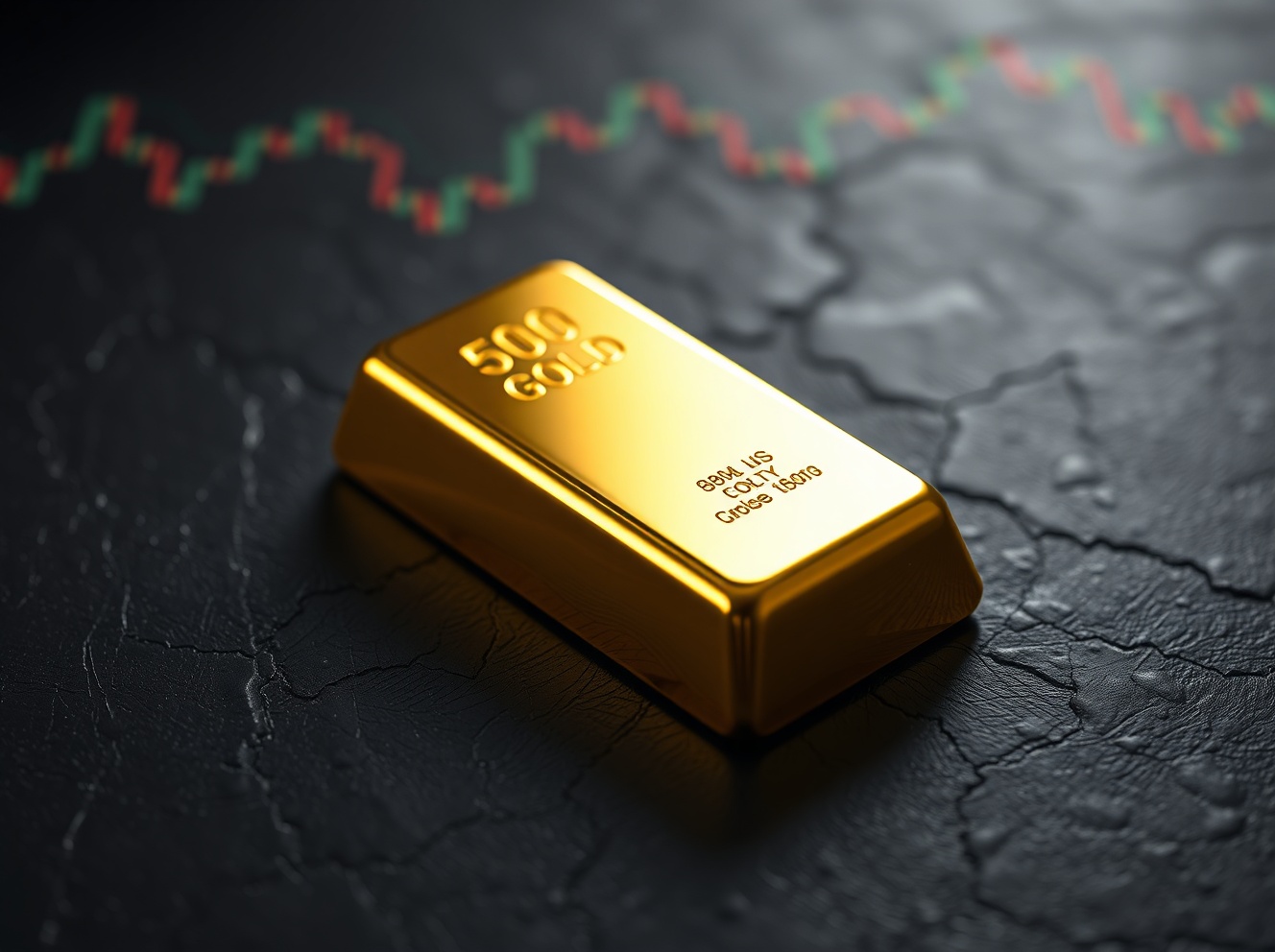
Gold Price Analysis: Resilient Metal Holds Below $4,800 Despite Modest USD Uptick
Global gold markets, as of early 2025, demonstrate a persistent negative bias with prices consolidating below the significant $4,800 per ounce threshold. This movement occurs concurrently with a modest uptick in the US Dollar Index, yet multiple technical and fundamental factors appear to cushion the metal’s downside. Market analysts closely monitor this interplay between traditional safe-haven demand and prevailing macroeconomic headwinds.
Gold Price Dynamics and the US Dollar Correlation
The inverse relationship between gold and the US dollar remains a cornerstone of commodity market analysis. Consequently, a strengthening dollar typically exerts downward pressure on dollar-denominated gold prices. Recently, the dollar has found modest support from shifting expectations regarding the Federal Reserve’s monetary policy trajectory. However, this USD uptick has not triggered a sharp sell-off in gold, indicating underlying resilience.
Several key factors contribute to this cushioned downside. First, central bank demand for gold reserves continues at a robust pace, providing a consistent floor for prices. Second, ongoing geopolitical tensions in several regions sustain a baseline level of safe-haven buying. Finally, physical demand from key markets like India and China shows seasonal strength, absorbing some of the selling pressure from paper markets.
Technical Analysis and Key Price Levels
From a chart perspective, the consolidation below $4,800 presents a critical juncture for traders. The area around $4,750 has acted as a reliable support zone on multiple occasions throughout the first quarter of 2025. A sustained break below this level could open the path toward testing the 100-day moving average, currently situated near $4,680.
Conversely, resistance is firmly established in the $4,820-$4,850 range. A decisive close above this band would signal a potential resumption of the broader uptrend that characterized late 2024. The following table outlines the immediate technical levels market participants are watching:
| Level | Type | Significance |
|---|---|---|
| $4,850 | Resistance | Previous swing high & trendline resistance |
| $4,800 | Psychological | Key round number and recent ceiling |
| $4,750 | Support | Recent consolidation low and buying zone |
| $4,680 | Support | 100-day Moving Average |
Momentum indicators, including the Relative Strength Index (RSI), currently hover near neutral territory, suggesting the market is neither overbought nor oversold. This positioning allows for movement in either direction based on fresh fundamental catalysts.
Expert Insights on Macroeconomic Crosscurrents
Financial institutions provide nuanced views on the current gold landscape. Analysts at major banks point to the competing forces of higher real yields—a traditional negative for non-yielding gold—and elevated macroeconomic uncertainty as the primary drivers. “The market is in a tug-of-war,” notes a senior commodity strategist, whose analysis is frequently cited by institutional clients. “While nominal rate expectations provide a headwind, the demand for portfolio diversification and a tangible store of value acts as a powerful counterweight.”
Furthermore, data from futures markets shows that managed money positioning, while reduced from recent extremes, is not excessively short. This suggests that a sudden wave of short-covering could amplify any positive price move, thereby limiting the depth of any correction. The commitment of traders reports indicate a balanced speculative landscape, reducing the risk of a cascading sell-off driven by leveraged positions.
Fundamental Drivers Beyond Currency Markets
While the dollar’s movement captures immediate attention, other fundamental factors provide critical context for gold’s resilience. Global mine production has plateaued, with few major new deposits coming online. Simultaneously, production costs have risen due to persistent inflation in energy and labor markets, establishing a higher all-in sustaining cost floor for the industry.
Investment demand patterns also show evolution. Flows into physically-backed gold ETFs, which saw outflows during periods of aggressive central bank tightening, have stabilized. Notably, demand for smaller bars and coins among retail investors remains elevated in Western markets, a trend often associated with longer-term wealth preservation strategies rather than short-term speculation.
- Central Bank Activity: Official sector purchases continue unabated, with diversification away from traditional reserve currencies being a stated goal for many nations.
- Inflation Expectations: While headline inflation has moderated, long-term market-based inflation expectations remain above pre-pandemic averages, supporting gold’s role as an inflation hedge.
- Real Asset Allocation: Pension funds and large asset allocators are marginally increasing target weights to real assets, including precious metals, within multi-asset portfolios.
This combination of supply constraints and diversified demand sources creates a structural support for prices that transcends daily currency fluctuations.
Conclusion
In summary, the gold price currently exhibits a negative bias below $4,800, primarily influenced by a firmer US dollar. However, the downside appears well-cushioned by a confluence of technical support levels, sustained physical and central bank demand, and its enduring role as a strategic diversifier. The market’s trajectory will likely hinge on the evolving path of US interest rates and the broader global economic outlook. For now, the metal demonstrates characteristic resilience, trading within a defined range as it assimilates competing macroeconomic signals. The key takeaway for investors is that while short-term momentum may be subdued, the fundamental case for gold within a balanced portfolio remains intact, supported by both cyclical and secular drivers.
FAQs
Q1: Why does a stronger US Dollar typically push gold prices lower?
A stronger US Dollar makes gold more expensive for holders of other currencies, which can reduce international demand. Since gold is globally priced in USD, this inverse relationship is a fundamental market dynamic.
Q2: What does ‘downside seems cushioned’ mean in market analysis?
This phrase suggests that while the price trend may be negative or downward, there are identifiable factors—such as strong support levels, consistent buyer demand, or favorable fundamentals—that are expected to prevent a severe or rapid decline.
Q3: What are the main sources of demand supporting the gold market in 2025?
The primary demand pillars include central bank reserves diversification, physical bar and coin investment, jewelry consumption (particularly in Asia), and the use of gold-backed financial instruments by institutional investors.
Q4: How do interest rates affect gold prices?
Higher interest rates increase the opportunity cost of holding gold, which does not pay interest or dividends. This can make yield-bearing assets more attractive. However, if rate hikes are driven by high inflation, gold’s hedge characteristics can offset this pressure.
Q5: Is the $4,800 level specifically important for technical analysis?
Yes, round numbers like $4,800 often act as psychological barriers in trading. They can concentrate buy and sell orders, making them significant areas of support or resistance that technical analysts watch closely for breakout or breakdown signals.
This post Gold Price Analysis: Resilient Metal Holds Below $4,800 Despite Modest USD Uptick first appeared on BitcoinWorld.


You May Also Like

Next Crypto to Explode 2026 as Pepeto Eyes 1000x, Rivals Lag
ORDI Surges 47.7% as Bitcoin Ordinals Token Defies 92% Drawdown from ATH




