BitcoinWorld Massive Crypto Futures Liquidation: $183 Million Vanishes in an Hour The cryptocurrency market recently witnessed a dramatic event, with a staggering $183 million worth of crypto futures liquidation occurring in just a single hour. This sudden downturn caught many traders off guard, highlighting the inherent volatility of digital asset markets. Over the past 24 hours, the total liquidated value soared to an astonishing $390 million, leaving a significant impact on trading positions across major exchanges. What exactly does this mean for traders and the broader market? What Exactly is Crypto Futures Liquidation? For those new to futures trading, understanding crypto futures liquidation is crucial. Essentially, it happens when a trader’s leveraged position is forcibly closed by an exchange. This occurs because the trader no longer has sufficient margin to cover potential losses. When market prices move sharply against a trader’s position, their margin balance can fall below the maintenance margin level. To prevent further losses and maintain market stability, the exchange automatically liquidates the position. Imagine you are trading with borrowed funds, also known as leverage. While leverage can amplify profits, it also significantly magnifies potential losses. If the market shifts unfavorably, even slightly, your initial capital (margin) might not be enough to sustain the position. Leverage Amplifies Risk: Using leverage means you’re trading with more capital than you actually own, increasing both potential gains and losses. Margin Call Precursor: Before liquidation, traders might face a margin call, requesting additional funds. Failure to meet this often leads to forced closure. Market Volatility is Key: The highly volatile nature of cryptocurrencies means prices can swing dramatically in short periods, making futures positions particularly susceptible to liquidation. Why Did Such a Massive Liquidation Event Occur? The recent $183 million crypto futures liquidation didn’t happen in a vacuum. Such large-scale events are typically triggered by a confluence of factors, often beginning with a significant price movement in a major cryptocurrency like Bitcoin or Ethereum. A sudden dip or surge can cascade through the market, especially when many traders hold highly leveraged positions in the same direction. Several elements contribute to these sudden market shifts and subsequent liquidations. Understanding these can provide valuable insights into market dynamics and help traders prepare for future volatility. Sudden Price Swings: A rapid, unexpected price drop or pump can quickly erode a trader’s margin, especially for highly leveraged positions. Over-Leveraged Positions: Many traders might have been overly optimistic or aggressive with their leverage, making their positions fragile and vulnerable to even small price movements. Market Sentiment Shift: Negative news, regulatory concerns, or broader economic trends can quickly shift market sentiment, leading to widespread selling pressure and price depreciation. Stop-Loss Hunting: Sometimes, large market players might strategically push prices to trigger stop-loss orders and liquidations, creating further downward (or upward) momentum. How Can Traders Navigate the Risks of Crypto Futures Liquidation? While the recent crypto futures liquidation event serves as a stark reminder of market risks, traders can adopt several strategies to protect themselves. Prudent risk management is not just a recommendation; it is an absolute necessity in futures trading. Protecting your capital should always be your top priority. Here are some actionable insights to help you navigate these turbulent waters: Manage Leverage Wisely: Avoid excessively high leverage. Start with lower leverage ratios until you gain sufficient experience and confidence in your trading strategy. Implement Stop-Loss Orders: Always set stop-loss orders to automatically close your position if the price moves beyond a predetermined threshold. This limits potential losses and prevents catastrophic outcomes. Diversify Your Portfolio: Do not put all your capital into one trade or one asset. Diversification across different assets and strategies can help spread risk and reduce exposure. Monitor Market News: Stay informed about global economic news, regulatory updates, and cryptocurrency-specific developments that could impact prices. Knowledge is power in volatile markets. Understand Margin Requirements: Always be aware of your initial and maintenance margin requirements. Keep sufficient funds in your account to avoid margin calls and potential liquidation. Practice Emotional Discipline: Avoid impulsive decisions driven by fear or greed. Stick to your trading plan and pre-defined risk parameters, even when the market is chaotic. The recent $183 million crypto futures liquidation underscores the dynamic and often unpredictable nature of the cryptocurrency market. While futures trading offers exciting opportunities for profit, it comes with significant risks, particularly due to leverage and market volatility. By understanding the mechanics of liquidation and implementing robust risk management strategies, traders can better navigate these turbulent waters. Stay informed, trade responsibly, and prioritize the preservation of your capital to ensure long-term success in the crypto space. Frequently Asked Questions (FAQs) 1. What is crypto futures liquidation? Crypto futures liquidation occurs when an exchange forcibly closes a trader’s leveraged position because their margin balance has fallen below the required maintenance level, typically due to adverse price movements against their trade. 2. Why did $183 million worth of futures get liquidated recently? This massive liquidation was likely triggered by significant and rapid price movements in major cryptocurrencies, combined with a high number of traders holding overly leveraged positions that could not withstand the sudden market shift. 3. How can I avoid liquidation in futures trading? To avoid liquidation, traders should use lower leverage, always set stop-loss orders, maintain sufficient margin, diversify their portfolio, and stay informed about market news to make prudent trading decisions. 4. Is crypto futures trading too risky? Crypto futures trading is inherently risky due to market volatility and the use of leverage. However, with proper risk management, education, and emotional discipline, traders can mitigate some of these risks. 5. What role does leverage play in liquidation? Leverage significantly amplifies both potential profits and losses. While it allows traders to control larger positions with less capital, it also makes positions more susceptible to liquidation if market prices move unfavorably, as the margin required to maintain the position becomes insufficient more quickly. If you found this article insightful and believe it can help other traders understand the complexities of crypto futures liquidation, please consider sharing it on your social media platforms. Your support helps us continue providing valuable market insights and educational content to the crypto community! To learn more about the latest crypto market trends, explore our article on key developments shaping Bitcoin price action. This post Massive Crypto Futures Liquidation: $183 Million Vanishes in an Hour first appeared on BitcoinWorld.BitcoinWorld Massive Crypto Futures Liquidation: $183 Million Vanishes in an Hour The cryptocurrency market recently witnessed a dramatic event, with a staggering $183 million worth of crypto futures liquidation occurring in just a single hour. This sudden downturn caught many traders off guard, highlighting the inherent volatility of digital asset markets. Over the past 24 hours, the total liquidated value soared to an astonishing $390 million, leaving a significant impact on trading positions across major exchanges. What exactly does this mean for traders and the broader market? What Exactly is Crypto Futures Liquidation? For those new to futures trading, understanding crypto futures liquidation is crucial. Essentially, it happens when a trader’s leveraged position is forcibly closed by an exchange. This occurs because the trader no longer has sufficient margin to cover potential losses. When market prices move sharply against a trader’s position, their margin balance can fall below the maintenance margin level. To prevent further losses and maintain market stability, the exchange automatically liquidates the position. Imagine you are trading with borrowed funds, also known as leverage. While leverage can amplify profits, it also significantly magnifies potential losses. If the market shifts unfavorably, even slightly, your initial capital (margin) might not be enough to sustain the position. Leverage Amplifies Risk: Using leverage means you’re trading with more capital than you actually own, increasing both potential gains and losses. Margin Call Precursor: Before liquidation, traders might face a margin call, requesting additional funds. Failure to meet this often leads to forced closure. Market Volatility is Key: The highly volatile nature of cryptocurrencies means prices can swing dramatically in short periods, making futures positions particularly susceptible to liquidation. Why Did Such a Massive Liquidation Event Occur? The recent $183 million crypto futures liquidation didn’t happen in a vacuum. Such large-scale events are typically triggered by a confluence of factors, often beginning with a significant price movement in a major cryptocurrency like Bitcoin or Ethereum. A sudden dip or surge can cascade through the market, especially when many traders hold highly leveraged positions in the same direction. Several elements contribute to these sudden market shifts and subsequent liquidations. Understanding these can provide valuable insights into market dynamics and help traders prepare for future volatility. Sudden Price Swings: A rapid, unexpected price drop or pump can quickly erode a trader’s margin, especially for highly leveraged positions. Over-Leveraged Positions: Many traders might have been overly optimistic or aggressive with their leverage, making their positions fragile and vulnerable to even small price movements. Market Sentiment Shift: Negative news, regulatory concerns, or broader economic trends can quickly shift market sentiment, leading to widespread selling pressure and price depreciation. Stop-Loss Hunting: Sometimes, large market players might strategically push prices to trigger stop-loss orders and liquidations, creating further downward (or upward) momentum. How Can Traders Navigate the Risks of Crypto Futures Liquidation? While the recent crypto futures liquidation event serves as a stark reminder of market risks, traders can adopt several strategies to protect themselves. Prudent risk management is not just a recommendation; it is an absolute necessity in futures trading. Protecting your capital should always be your top priority. Here are some actionable insights to help you navigate these turbulent waters: Manage Leverage Wisely: Avoid excessively high leverage. Start with lower leverage ratios until you gain sufficient experience and confidence in your trading strategy. Implement Stop-Loss Orders: Always set stop-loss orders to automatically close your position if the price moves beyond a predetermined threshold. This limits potential losses and prevents catastrophic outcomes. Diversify Your Portfolio: Do not put all your capital into one trade or one asset. Diversification across different assets and strategies can help spread risk and reduce exposure. Monitor Market News: Stay informed about global economic news, regulatory updates, and cryptocurrency-specific developments that could impact prices. Knowledge is power in volatile markets. Understand Margin Requirements: Always be aware of your initial and maintenance margin requirements. Keep sufficient funds in your account to avoid margin calls and potential liquidation. Practice Emotional Discipline: Avoid impulsive decisions driven by fear or greed. Stick to your trading plan and pre-defined risk parameters, even when the market is chaotic. The recent $183 million crypto futures liquidation underscores the dynamic and often unpredictable nature of the cryptocurrency market. While futures trading offers exciting opportunities for profit, it comes with significant risks, particularly due to leverage and market volatility. By understanding the mechanics of liquidation and implementing robust risk management strategies, traders can better navigate these turbulent waters. Stay informed, trade responsibly, and prioritize the preservation of your capital to ensure long-term success in the crypto space. Frequently Asked Questions (FAQs) 1. What is crypto futures liquidation? Crypto futures liquidation occurs when an exchange forcibly closes a trader’s leveraged position because their margin balance has fallen below the required maintenance level, typically due to adverse price movements against their trade. 2. Why did $183 million worth of futures get liquidated recently? This massive liquidation was likely triggered by significant and rapid price movements in major cryptocurrencies, combined with a high number of traders holding overly leveraged positions that could not withstand the sudden market shift. 3. How can I avoid liquidation in futures trading? To avoid liquidation, traders should use lower leverage, always set stop-loss orders, maintain sufficient margin, diversify their portfolio, and stay informed about market news to make prudent trading decisions. 4. Is crypto futures trading too risky? Crypto futures trading is inherently risky due to market volatility and the use of leverage. However, with proper risk management, education, and emotional discipline, traders can mitigate some of these risks. 5. What role does leverage play in liquidation? Leverage significantly amplifies both potential profits and losses. While it allows traders to control larger positions with less capital, it also makes positions more susceptible to liquidation if market prices move unfavorably, as the margin required to maintain the position becomes insufficient more quickly. If you found this article insightful and believe it can help other traders understand the complexities of crypto futures liquidation, please consider sharing it on your social media platforms. Your support helps us continue providing valuable market insights and educational content to the crypto community! To learn more about the latest crypto market trends, explore our article on key developments shaping Bitcoin price action. This post Massive Crypto Futures Liquidation: $183 Million Vanishes in an Hour first appeared on BitcoinWorld.

Massive Crypto Futures Liquidation: $183 Million Vanishes in an Hour

BitcoinWorld
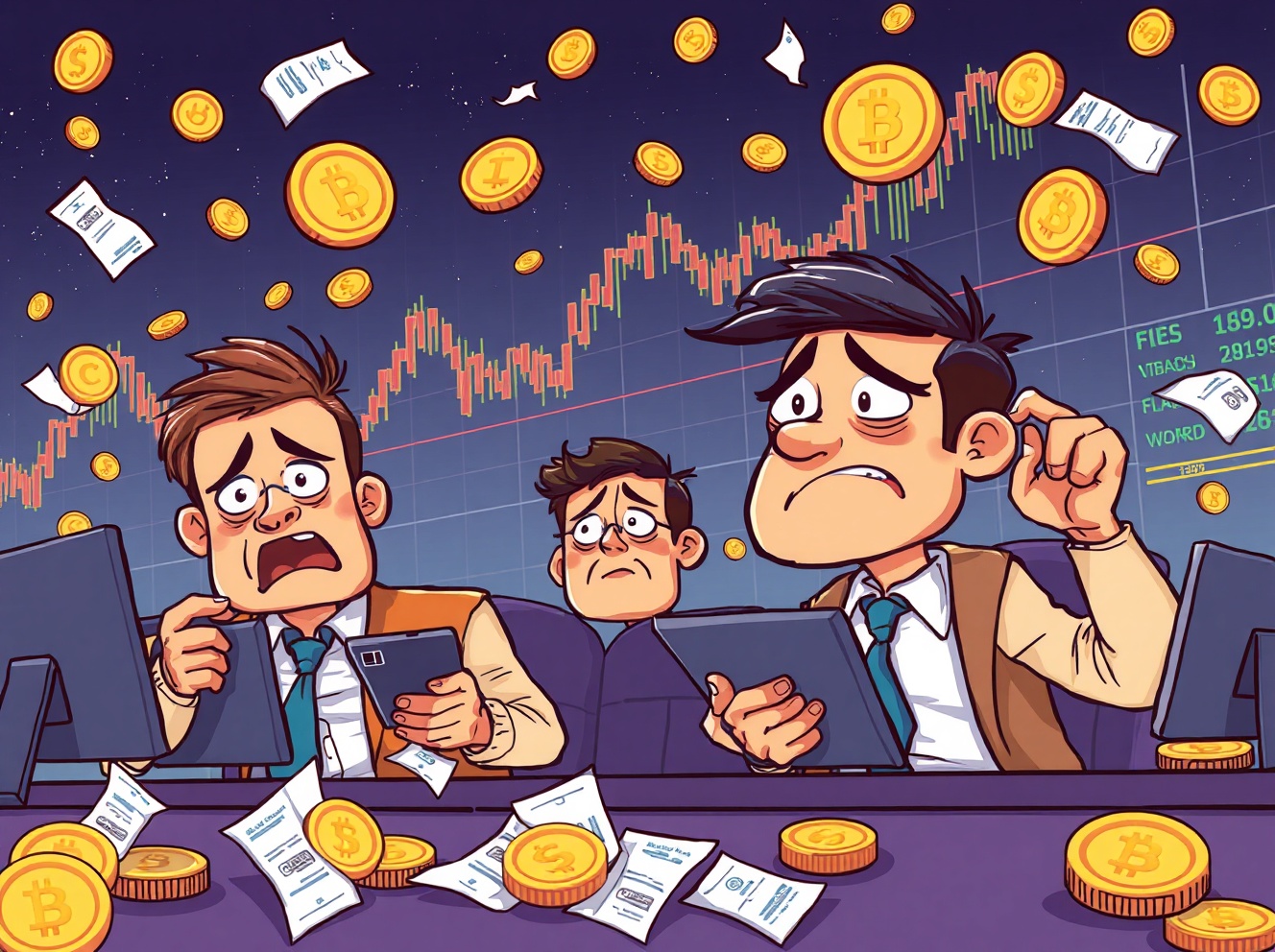
Massive Crypto Futures Liquidation: $183 Million Vanishes in an Hour

The cryptocurrency market recently witnessed a dramatic event, with a staggering $183 million worth of crypto futures liquidation occurring in just a single hour. This sudden downturn caught many traders off guard, highlighting the inherent volatility of digital asset markets. Over the past 24 hours, the total liquidated value soared to an astonishing $390 million, leaving a significant impact on trading positions across major exchanges. What exactly does this mean for traders and the broader market?

What Exactly is Crypto Futures Liquidation?

For those new to futures trading, understanding crypto futures liquidation is crucial. Essentially, it happens when a trader’s leveraged position is forcibly closed by an exchange. This occurs because the trader no longer has sufficient margin to cover potential losses. When market prices move sharply against a trader’s position, their margin balance can fall below the maintenance margin level. To prevent further losses and maintain market stability, the exchange automatically liquidates the position.

Imagine you are trading with borrowed funds, also known as leverage. While leverage can amplify profits, it also significantly magnifies potential losses. If the market shifts unfavorably, even slightly, your initial capital (margin) might not be enough to sustain the position.

  • Leverage Amplifies Risk: Using leverage means you’re trading with more capital than you actually own, increasing both potential gains and losses.
  • Margin Call Precursor: Before liquidation, traders might face a margin call, requesting additional funds. Failure to meet this often leads to forced closure.
  • Market Volatility is Key: The highly volatile nature of cryptocurrencies means prices can swing dramatically in short periods, making futures positions particularly susceptible to liquidation.

Why Did Such a Massive Liquidation Event Occur?

The recent $183 million crypto futures liquidation didn’t happen in a vacuum. Such large-scale events are typically triggered by a confluence of factors, often beginning with a significant price movement in a major cryptocurrency like Bitcoin or Ethereum. A sudden dip or surge can cascade through the market, especially when many traders hold highly leveraged positions in the same direction.

Several elements contribute to these sudden market shifts and subsequent liquidations. Understanding these can provide valuable insights into market dynamics and help traders prepare for future volatility.

  • Sudden Price Swings: A rapid, unexpected price drop or pump can quickly erode a trader’s margin, especially for highly leveraged positions.
  • Over-Leveraged Positions: Many traders might have been overly optimistic or aggressive with their leverage, making their positions fragile and vulnerable to even small price movements.
  • Market Sentiment Shift: Negative news, regulatory concerns, or broader economic trends can quickly shift market sentiment, leading to widespread selling pressure and price depreciation.
  • Stop-Loss Hunting: Sometimes, large market players might strategically push prices to trigger stop-loss orders and liquidations, creating further downward (or upward) momentum.

How Can Traders Navigate the Risks of Crypto Futures Liquidation?

While the recent crypto futures liquidation event serves as a stark reminder of market risks, traders can adopt several strategies to protect themselves. Prudent risk management is not just a recommendation; it is an absolute necessity in futures trading. Protecting your capital should always be your top priority.

Here are some actionable insights to help you navigate these turbulent waters:

  • Manage Leverage Wisely: Avoid excessively high leverage. Start with lower leverage ratios until you gain sufficient experience and confidence in your trading strategy.
  • Implement Stop-Loss Orders: Always set stop-loss orders to automatically close your position if the price moves beyond a predetermined threshold. This limits potential losses and prevents catastrophic outcomes.
  • Diversify Your Portfolio: Do not put all your capital into one trade or one asset. Diversification across different assets and strategies can help spread risk and reduce exposure.
  • Monitor Market News: Stay informed about global economic news, regulatory updates, and cryptocurrency-specific developments that could impact prices. Knowledge is power in volatile markets.
  • Understand Margin Requirements: Always be aware of your initial and maintenance margin requirements. Keep sufficient funds in your account to avoid margin calls and potential liquidation.
  • Practice Emotional Discipline: Avoid impulsive decisions driven by fear or greed. Stick to your trading plan and pre-defined risk parameters, even when the market is chaotic.

The recent $183 million crypto futures liquidation underscores the dynamic and often unpredictable nature of the cryptocurrency market. While futures trading offers exciting opportunities for profit, it comes with significant risks, particularly due to leverage and market volatility. By understanding the mechanics of liquidation and implementing robust risk management strategies, traders can better navigate these turbulent waters. Stay informed, trade responsibly, and prioritize the preservation of your capital to ensure long-term success in the crypto space.

Frequently Asked Questions (FAQs)

1. What is crypto futures liquidation?

Crypto futures liquidation occurs when an exchange forcibly closes a trader’s leveraged position because their margin balance has fallen below the required maintenance level, typically due to adverse price movements against their trade.

2. Why did $183 million worth of futures get liquidated recently?

This massive liquidation was likely triggered by significant and rapid price movements in major cryptocurrencies, combined with a high number of traders holding overly leveraged positions that could not withstand the sudden market shift.

3. How can I avoid liquidation in futures trading?

To avoid liquidation, traders should use lower leverage, always set stop-loss orders, maintain sufficient margin, diversify their portfolio, and stay informed about market news to make prudent trading decisions.

4. Is crypto futures trading too risky?

Crypto futures trading is inherently risky due to market volatility and the use of leverage. However, with proper risk management, education, and emotional discipline, traders can mitigate some of these risks.

5. What role does leverage play in liquidation?

Leverage significantly amplifies both potential profits and losses. While it allows traders to control larger positions with less capital, it also makes positions more susceptible to liquidation if market prices move unfavorably, as the margin required to maintain the position becomes insufficient more quickly.

If you found this article insightful and believe it can help other traders understand the complexities of crypto futures liquidation, please consider sharing it on your social media platforms. Your support helps us continue providing valuable market insights and educational content to the crypto community!

To learn more about the latest crypto market trends, explore our article on key developments shaping Bitcoin price action.

This post Massive Crypto Futures Liquidation: $183 Million Vanishes in an Hour first appeared on BitcoinWorld.


Market Opportunity
LETSTOP Logo
LETSTOP Price(STOP)
$0.01678
$0.01678$0.01678
+0.65%
USD
LETSTOP (STOP) Live Price Chart
Disclaimer: The articles reposted on this site are sourced from public platforms and are provided for informational purposes only. They do not necessarily reflect the views of MEXC. All rights remain with the original authors. If you believe any content infringes on third-party rights, please contact service@support.mexc.com for removal. MEXC makes no guarantees regarding the accuracy, completeness, or timeliness of the content and is not responsible for any actions taken based on the information provided. The content does not constitute financial, legal, or other professional advice, nor should it be considered a recommendation or endorsement by MEXC.

You May Also Like

Top 4 Tokens Turning IP Rights Into Investable Assets

Top 4 Tokens Turning IP Rights Into Investable Assets

IP tokenization opens royalties to investors as BeatSwap, Audius, Story Protocol, and Opulous turn music and media rights into on-chain, income-backed assets.
Share
Blockchainreporter2026/01/21 17:45
Fed Decides On Interest Rates Today—Here’s What To Watch For

Fed Decides On Interest Rates Today—Here’s What To Watch For

The post Fed Decides On Interest Rates Today—Here’s What To Watch For appeared on BitcoinEthereumNews.com. Topline The Federal Reserve on Wednesday will conclude a two-day policymaking meeting and release a decision on whether to lower interest rates—following months of pressure and criticism from President Donald Trump—and potentially signal whether additional cuts are on the way. President Donald Trump has urged the central bank to “CUT INTEREST RATES, NOW, AND BIGGER” than they might plan to. Getty Images Key Facts The central bank is poised to cut interest rates by at least a quarter-point, down from the 4.25% to 4.5% range where they have been held since December to between 4% and 4.25%, as Wall Street has placed 100% odds of a rate cut, according to CME’s FedWatch, with higher odds (94%) on a quarter-point cut than a half-point (6%) reduction. Fed governors Christopher Waller and Michelle Bowman, both Trump appointees, voted in July for a quarter-point reduction to rates, and they may dissent again in favor of a large cut alongside Stephen Miran, Trump’s Council of Economic Advisers’ chair, who was sworn in at the meeting’s start on Tuesday. It’s unclear whether other policymakers, including Kansas City Fed President Jeffrey Schmid and St. Louis Fed President Alberto Musalem, will favor larger cuts or opt for no reduction. Fed Chair Jerome Powell said in his Jackson Hole, Wyoming, address last month the central bank would likely consider a looser monetary policy, noting the “shifting balance of risks” on the U.S. economy “may warrant adjusting our policy stance.” David Mericle, an economist for Goldman Sachs, wrote in a note the “key question” for the Fed’s meeting is whether policymakers signal “this is likely the first in a series of consecutive cuts” as the central bank is anticipated to “acknowledge the softening in the labor market,” though they may not “nod to an October cut.” Mericle said he…
Share
BitcoinEthereumNews2025/09/18 00:23
‘Anti-Innovation’: Experts Slam Nigeria’s ‘Disproportionate’ Capital Requirements for Crypto Firms

‘Anti-Innovation’: Experts Slam Nigeria’s ‘Disproportionate’ Capital Requirements for Crypto Firms

The post ‘Anti-Innovation’: Experts Slam Nigeria’s ‘Disproportionate’ Capital Requirements for Crypto Firms appeared on BitcoinEthereumNews.com. The Nigerian SEC
Share
BitcoinEthereumNews2026/01/21 17:34