By Dylan Bane Compiled by: TechFlow The application of prediction markets has expanded beyond elections, demonstrating proof-of-market fit (PMF). Betting volumes are surging, investors are flocking in, and new approaches, from information perps to Telegram bots, are entering the market. So, what methods actually work and maximize the growth of trading volume? The 2024 election caused Polymarket’s trading volume to surge from $62 million in May to $2.1 billion in October, a 3,268% increase. Mainstream media outlets like CNN and Bloomberg cited Polymarket's odds in their live broadcasts, presenting them alongside traditional polling data. In fact, prediction markets ultimately beat opinion polls in predicting election outcomes. After the election, prediction market trading volume declined but remained stable at over $1 billion per month. Combined with Kalshi’s recent surge in trading volume, investors believe that the prediction market has validated demand and is primed for further growth. About 90% of the funds are concentrated in two platforms, Polymarket and Kalshi, with valuations approaching tens of digits (i.e. billions of US dollars). These industry leaders have already built liquidity and are now focused on expanding trading volumes and strengthening market defensibility as larger exchanges like Hyperliquid and Coinbase are eyeing this space. However, with over 100 prediction market projects and growing, there are a lot of opportunities. The question is, how should investors identify the best opportunities in this increasingly complex and noisy landscape? We believe that the best way to solve liquidity issues and increase trading volume is to attract retail speculators. Prediction markets can attract this segment by focusing on accessibility, fun, user experience, and high potential financial gains. Continuous flow of information perpetual contracts Because perpetual contracts fluctuate continuously, they overcome the slow settlement times that often deter speculators in binary outcome markets. Such perpetual contracts can also track interesting and well-understood topics for which there are currently no existing markets. Front-end platform Rather than building native liquidity, startups can source supply from existing industry leaders and provide users with a higher-quality trading experience. For example, Flipr offers a trading terminal, trading bots on the X platform, and up to 10x leverage using existing liquidity. Social Apps Gamified apps or social experiences can make forecasting more fun. Just as sports betting is an inherently social experience, prediction markets can foster a similarly interactive experience. In the early stages of prediction market adoption, the design space is very broad. Basket trading, managed indices, celebrity copy trading, parlays, and more are all worth exploring.By Dylan Bane Compiled by: TechFlow The application of prediction markets has expanded beyond elections, demonstrating proof-of-market fit (PMF). Betting volumes are surging, investors are flocking in, and new approaches, from information perps to Telegram bots, are entering the market. So, what methods actually work and maximize the growth of trading volume? The 2024 election caused Polymarket’s trading volume to surge from $62 million in May to $2.1 billion in October, a 3,268% increase. Mainstream media outlets like CNN and Bloomberg cited Polymarket's odds in their live broadcasts, presenting them alongside traditional polling data. In fact, prediction markets ultimately beat opinion polls in predicting election outcomes. After the election, prediction market trading volume declined but remained stable at over $1 billion per month. Combined with Kalshi’s recent surge in trading volume, investors believe that the prediction market has validated demand and is primed for further growth. About 90% of the funds are concentrated in two platforms, Polymarket and Kalshi, with valuations approaching tens of digits (i.e. billions of US dollars). These industry leaders have already built liquidity and are now focused on expanding trading volumes and strengthening market defensibility as larger exchanges like Hyperliquid and Coinbase are eyeing this space. However, with over 100 prediction market projects and growing, there are a lot of opportunities. The question is, how should investors identify the best opportunities in this increasingly complex and noisy landscape? We believe that the best way to solve liquidity issues and increase trading volume is to attract retail speculators. Prediction markets can attract this segment by focusing on accessibility, fun, user experience, and high potential financial gains. Continuous flow of information perpetual contracts Because perpetual contracts fluctuate continuously, they overcome the slow settlement times that often deter speculators in binary outcome markets. Such perpetual contracts can also track interesting and well-understood topics for which there are currently no existing markets. Front-end platform Rather than building native liquidity, startups can source supply from existing industry leaders and provide users with a higher-quality trading experience. For example, Flipr offers a trading terminal, trading bots on the X platform, and up to 10x leverage using existing liquidity. Social Apps Gamified apps or social experiences can make forecasting more fun. Just as sports betting is an inherently social experience, prediction markets can foster a similarly interactive experience. In the early stages of prediction market adoption, the design space is very broad. Basket trading, managed indices, celebrity copy trading, parlays, and more are all worth exploring.
Messari Research Report: What’s missing for the prediction market to truly explode?

2025/09/22 19:00

By Dylan Bane

Compiled by: TechFlow

The application of prediction markets has expanded beyond elections, demonstrating proof-of-market fit (PMF).

Betting volumes are surging, investors are flocking in, and new approaches, from information perps to Telegram bots, are entering the market.

So, what methods actually work and maximize the growth of trading volume?

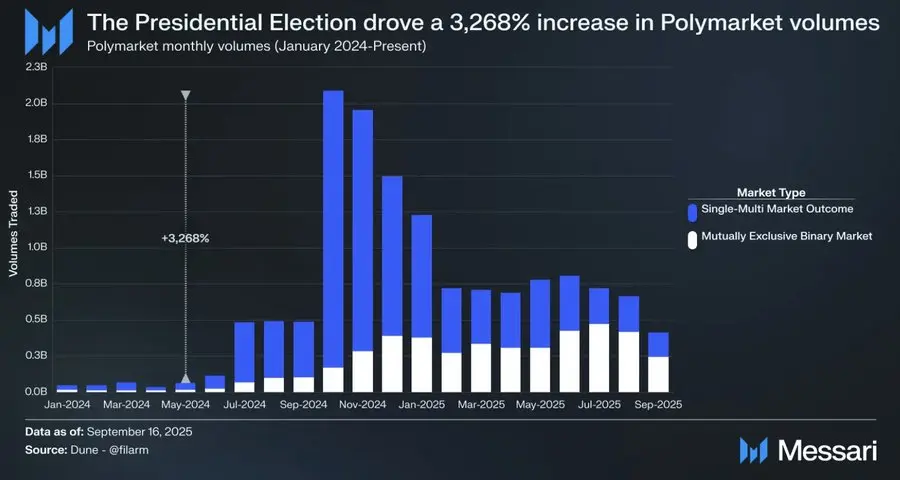
The 2024 election caused Polymarket’s trading volume to surge from $62 million in May to $2.1 billion in October, a 3,268% increase.

Mainstream media outlets like CNN and Bloomberg cited Polymarket's odds in their live broadcasts, presenting them alongside traditional polling data.

In fact, prediction markets ultimately beat opinion polls in predicting election outcomes.

After the election, prediction market trading volume declined but remained stable at over $1 billion per month.

Combined with Kalshi’s recent surge in trading volume, investors believe that the prediction market has validated demand and is primed for further growth.
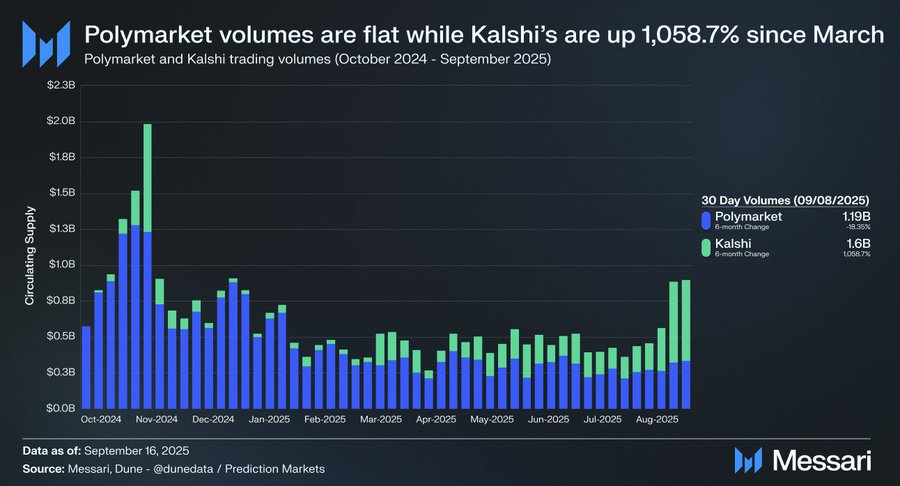
About 90% of the funds are concentrated in two platforms, Polymarket and Kalshi, with valuations approaching tens of digits (i.e. billions of US dollars).

These industry leaders have already built liquidity and are now focused on expanding trading volumes and strengthening market defensibility as larger exchanges like Hyperliquid and Coinbase are eyeing this space.
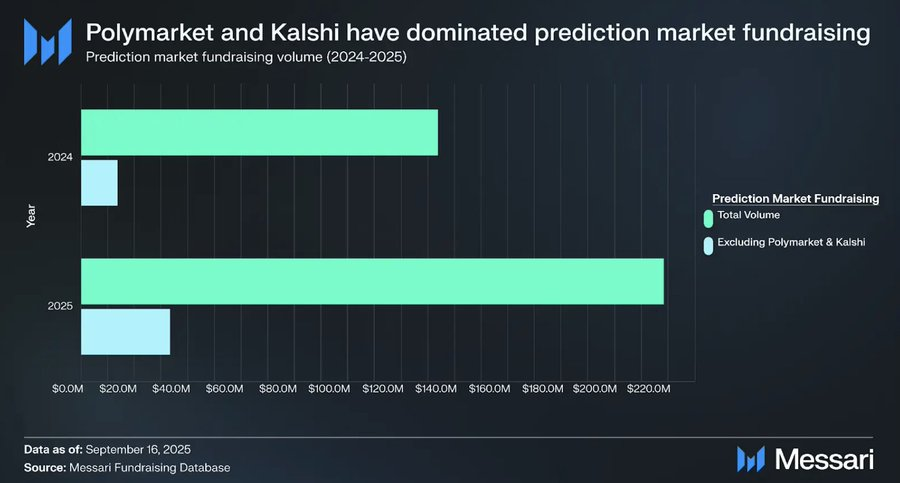
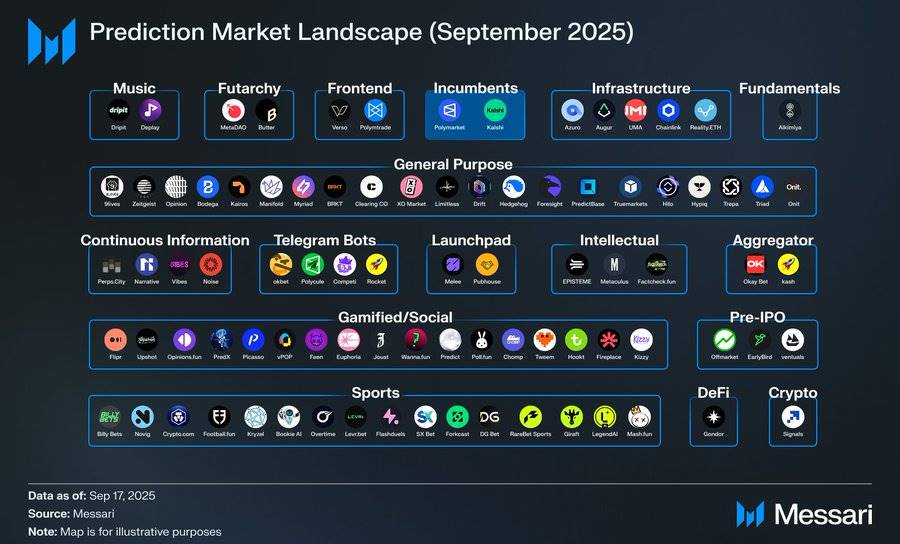
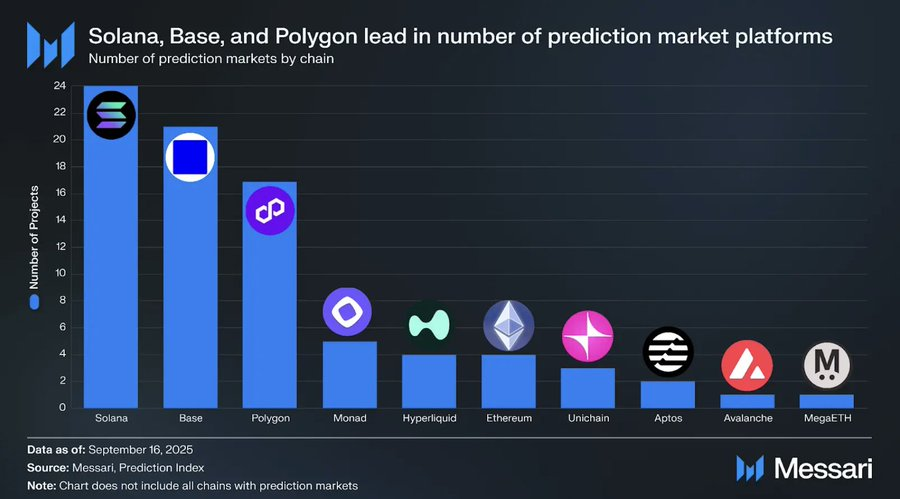
However, with over 100 prediction market projects and growing, there are a lot of opportunities.

The question is, how should investors identify the best opportunities in this increasingly complex and noisy landscape?
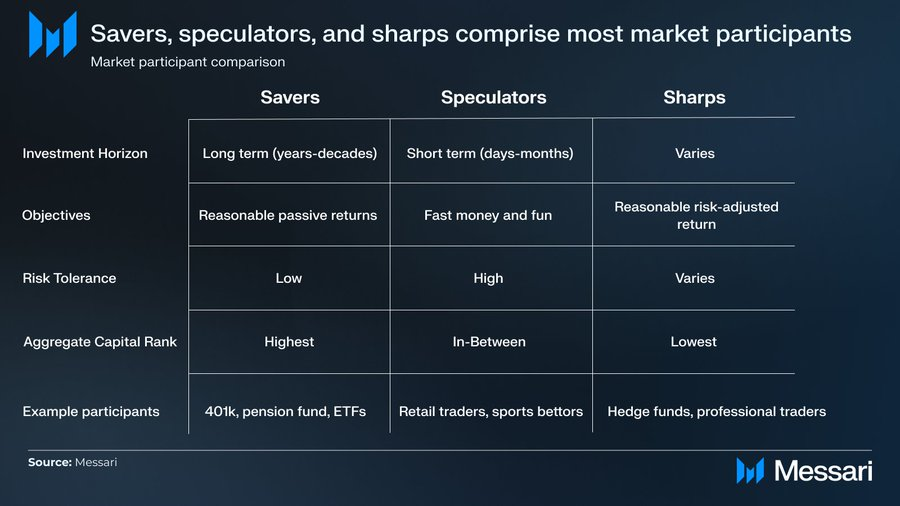
We believe that the best way to solve liquidity issues and increase trading volume is to attract retail speculators.

Prediction markets can attract this segment by focusing on accessibility, fun, user experience, and high potential financial gains.
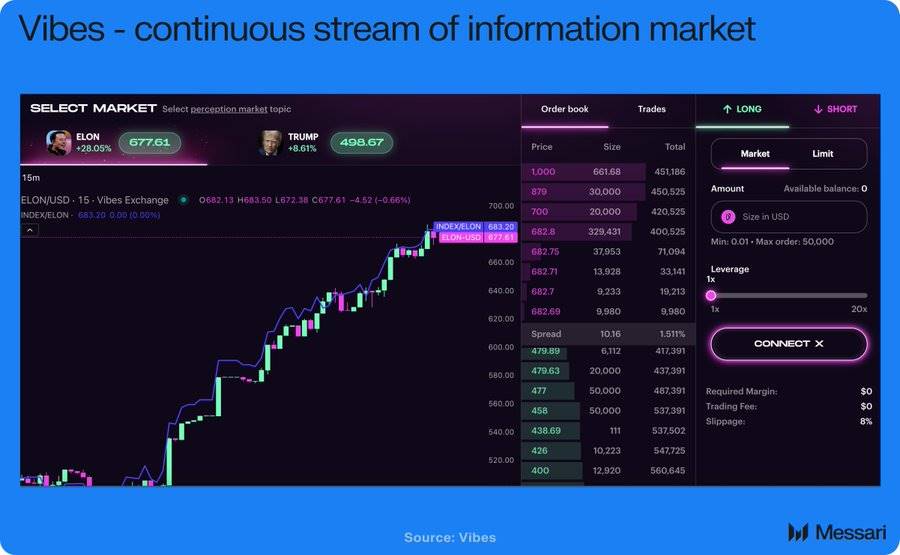
Continuous flow of information perpetual contracts

Because perpetual contracts fluctuate continuously, they overcome the slow settlement times that often deter speculators in binary outcome markets.

Such perpetual contracts can also track interesting and well-understood topics for which there are currently no existing markets.
Front-end platform

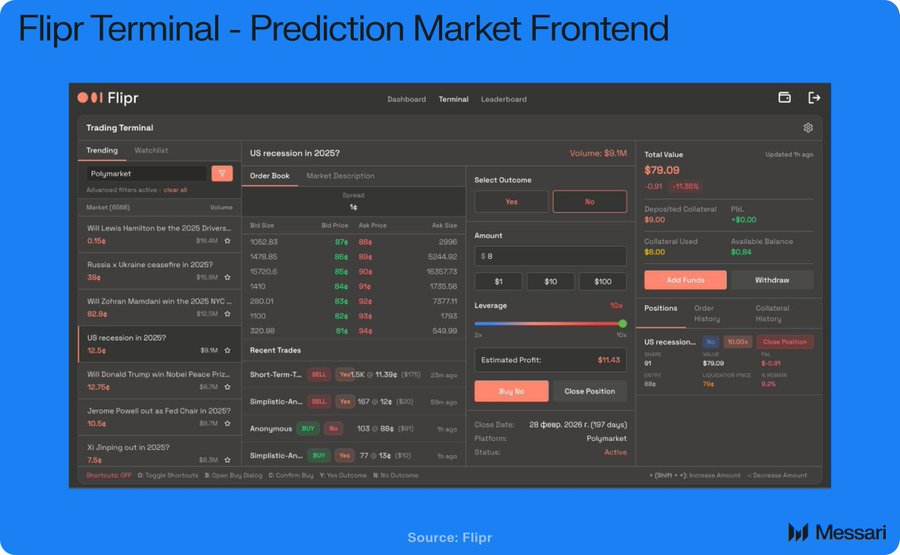
Rather than building native liquidity, startups can source supply from existing industry leaders and provide users with a higher-quality trading experience.

For example, Flipr offers a trading terminal, trading bots on the X platform, and up to 10x leverage using existing liquidity.
Social Apps

Gamified apps or social experiences can make forecasting more fun.

Just as sports betting is an inherently social experience, prediction markets can foster a similarly interactive experience.

In the early stages of prediction market adoption, the design space is very broad.

Basket trading, managed indices, celebrity copy trading, parlays, and more are all worth exploring.

Market Opportunity
1 Logo
1 Price(1)
$0.004984
$0.004984$0.004984
+3.14%
USD
1 (1) Live Price Chart
Disclaimer: The articles reposted on this site are sourced from public platforms and are provided for informational purposes only. They do not necessarily reflect the views of MEXC. All rights remain with the original authors. If you believe any content infringes on third-party rights, please contact service@support.mexc.com for removal. MEXC makes no guarantees regarding the accuracy, completeness, or timeliness of the content and is not responsible for any actions taken based on the information provided. The content does not constitute financial, legal, or other professional advice, nor should it be considered a recommendation or endorsement by MEXC.

You May Also Like

China Blocks Nvidia’s RTX Pro 6000D as Local Chips Rise

China Blocks Nvidia’s RTX Pro 6000D as Local Chips Rise

The post China Blocks Nvidia’s RTX Pro 6000D as Local Chips Rise appeared on BitcoinEthereumNews.com. China Blocks Nvidia’s RTX Pro 6000D as Local Chips Rise China’s internet regulator has ordered the country’s biggest technology firms, including Alibaba and ByteDance, to stop purchasing Nvidia’s RTX Pro 6000D GPUs. According to the Financial Times, the move shuts down the last major channel for mass supplies of American chips to the Chinese market. Why Beijing Halted Nvidia Purchases Chinese companies had planned to buy tens of thousands of RTX Pro 6000D accelerators and had already begun testing them in servers. But regulators intervened, halting the purchases and signaling stricter controls than earlier measures placed on Nvidia’s H20 chip. Image: Nvidia An audit compared Huawei and Cambricon processors, along with chips developed by Alibaba and Baidu, against Nvidia’s export-approved products. Regulators concluded that Chinese chips had reached performance levels comparable to the restricted U.S. models. This assessment pushed authorities to advise firms to rely more heavily on domestic processors, further tightening Nvidia’s already limited position in China. China’s Drive Toward Tech Independence The decision highlights Beijing’s focus on import substitution — developing self-sufficient chip production to reduce reliance on U.S. supplies. “The signal is now clear: all attention is focused on building a domestic ecosystem,” said a representative of a leading Chinese tech company. Nvidia had unveiled the RTX Pro 6000D in July 2025 during CEO Jensen Huang’s visit to Beijing, in an attempt to keep a foothold in China after Washington restricted exports of its most advanced chips. But momentum is shifting. Industry sources told the Financial Times that Chinese manufacturers plan to triple AI chip production next year to meet growing demand. They believe “domestic supply will now be sufficient without Nvidia.” What It Means for the Future With Huawei, Cambricon, Alibaba, and Baidu stepping up, China is positioning itself for long-term technological independence. Nvidia, meanwhile, faces…
Share
BitcoinEthereumNews2025/09/18 01:37
Gold continues to hit new highs. How to invest in gold in the crypto market?

Gold continues to hit new highs. How to invest in gold in the crypto market?

As Bitcoin encounters a "value winter", real-world gold is recasting the iron curtain of value on the blockchain.
Share
PANews2025/04/14 17:12
USDC Treasury mints 250 million new USDC on Solana

USDC Treasury mints 250 million new USDC on Solana

PANews reported on September 17 that according to Whale Alert , at 23:48 Beijing time, USDC Treasury minted 250 million new USDC (approximately US$250 million) on the Solana blockchain .
Share
PANews2025/09/17 23:51