Bitcoin vs. Ethereum: One Is Safer, But Which One Makes You More Money?
TLDR
- Bitcoin has a market cap of ~$1.56 trillion vs. Ethereum’s ~$281.8 billion, giving ETH more room to grow
- Bitcoin remains the safer, more institutional-friendly crypto with a fixed 21 million coin supply
- Ethereum holds ~$166.7 billion in stablecoins and powers DeFi, tokenization, and onchain finance
- Ethereum’s Pectra upgrade doubled blob throughput and improved staking efficiency
- Citigroup lowered 12-month price targets for both assets, flagging Ethereum’s weakness in user activity
Bitcoin holds the top spot in crypto by a wide margin. But when it comes to upside over the next five years, Ethereum makes a strong case.
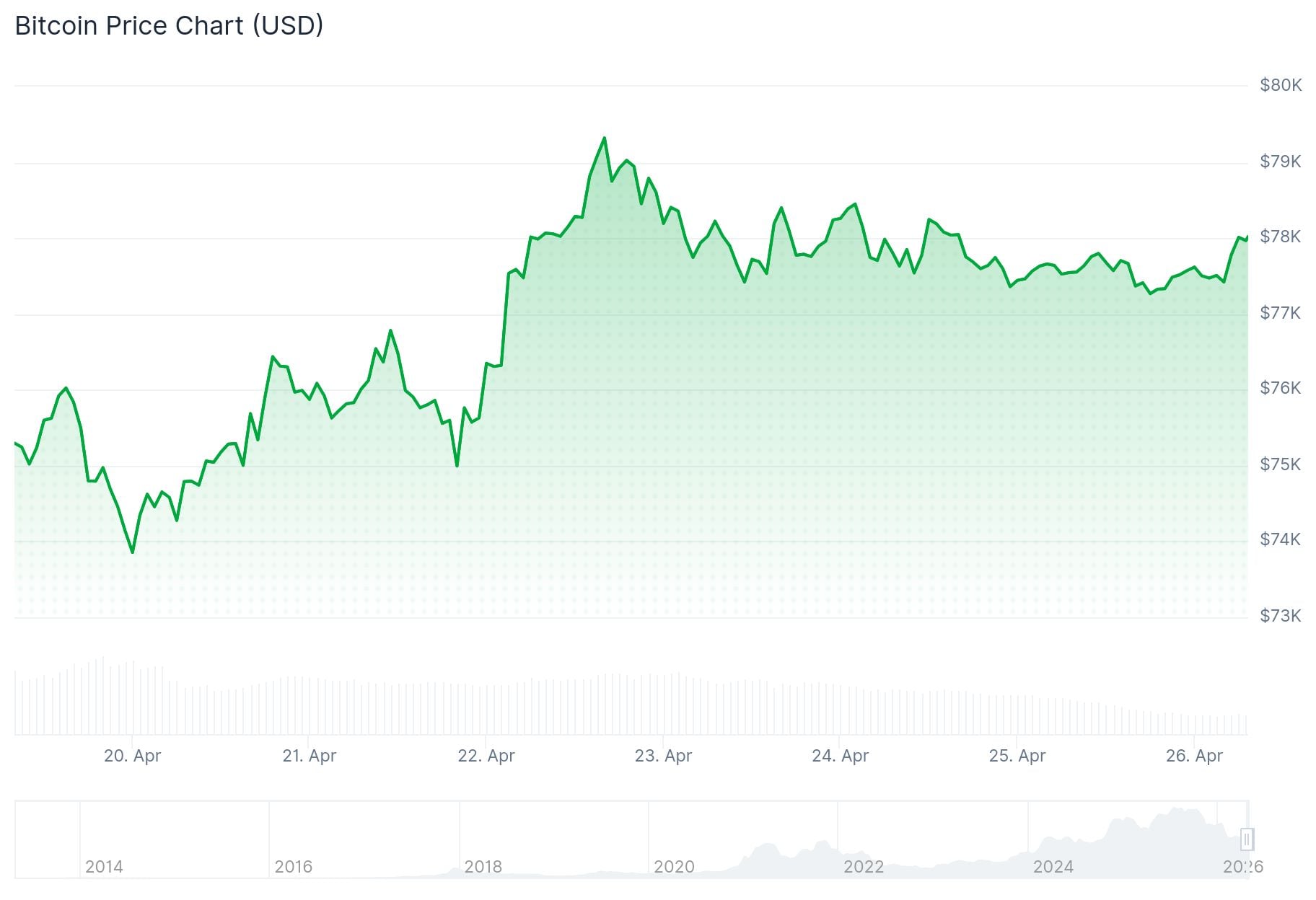 Bitcoin (BTC) Price
Bitcoin’s market cap sits at roughly $1.56 trillion, according to CoinGecko. Ethereum’s is around $281.8 billion. That gap is large, and it matters for future returns.
A smaller asset needs far less new capital to move the price. That simple math gives Ethereum an edge when thinking about percentage gains from here.
Bitcoin’s investment case is still very strong. Its supply is capped at 21 million coins. That fixed scarcity is the core of its long-term bull thesis.
Spot ETF inflows have picked up again in recent months. Large companies continue to add Bitcoin to their balance sheets. Both factors have helped keep Bitcoin near the top of its recent trading range.
These are the reasons Bitcoin is still the safer crypto to hold. It has the clearest story and the widest base of institutional support.
Ethereum’s Case Rests on Network Demand
Ethereum works differently. Its value comes less from scarcity and more from what the network does.
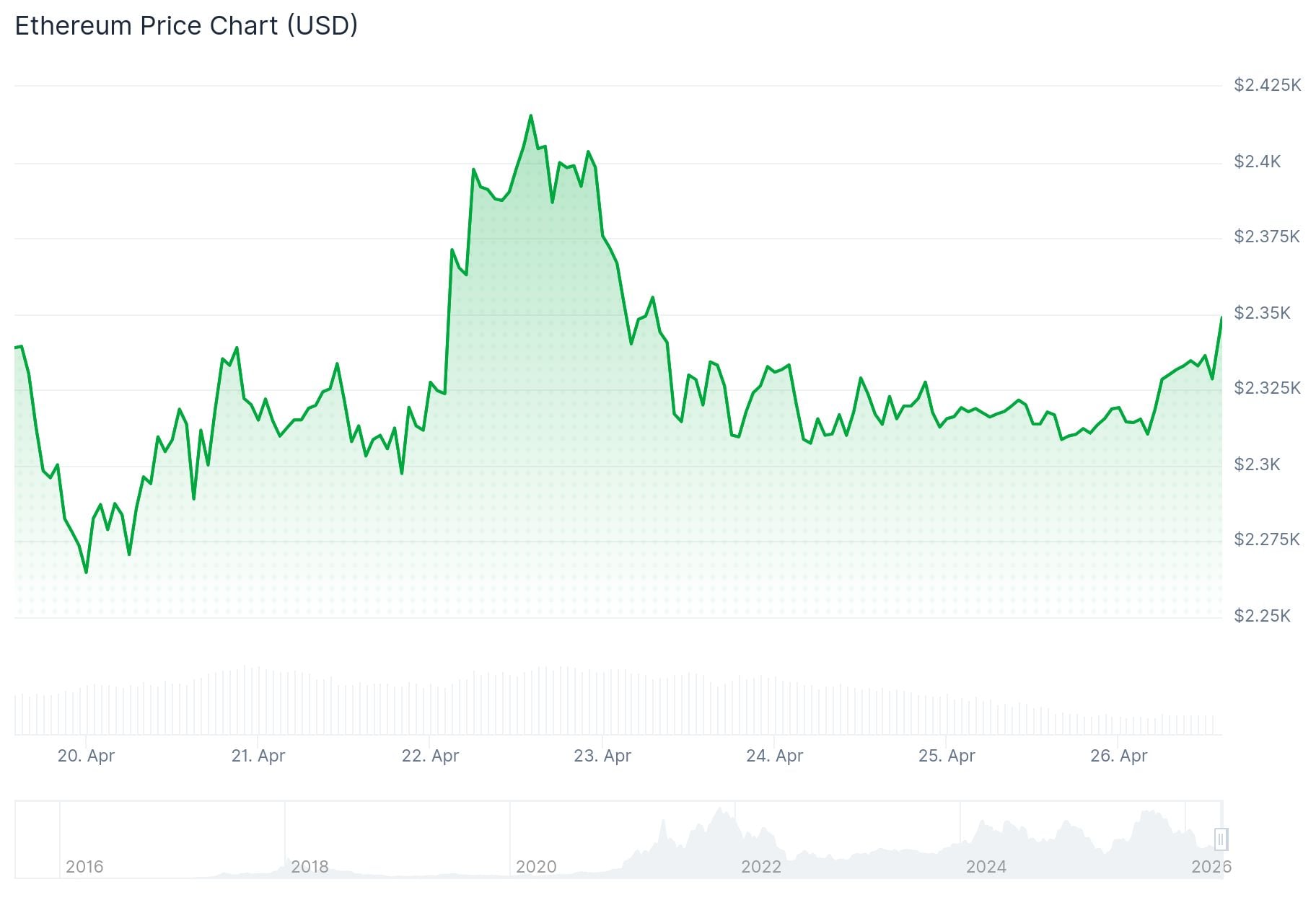 Ethereum (ETH) Price
DefiLlama data shows Ethereum hosts around $166.7 billion in stablecoins. That makes it the center of onchain dollar activity and crypto settlement.
Stablecoins, tokenization, and DeFi are still some of the fastest-growing areas in digital assets. If that growth continues, Ethereum is one of the main places where value builds up over time.
The Ethereum protocol is also being updated. Ethereum.org lists Pectra and Fusaka as already in production, with Glamsterdam and Hegotá in development next.
The Ethereum Foundation said Pectra doubled blob throughput, raised the maximum effective validator balance, and cut validator onboarding times.
Those changes improve scaling and staking efficiency. That can attract more users and more capital to the network.
Risks Are Real for Ethereum
Ethereum’s upside comes with more risk. Reuters reported in March that Citigroup cut its 12-month price targets for both Bitcoin and Ethereum.
Citigroup specifically pointed to weak user activity as a risk for Ethereum. That is the key challenge. Ethereum needs its broader application economy to keep growing. Bitcoin does not.
Final Thoughts
Over a five-year horizon, Ethereum offers more ways to win. It can grow through stablecoins, DeFi, tokenization, staking, and future upgrades, all from a much lower starting valuation.
Bitcoin can keep winning as digital gold, treasury collateral, and an ETF-driven institutional asset.
Both have a path forward. But Ethereum has more of them.
Citigroup’s decision to lower targets for both assets serves as the most recent institutional signal that near-term caution is warranted for both Bitcoin and Ethereum
The post Bitcoin vs. Ethereum: One Is Safer, But Which One Makes You More Money? appeared first on CoinCentral.


You May Also Like

Benchmark Reaffirms MicroStrategy Buy Rating, Sees 515% Upside Potential

Pipes Power and Processing