

INSIGHTS | Why South Africa is Re-Writing Decades-Old Money Rules
South Africa is betting that rewriting decades-old money rules could unlock one of the biggest investment opportunities in emerging markets.
The country is planning its most significant financial reform in decades, aimed at attracting global capital, strengthening Johannesburg’s position as Africa’s leading financial hub, and making it easier for international investors to deploy funds into its economy.
According to the Johannesburg Stock Exchange (JSE), the proposed changes could unlock as much as 10 trillion rand (about $607 billion) in investment over time, a potentially major boost for an economy that has struggled with weak growth, power shortages, and logistics challenges in recent years.
At the core of the plan is a sweeping overhaul of capital flow regulations. The reforms would replace exchange control laws dating back to 1961, with some provisions rooted as far back as the 1930s – rules originally designed for an era when governments tightly controlled currency movements and protected domestic reserves.
Speaking to Reuters, Vukile Davidson, deputy director-general for financial policy at National Treasury, said:
“At the time, exchange control was principally used to deal with a wide range of issues beyond just capital flows management.”
South Africa’s National Treasury has already published draft Capital Flow Management Regulations for public comment, marking one of the most significant shifts in financial policy since the dismantling of apartheid-era controls.
The proposals include allowing foreign-currency funds to operate locally instead of offshore, a move that could bring capital and asset management activity back into the country.
For investors, this signals a more accommodating stance from a country whose markets already dominate much of sub-Saharan Africa. South Africa hosts the continent’s largest stock exchange, one of its deepest bond markets, and highly developed banking and legal systems.
The reforms would also, for the first time, formally incorporate crypto assets into the capital controls framework. Large crypto transactions would likely be required to pass through approved intermediaries while substantial holdings and transfers could be subject to disclosure requirements.
The timing is important as South Africa is one of Africa’s leading crypto markets. This coincides with the need for global investors search for yield outside developed markets amidst geopolitical tensions and shifting supply chains that are ultimately restructuring capital flows.
Currently, funds that raise or report in dollars or euros must be domiciled offshore despite investment decisions being made in Johannesburg. This decision has helped financial hubs like
- Mauritius
- Dubai
- Nairobi
- Kigali
attract firms, skills, and tax revenue from South Africa.
Overall, the reform effort reflects a broader push by the government to
- modernize its financial system,
- attract long-term investment, and
- better position South Africa
in an increasingly competitive global capital market.
Stay tuned to BitKE for updates into financial and crypto regulation in Africa.
Join our WhatsApp channel here.
Follow us on X for the latest posts and updates
Join and interact with our Telegram community
_________________________________________


You May Also Like
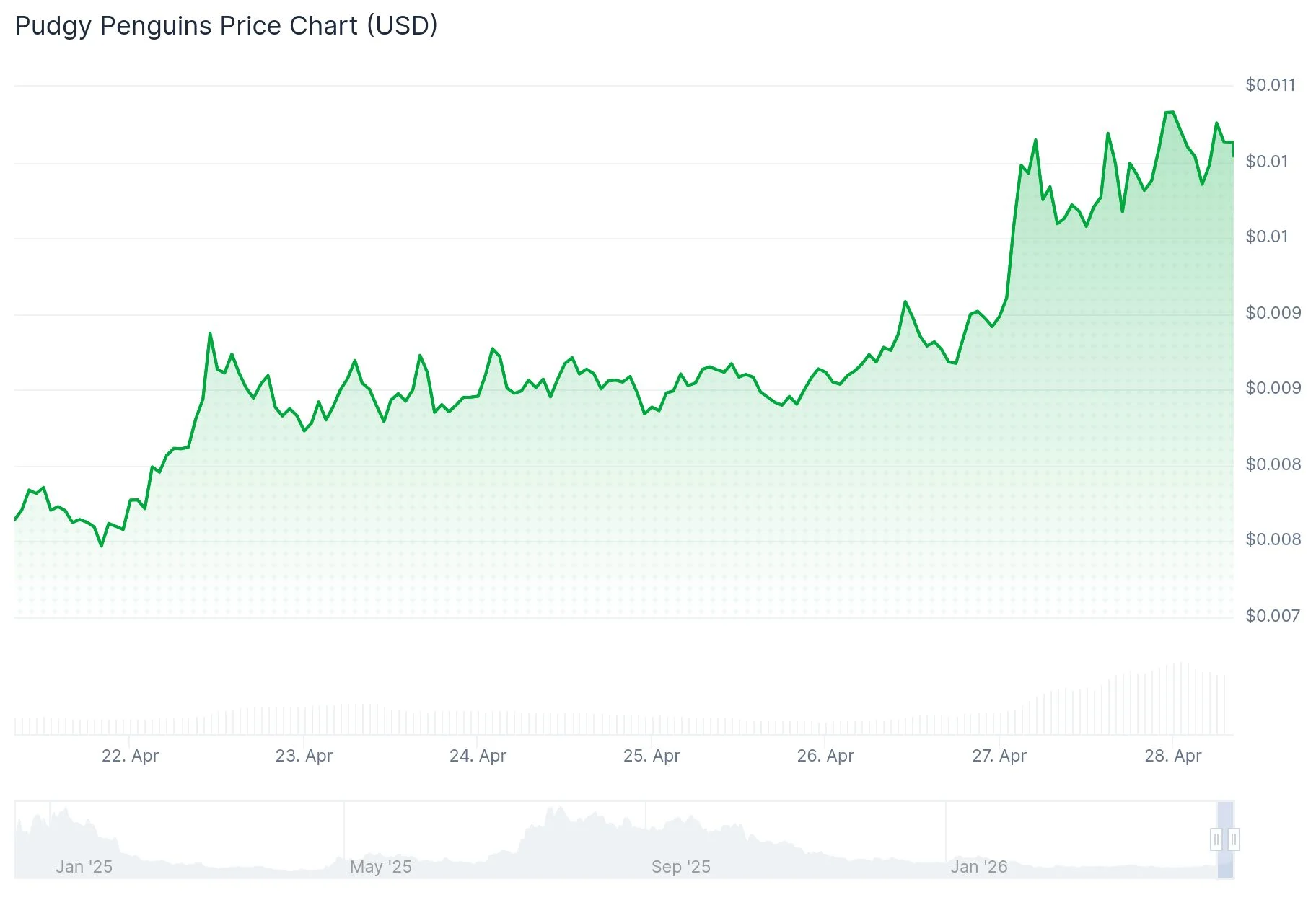
Pudgy Penguins (PENGU) Hits 3-Month Peak Amid NFT Token Revival

XRP Breakout Setup Faces Heavy Supply Test




