BitcoinWorld Crucial Base Layer 2: Vitalik Buterin Hails Coinbase’s Network as Ethereum-Aligned In the fast-evolving world of cryptocurrency, few voices carry as much weight as Ethereum founder Vitalik Buterin. His recent endorsement of Coinbase’s Base Layer 2 network has sparked considerable interest, signaling a significant vote of confidence. Buterin views Base not just as another scaling solution, but as a Layer 2 built “in the right way,” perfectly aligning with Ethereum’s core philosophy. This perspective offers crucial insights into the future of decentralized applications and how they can achieve mainstream adoption while maintaining foundational security. Why is Base Layer 2 ‘Built the Right Way’? Vitalik Buterin’s praise for Base stems from its unique design philosophy. He highlighted that while Base incorporates centralized features to enhance user experience, its fundamental security architecture remains firmly rooted in Ethereum’s robust, decentralized base layer. This distinction is vital for understanding why Base stands out. Buterin emphasized that Base does not directly hold user funds. This non-custodial approach means that, unlike some centralized platforms, Base cannot unilaterally seize assets or block withdrawals. Such a design choice significantly bolsters trust and security, reassuring users that their digital assets remain under their control, even when interacting with a faster, more user-friendly Layer 2 solution. Balancing User Experience with Decentralized Security One of the persistent challenges in blockchain technology has been the trade-off between scalability, user experience, and decentralization. Many solutions often sacrifice one for the others. However, Buterin sees Base Layer 2 as a compelling example of finding a harmonious balance. Enhanced User Experience: Base leverages certain centralized aspects to deliver a smoother, faster, and more intuitive experience for users and developers. This can include faster transaction finality and lower fees, which are critical for mass adoption. Ethereum’s Security Backbone: Crucially, these centralized elements do not compromise the underlying security. Base’s security guarantees are inherited directly from Ethereum. This means that even if parts of Base were to face issues, the integrity of user funds and transactions is ultimately protected by Ethereum’s battle-tested blockchain. Non-Custodial Design: As Buterin pointed out, the inability of Base to seize funds or block withdrawals is a cornerstone of its “right way” design. This principle is fundamental to the ethos of decentralization, ensuring users retain sovereignty over their assets. Understanding Ethereum’s Layer 2 Philosophy Ethereum’s long-term vision for scalability heavily relies on Layer 2 solutions. These networks process transactions off the main Ethereum chain, bundling them together and then submitting a compressed proof or summary back to the mainnet. This approach dramatically increases transaction throughput and reduces costs without burdening the core blockchain. Buterin’s endorsement of Base Layer 2 reinforces the idea that L2s should complement, not compete with, Ethereum. They extend its capabilities, allowing it to handle a global scale of users and applications. Base’s commitment to relying on Ethereum for security and finality perfectly embodies this collaborative philosophy, making it a valuable addition to the ecosystem. The Crucial Role of Non-Custodial Design Why is the non-custodial nature of Base so significant? In the world of finance, custodianship implies control over assets. For a Layer 2 network, being non-custodial means that even if the L2 operator experiences technical difficulties or malicious intent, they cannot prevent users from accessing their funds on the underlying Ethereum network. This is a critical trust factor for any scaling solution. This design choice for Base Layer 2 provides a strong guarantee of user autonomy. It distinguishes it from centralized exchanges or platforms that do hold user funds, making it a more resilient and censorship-resistant option for decentralized applications and users alike. This commitment to user sovereignty is what makes Base a truly Ethereum-aligned scaling solution. What Does Base Layer 2 Mean for Ethereum’s Future? The success and design principles of Base have significant implications for the broader Ethereum ecosystem. As more users and developers flock to Layer 2 solutions, networks like Base demonstrate that it is possible to achieve high performance and user-friendliness without sacrificing the core tenets of decentralization and security that define Ethereum. This positive validation from Vitalik Buterin encourages other Layer 2 developers to adopt similar best practices. It fosters a healthier, more secure, and ultimately more scalable environment for decentralized finance (DeFi), NFTs, and other Web3 applications. The continued growth of robust Layer 2s like Base is essential for Ethereum to realize its full potential as the world’s leading programmable blockchain. In conclusion, Vitalik Buterin’s praise for Coinbase’s Base Layer 2 is a powerful affirmation of its design and alignment with Ethereum’s foundational principles. By prioritizing security through Ethereum’s base layer and adopting a non-custodial approach, Base offers a compelling model for future scaling solutions. It shows that we can achieve a superior user experience while upholding the core values of decentralization and user sovereignty, paving the way for a more accessible and robust Web3 future. Frequently Asked Questions (FAQs) 1. What is Base Layer 2? Base is an Ethereum Layer 2 network developed by Coinbase. It aims to provide a secure, low-cost, and developer-friendly environment for building decentralized applications, leveraging Ethereum’s security while offering enhanced scalability. 2. Why did Vitalik Buterin praise Base? Vitalik Buterin praised Base because its design aligns with Ethereum’s philosophy. He noted its reliance on Ethereum’s decentralized base layer for security and its non-custodial nature, meaning it cannot seize user funds or block withdrawals, despite offering a stronger user experience through some centralized features. 3. How does Base ensure user fund security? Base ensures user fund security by relying on Ethereum’s decentralized network. While Base handles transactions off-chain for speed, the ultimate security and finality of assets are guaranteed by Ethereum. Furthermore, its non-custodial design means Base itself does not hold user funds, preventing asset seizure. 4. What does ‘non-custodial’ mean for a Layer 2 network? For a Layer 2 network like Base, ‘non-custodial’ means that the network operator does not have direct control over users’ digital assets. Users retain full ownership and control of their funds, and the network cannot prevent them from withdrawing their assets back to the main Ethereum chain. 5. How does Base contribute to Ethereum’s scalability? Base contributes to Ethereum’s scalability by processing transactions off the main Ethereum blockchain, thereby reducing congestion and lowering transaction costs on the mainnet. It bundles these off-chain transactions and periodically settles them on Ethereum, allowing the overall ecosystem to handle a much higher volume of activity. Did you find this article insightful? Share your thoughts and help spread the word about the exciting developments in the Ethereum ecosystem! Share this article on your social media to inform your network. To learn more about the latest Ethereum trends, explore our article on key developments shaping Ethereum price action. This post Crucial Base Layer 2: Vitalik Buterin Hails Coinbase’s Network as Ethereum-Aligned first appeared on BitcoinWorld.BitcoinWorld Crucial Base Layer 2: Vitalik Buterin Hails Coinbase’s Network as Ethereum-Aligned In the fast-evolving world of cryptocurrency, few voices carry as much weight as Ethereum founder Vitalik Buterin. His recent endorsement of Coinbase’s Base Layer 2 network has sparked considerable interest, signaling a significant vote of confidence. Buterin views Base not just as another scaling solution, but as a Layer 2 built “in the right way,” perfectly aligning with Ethereum’s core philosophy. This perspective offers crucial insights into the future of decentralized applications and how they can achieve mainstream adoption while maintaining foundational security. Why is Base Layer 2 ‘Built the Right Way’? Vitalik Buterin’s praise for Base stems from its unique design philosophy. He highlighted that while Base incorporates centralized features to enhance user experience, its fundamental security architecture remains firmly rooted in Ethereum’s robust, decentralized base layer. This distinction is vital for understanding why Base stands out. Buterin emphasized that Base does not directly hold user funds. This non-custodial approach means that, unlike some centralized platforms, Base cannot unilaterally seize assets or block withdrawals. Such a design choice significantly bolsters trust and security, reassuring users that their digital assets remain under their control, even when interacting with a faster, more user-friendly Layer 2 solution. Balancing User Experience with Decentralized Security One of the persistent challenges in blockchain technology has been the trade-off between scalability, user experience, and decentralization. Many solutions often sacrifice one for the others. However, Buterin sees Base Layer 2 as a compelling example of finding a harmonious balance. Enhanced User Experience: Base leverages certain centralized aspects to deliver a smoother, faster, and more intuitive experience for users and developers. This can include faster transaction finality and lower fees, which are critical for mass adoption. Ethereum’s Security Backbone: Crucially, these centralized elements do not compromise the underlying security. Base’s security guarantees are inherited directly from Ethereum. This means that even if parts of Base were to face issues, the integrity of user funds and transactions is ultimately protected by Ethereum’s battle-tested blockchain. Non-Custodial Design: As Buterin pointed out, the inability of Base to seize funds or block withdrawals is a cornerstone of its “right way” design. This principle is fundamental to the ethos of decentralization, ensuring users retain sovereignty over their assets. Understanding Ethereum’s Layer 2 Philosophy Ethereum’s long-term vision for scalability heavily relies on Layer 2 solutions. These networks process transactions off the main Ethereum chain, bundling them together and then submitting a compressed proof or summary back to the mainnet. This approach dramatically increases transaction throughput and reduces costs without burdening the core blockchain. Buterin’s endorsement of Base Layer 2 reinforces the idea that L2s should complement, not compete with, Ethereum. They extend its capabilities, allowing it to handle a global scale of users and applications. Base’s commitment to relying on Ethereum for security and finality perfectly embodies this collaborative philosophy, making it a valuable addition to the ecosystem. The Crucial Role of Non-Custodial Design Why is the non-custodial nature of Base so significant? In the world of finance, custodianship implies control over assets. For a Layer 2 network, being non-custodial means that even if the L2 operator experiences technical difficulties or malicious intent, they cannot prevent users from accessing their funds on the underlying Ethereum network. This is a critical trust factor for any scaling solution. This design choice for Base Layer 2 provides a strong guarantee of user autonomy. It distinguishes it from centralized exchanges or platforms that do hold user funds, making it a more resilient and censorship-resistant option for decentralized applications and users alike. This commitment to user sovereignty is what makes Base a truly Ethereum-aligned scaling solution. What Does Base Layer 2 Mean for Ethereum’s Future? The success and design principles of Base have significant implications for the broader Ethereum ecosystem. As more users and developers flock to Layer 2 solutions, networks like Base demonstrate that it is possible to achieve high performance and user-friendliness without sacrificing the core tenets of decentralization and security that define Ethereum. This positive validation from Vitalik Buterin encourages other Layer 2 developers to adopt similar best practices. It fosters a healthier, more secure, and ultimately more scalable environment for decentralized finance (DeFi), NFTs, and other Web3 applications. The continued growth of robust Layer 2s like Base is essential for Ethereum to realize its full potential as the world’s leading programmable blockchain. In conclusion, Vitalik Buterin’s praise for Coinbase’s Base Layer 2 is a powerful affirmation of its design and alignment with Ethereum’s foundational principles. By prioritizing security through Ethereum’s base layer and adopting a non-custodial approach, Base offers a compelling model for future scaling solutions. It shows that we can achieve a superior user experience while upholding the core values of decentralization and user sovereignty, paving the way for a more accessible and robust Web3 future. Frequently Asked Questions (FAQs) 1. What is Base Layer 2? Base is an Ethereum Layer 2 network developed by Coinbase. It aims to provide a secure, low-cost, and developer-friendly environment for building decentralized applications, leveraging Ethereum’s security while offering enhanced scalability. 2. Why did Vitalik Buterin praise Base? Vitalik Buterin praised Base because its design aligns with Ethereum’s philosophy. He noted its reliance on Ethereum’s decentralized base layer for security and its non-custodial nature, meaning it cannot seize user funds or block withdrawals, despite offering a stronger user experience through some centralized features. 3. How does Base ensure user fund security? Base ensures user fund security by relying on Ethereum’s decentralized network. While Base handles transactions off-chain for speed, the ultimate security and finality of assets are guaranteed by Ethereum. Furthermore, its non-custodial design means Base itself does not hold user funds, preventing asset seizure. 4. What does ‘non-custodial’ mean for a Layer 2 network? For a Layer 2 network like Base, ‘non-custodial’ means that the network operator does not have direct control over users’ digital assets. Users retain full ownership and control of their funds, and the network cannot prevent them from withdrawing their assets back to the main Ethereum chain. 5. How does Base contribute to Ethereum’s scalability? Base contributes to Ethereum’s scalability by processing transactions off the main Ethereum blockchain, thereby reducing congestion and lowering transaction costs on the mainnet. It bundles these off-chain transactions and periodically settles them on Ethereum, allowing the overall ecosystem to handle a much higher volume of activity. Did you find this article insightful? Share your thoughts and help spread the word about the exciting developments in the Ethereum ecosystem! Share this article on your social media to inform your network. To learn more about the latest Ethereum trends, explore our article on key developments shaping Ethereum price action. This post Crucial Base Layer 2: Vitalik Buterin Hails Coinbase’s Network as Ethereum-Aligned first appeared on BitcoinWorld.

Crucial Base Layer 2: Vitalik Buterin Hails Coinbase’s Network as Ethereum-Aligned

BitcoinWorld
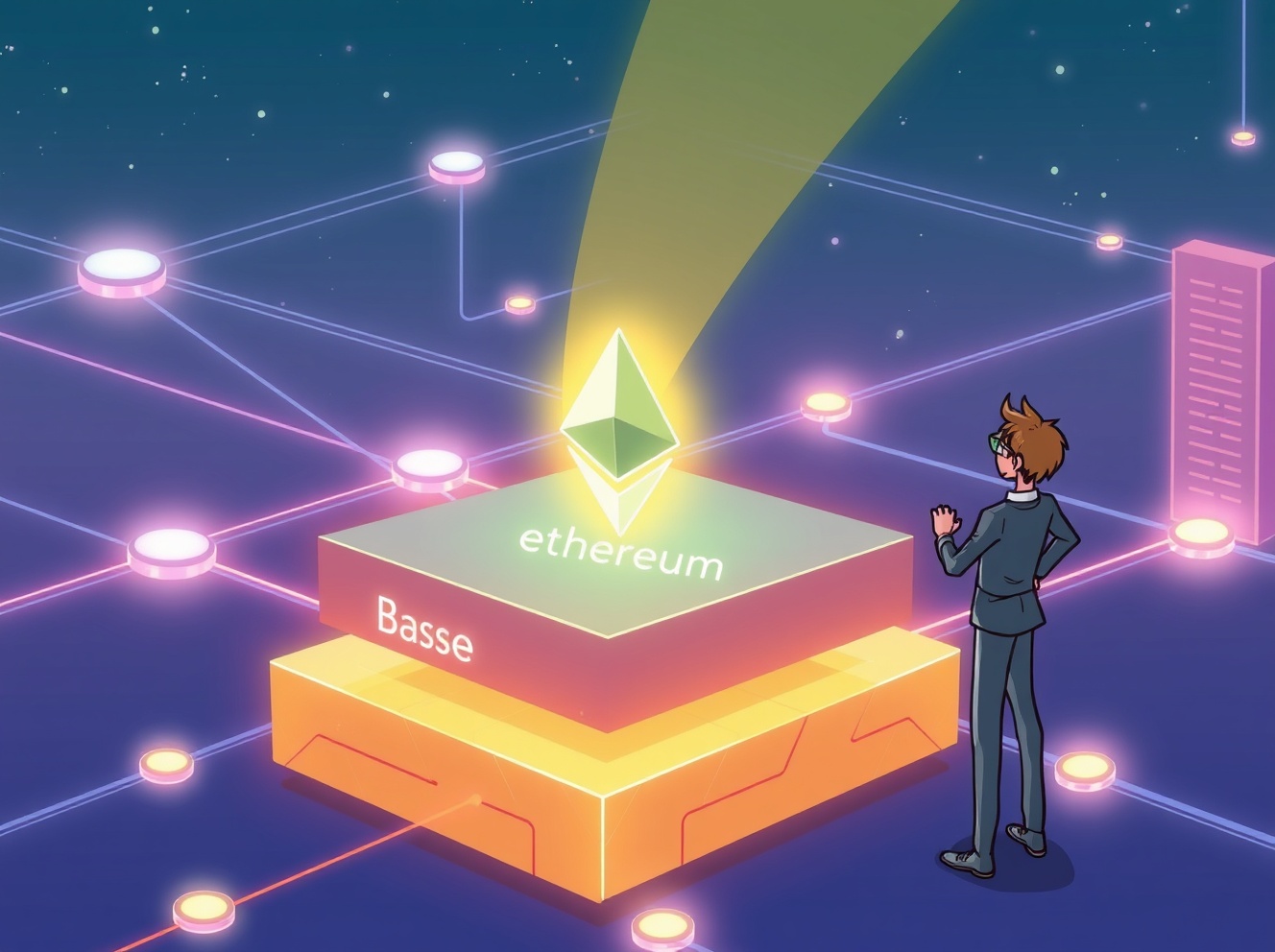
Crucial Base Layer 2: Vitalik Buterin Hails Coinbase’s Network as Ethereum-Aligned

In the fast-evolving world of cryptocurrency, few voices carry as much weight as Ethereum founder Vitalik Buterin. His recent endorsement of Coinbase’s Base Layer 2 network has sparked considerable interest, signaling a significant vote of confidence. Buterin views Base not just as another scaling solution, but as a Layer 2 built “in the right way,” perfectly aligning with Ethereum’s core philosophy. This perspective offers crucial insights into the future of decentralized applications and how they can achieve mainstream adoption while maintaining foundational security.

Why is Base Layer 2 ‘Built the Right Way’?

Vitalik Buterin’s praise for Base stems from its unique design philosophy. He highlighted that while Base incorporates centralized features to enhance user experience, its fundamental security architecture remains firmly rooted in Ethereum’s robust, decentralized base layer. This distinction is vital for understanding why Base stands out.

Buterin emphasized that Base does not directly hold user funds. This non-custodial approach means that, unlike some centralized platforms, Base cannot unilaterally seize assets or block withdrawals. Such a design choice significantly bolsters trust and security, reassuring users that their digital assets remain under their control, even when interacting with a faster, more user-friendly Layer 2 solution.

Balancing User Experience with Decentralized Security

One of the persistent challenges in blockchain technology has been the trade-off between scalability, user experience, and decentralization. Many solutions often sacrifice one for the others. However, Buterin sees Base Layer 2 as a compelling example of finding a harmonious balance.

  • Enhanced User Experience: Base leverages certain centralized aspects to deliver a smoother, faster, and more intuitive experience for users and developers. This can include faster transaction finality and lower fees, which are critical for mass adoption.
  • Ethereum’s Security Backbone: Crucially, these centralized elements do not compromise the underlying security. Base’s security guarantees are inherited directly from Ethereum. This means that even if parts of Base were to face issues, the integrity of user funds and transactions is ultimately protected by Ethereum’s battle-tested blockchain.
  • Non-Custodial Design: As Buterin pointed out, the inability of Base to seize funds or block withdrawals is a cornerstone of its “right way” design. This principle is fundamental to the ethos of decentralization, ensuring users retain sovereignty over their assets.

Understanding Ethereum’s Layer 2 Philosophy

Ethereum’s long-term vision for scalability heavily relies on Layer 2 solutions. These networks process transactions off the main Ethereum chain, bundling them together and then submitting a compressed proof or summary back to the mainnet. This approach dramatically increases transaction throughput and reduces costs without burdening the core blockchain.

Buterin’s endorsement of Base Layer 2 reinforces the idea that L2s should complement, not compete with, Ethereum. They extend its capabilities, allowing it to handle a global scale of users and applications. Base’s commitment to relying on Ethereum for security and finality perfectly embodies this collaborative philosophy, making it a valuable addition to the ecosystem.

The Crucial Role of Non-Custodial Design

Why is the non-custodial nature of Base so significant? In the world of finance, custodianship implies control over assets. For a Layer 2 network, being non-custodial means that even if the L2 operator experiences technical difficulties or malicious intent, they cannot prevent users from accessing their funds on the underlying Ethereum network. This is a critical trust factor for any scaling solution.

This design choice for Base Layer 2 provides a strong guarantee of user autonomy. It distinguishes it from centralized exchanges or platforms that do hold user funds, making it a more resilient and censorship-resistant option for decentralized applications and users alike. This commitment to user sovereignty is what makes Base a truly Ethereum-aligned scaling solution.

What Does Base Layer 2 Mean for Ethereum’s Future?

The success and design principles of Base have significant implications for the broader Ethereum ecosystem. As more users and developers flock to Layer 2 solutions, networks like Base demonstrate that it is possible to achieve high performance and user-friendliness without sacrificing the core tenets of decentralization and security that define Ethereum.

This positive validation from Vitalik Buterin encourages other Layer 2 developers to adopt similar best practices. It fosters a healthier, more secure, and ultimately more scalable environment for decentralized finance (DeFi), NFTs, and other Web3 applications. The continued growth of robust Layer 2s like Base is essential for Ethereum to realize its full potential as the world’s leading programmable blockchain.

In conclusion, Vitalik Buterin’s praise for Coinbase’s Base Layer 2 is a powerful affirmation of its design and alignment with Ethereum’s foundational principles. By prioritizing security through Ethereum’s base layer and adopting a non-custodial approach, Base offers a compelling model for future scaling solutions. It shows that we can achieve a superior user experience while upholding the core values of decentralization and user sovereignty, paving the way for a more accessible and robust Web3 future.

Frequently Asked Questions (FAQs)

1. What is Base Layer 2?

Base is an Ethereum Layer 2 network developed by Coinbase. It aims to provide a secure, low-cost, and developer-friendly environment for building decentralized applications, leveraging Ethereum’s security while offering enhanced scalability.

2. Why did Vitalik Buterin praise Base?

Vitalik Buterin praised Base because its design aligns with Ethereum’s philosophy. He noted its reliance on Ethereum’s decentralized base layer for security and its non-custodial nature, meaning it cannot seize user funds or block withdrawals, despite offering a stronger user experience through some centralized features.

3. How does Base ensure user fund security?

Base ensures user fund security by relying on Ethereum’s decentralized network. While Base handles transactions off-chain for speed, the ultimate security and finality of assets are guaranteed by Ethereum. Furthermore, its non-custodial design means Base itself does not hold user funds, preventing asset seizure.

4. What does ‘non-custodial’ mean for a Layer 2 network?

For a Layer 2 network like Base, ‘non-custodial’ means that the network operator does not have direct control over users’ digital assets. Users retain full ownership and control of their funds, and the network cannot prevent them from withdrawing their assets back to the main Ethereum chain.

5. How does Base contribute to Ethereum’s scalability?

Base contributes to Ethereum’s scalability by processing transactions off the main Ethereum blockchain, thereby reducing congestion and lowering transaction costs on the mainnet. It bundles these off-chain transactions and periodically settles them on Ethereum, allowing the overall ecosystem to handle a much higher volume of activity.

Did you find this article insightful? Share your thoughts and help spread the word about the exciting developments in the Ethereum ecosystem! Share this article on your social media to inform your network.

To learn more about the latest Ethereum trends, explore our article on key developments shaping Ethereum price action.

This post Crucial Base Layer 2: Vitalik Buterin Hails Coinbase’s Network as Ethereum-Aligned first appeared on BitcoinWorld.


Market Opportunity
Brainedge Logo
Brainedge Price(LEARN)
$0.00875
$0.00875$0.00875
-1.57%
USD
Brainedge (LEARN) Live Price Chart
Disclaimer: The articles reposted on this site are sourced from public platforms and are provided for informational purposes only. They do not necessarily reflect the views of MEXC. All rights remain with the original authors. If you believe any content infringes on third-party rights, please contact service@support.mexc.com for removal. MEXC makes no guarantees regarding the accuracy, completeness, or timeliness of the content and is not responsible for any actions taken based on the information provided. The content does not constitute financial, legal, or other professional advice, nor should it be considered a recommendation or endorsement by MEXC.

You May Also Like

Lovable AI’s Astonishing Rise: Anton Osika Reveals Startup Secrets at Bitcoin World Disrupt 2025

Lovable AI’s Astonishing Rise: Anton Osika Reveals Startup Secrets at Bitcoin World Disrupt 2025

BitcoinWorld Lovable AI’s Astonishing Rise: Anton Osika Reveals Startup Secrets at Bitcoin World Disrupt 2025 Are you ready to witness a phenomenon? The world of technology is abuzz with the incredible rise of Lovable AI, a startup that’s not just breaking records but rewriting the rulebook for rapid growth. Imagine creating powerful apps and websites just by speaking to an AI – that’s the magic Lovable brings to the masses. This groundbreaking approach has propelled the company into the spotlight, making it one of the fastest-growing software firms in history. And now, the visionary behind this sensation, co-founder and CEO Anton Osika, is set to share his invaluable insights on the Disrupt Stage at the highly anticipated Bitcoin World Disrupt 2025. If you’re a founder, investor, or tech enthusiast eager to understand the future of innovation, this is an event you cannot afford to miss. Lovable AI’s Meteoric Ascent: Redefining Software Creation In an era where digital transformation is paramount, Lovable AI has emerged as a true game-changer. Its core premise is deceptively simple yet profoundly impactful: democratize software creation. By enabling anyone to build applications and websites through intuitive AI conversations, Lovable is empowering the vast majority of individuals who lack coding skills to transform their ideas into tangible digital products. This mission has resonated globally, leading to unprecedented momentum. The numbers speak for themselves: Achieved an astonishing $100 million Annual Recurring Revenue (ARR) in less than a year. Successfully raised a $200 million Series A funding round, valuing the company at $1.8 billion, led by industry giant Accel. Is currently fielding unsolicited investor offers, pushing its valuation towards an incredible $4 billion. As industry reports suggest, investors are unequivocally “loving Lovable,” and it’s clear why. This isn’t just about impressive financial metrics; it’s about a company that has tapped into a fundamental need, offering a solution that is both innovative and accessible. The rapid scaling of Lovable AI provides a compelling case study for any entrepreneur aiming for similar exponential growth. The Visionary Behind the Hype: Anton Osika’s Journey to Innovation Every groundbreaking company has a driving force, and for Lovable, that force is co-founder and CEO Anton Osika. His journey is as fascinating as his company’s success. A physicist by training, Osika previously contributed to the cutting-edge research at CERN, the European Organization for Nuclear Research. This deep technical background, combined with his entrepreneurial spirit, has been instrumental in Lovable’s rapid ascent. Before Lovable, he honed his skills as a co-founder of Depict.ai and a Founding Engineer at Sana. Based in Stockholm, Osika has masterfully steered Lovable from a nascent idea to a global phenomenon in record time. His leadership embodies a unique blend of profound technical understanding and a keen, consumer-first vision. At Bitcoin World Disrupt 2025, attendees will have the rare opportunity to hear directly from Osika about what it truly takes to build a brand that not only scales at an incredible pace in a fiercely competitive market but also adeptly manages the intense cultural conversations that inevitably accompany such swift and significant success. His insights will be crucial for anyone looking to understand the dynamics of high-growth tech leadership. Unpacking Consumer Tech Innovation at Bitcoin World Disrupt 2025 The 20th anniversary of Bitcoin World is set to be marked by a truly special event: Bitcoin World Disrupt 2025. From October 27–29, Moscone West in San Francisco will transform into the epicenter of innovation, gathering over 10,000 founders, investors, and tech leaders. It’s the ideal platform to explore the future of consumer tech innovation, and Anton Osika’s presence on the Disrupt Stage is a highlight. His session will delve into how Lovable is not just participating in but actively shaping the next wave of consumer-facing technologies. Why is this session particularly relevant for those interested in the future of consumer experiences? Osika’s discussion will go beyond the superficial, offering a deep dive into the strategies that have allowed Lovable to carve out a unique category in a market long thought to be saturated. Attendees will gain a front-row seat to understanding how to identify unmet consumer needs, leverage advanced AI to meet those needs, and build a product that captivates users globally. The event itself promises a rich tapestry of ideas and networking opportunities: For Founders: Sharpen your pitch and connect with potential investors. For Investors: Discover the next breakout startup poised for massive growth. For Innovators: Claim your spot at the forefront of technological advancements. The insights shared regarding consumer tech innovation at this event will be invaluable for anyone looking to navigate the complexities and capitalize on the opportunities within this dynamic sector. Mastering Startup Growth Strategies: A Blueprint for the Future Lovable’s journey isn’t just another startup success story; it’s a meticulously crafted blueprint for effective startup growth strategies in the modern era. Anton Osika’s experience offers a rare glimpse into the practicalities of scaling a business at breakneck speed while maintaining product integrity and managing external pressures. For entrepreneurs and aspiring tech leaders, his talk will serve as a masterclass in several critical areas: Strategy Focus Key Takeaways from Lovable’s Journey Rapid Scaling How to build infrastructure and teams that support exponential user and revenue growth without compromising quality. Product-Market Fit Identifying a significant, underserved market (the 99% who can’t code) and developing a truly innovative solution (AI-powered app creation). Investor Relations Balancing intense investor interest and pressure with a steadfast focus on product development and long-term vision. Category Creation Carving out an entirely new niche by democratizing complex technologies, rather than competing in existing crowded markets. Understanding these startup growth strategies is essential for anyone aiming to build a resilient and impactful consumer experience. Osika’s session will provide actionable insights into how to replicate elements of Lovable’s success, offering guidance on navigating challenges from product development to market penetration and investor management. Conclusion: Seize the Future of Tech The story of Lovable, under the astute leadership of Anton Osika, is a testament to the power of innovative ideas meeting flawless execution. Their remarkable journey from concept to a multi-billion-dollar valuation in record time is a compelling narrative for anyone interested in the future of technology. By democratizing software creation through Lovable AI, they are not just building a company; they are fostering a new generation of creators. His appearance at Bitcoin World Disrupt 2025 is an unmissable opportunity to gain direct insights from a leader who is truly shaping the landscape of consumer tech innovation. Don’t miss this chance to learn about cutting-edge startup growth strategies and secure your front-row seat to the future. Register now and save up to $668 before Regular Bird rates end on September 26. To learn more about the latest AI market trends, explore our article on key developments shaping AI features. This post Lovable AI’s Astonishing Rise: Anton Osika Reveals Startup Secrets at Bitcoin World Disrupt 2025 first appeared on BitcoinWorld.
Share
Coinstats2025/09/17 23:40
SHIB Price Drops as Leadership Concerns Grow

SHIB Price Drops as Leadership Concerns Grow

The post SHIB Price Drops as Leadership Concerns Grow appeared on BitcoinEthereumNews.com. Shiba Inu investors uneasy as Kusama’s silence fuels leadership concerns. SHIB slid 13% in three days, retracing from $0.00001484 to $0.00001305. Shibarium exploit and Kusama’s absence have weighed on investor trust. Shiba Inu investors are voicing concerns about the project’s long-term direction as leadership uncertainty and slow ecosystem progress erode confidence.  The token, which rallied from its meme-coin origins to become the second-largest meme asset by market cap, counts more than 1.5 million holders worldwide. But as SHIB matures, the gap between early hype and current delivery has widened.  The project’s transition into an “ecosystem coin” with spin-off projects and Shibarium, its layer-2 network, once raised expectations. Analysts now point to internal challenges as the main factor holding SHIB back from fulfilling that potential. Kusama’s Silence Adds to Instability Central to the debate is the role of Shytoshi Kusama, Shiba Inu’s pseudonymous lead developer. Investors are concerned about the intermittent disappearance of the project’s lead developer, who repeatedly takes unannounced social media breaks.  For instance, Kusama went silent on X for over a month before resurfacing this week amid growing speculation that he had abandoned the Shiba Inu project.  Kusama returned shortly after the Shibarium bridge suffered an exploit worth around $3 million. However, he did not directly address the issue but only reassured Shiba Inu community members of his commitment to advancing the project.  Although most community members didn’t complain about Kusama’s anonymity in the project’s initial stages, his recent behavior has raised concerns. Many are beginning to develop trust issues, particularly because nobody could reveal the SHIB developer’s identity for the past five years. He has conducted all communications under pseudonyms. SHIB Price Action Reflects Sentiment Shift Market reaction has mirrored the doubts. SHIB, which spiked 26% at the start of September, has since reversed. Over the last…
Share
BitcoinEthereumNews2025/09/18 04:13
Q2 Market Insights: Bitcoin regains dominance in risk-averse environment, ETFs remain critical to market structure

Q2 Market Insights: Bitcoin regains dominance in risk-averse environment, ETFs remain critical to market structure

The market will show a downward trend in the short term, and then rebound and set new highs in the second half of the year.
Share
PANews2025/04/28 19:40