Bitcoin (BTC) Price: How Rising Oil Prices and PCE Inflation Are Pressuring BTC
TLDR
- U.S. PCE inflation rose to 3.5% in March, its highest since August 2023
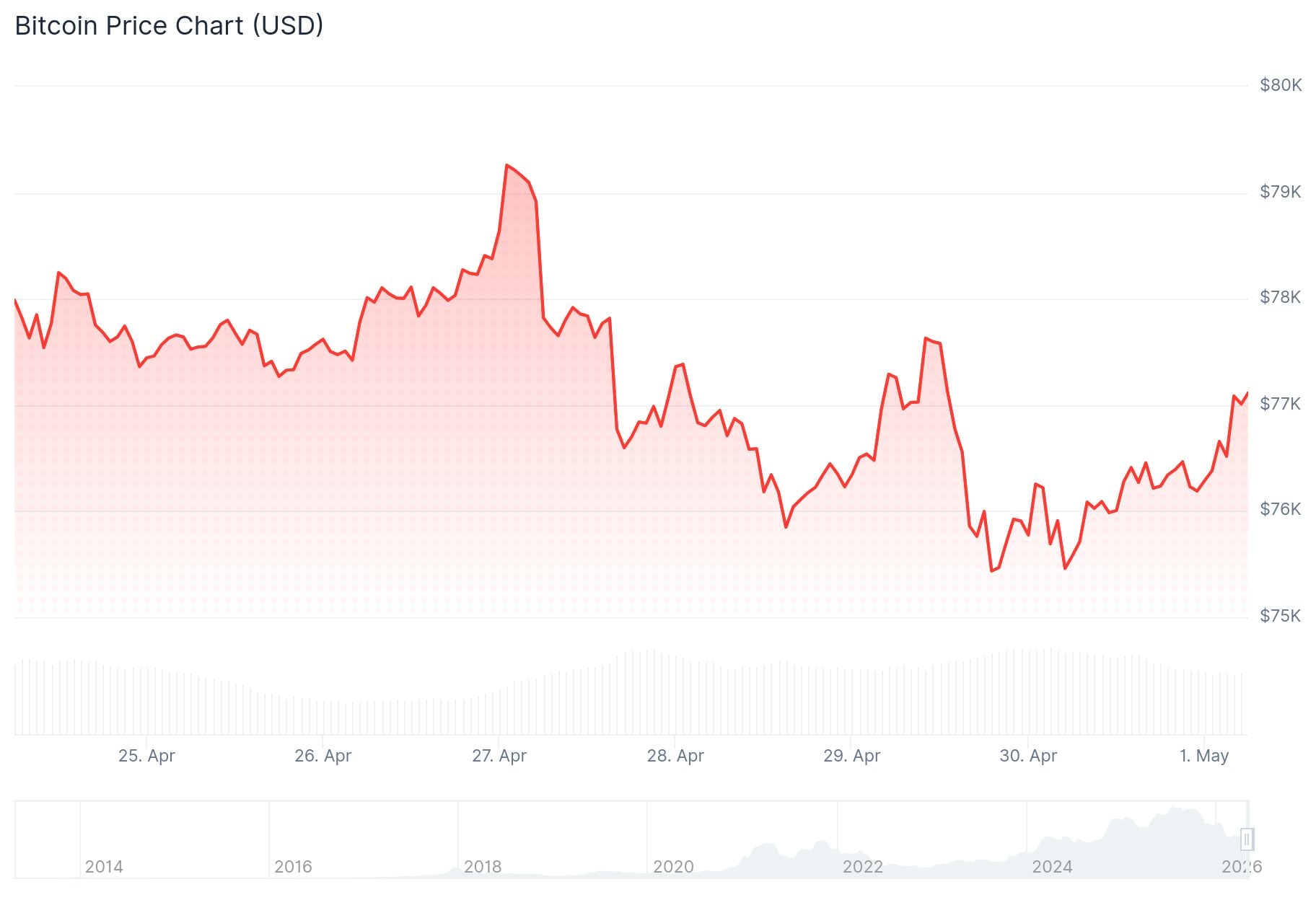
- Bitcoin dropped to around $76,000 following the inflation data release
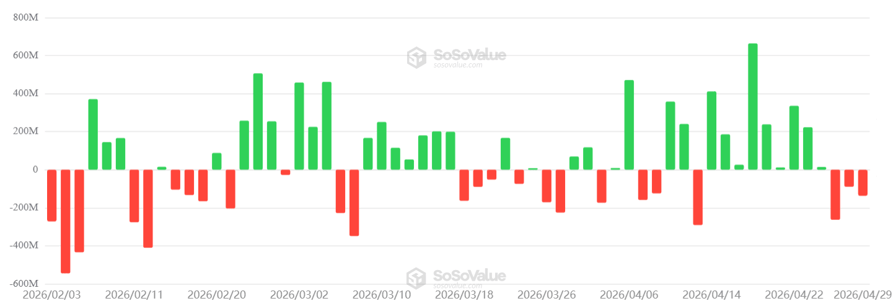
- Spot Bitcoin ETFs saw $490 million in net outflows over three days
- Polymarket now shows a 58% chance of zero Fed rate cuts in 2026
- Analyst Ted Pillows flagged a potential short-term bounce after BTC held $75,000
The latest U.S. inflation data has pushed Bitcoin lower, with the PCE price index climbing to its highest point in nearly three years.
 Bitcoin (BTC) Price
The Bureau of Economic Analysis reported that March PCE inflation rose 3.5% year-over-year and 0.7% month-over-month. Core PCE came in at 3.2% year-over-year, its highest reading since November 2023.
Bitcoin responded by sliding to around $76,000 following the release. As of writing, BTC is trading at approximately $76,400 according to TradingView data.
The Fed left interest rates unchanged at its latest meeting, pointing to uncertainty from the ongoing U.S.-Iran conflict as a key factor. The elevated PCE reading strengthens the case for the Fed to hold rates steady for a third consecutive meeting.
Polymarket data now shows a 58% probability of zero rate cuts in 2026, up sharply from 39% just two days earlier. That shift in expectations is putting pressure on risk assets including Bitcoin.
Crypto analyst Ted Pillows noted on X that BTC touched the $75,000 zone before seeing a bounce. He wrote that buyers are defending that level and that another short-term rally could be forming. The $75,000 area is being watched closely as a key support level.
ETF Outflows Add to Pressure
U.S.-listed spot Bitcoin ETFs recorded $490 million in net outflows between Monday and Wednesday. This reversed the inflow trend seen over the prior two weeks and points to a pullback in short-term institutional demand.
 Source: SoSoValue
Despite the recent outflows, Bitcoin ETFs have seen $3.3 billion in net inflows since March, showing the longer-term trend remains positive.
Bitcoin is down 14% year-to-date while the S&P 500 reached an all-time high. Weak tech earnings added to the cautious mood, with Meta falling 9% and Microsoft dropping 4% after their quarterly results.
Oil Prices Weigh on Sentiment
Brent crude oil rose above $120 per barrel and recently hit $126, driven by the U.S.-Iran conflict. Higher oil prices have pushed five-year Treasury yields to 4.02%, up from 3.51% two months ago, triggering risk-off behavior among traders.
Strategy, led by Michael Saylor, bought 56,235 BTC in the first four weeks of April at an average cost of $75,537. Traders are watching whether that pace of accumulation holds up.
U.S. GDP grew at a 2% annualized rate in Q1, slightly below the 2.3% estimate from economists. President Trump also rejected Iran’s latest offer to reopen the Strait of Hormuz, keeping geopolitical uncertainty elevated.
The post Bitcoin (BTC) Price: How Rising Oil Prices and PCE Inflation Are Pressuring BTC appeared first on CoinCentral.


You May Also Like

I Took a Calculated Risk and It Paid Off in a Big Way
Japan Yen Intervention: Analysts Warn Weak Trend to Continue Despite Bold Action