

Robinhood (HOOD) Stock; Surges Nearly 5% as Second Venture Fund Filing Emerges
TLDRs;
- Robinhood shares jumped nearly 5% after reports of a second public venture fund filing surfaced.
- The new RVII fund follows strong performance from RVI, which holds stakes in major private startups.
- The model expands retail access to venture capital-style investments via listed closed-end funds.
- Investors are watching whether Robinhood can sustain demand for private-market exposure products.
Robinhood Markets Inc. (NASDAQ: HOOD) saw its shares surge nearly 5% in recent trading sessions after reports emerged that the company has confidentially filed for a second publicly listed venture fund. The move signals a deeper push into private-market investing and reinforces Robinhood’s strategy of broadening retail investor access to startup equity exposure.
The filing comes just months after the successful listing of its first venture fund, marking a rapid expansion of a model that blends traditional brokerage services with venture capital-style investing.
RVII fund filing revealed
The new fund, internally referred to as RVII, follows Robinhood’s earlier venture product RVI, which debuted on the New York Stock Exchange in March. RVI initially targeted roughly $1 billion in capital but ultimately raised a smaller amount. Despite this, its performance has been strong, with shares rising significantly since listing.
Robinhood Markets, Inc., HOOD
RVI currently holds stakes in high-profile private companies including OpenAI, Stripe, Databricks, and Revolut. The fund structure allows everyday investors to gain exposure to late-stage startups that are typically inaccessible through traditional brokerage accounts.
Robinhood has not disclosed a fundraising target for RVII, but analysts expect it to follow a similar model while potentially expanding into earlier-stage investments.
Retail access to private markets grows
The company’s venture fund strategy is built around listed closed-end funds, which trade like stocks on public exchanges but hold illiquid private-company stakes. This structure allows retail investors to participate in venture capital returns without meeting accredited investor requirements.
However, the model also introduces complexity. Investors cannot redeem shares at net asset value and must rely on secondary market trading, which may experience volatility or limited liquidity.
Management fees are set at 2% annually on net assets, temporarily reduced to 1% in the initial post-IPO period. Notably, there is no performance fee or carried interest structure, distinguishing it from traditional venture capital funds.
Strategic shift beyond trading revenue
Robinhood’s expansion into venture funds reflects a broader strategic shift away from reliance solely on trading-based revenue. By launching multiple funds, the company gains a steadier stream of fee-based income while also deepening engagement with long-term investors.
Industry observers note that this approach could strengthen Robinhood’s position in the evolving fintech landscape, where platforms increasingly compete on access to private markets and alternative assets.
At the same time, the model raises questions about potential conflicts of interest, as Robinhood and its affiliated structures may benefit more directly from in-house investment vehicles compared to external offerings.
Still, the appeal is clear: retail investors gain exposure to fast-growing startups without needing direct venture capital access, while Robinhood positions itself as a bridge between public markets and private innovation.
Market reaction and outlook
Following the filing news, HOOD shares climbed nearly 5%, reflecting investor optimism around the company’s expanding financial ecosystem. Analysts suggest that the market is pricing in long-term revenue diversification rather than short-term trading performance.
RVI’s earlier success, doubling from its IPO price to recent highs, has also strengthened sentiment around the new filing. If RVII attracts comparable demand, it could further validate Robinhood’s hybrid brokerage-venture model.
Looking ahead, the key question remains whether retail investors will sustain appetite for private-market exposure through exchange-traded structures. If successful, Robinhood’s strategy could reshape how everyday investors participate in venture capital returns.
The post Robinhood (HOOD) Stock; Surges Nearly 5% as Second Venture Fund Filing Emerges appeared first on CoinCentral.


You May Also Like
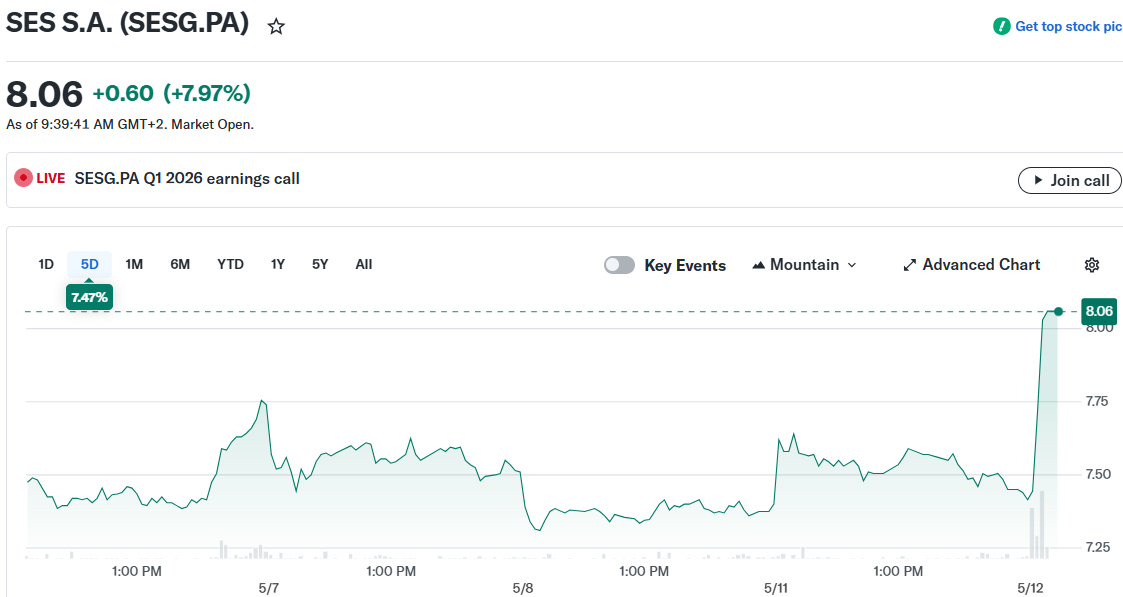
SES Reports 80% Revenue Jump as Aviation Connectivity and Intelsat Merger Drive Q1 Growth

Shai Gilgeous-Alexander, Thunder still perfect in playoffs after sweep of Lakers




