Gold Markets Fluctuate Amid Middle East Tensions and Shifting Bond Yields
Key Takeaways
- Bullion climbed 0.7% to reach $4,570.60 per ounce on Monday amid volatile conditions
- Trading saw prices dip to levels not witnessed since the end of March
- Government bond yields retreated following a period of intense market turbulence
- Military drone strikes targeting UAE nuclear infrastructure and Saudi territories raised alarm
- Presidential visit to Beijing yielded no tangible progress on Iran diplomatic resolution
Bullion markets experienced significant fluctuations on Monday as market participants monitored retreating pressure in government debt markets alongside escalating tensions across the Middle East region.
Spot bullion advanced 0.7% during early trading to reach $4,570.60 per ounce. However, the precious metal had also touched its weakest position since March 30 earlier in the same session, highlighting the considerable volatility characterizing current market conditions.
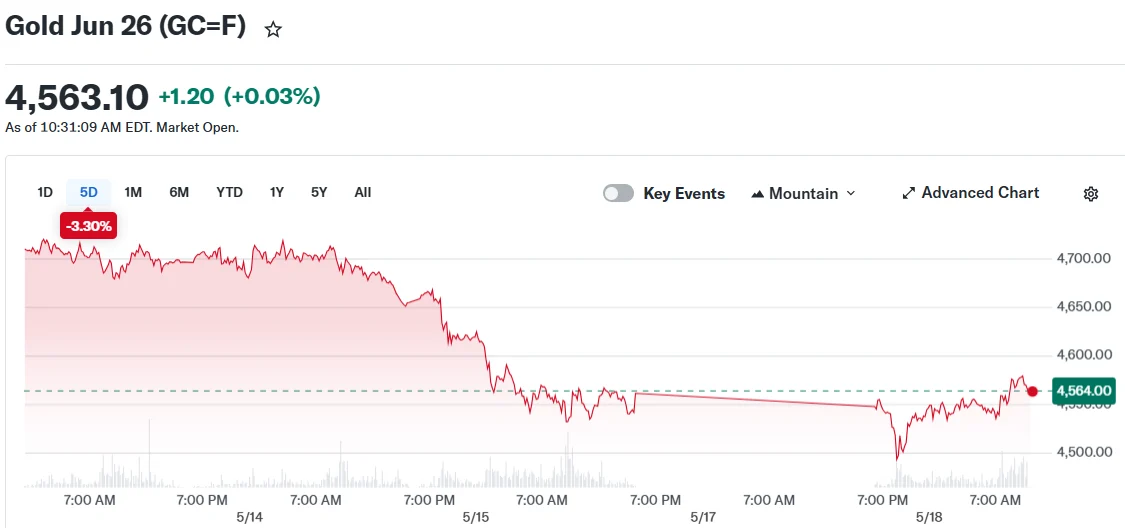 Gold Jun 26 (GC=F)
Futures contracts for the yellow metal declined 0.3% to $4,574.20 per ounce during certain points throughout the trading day.
These movements occurred as government bond yields across global markets retreated from elevated levels following a challenging period for sovereign debt. The recent turbulence in fixed-income markets had unsettled investors throughout the previous week.
Oil prices also registered declines. Reports from Iranian state media indicated that Washington proposed temporary relief from petroleum sanctions targeting Iran pending the conclusion of comprehensive peace negotiations between the two nations.
Middle East Conflict Maintains Market Uncertainty
Gold has actually retreated from the elevated levels seen when the Iran military engagement commenced in late February. While this may appear counterintuitive given the continuing hostilities, there are logical explanations.
Market participants have been gravitating toward the U.S. dollar as their preferred safe-haven instrument. The greenback has benefited from perceptions that America’s economy, given its status as a substantial energy producer, may be more insulated from potential energy disruptions stemming from the conflict.
A robust dollar increases the cost of gold for international purchasers, potentially dampening overall demand for the precious metal.
Inflation concerns have also presented headwinds for bullion. Should the military conflict drive consumer prices higher, monetary authorities may implement interest rate increases. Elevated borrowing costs can diminish the appeal of assets like gold that generate no income for holders.
Military Actions and Diplomatic Setbacks Increase Market Instability
During the weekend period, a drone assault triggered a blaze at nuclear infrastructure located in the United Arab Emirates. Saudi Arabia similarly announced it had successfully intercepted three unmanned aerial vehicles.
These incidents generated renewed skepticism regarding the tenuous ceasefire arrangement between Washington and Tehran.
Certain market observers had anticipated that Trump’s diplomatic journey to China during the previous week might facilitate advancement in Iran negotiations. Beijing ranks among the principal consumers of Iranian petroleum exports, providing it with substantial influence in the discussions.
However, the bilateral summit failed to generate any concrete pledges from Chinese leadership.
David Morrison, Senior Market Analyst at Trade Nation, noted that the weekend developments resurrected anxieties that had temporarily subsided during Trump’s Asian visit.
With the ceasefire arrangement facing renewed challenges and diplomatic channels showing limited progress, bullion prices appear poised to maintain elevated volatility throughout the immediate future.
The post Gold Markets Fluctuate Amid Middle East Tensions and Shifting Bond Yields appeared first on Blockonomi.


You May Also Like
Pi Coin Price Crashes Another 7.5% Before Pi Network Protocol 23 Mainnet Activation

The Chemistry of UV Resistance: How Titanium Dioxide Protects Against the California Sun