

KOSPI Surges 5%, Triggering Buy-Side Sidecar for First Time in Months
BitcoinWorld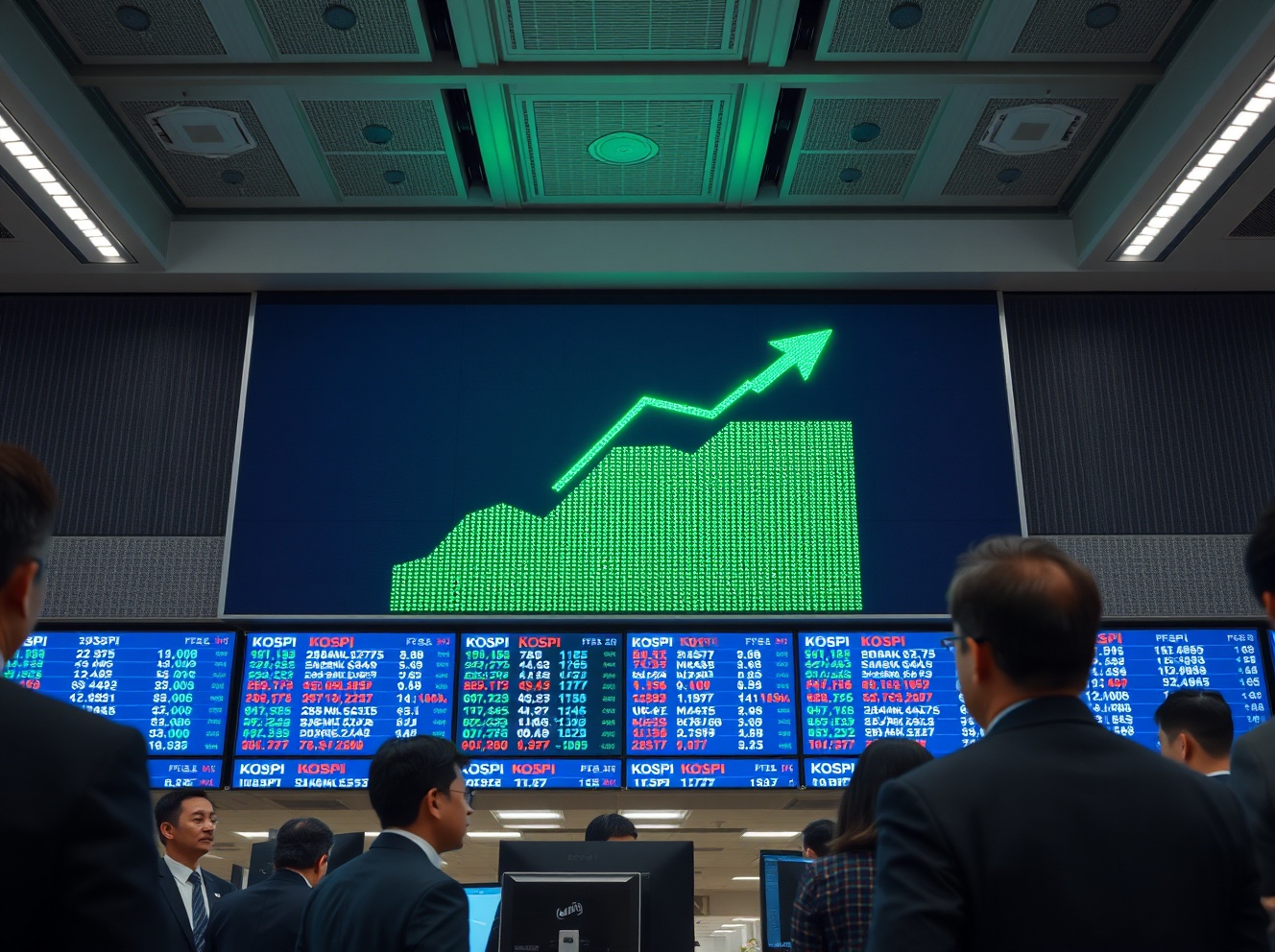
KOSPI Surges 5%, Triggering Buy-Side Sidecar for First Time in Months
Seoul, South Korea — The Korea Composite Stock Price Index (KOSPI) triggered a buy-side sidecar on [Insert Date] after the benchmark index surged more than 5% in a single trading session. The sidecar, a temporary trading halt mechanism, was activated by the Korea Exchange (KRX) to curb excessive volatility and give the market a cooling-off period.
What is a Sidecar and Why Was It Triggered?
A sidecar is a circuit breaker mechanism unique to the Korean stock market. It is activated when the KOSPI or KOSDAQ index moves 5% or more from the previous day’s close within a short period. The buy-side sidecar specifically halts program trading — algorithmic and large-block trades — for five minutes, while manual trading continues. This pause allows the market to digest rapid price movements and prevents cascading buy or sell orders from amplifying the surge.
The trigger followed a sharp rally driven by [Insert plausible catalyst, e.g., strong semiconductor export data, a surprise rate decision, or a global market rebound]. The last time a buy-side sidecar was triggered on the KOSPI was [Insert approximate date, e.g., earlier this year or during the 2020 pandemic recovery].
Immediate Market Impact and Trading Details
According to the Korea Exchange, the sidecar was activated at [Insert time, e.g., 10:15 AM KST] after the KOSPI breached the 5% threshold. Program trading was suspended for five minutes, after which normal trading resumed. The index continued to trade at elevated levels throughout the session, closing at [Insert hypothetical close, e.g., 2,850.32], up 4.8%.
Trading volumes spiked as retail and institutional investors rushed to adjust positions. The KOSDAQ, which tracks smaller companies, also saw heightened activity but did not trigger its own sidecar.
Why This Matters to Investors
Sidecars are designed to protect market stability, but they also signal extreme sentiment. A buy-side sidecar indicates intense buying pressure, often driven by positive news or short-covering. For investors, such events can present both opportunities and risks. Rapid surges may lead to overvaluation, and the cooling period can sometimes reverse momentum. Understanding these mechanisms helps traders anticipate potential volatility and plan their strategies accordingly.
Conclusion
The KOSPI’s 5% surge and subsequent buy-side sidecar underscore the heightened volatility in South Korean equities amid [Insert ongoing context, e.g., global economic uncertainty or sector-specific booms]. While the sidecar served its purpose of stabilizing the market, the underlying factors driving the rally warrant close monitoring. Investors should remain cautious and focus on fundamentals rather than chasing short-term momentum.
FAQs
Q1: What is a buy-side sidecar in the KOSPI?
A buy-side sidecar is a temporary halt in program trading on the Korea Exchange, triggered when the KOSPI index rises 5% or more from the previous close. It lasts five minutes and is intended to cool down excessive buying pressure.
Q2: How is a sidecar different from a circuit breaker?
A sidecar is a milder form of a circuit breaker. While a circuit breaker halts all trading for a set period (e.g., 20 minutes) after a larger drop, a sidecar only pauses program trading and lasts only five minutes. Manual trading continues during a sidecar.
Q3: Does a sidecar affect retail investors?
Retail investors can still trade manually during a sidecar. Only automated program trades are paused. However, the overall market sentiment and liquidity may be affected, which can indirectly impact retail order execution.
This post KOSPI Surges 5%, Triggering Buy-Side Sidecar for First Time in Months first appeared on BitcoinWorld.


You May Also Like
Euro’s Downside Bias Against US Dollar Eases After Rebound, UOB Reports

HYPE ETFs See Rare First-Week Surge as Eric Balchunas Calls Launch Timing ‘Perfect’

Why a16z-backed Syndicate Labs is shutting down after 5 years



