

US Government Shutdown Begins After Budget Talks Fail: What It Means For Crypto
TLDR
- The US government entered its first shutdown since 2019 after Congress failed to pass a spending bill at midnight on October 1, 2025
- The shutdown furloughs hundreds of thousands of federal workers and suspends government economic data releases including Friday’s jobs report
- The deadlock centers on disputes over healthcare subsidies and Medicaid cuts, with both Senate Republican and Democratic bills failing to advance
- New tariffs on pharmaceuticals (100%) and heavy-duty trucks (25%) took effect on the same day as the shutdown
- Bitcoin rallied from $108,650 to near $114,000 during the crisis as investors moved toward alternative assets
The US government shut down at 12:01 a.m. ET on Wednesday, October 1, 2025, marking the first federal shutdown since 2019. The shutdown began after the Senate rejected competing spending proposals from both Republicans and Democrats on Tuesday evening.
The Republican bill sought to extend funding through November 21 but failed to reach the required 60 votes. The Democratic plan included funding through October with over $1 trillion in health-related spending but was also blocked.
The current shutdown is the first since a 35-day stoppage in 2018-19 during President Trump’s first term. That shutdown remains the longest in American history.
The breakdown in negotiations stems from disagreements over healthcare subsidies and Medicaid cuts. Democrats want to extend expiring health subsidies and reverse Medicaid reductions from earlier tax reforms.
White House budget director Russell T. Vought directed agencies to execute their shutdown plans. Federal agencies have implemented contingency plans sending hundreds of thousands of workers home.
Economic Data and Market Effects
The Bureau of Labor Statistics will completely cease operations during the shutdown. The agency drops from a workforce of 2,055 to just one full-time employee.
Friday’s monthly jobs report will not be released as scheduled. The Commerce Department will also halt operations at the Census Bureau and Bureau of Economic Analysis.
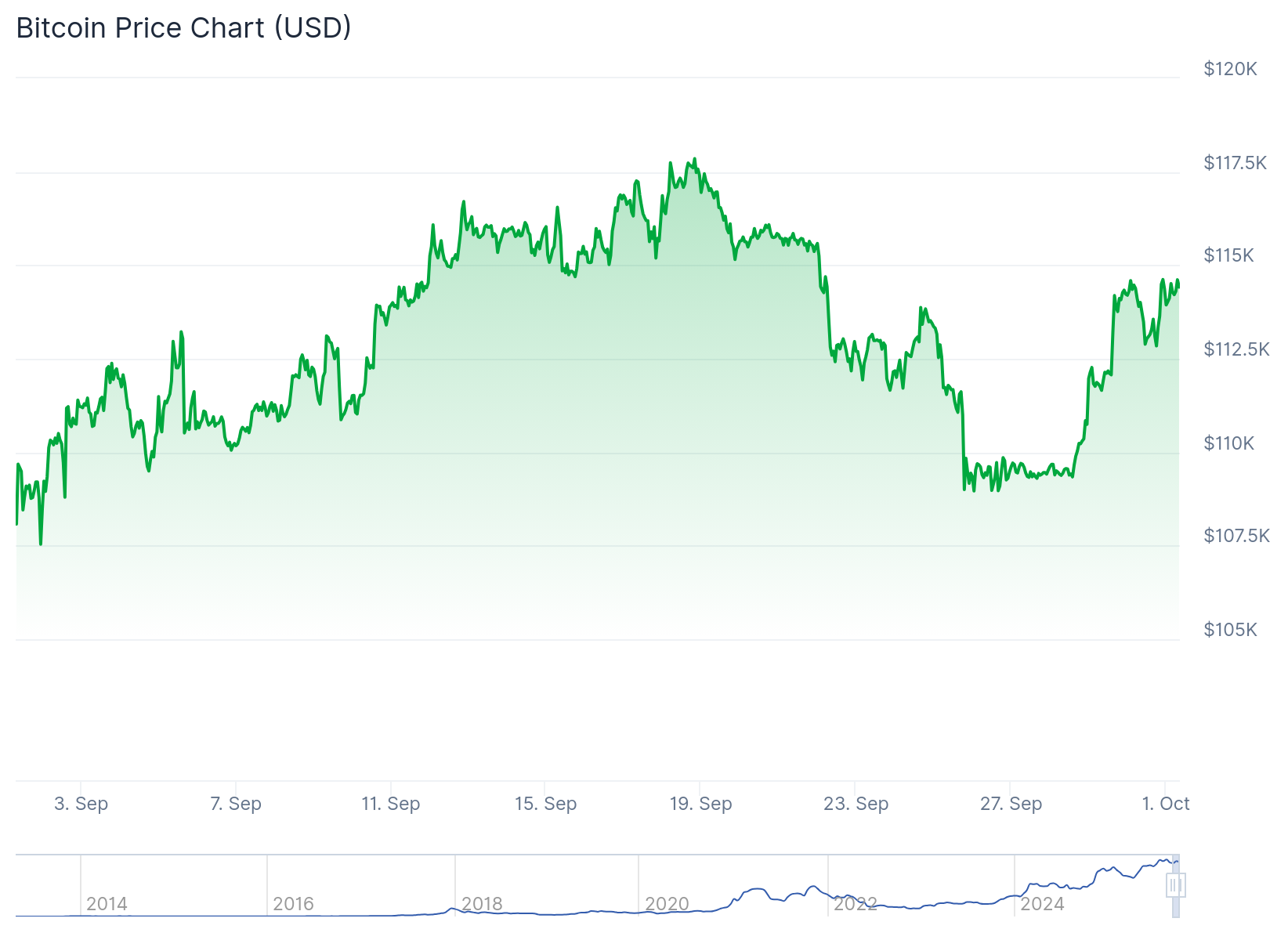 Bitcoin (BTC) Price
Bitcoin climbed from $108,650 to near $114,000 as the shutdown approached. Gold and silver also rallied as traders moved toward alternative assets during the fiscal uncertainty.
Polymarket data showed odds of a shutdown reached 85% before the midnight deadline. Markets responded to the increased probability with moves into hedge assets.
The lack of economic data may complicate Federal Reserve interest rate decisions scheduled for late October. Traders will have fewer signals to gauge Fed policy without regular economic reports.
Government Operations and Worker Impact
Federal employees including military personnel will go without paychecks during the shutdown. Many workers classified as essential must continue reporting to work without pay.
Air traffic controllers and TSA agents are expected to keep working despite paychecks stopping. The 2018 shutdown saw higher unscheduled absences among TSA workers leading to some airport disruptions.
Medicare benefits and Social Security checks will continue going out during the shutdown. The US Postal Service will maintain mail delivery as it is largely self-funded through stamp sales.
The Federal Reserve will continue operations as it is also largely self-funded. Senate Majority Whip John Barrasso told reporters that votes could be scheduled throughout the weekend to resolve the impasse.
New Tariffs Take Effect
The shutdown coincided with new tariffs taking effect on October 1. The administration imposed 100% duties on branded or patented pharmaceutical products with some exceptions.
Companies building in the United States received full exemptions from the pharmaceutical tariffs. Pfizer secured a three-year grace period from the tariffs as part of a deal to lower some US drug prices.
Heavy-duty trucks face 25% tariffs as of Wednesday. The White House has not clarified whether the United States-Mexico-Canada Agreement provides an exception for Mexico.
Trump also promised 10% duties on softwood timber and lumber plus 25% rates on certain upholstered wooden products starting October 14. These rates could increase again in January according to White House releases.
The CLARITY Act faces fresh delays due to the shutdown. Senate Banking Republicans had targeted a September 30 markup session but the timeline is now off the table.
The post US Government Shutdown Begins After Budget Talks Fail: What It Means For Crypto appeared first on CoinCentral.


You May Also Like

Trump kritik serangan Israel terhadap Beirut ketika rundingan damai Iran

Adoption Leads Traders to Snorter Token

Hyperscalers Break U.S. Bond Market With $725B AI Spending Spree, Go Global for Debt



