

Bitcoin’s $126K Surge Sparks Record Inflows — Here’s Why Early Investors Turn to $HYPER for Exponential Gains

With the US dollar weakening significantly, market commentators like Bitwise believe that investors are increasingly buying ‘hard assets’ like gold and Bitcoin, in a phenomenon called the debasement trade. The rising fiscal stress, coupled with increasing deficits, has heightened expectations for policy relaxations, fueling concerns that fiat currencies could erode over time.
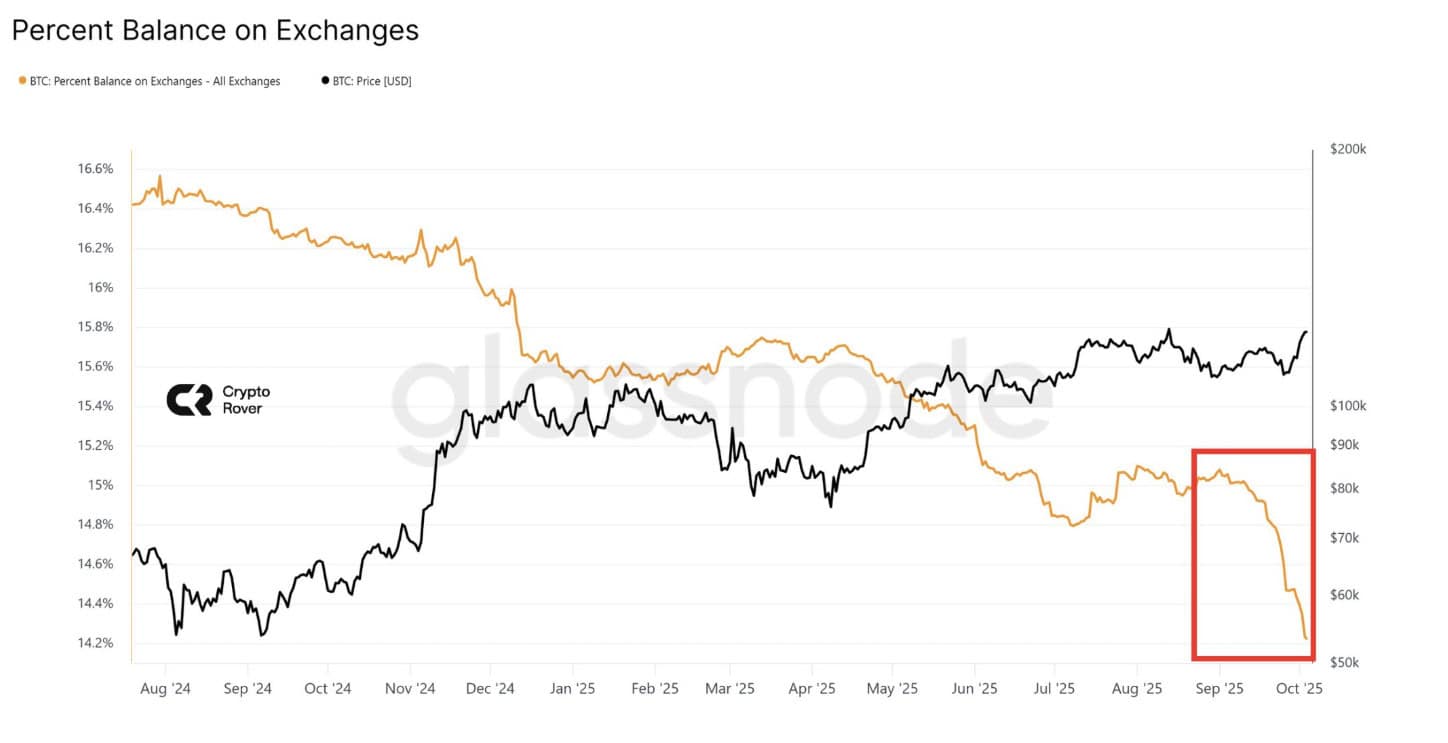
Bitwise backs this data with market behavior this year. DXY dropped by 10% YTD, while gold and Bitcoin rose by 26% and 25% respectively. Building on that narrative, Bitwise also cites that there have been withdrawals of 49158 $BTC from exchanges, suggesting accumulation over active retail selling.
The resulting momentum has spilled over into Bitcoin-linked projects such as the Bitcoin Hyper ($HYPER), a Layer 2 scalability solution that rides on the Bitcoin bull run narrative.
Institutions Take the Wheel: Bitcoin’s Rally Gains Strength Despite Retail Slowdown
The inflows and product activity in the Bitcoin ecosystem are predominantly driven by US spot ETFs, such as BlackRock’s IBIT and Bitwise’s BITB, as well as other institutional investors.
To visualize this correlation, the graph below shows how Bitcoin’s price has moved in tandem with Bitwise’s $BTC ETF purchases in the past month.
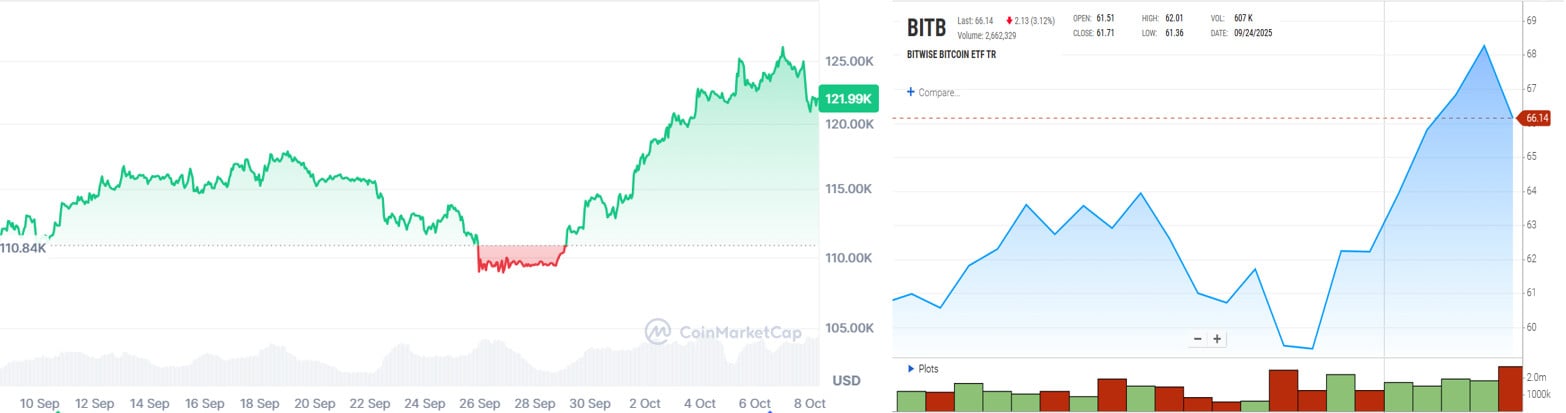
Alternatively, retail-sized transactions have not risen. Analysts, such as Axel Adler Jr., cite that small transactions have been declining since spring 2024, suggesting that the rally is disproportionately driven by institutions.
A Bubble or a Sustainable Trend?
Well, Bitwise highlights a few key factors that keep the rally in check. For starters, open interest and funding rates have moved up but remain below the previous ATH euphoria levels.
Thankfully, these elements hint that this rally is sustainable, rather than a short-lived speculative spike.
What Does this Mean for the Bitcoin Ecosystem?
To begin with, large ETF flows mean more institutional money parked in regulated wrappers, which helps increase liquidity and reduces friction for significant allocators. It also serves as a structural tailwind for $BTC price discovery.
That aside, the scarcity narrative continues to build for $BTC. Declining exchange reserves, combined with large withdrawals from whales, contribute to the scarcity narrative, which amplifies price fluctuations when demand surges.
Then there is the aspect of regulatory clarity, which has lowered counterparty and compliance risk for large investors, paving the pathway for new institutional products to launch.
That more predictable, institution-led backdrop helps cool market volatility and creates the perfect landscape for next-generation Bitcoin projects, such as Bitcoin Hyper, to emerge.
From Slow to Seamless: How Bitcoin Hyper ($HYPER) Plans to Upgrade Bitcoin’s Performance
Considering how slow Bitcoin is (7 TPS) and its high transaction costs (0.8651), Bitcoin Hyper ($HYPER) emerges as the natural evolution, not only addressing Bitcoin’s speed and fee issues, but also making the network more scalable.

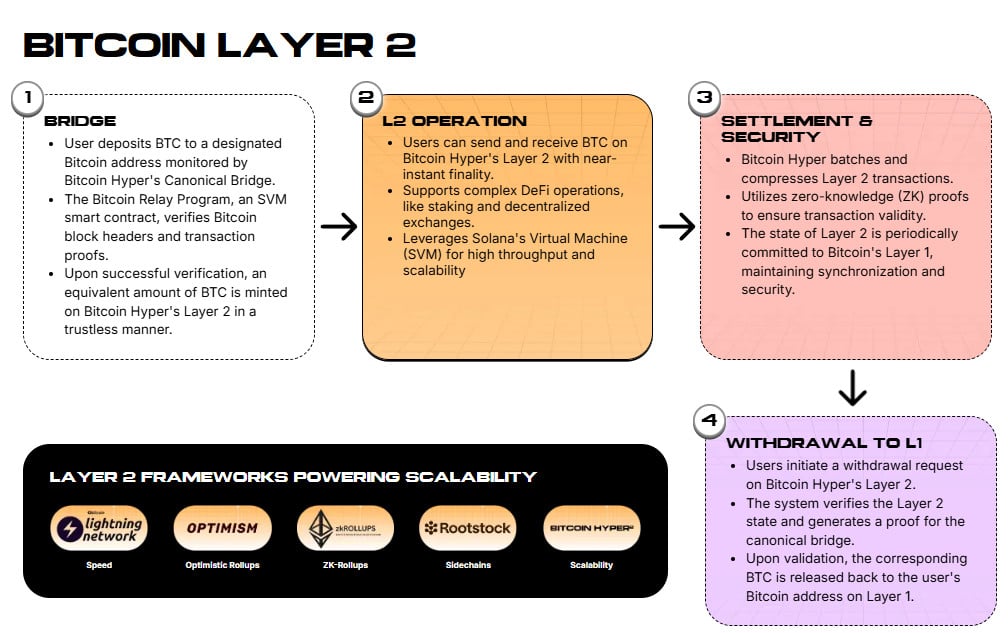
Bitcoin Hyper addresses the blockchain’s fundamental finality problem using the Solana Virtual Machine, which brings Solana-level speed to the Bitcoin ecosystem.
Thanks to its canonical bridge, it allows you to lock your $BTC on the main chain and mint equivalent wrapped tokens on the Bitcoin Hyper Layer 2 network.
Why It Matters
Bitcoin Hyper turns $BTC into a usable asset for:
- Real-time payments
- On-chain apps
- Staking and DeFi
- Meme coin launches
It’s about more than just speed; it’s about making Bitcoin programmable, scalable, and final without compromising its core security.
Investors Flock to the $HYPER Presale
Bitcoin Hyper ($HYPER) has already raised $22.5M, with recent whale buys as high as $58.6K and $40K signaling strong investor confidence.
If this $HYPER price prediction is correct, the token could reach $0.15 by 2026. That’s a 10.5x return if you get in today.
Claim your stake in Bitcoin’s evolution — visit the $HYPER presale website today.


You May Also Like
Top Crypto to Watch Right Now? Experts Highlight This Altcoin Under $1

Nigeria invests $9m in research to drive digital economy ambitions




