The post NZD/USD remains subdued around 0.5750 following Business NZ PMI release appeared on BitcoinEthereumNews.com. NZD/USD remains weaker for the fourth successive session, trading around 0.5750 during the Asian hours on Friday. The pair holds losses following September’s Business NZ Performance of Manufacturing Index (PMI), which held steady at 49.9, remaining in contraction. The New Zealand Dollar (NZD) depreciated against the US Dollar (USD) after the Reserve Bank of New Zealand (RBNZ) decided on a larger-than-expected rate cut on Wednesday. The central bank cut its Official Cash Rate by 50 bps to 2.50%, the lowest level since July 2022, with rising market expectations of a 25 bps rate cut in November. The NZD/USD pair also faced challenges as the US Dollar (USD) could receive further support from increased risk aversion, driven by the ongoing government shutdown. The US Senate remained deadlocked on legislation to end the government shutdown. However, the prevailing dovish sentiment on the US Federal Reserve’s policy outlook could weigh on the Dollar and support the NZD/USD pair. Fed Bank of San Francisco President Mary Daly said on late Thursday that inflation has come in much less than she had feared. Daly further stated that the US central bank is projecting additional cuts in risk management. Fed Governor Michael Barr said that the current outlook poses challenges for judging the stance of monetary policy and deciding the right path forward. Barr also noted that the Fed’s rate cut in September was appropriate, and the current policy rate is still modestly restrictive. He added that it’s hard to judge at this point whether the federal government shutdown will leave an imprint on the overall economy. New Zealand Dollar FAQs The New Zealand Dollar (NZD), also known as the Kiwi, is a well-known traded currency among investors. Its value is broadly determined by the health of the New Zealand economy and the country’s central bank… The post NZD/USD remains subdued around 0.5750 following Business NZ PMI release appeared on BitcoinEthereumNews.com. NZD/USD remains weaker for the fourth successive session, trading around 0.5750 during the Asian hours on Friday. The pair holds losses following September’s Business NZ Performance of Manufacturing Index (PMI), which held steady at 49.9, remaining in contraction. The New Zealand Dollar (NZD) depreciated against the US Dollar (USD) after the Reserve Bank of New Zealand (RBNZ) decided on a larger-than-expected rate cut on Wednesday. The central bank cut its Official Cash Rate by 50 bps to 2.50%, the lowest level since July 2022, with rising market expectations of a 25 bps rate cut in November. The NZD/USD pair also faced challenges as the US Dollar (USD) could receive further support from increased risk aversion, driven by the ongoing government shutdown. The US Senate remained deadlocked on legislation to end the government shutdown. However, the prevailing dovish sentiment on the US Federal Reserve’s policy outlook could weigh on the Dollar and support the NZD/USD pair. Fed Bank of San Francisco President Mary Daly said on late Thursday that inflation has come in much less than she had feared. Daly further stated that the US central bank is projecting additional cuts in risk management. Fed Governor Michael Barr said that the current outlook poses challenges for judging the stance of monetary policy and deciding the right path forward. Barr also noted that the Fed’s rate cut in September was appropriate, and the current policy rate is still modestly restrictive. He added that it’s hard to judge at this point whether the federal government shutdown will leave an imprint on the overall economy. New Zealand Dollar FAQs The New Zealand Dollar (NZD), also known as the Kiwi, is a well-known traded currency among investors. Its value is broadly determined by the health of the New Zealand economy and the country’s central bank…

NZD/USD remains subdued around 0.5750 following Business NZ PMI release

For feedback or concerns regarding this content, please contact us at crypto.news@mexc.com

NZD/USD remains weaker for the fourth successive session, trading around 0.5750 during the Asian hours on Friday. The pair holds losses following September’s Business NZ Performance of Manufacturing Index (PMI), which held steady at 49.9, remaining in contraction.

The New Zealand Dollar (NZD) depreciated against the US Dollar (USD) after the Reserve Bank of New Zealand (RBNZ) decided on a larger-than-expected rate cut on Wednesday. The central bank cut its Official Cash Rate by 50 bps to 2.50%, the lowest level since July 2022, with rising market expectations of a 25 bps rate cut in November.

The NZD/USD pair also faced challenges as the US Dollar (USD) could receive further support from increased risk aversion, driven by the ongoing government shutdown. The US Senate remained deadlocked on legislation to end the government shutdown.

However, the prevailing dovish sentiment on the US Federal Reserve’s policy outlook could weigh on the Dollar and support the NZD/USD pair. Fed Bank of San Francisco President Mary Daly said on late Thursday that inflation has come in much less than she had feared. Daly further stated that the US central bank is projecting additional cuts in risk management.

Fed Governor Michael Barr said that the current outlook poses challenges for judging the stance of monetary policy and deciding the right path forward. Barr also noted that the Fed’s rate cut in September was appropriate, and the current policy rate is still modestly restrictive. He added that it’s hard to judge at this point whether the federal government shutdown will leave an imprint on the overall economy.

New Zealand Dollar FAQs

The New Zealand Dollar (NZD), also known as the Kiwi, is a well-known traded currency among investors. Its value is broadly determined by the health of the New Zealand economy and the country’s central bank policy. Still, there are some unique particularities that also can make NZD move. The performance of the Chinese economy tends to move the Kiwi because China is New Zealand’s biggest trading partner. Bad news for the Chinese economy likely means less New Zealand exports to the country, hitting the economy and thus its currency. Another factor moving NZD is dairy prices as the dairy industry is New Zealand’s main export. High dairy prices boost export income, contributing positively to the economy and thus to the NZD.

The Reserve Bank of New Zealand (RBNZ) aims to achieve and maintain an inflation rate between 1% and 3% over the medium term, with a focus to keep it near the 2% mid-point. To this end, the bank sets an appropriate level of interest rates. When inflation is too high, the RBNZ will increase interest rates to cool the economy, but the move will also make bond yields higher, increasing investors’ appeal to invest in the country and thus boosting NZD. On the contrary, lower interest rates tend to weaken NZD. The so-called rate differential, or how rates in New Zealand are or are expected to be compared to the ones set by the US Federal Reserve, can also play a key role in moving the NZD/USD pair.

Macroeconomic data releases in New Zealand are key to assess the state of the economy and can impact the New Zealand Dollar’s (NZD) valuation. A strong economy, based on high economic growth, low unemployment and high confidence is good for NZD. High economic growth attracts foreign investment and may encourage the Reserve Bank of New Zealand to increase interest rates, if this economic strength comes together with elevated inflation. Conversely, if economic data is weak, NZD is likely to depreciate.

The New Zealand Dollar (NZD) tends to strengthen during risk-on periods, or when investors perceive that broader market risks are low and are optimistic about growth. This tends to lead to a more favorable outlook for commodities and so-called ‘commodity currencies’ such as the Kiwi. Conversely, NZD tends to weaken at times of market turbulence or economic uncertainty as investors tend to sell higher-risk assets and flee to the more-stable safe havens.

Source: https://www.fxstreet.com/news/nzd-usd-remains-subdued-around-05750-following-business-nz-pmi-release-202510100625

Market Opportunity
Lorenzo Protocol Logo
Lorenzo Protocol Price(BANK)
$0.03802
$0.03802$0.03802
-3.30%
USD
Lorenzo Protocol (BANK) Live Price Chart
Disclaimer: The articles reposted on this site are sourced from public platforms and are provided for informational purposes only. They do not necessarily reflect the views of MEXC. All rights remain with the original authors. If you believe any content infringes on third-party rights, please contact crypto.news@mexc.com for removal. MEXC makes no guarantees regarding the accuracy, completeness, or timeliness of the content and is not responsible for any actions taken based on the information provided. The content does not constitute financial, legal, or other professional advice, nor should it be considered a recommendation or endorsement by MEXC.

You May Also Like

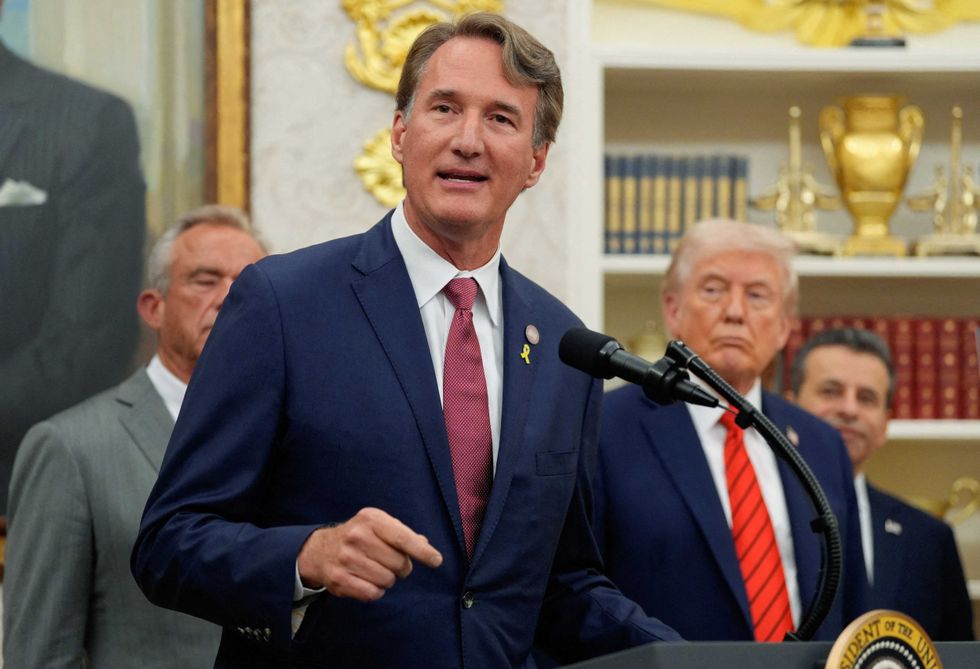
Virginia Republicans rage against ex-GOP governor: 'Missing in action' while eyeing 2028

Virginia Republicans rage against ex-GOP governor: 'Missing in action' while eyeing 2028

Republicans in Virginia are turning on the state's former GOP governor, Glenn Youngkin, according to the Wall Street Journal, accusing him of being "missing in
Share
Alternet2026/03/10 00:31
Franklin Templeton CEO Dismisses 50bps Rate Cut Ahead FOMC

Franklin Templeton CEO Dismisses 50bps Rate Cut Ahead FOMC

The post Franklin Templeton CEO Dismisses 50bps Rate Cut Ahead FOMC appeared on BitcoinEthereumNews.com. Franklin Templeton CEO Jenny Johnson has weighed in on whether the Federal Reserve should make a 25 basis points (bps) Fed rate cut or 50 bps cut. This comes ahead of the Fed decision today at today’s FOMC meeting, with the market pricing in a 25 bps cut. Bitcoin and the broader crypto market are currently trading flat ahead of the rate cut decision. Franklin Templeton CEO Weighs In On Potential FOMC Decision In a CNBC interview, Jenny Johnson said that she expects the Fed to make a 25 bps cut today instead of a 50 bps cut. She acknowledged the jobs data, which suggested that the labor market is weakening. However, she noted that this data is backward-looking, indicating that it doesn’t show the current state of the economy. She alluded to the wage growth, which she remarked is an indication of a robust labor market. She added that retail sales are up and that consumers are still spending, despite inflation being sticky at 3%, which makes a case for why the FOMC should opt against a 50-basis-point Fed rate cut. In line with this, the Franklin Templeton CEO said that she would go with a 25 bps rate cut if she were Jerome Powell. She remarked that the Fed still has the October and December FOMC meetings to make further cuts if the incoming data warrants it. Johnson also asserted that the data show a robust economy. However, she noted that there can’t be an argument for no Fed rate cut since Powell already signaled at Jackson Hole that they were likely to lower interest rates at this meeting due to concerns over a weakening labor market. Notably, her comment comes as experts argue for both sides on why the Fed should make a 25 bps cut or…
Share
BitcoinEthereumNews2025/09/18 00:36
Wall Street Bull Warns! “US Stock Markets Could Collapse, Bitcoin (BTC) Could Fall Further!”

Wall Street Bull Warns! “US Stock Markets Could Collapse, Bitcoin (BTC) Could Fall Further!”

Wall Street bull Ed Yardeni raised the probability of a US stock market crash to 35 percent and warned of further selling pressure on Bitcoin. Continue Reading
Share
Bitcoinsistemi2026/03/10 00:34