The post Understanding the “Black Friday” Market Crash appeared on BitcoinEthereumNews.com. The digital asset market faced its largest-ever liquidation cascade on October 10, now being referred to as crypto’s Black Friday. Within 24 hours, over $19 billion in leveraged positions were wiped out, marking the single biggest deleveraging event in the industry’s history. The sell-off began late in the U.S. session after President Trump announced a proposed 100% tariff on Chinese imports, triggering global risk aversion across equities, commodities and crypto. The steepest declines occurred within a 25-minute window, as high leverage collided with thin liquidity. According to CoinDesk Reference Rates (CADLI), bitcoin fell to $106,560, ether to $3,551, and solana to $174, with smaller-cap tokens dropping more than 75% intraday. Market dynamics & scale of deleveraging According to CoinDesk Data, total perpetual futures open interest fell 43%, dropping from $217 billion on October 10 to $123 billion by October 11. The largest single-day contraction occurred on Hyperliquid, where open interest declined 57%, from $14 billion to $6 billion, as positions were forcefully unwound. Source: CoinDesk Data Data suggests that around $16 billion of the $19 billion total came from long liquidations, with nearly every trader carrying 2x leverage or higher with no stop-losses on altcoins being wiped out within minutes. Public blockchains such as Hyperliquid provided a rare, transparent look into the sequence of forced liquidations, where the liquidation queue and execution can be verified on-chain. By contrast, centralised exchanges aggregate and batch liquidation data, meaning the true scale of forced unwinds may have even exceeded the widely reported $20 billion, since grouped reporting often understates notional values. Source: CoinDesk Data Structural stress & order book collapse The episode underscored how tightly coupled liquidity, collateral and oracle systems have become. What began as a macro-driven unwind rapidly evolved into a market-wide stress event. As prices breached key liquidation levels, market… The post Understanding the “Black Friday” Market Crash appeared on BitcoinEthereumNews.com. The digital asset market faced its largest-ever liquidation cascade on October 10, now being referred to as crypto’s Black Friday. Within 24 hours, over $19 billion in leveraged positions were wiped out, marking the single biggest deleveraging event in the industry’s history. The sell-off began late in the U.S. session after President Trump announced a proposed 100% tariff on Chinese imports, triggering global risk aversion across equities, commodities and crypto. The steepest declines occurred within a 25-minute window, as high leverage collided with thin liquidity. According to CoinDesk Reference Rates (CADLI), bitcoin fell to $106,560, ether to $3,551, and solana to $174, with smaller-cap tokens dropping more than 75% intraday. Market dynamics & scale of deleveraging According to CoinDesk Data, total perpetual futures open interest fell 43%, dropping from $217 billion on October 10 to $123 billion by October 11. The largest single-day contraction occurred on Hyperliquid, where open interest declined 57%, from $14 billion to $6 billion, as positions were forcefully unwound. Source: CoinDesk Data Data suggests that around $16 billion of the $19 billion total came from long liquidations, with nearly every trader carrying 2x leverage or higher with no stop-losses on altcoins being wiped out within minutes. Public blockchains such as Hyperliquid provided a rare, transparent look into the sequence of forced liquidations, where the liquidation queue and execution can be verified on-chain. By contrast, centralised exchanges aggregate and batch liquidation data, meaning the true scale of forced unwinds may have even exceeded the widely reported $20 billion, since grouped reporting often understates notional values. Source: CoinDesk Data Structural stress & order book collapse The episode underscored how tightly coupled liquidity, collateral and oracle systems have become. What began as a macro-driven unwind rapidly evolved into a market-wide stress event. As prices breached key liquidation levels, market…

Understanding the “Black Friday” Market Crash

For feedback or concerns regarding this content, please contact us at crypto.news@mexc.com

The digital asset market faced its largest-ever liquidation cascade on October 10, now being referred to as crypto’s Black Friday. Within 24 hours, over $19 billion in leveraged positions were wiped out, marking the single biggest deleveraging event in the industry’s history.

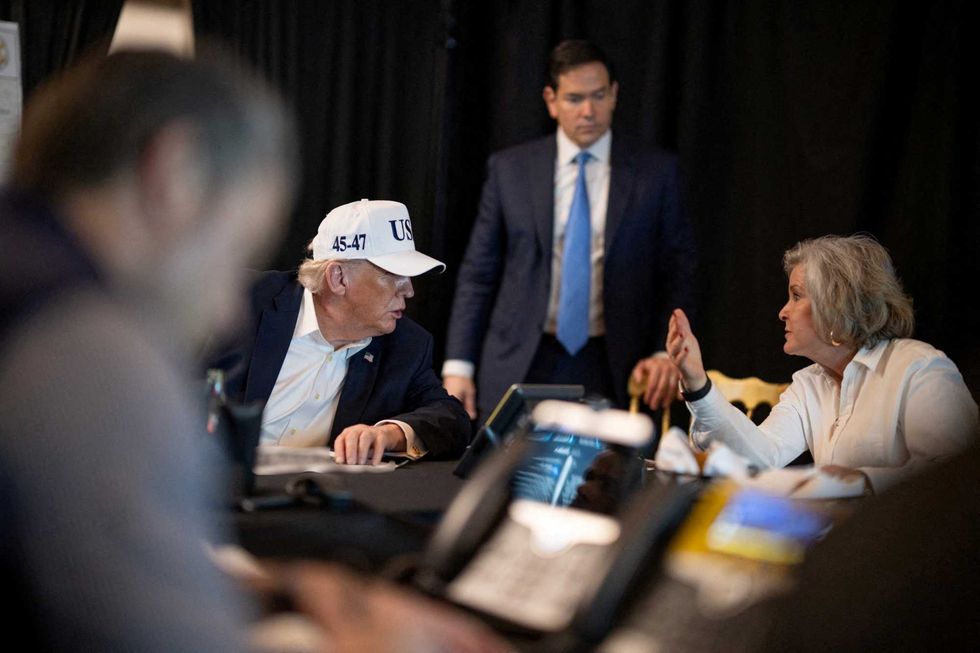
The sell-off began late in the U.S. session after President Trump announced a proposed 100% tariff on Chinese imports, triggering global risk aversion across equities, commodities and crypto. The steepest declines occurred within a 25-minute window, as high leverage collided with thin liquidity. According to CoinDesk Reference Rates (CADLI), bitcoin fell to $106,560, ether to $3,551, and solana to $174, with smaller-cap tokens dropping more than 75% intraday.

Market dynamics & scale of deleveraging

According to CoinDesk Data, total perpetual futures open interest fell 43%, dropping from $217 billion on October 10 to $123 billion by October 11. The largest single-day contraction occurred on Hyperliquid, where open interest declined 57%, from $14 billion to $6 billion, as positions were forcefully unwound.

Source: CoinDesk Data

Data suggests that around $16 billion of the $19 billion total came from long liquidations, with nearly every trader carrying 2x leverage or higher with no stop-losses on altcoins being wiped out within minutes.

Public blockchains such as Hyperliquid provided a rare, transparent look into the sequence of forced liquidations, where the liquidation queue and execution can be verified on-chain. By contrast, centralised exchanges aggregate and batch liquidation data, meaning the true scale of forced unwinds may have even exceeded the widely reported $20 billion, since grouped reporting often understates notional values.

Source: CoinDesk Data

Structural stress & order book collapse

The episode underscored how tightly coupled liquidity, collateral and oracle systems have become. What began as a macro-driven unwind rapidly evolved into a market-wide stress event. As prices breached key liquidation levels, market depth collapsed by more than 80% across major exchanges within minutes.

In some instances, thin order books saw large-cap assets like ATOM temporarily print near-zero bids; a reflection not of fair market value but of market makers withdrawing liquidity as risk systems throttled activity. With collateral shared across assets and venues relying on local price feeds, feedback loops amplified volatility across the ecosystem. Even well-capitalised platforms proved vulnerable once liquidity evaporated across the board.

Fair-value pricing in volatility

When exchange-level pricing becomes erratic, CoinDesk Reference Rates such as CCIX and CADLI act as stabilising mechanisms. These multi-venue benchmarks aggregate prices from hundreds of sources, applying quality filters and outlier rejection to produce a global, consensus-based fair value.

During Black Friday’s volatility, reference rates revealed that market-wide valuations remained far less extreme than certain venue-specific prints suggested. This transparency allows market participants to distinguish between genuine repricing and localised dislocation, providing a neutral reference for post-trade performance assessment.

Reference rates don’t stop volatility, but they define it – ensuring traders, funds and exchanges have reliable data when the market breaks.

Closing thoughts

The severe dislocation in the market showed how leverage, liquidity and fragmented infrastructure can converge into a feedback loop that overwhelms even the largest trading venues. It also revealed the limits of transparency in a system where some on-chain exchanges, such as Hyperliquid, expose liquidation flows in real time, while centralised venues still operate as partial black boxes.

Crypto’s maturity will be defined by how it internalises these shocks. Better risk controls, unified collateral standards and real-time transparency will matter just as much as utilising pricing benchmarks. CoinDesk Reference Rates help confirm fair valuations when screens go red, but true resilience depends on exchange architecture, deeper order books, more robust oracle design and ultimately, exchange uptime.

The industry now faces a choice between treating this as a singular event, or as the blueprint for building a market that can absorb the next one.

Source: https://www.coindesk.com/coindesk-indices/2025/10/15/crypto-s-black-friday

Market Opportunity
Union Logo
Union Price(U)
$0.000945
$0.000945$0.000945
+3.27%
USD
Union (U) Live Price Chart
Disclaimer: The articles reposted on this site are sourced from public platforms and are provided for informational purposes only. They do not necessarily reflect the views of MEXC. All rights remain with the original authors. If you believe any content infringes on third-party rights, please contact crypto.news@mexc.com for removal. MEXC makes no guarantees regarding the accuracy, completeness, or timeliness of the content and is not responsible for any actions taken based on the information provided. The content does not constitute financial, legal, or other professional advice, nor should it be considered a recommendation or endorsement by MEXC.

You May Also Like

WORLD3 and PlaysOut Unite to Advance Web3 Mini-Game Ecosystem

WORLD3 and PlaysOut Unite to Advance Web3 Mini-Game Ecosystem

WORLD3, a project known for combining Web3 technology with autonomous agents and artificial intelligence, has entered into a strategic collaboration with PlaysOut
Share
CoinTrust2026/03/10 15:08
TrendX Taps Trusta AI to Develop Safer and Smarter Web3 Network

TrendX Taps Trusta AI to Develop Safer and Smarter Web3 Network

The purpose of collaboration is to advance the Web3 landscape by combining the decentralized infrastructure of TrendX with AI-led capabilities of Trusta AI.
Share
Blockchainreporter2025/09/18 01:07
UK crypto holders brace for FCA’s expanded regulatory reach

UK crypto holders brace for FCA’s expanded regulatory reach

The post UK crypto holders brace for FCA’s expanded regulatory reach appeared on BitcoinEthereumNews.com. British crypto holders may soon face a very different landscape as the Financial Conduct Authority (FCA) moves to expand its regulatory reach in the industry. A new consultation paper outlines how the watchdog intends to apply its rulebook to crypto firms, shaping everything from asset safeguarding to trading platform operation. According to the financial regulator, these proposals would translate into clearer protections for retail investors and stricter oversight of crypto firms. UK FCA plans Until now, UK crypto users mostly encountered the FCA through rules on promotions and anti-money laundering checks. The consultation paper goes much further. It proposes direct oversight of stablecoin issuers, custodians, and crypto-asset trading platforms (CATPs). For investors, that means the wallets, exchanges, and coins they rely on could soon be subject to the same governance and resilience standards as traditional financial institutions. The regulator has also clarified that firms need official authorization before serving customers. This condition should, in theory, reduce the risk of sudden platform failures or unclear accountability. David Geale, the FCA’s executive director of payments and digital finance, said the proposals are designed to strike a balance between innovation and protection. He explained: “We want to develop a sustainable and competitive crypto sector – balancing innovation, market integrity and trust.” Geale noted that while the rules will not eliminate investment risks, they will create consistent standards, helping consumers understand what to expect from registered firms. Why does this matter for crypto holders? The UK regulatory framework shift would provide safer custody of assets, better disclosure of risks, and clearer recourse if something goes wrong. However, the regulator was also frank in its submission, arguing that no rulebook can eliminate the volatility or inherent risks of holding digital assets. Instead, the focus is on ensuring that when consumers choose to invest, they do…
Share
BitcoinEthereumNews2025/09/17 23:52