The G20’s top financial watchdog has warned that strict privacy and data protection laws are hindering global regulators from effectively overseeing the fast-growing cryptocurrency sector. In a detailed peer review report released on Thursday, the Financial Stability Board (FSB), a global authority funded by the Bank for International Settlements (BIS), said inconsistencies in national crypto frameworks are creating major barriers to cross-border supervision and systemic risk monitoring. The FSB’s 107-page review outlined persistent gaps in how countries regulate digital assets such as Bitcoin and stablecoins. It noted that divided supervisory responsibilities, fragmented approaches, and especially data privacy laws are complicating information-sharing among regulators worldwide. “Secrecy or data privacy laws may pose significant barriers to cooperation,” the FSB wrote, adding that in many jurisdictions, confidentiality rules prevent companies from sharing transaction or risk-related data with foreign regulators.Source: FSB Lack of Data Access Leaves Regulators “Blind” to Crypto Risks, FSB Finds This, the report said, “leads to delays in addressing cooperation requests” and in some cases “discourages participation in cooperation arrangements altogether.” The board said privacy protections, while essential for personal and corporate rights, have become a double-edged sword for global oversight. Without consistent and reliable data access, regulators are unable to identify potential systemic risks in the crypto sector. The report also said that “regulatory data sources remain limited,” forcing authorities to rely on incomplete information from commercial providers and surveys that often lack accuracy and consistency. According to the FSB, the uneven regulatory environment across major economies has led to regulatory arbitrage, allowing crypto companies to shift operations across borders to exploit weaker oversight regimes. The board urged governments to close data gaps and strengthen cooperation mechanisms to avoid further fragmentation of the global crypto market.Source: FSB The FSB’s warning comes as privacy debates intensify within the crypto industry. Advocates argue that privacy is essential for protecting users from surveillance and financial exploitation, while regulators view the lack of transparency as a major obstacle to combating money laundering and illicit finance. The tension reflects a deeper divide between two financial philosophies. For governments, data access is a cornerstone of financial stability and compliance enforcement. For the crypto community, privacy represents a fundamental right and a necessary layer of security in digital finance. Privacy advocates note that transparency on public blockchains can expose people and businesses to competitive and security risks. Public wallet data can reveal salaries, trade volumes, and strategic holdings, information that, in traditional finance, remains strictly confidential. Experts say that without privacy, enterprises and institutions remain hesitant to adopt blockchain for mainstream financial operations. Experts, Especially Ethereum, Say Lack of Privacy is Crypto’s Biggest Weakness Recent initiatives within the Ethereum ecosystem show the industry’s efforts to address these privacy concerns. The Ethereum Foundation recently launched a 47-member Privacy Cluster coordinated by Blockscout founder Igor Barinov. The group seeks to develop privacy-preserving technologies such as private reads and writes, selective disclosure for digital identities, and a new privacy-focused wallet called Kohaku. The foundation warned earlier this year that without robust privacy safeguards, Ethereum could risk becoming “the backbone of global surveillance rather than global freedom.” Ethereum co-founder Vitalik Buterin has also been vocal on the issue, describing privacy as “essential to decentralization.” In his essay “Why I Support Privacy,” Buterin argued that information asymmetry, when power is concentrated among those who control data, undermines democratic and financial balance. The debate over crypto privacy has also drawn attention from regulators in the EU, U.S., and U.K., where laws governing Know Your Customer (KYC) procedures and the Financial Action Task Force’s (FATF) Travel Rule are tightening. Developers of privacy tools such as mixers and zero-knowledge proof systems have faced increasing scrutiny, with some jurisdictions treating privacy technologies as potential tools for criminal activity. Despite regulatory pressure, many within the crypto industry maintain that privacy and compliance are not mutually exclusive. Emerging models such as smart contract privacy allow transactions to remain verifiable without exposing sensitive data, a balance that could satisfy both regulators and institutions. Finance veteran Petro Golovko, trust protector at British Gold Trust, told Cryptonews that the lack of privacy is “crypto’s biggest undoing.” He argued that no monetary system can function if “every transaction is permanently public,” saying that without privacy, crypto “will never scale beyond a niche.” The FSB’s report concludes that addressing privacy barriers will be key to supporting effective cross-border cooperationThe G20’s top financial watchdog has warned that strict privacy and data protection laws are hindering global regulators from effectively overseeing the fast-growing cryptocurrency sector. In a detailed peer review report released on Thursday, the Financial Stability Board (FSB), a global authority funded by the Bank for International Settlements (BIS), said inconsistencies in national crypto frameworks are creating major barriers to cross-border supervision and systemic risk monitoring. The FSB’s 107-page review outlined persistent gaps in how countries regulate digital assets such as Bitcoin and stablecoins. It noted that divided supervisory responsibilities, fragmented approaches, and especially data privacy laws are complicating information-sharing among regulators worldwide. “Secrecy or data privacy laws may pose significant barriers to cooperation,” the FSB wrote, adding that in many jurisdictions, confidentiality rules prevent companies from sharing transaction or risk-related data with foreign regulators.Source: FSB Lack of Data Access Leaves Regulators “Blind” to Crypto Risks, FSB Finds This, the report said, “leads to delays in addressing cooperation requests” and in some cases “discourages participation in cooperation arrangements altogether.” The board said privacy protections, while essential for personal and corporate rights, have become a double-edged sword for global oversight. Without consistent and reliable data access, regulators are unable to identify potential systemic risks in the crypto sector. The report also said that “regulatory data sources remain limited,” forcing authorities to rely on incomplete information from commercial providers and surveys that often lack accuracy and consistency. According to the FSB, the uneven regulatory environment across major economies has led to regulatory arbitrage, allowing crypto companies to shift operations across borders to exploit weaker oversight regimes. The board urged governments to close data gaps and strengthen cooperation mechanisms to avoid further fragmentation of the global crypto market.Source: FSB The FSB’s warning comes as privacy debates intensify within the crypto industry. Advocates argue that privacy is essential for protecting users from surveillance and financial exploitation, while regulators view the lack of transparency as a major obstacle to combating money laundering and illicit finance. The tension reflects a deeper divide between two financial philosophies. For governments, data access is a cornerstone of financial stability and compliance enforcement. For the crypto community, privacy represents a fundamental right and a necessary layer of security in digital finance. Privacy advocates note that transparency on public blockchains can expose people and businesses to competitive and security risks. Public wallet data can reveal salaries, trade volumes, and strategic holdings, information that, in traditional finance, remains strictly confidential. Experts say that without privacy, enterprises and institutions remain hesitant to adopt blockchain for mainstream financial operations. Experts, Especially Ethereum, Say Lack of Privacy is Crypto’s Biggest Weakness Recent initiatives within the Ethereum ecosystem show the industry’s efforts to address these privacy concerns. The Ethereum Foundation recently launched a 47-member Privacy Cluster coordinated by Blockscout founder Igor Barinov. The group seeks to develop privacy-preserving technologies such as private reads and writes, selective disclosure for digital identities, and a new privacy-focused wallet called Kohaku. The foundation warned earlier this year that without robust privacy safeguards, Ethereum could risk becoming “the backbone of global surveillance rather than global freedom.” Ethereum co-founder Vitalik Buterin has also been vocal on the issue, describing privacy as “essential to decentralization.” In his essay “Why I Support Privacy,” Buterin argued that information asymmetry, when power is concentrated among those who control data, undermines democratic and financial balance. The debate over crypto privacy has also drawn attention from regulators in the EU, U.S., and U.K., where laws governing Know Your Customer (KYC) procedures and the Financial Action Task Force’s (FATF) Travel Rule are tightening. Developers of privacy tools such as mixers and zero-knowledge proof systems have faced increasing scrutiny, with some jurisdictions treating privacy technologies as potential tools for criminal activity. Despite regulatory pressure, many within the crypto industry maintain that privacy and compliance are not mutually exclusive. Emerging models such as smart contract privacy allow transactions to remain verifiable without exposing sensitive data, a balance that could satisfy both regulators and institutions. Finance veteran Petro Golovko, trust protector at British Gold Trust, told Cryptonews that the lack of privacy is “crypto’s biggest undoing.” He argued that no monetary system can function if “every transaction is permanently public,” saying that without privacy, crypto “will never scale beyond a niche.” The FSB’s report concludes that addressing privacy barriers will be key to supporting effective cross-border cooperation

G20 Watchdog Sounds Alarm: Privacy Rules Are Handcuffing Global Crypto Oversight

The G20’s top financial watchdog has warned that strict privacy and data protection laws are hindering global regulators from effectively overseeing the fast-growing cryptocurrency sector.

In a detailed peer review report released on Thursday, the Financial Stability Board (FSB), a global authority funded by the Bank for International Settlements (BIS), said inconsistencies in national crypto frameworks are creating major barriers to cross-border supervision and systemic risk monitoring.

The FSB’s 107-page review outlined persistent gaps in how countries regulate digital assets such as Bitcoin and stablecoins.

It noted that divided supervisory responsibilities, fragmented approaches, and especially data privacy laws are complicating information-sharing among regulators worldwide.

“Secrecy or data privacy laws may pose significant barriers to cooperation,” the FSB wrote, adding that in many jurisdictions, confidentiality rules prevent companies from sharing transaction or risk-related data with foreign regulators.
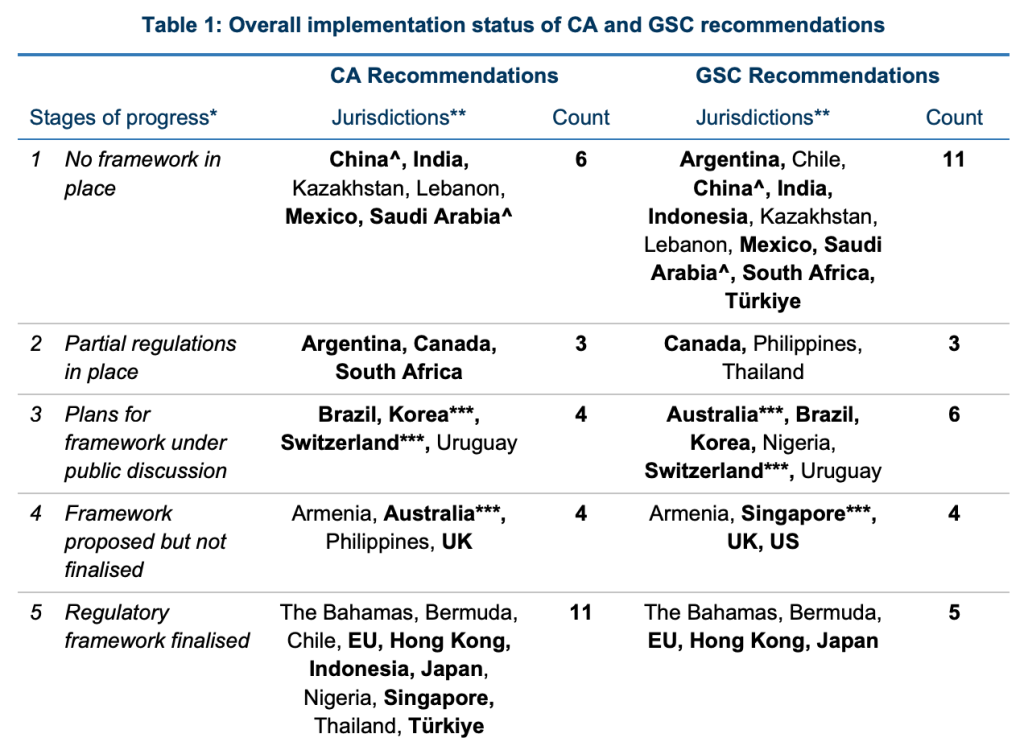
Source: FSB

Lack of Data Access Leaves Regulators “Blind” to Crypto Risks, FSB Finds

This, the report said, “leads to delays in addressing cooperation requests” and in some cases “discourages participation in cooperation arrangements altogether.”

The board said privacy protections, while essential for personal and corporate rights, have become a double-edged sword for global oversight. Without consistent and reliable data access, regulators are unable to identify potential systemic risks in the crypto sector.

The report also said that “regulatory data sources remain limited,” forcing authorities to rely on incomplete information from commercial providers and surveys that often lack accuracy and consistency.

According to the FSB, the uneven regulatory environment across major economies has led to regulatory arbitrage, allowing crypto companies to shift operations across borders to exploit weaker oversight regimes.

The board urged governments to close data gaps and strengthen cooperation mechanisms to avoid further fragmentation of the global crypto market.

Source: FSB

The FSB’s warning comes as privacy debates intensify within the crypto industry.

Advocates argue that privacy is essential for protecting users from surveillance and financial exploitation, while regulators view the lack of transparency as a major obstacle to combating money laundering and illicit finance.

The tension reflects a deeper divide between two financial philosophies. For governments, data access is a cornerstone of financial stability and compliance enforcement.

For the crypto community, privacy represents a fundamental right and a necessary layer of security in digital finance.

Privacy advocates note that transparency on public blockchains can expose people and businesses to competitive and security risks.

Public wallet data can reveal salaries, trade volumes, and strategic holdings, information that, in traditional finance, remains strictly confidential.

Experts say that without privacy, enterprises and institutions remain hesitant to adopt blockchain for mainstream financial operations.

Experts, Especially Ethereum, Say Lack of Privacy is Crypto’s Biggest Weakness

Recent initiatives within the Ethereum ecosystem show the industry’s efforts to address these privacy concerns.

The Ethereum Foundation recently launched a 47-member Privacy Cluster coordinated by Blockscout founder Igor Barinov. The group seeks to develop privacy-preserving technologies such as private reads and writes, selective disclosure for digital identities, and a new privacy-focused wallet called Kohaku.

The foundation warned earlier this year that without robust privacy safeguards, Ethereum could risk becoming “the backbone of global surveillance rather than global freedom.”

Ethereum co-founder Vitalik Buterin has also been vocal on the issue, describing privacy as “essential to decentralization.”

In his essay “Why I Support Privacy,” Buterin argued that information asymmetry, when power is concentrated among those who control data, undermines democratic and financial balance.

The debate over crypto privacy has also drawn attention from regulators in the EU, U.S., and U.K., where laws governing Know Your Customer (KYC) procedures and the Financial Action Task Force’s (FATF) Travel Rule are tightening.

Developers of privacy tools such as mixers and zero-knowledge proof systems have faced increasing scrutiny, with some jurisdictions treating privacy technologies as potential tools for criminal activity.

Despite regulatory pressure, many within the crypto industry maintain that privacy and compliance are not mutually exclusive.

Emerging models such as smart contract privacy allow transactions to remain verifiable without exposing sensitive data, a balance that could satisfy both regulators and institutions.

Finance veteran Petro Golovko, trust protector at British Gold Trust, told Cryptonews that the lack of privacy is “crypto’s biggest undoing.”

He argued that no monetary system can function if “every transaction is permanently public,” saying that without privacy, crypto “will never scale beyond a niche.”

The FSB’s report concludes that addressing privacy barriers will be key to supporting effective cross-border cooperation.


Disclaimer: The articles reposted on this site are sourced from public platforms and are provided for informational purposes only. They do not necessarily reflect the views of MEXC. All rights remain with the original authors. If you believe any content infringes on third-party rights, please contact service@support.mexc.com for removal. MEXC makes no guarantees regarding the accuracy, completeness, or timeliness of the content and is not responsible for any actions taken based on the information provided. The content does not constitute financial, legal, or other professional advice, nor should it be considered a recommendation or endorsement by MEXC.

You May Also Like

American Bitcoin’s $5B Nasdaq Debut Puts Trump-Backed Miner in Crypto Spotlight

American Bitcoin’s $5B Nasdaq Debut Puts Trump-Backed Miner in Crypto Spotlight

The post American Bitcoin’s $5B Nasdaq Debut Puts Trump-Backed Miner in Crypto Spotlight appeared on BitcoinEthereumNews.com. Key Takeaways: American Bitcoin (ABTC) surged nearly 85% on its Nasdaq debut, briefly reaching a $5B valuation. The Trump family, alongside Hut 8 Mining, controls 98% of the newly merged crypto-mining entity. Eric Trump called Bitcoin “modern-day gold,” predicting it could reach $1 million per coin. American Bitcoin, a fast-rising crypto mining firm with strong political and institutional backing, has officially entered Wall Street. After merging with Gryphon Digital Mining, the company made its Nasdaq debut under the ticker ABTC, instantly drawing global attention to both its stock performance and its bold vision for Bitcoin’s future. Read More: Trump-Backed Crypto Firm Eyes Asia for Bold Bitcoin Expansion Nasdaq Debut: An Explosive First Day ABTC’s first day of trading proved as dramatic as expected. Shares surged almost 85% at the open, touching a peak of $14 before settling at lower levels by the close. That initial spike valued the company around $5 billion, positioning it as one of 2025’s most-watched listings. At the last session, ABTC has been trading at $7.28 per share, which is a small positive 2.97% per day. Although the price has decelerated since opening highs, analysts note that the company has been off to a strong start and early investor activity is a hard-to-find feat in a newly-launched crypto mining business. According to market watchers, the listing comes at a time of new momentum in the digital asset markets. With Bitcoin trading above $110,000 this quarter, American Bitcoin’s entry comes at a time when both institutional investors and retail traders are showing heightened interest in exposure to Bitcoin-linked equities. Ownership Structure: Trump Family and Hut 8 at the Helm Its management and ownership set up has increased the visibility of the company. The Trump family and the Canadian mining giant Hut 8 Mining jointly own 98 percent…
Share
BitcoinEthereumNews2025/09/18 01:33
Why Smart Talent Acquisition Leaders are Choosing Nearshore Over Offshore: The 2026 Talent Geography Playbook

Why Smart Talent Acquisition Leaders are Choosing Nearshore Over Offshore: The 2026 Talent Geography Playbook

Last quarter, I watched a director of engineering at a Series B startup spend three weeks trying to fill a temporary Senior Backend Engineer role. The rate? $89
Share
Techbullion2026/01/21 06:13
Fed Finally Cuts Interest Rates – Crypto Boom is About to Begin

Fed Finally Cuts Interest Rates – Crypto Boom is About to Begin

The federal funds rate now stands in a range of 4.00% to 4.25%, a level that reflects a delicate balancing […] The post Fed Finally Cuts Interest Rates – Crypto Boom is About to Begin appeared first on Coindoo.
Share
Coindoo2025/09/18 02:01



