The post Netflix Executives Downplay Any Interest In Warner Acquisition appeared on BitcoinEthereumNews.com. (Photo by Mario Tama/Getty Images) Getty Images Netflix is also said to be among the interested buyers in Warner Bros. Discovery after the Hollywood media company officially put itself on the market earlier in the day, saying it had several potential interested suitors. But at Tuesday’s analyst call after releasing Q3 earnings, the company’s Co-CEOs made it pretty clear, though perhaps not absolutely definitive, that big media-company acquisitions aren’t big priorities. “We have no interest in owning legacy media networks, so there’s no change there,” said Co-CEO Ted Sarandos. “We can be choosy.” The comments came amid another big jump in revenues, 17%, but an earnings-per-share miss the company blamed on a complex Brazilian tax dispute. The biggest conversation of the day, however, is whether Netflix would actually buy one of the most storied media companies in Hollywood. While buying intellectual property rights may have value, Sarandos said, “does it strengthen our existing capabilities somehow? Does it accelerate our existing strategy?” Co-CEO Greg Peters noted that the latest round of consolidation in Hollywood doesn’t appear materially different from previous rounds, such as Disney’s 2019 purchase of most of Fox, or the successive previous deals involving Warner Bros., first with AT&T’s acquisition, and then the debt-laden 2023 merger led by Discovery Networks. “None of those mergers were a fundamental shift in the competitive landscape, and we’ve seen a wide range of outcomes from those mergers,” Peters said. Importantly, none of those mergers “changes the substance of the challenge our competitors face.” By that, Peters said it’s challenging, for Netflix or anyone else, to do all the things a company needs to do to compete globally in streaming video with content for a wide variety of markets in many languages and countries, with all the tech requirements for customer acquisition and retention,… The post Netflix Executives Downplay Any Interest In Warner Acquisition appeared on BitcoinEthereumNews.com. (Photo by Mario Tama/Getty Images) Getty Images Netflix is also said to be among the interested buyers in Warner Bros. Discovery after the Hollywood media company officially put itself on the market earlier in the day, saying it had several potential interested suitors. But at Tuesday’s analyst call after releasing Q3 earnings, the company’s Co-CEOs made it pretty clear, though perhaps not absolutely definitive, that big media-company acquisitions aren’t big priorities. “We have no interest in owning legacy media networks, so there’s no change there,” said Co-CEO Ted Sarandos. “We can be choosy.” The comments came amid another big jump in revenues, 17%, but an earnings-per-share miss the company blamed on a complex Brazilian tax dispute. The biggest conversation of the day, however, is whether Netflix would actually buy one of the most storied media companies in Hollywood. While buying intellectual property rights may have value, Sarandos said, “does it strengthen our existing capabilities somehow? Does it accelerate our existing strategy?” Co-CEO Greg Peters noted that the latest round of consolidation in Hollywood doesn’t appear materially different from previous rounds, such as Disney’s 2019 purchase of most of Fox, or the successive previous deals involving Warner Bros., first with AT&T’s acquisition, and then the debt-laden 2023 merger led by Discovery Networks. “None of those mergers were a fundamental shift in the competitive landscape, and we’ve seen a wide range of outcomes from those mergers,” Peters said. Importantly, none of those mergers “changes the substance of the challenge our competitors face.” By that, Peters said it’s challenging, for Netflix or anyone else, to do all the things a company needs to do to compete globally in streaming video with content for a wide variety of markets in many languages and countries, with all the tech requirements for customer acquisition and retention,…

Netflix Executives Downplay Any Interest In Warner Acquisition

For feedback or concerns regarding this content, please contact us at crypto.news@mexc.com

(Photo by Mario Tama/Getty Images)

Getty Images

Netflix is also said to be among the interested buyers in Warner Bros. Discovery after the Hollywood media company officially put itself on the market earlier in the day, saying it had several potential interested suitors. But at Tuesday’s analyst call after releasing Q3 earnings, the company’s Co-CEOs made it pretty clear, though perhaps not absolutely definitive, that big media-company acquisitions aren’t big priorities.

“We have no interest in owning legacy media networks, so there’s no change there,” said Co-CEO Ted Sarandos. “We can be choosy.”

The comments came amid another big jump in revenues, 17%, but an earnings-per-share miss the company blamed on a complex Brazilian tax dispute. The biggest conversation of the day, however, is whether Netflix would actually buy one of the most storied media companies in Hollywood.

While buying intellectual property rights may have value, Sarandos said, “does it strengthen our existing capabilities somehow? Does it accelerate our existing strategy?”

Co-CEO Greg Peters noted that the latest round of consolidation in Hollywood doesn’t appear materially different from previous rounds, such as Disney’s 2019 purchase of most of Fox, or the successive previous deals involving Warner Bros., first with AT&T’s acquisition, and then the debt-laden 2023 merger led by Discovery Networks.

“None of those mergers were a fundamental shift in the competitive landscape, and we’ve seen a wide range of outcomes from those mergers,” Peters said. Importantly, none of those mergers “changes the substance of the challenge our competitors face.”

By that, Peters said it’s challenging, for Netflix or anyone else, to do all the things a company needs to do to compete globally in streaming video with content for a wide variety of markets in many languages and countries, with all the tech requirements for customer acquisition and retention, recommendation engines, pricing models and much else.

“You don’t get there by buying another company trying to develop those same capabilities,” Peters said. “We’ll do whatever we think will help us grow the business.’

WBD assets include highly regarded film and TV production studios, HBO, CNN, several other cable networks, a sprawling lot in Burbank, and streaming service HBO Max. Its well-regarded library of award-winning films and TV shows also includes the DC superhero universe of Superman, Batman and others.

Paramount Skydance CEO David Ellison had previously made it clear his newly merged company was interested in buying all of WBD, and reportedly made a $20/share bid that valued WBD at around $55 billion. Comcast, owner of NBCUniversal but also spinning off most of its cable networks into a separate company called Versant, is also said to be interested.

“I would be surprised if Netflix made a push for (WBD),” said Mark Mahaney, Evercore ISI’s head of internet research, on CNBC. “I think they’re in the market as a bidder (on sports and other content). They’re bidding on UEFA (the hugely popular European club championship tournament).”

Mahaney and numerous other analysts say it’s difficult to see what use Netflix would have with most Warner Bros. assets, which don’t fit its corporate priorities, beyond the productions it routinely licenses with Warner and other Hollywood studios.

“The only focus investors have is what was with the answer on (mergers & acquisitions)?” said LightShed Partners senior analyst Rich Greenfield on CNBC. “Are they a bidder? Are they not?”

Most of what Warner has wouldn’t be much use to Netflix, even a gold-standard asset such as HBO and its streaming service HBO Max, because they’re entwined with the production studios, cable providers and more.

“What you’d really want is the IP trove of Warner Brothers,” Greenfield said. “That would be the piece that’s most interesting to Netflix.”

The company hasn’t made many big IP deals, other than acquiring MillarWorld’s comic-book empire, and children’s author Roald Dahl’s literary estate.

“This would be a $50 (billion), $60 billion acquisition,” Greenfield said. You have to wonder is that really the best use of capital for the organization.”

Even if Netflix were to get involved, it’s generally shown extreme cost discipline, which means it frequently loses out on sports rights and other deals where a motivated competitor is willing to pay more.

“Netflix generally doesn’t get sucked in and overpay,” Greenfield said. “Even if they’re interested, it’s hard to say they walk away the winner, given the price discipline they’ve always shown.”

Netflix shares dropped almost 6% Tuesday after quarterly earnings fell well below expectations, a miss the company blamed on an unanticipated, ongoing dispute with Brazilian tax authorities.

Despite the earnings miss, revenues were up 17%. The fight with Brazilian authorities was blamed on dropping operating margins to 28%, well below previous guidance of 31.5%.

“Absent this expense, we would have exceeded our Q3’25 operating margin forecast,” Netflix wrote in its investor letter accompanying its earnings report. “We don’t expect this matter to have a material impact on future results.”

As described by CFO Spence Neumann, the Brazilian dispute involves an unusual tax on “contributions for intervention in economic domain,” or payments between a Brazilian company and a non-Brazilian one. In this case, Netflix Brazil pays its parent company for use of subscriber technology, which Netflix expected would not be affected by the tax. A Brazilian Supreme Court decision found otherwise, necessitating nearly four years of back payments.

“No other tax looks or behaves like this in any other major country we operate in,” said Neumann.

The earnings miss came amid what Netflix executives had touted as one of its best-ever slates, including meme-worthy goldmine KPop Demon Hunters, the latest season of Wednesday, a Happy Gilmore sequel, Korean hit Your Majesty, the Canelo vs. Crawford boxing match and more.

But the company’s next legs of growth will likely come from further growth in its ad-supported tier, now nearing its third year of existence after doubling revenues from last year’s relatively small number. The company announced a big ad deal with alcohol-giant AB Inbev was one example of its growing power there, Mahaney said.

“I think it’s a real legitimate leg of growth,” Mahaney said. “I think investors want to see more of those deals come through.”

The company also can continue to invest in live events and sports, such as that Canelo/Crawford boxing match. The company will again feature two Christmas DayNFL games, as it did last year, and recently announced a deal with Major League Baseball for the opening-day game of the New York Yankees next spring.

The company has been careful, however, to avoid pricey long-term deals for weekly broadcasts of a league’s matches, such as all the traditional media companies have done for decades.

Source: https://www.forbes.com/sites/dbloom/2025/10/21/netflix-executives-downplay-any-interest-in-warner-acquisition/


Market Opportunity
Seed.Photo Logo
Seed.Photo Price(PHOTO)
$0.16443
$0.16443$0.16443
0.00%
USD
Seed.Photo (PHOTO) Live Price Chart
Disclaimer: The articles reposted on this site are sourced from public platforms and are provided for informational purposes only. They do not necessarily reflect the views of MEXC. All rights remain with the original authors. If you believe any content infringes on third-party rights, please contact crypto.news@mexc.com for removal. MEXC makes no guarantees regarding the accuracy, completeness, or timeliness of the content and is not responsible for any actions taken based on the information provided. The content does not constitute financial, legal, or other professional advice, nor should it be considered a recommendation or endorsement by MEXC.

You May Also Like

[Finterest] How do you start saving with Pag-IBIG’s MP2 program?

[Finterest] How do you start saving with Pag-IBIG’s MP2 program?

MP2 may be right for you if you have a conservative risk appetite and an investment horizon of at least 5 years
Share
Rappler2026/03/12 13:05
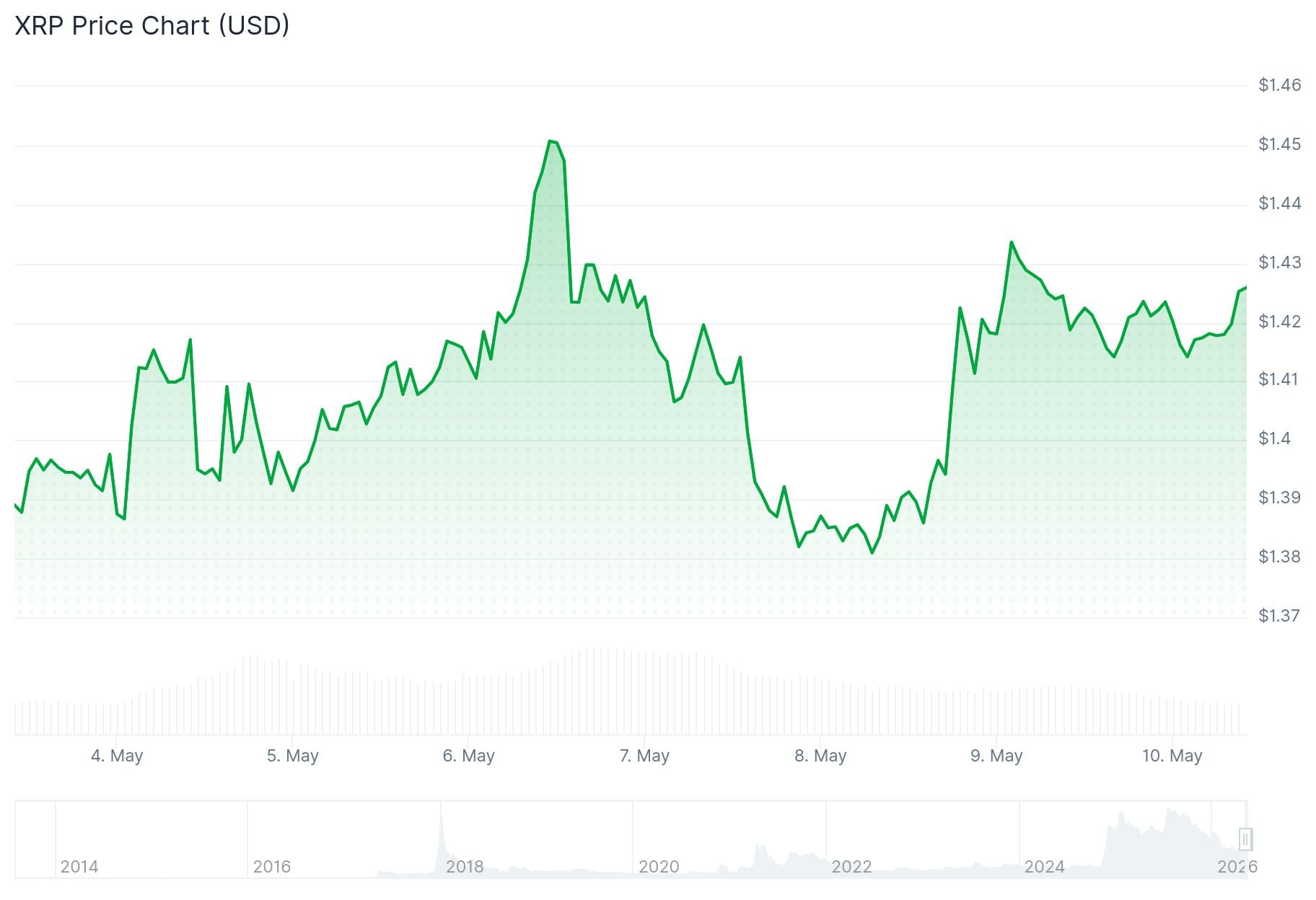
XRP steadies near $1.38 as Bollinger squeeze hints at breakout before CPI

XRP steadies near $1.38 as Bollinger squeeze hints at breakout before CPI

Markets Share Share this article
Copy linkX (Twitter)LinkedInFacebookEmail
XRP steadies near $1.38 as Bollinger squeeze
Share
Coindesk2026/03/12 13:15
Google's AP2 protocol has been released. Does encrypted AI still have a chance?

Google's AP2 protocol has been released. Does encrypted AI still have a chance?

Following the MCP and A2A protocols, the AI Agent market has seen another blockbuster arrival: the Agent Payments Protocol (AP2), developed by Google. This will clearly further enhance AI Agents' autonomous multi-tasking capabilities, but the unfortunate reality is that it has little to do with web3AI. Let's take a closer look: What problem does AP2 solve? Simply put, the MCP protocol is like a universal hook, enabling AI agents to connect to various external tools and data sources; A2A is a team collaboration communication protocol that allows multiple AI agents to cooperate with each other to complete complex tasks; AP2 completes the last piece of the puzzle - payment capability. In other words, MCP opens up connectivity, A2A promotes collaboration efficiency, and AP2 achieves value exchange. The arrival of AP2 truly injects "soul" into the autonomous collaboration and task execution of Multi-Agents. Imagine AI Agents connecting Qunar, Meituan, and Didi to complete the booking of flights, hotels, and car rentals, but then getting stuck at the point of "self-payment." What's the point of all that multitasking? So, remember this: AP2 is an extension of MCP+A2A, solving the last mile problem of AI Agent automated execution. What are the technical highlights of AP2? The core innovation of AP2 is the Mandates mechanism, which is divided into real-time authorization mode and delegated authorization mode. Real-time authorization is easy to understand. The AI Agent finds the product and shows it to you. The operation can only be performed after the user signs. Delegated authorization requires the user to set rules in advance, such as only buying the iPhone 17 when the price drops to 5,000. The AI Agent monitors the trigger conditions and executes automatically. The implementation logic is cryptographically signed using Verifiable Credentials (VCs). Users can set complex commission conditions, including price ranges, time limits, and payment method priorities, forming a tamper-proof digital contract. Once signed, the AI Agent executes according to the conditions, with VCs ensuring auditability and security at every step. Of particular note is the "A2A x402" extension, a technical component developed by Google specifically for crypto payments, developed in collaboration with Coinbase and the Ethereum Foundation. This extension enables AI Agents to seamlessly process stablecoins, ETH, and other blockchain assets, supporting native payment scenarios within the Web3 ecosystem. What kind of imagination space can AP2 bring? After analyzing the technical principles, do you think that's it? Yes, in fact, the AP2 is boring when it is disassembled alone. Its real charm lies in connecting and opening up the "MCP+A2A+AP2" technology stack, completely opening up the complete link of AI Agent's autonomous analysis+execution+payment. From now on, AI Agents can open up many application scenarios. For example, AI Agents for stock investment and financial management can help us monitor the market 24/7 and conduct independent transactions. Enterprise procurement AI Agents can automatically replenish and renew without human intervention. AP2's complementary payment capabilities will further expand the penetration of the Agent-to-Agent economy into more scenarios. Google obviously understands that after the technical framework is established, the ecological implementation must be relied upon, so it has brought in more than 60 partners to develop it, almost covering the entire payment and business ecosystem. Interestingly, it also involves major Crypto players such as Ethereum, Coinbase, MetaMask, and Sui. Combined with the current trend of currency and stock integration, the imagination space has been doubled. Is web3 AI really dead? Not entirely. Google's AP2 looks complete, but it only achieves technical compatibility with Crypto payments. It can only be regarded as an extension of the traditional authorization framework and belongs to the category of automated execution. There is a "paradigm" difference between it and the autonomous asset management pursued by pure Crypto native solutions. The Crypto-native solutions under exploration are taking the "decentralized custody + on-chain verification" route, including AI Agent autonomous asset management, AI Agent autonomous transactions (DeFAI), AI Agent digital identity and on-chain reputation system (ERC-8004...), AI Agent on-chain governance DAO framework, AI Agent NPC and digital avatars, and many other interesting and fun directions. Ultimately, once users get used to AI Agent payments in traditional fields, their acceptance of AI Agents autonomously owning digital assets will also increase. And for those scenarios that AP2 cannot reach, such as anonymous transactions, censorship-resistant payments, and decentralized asset management, there will always be a time for crypto-native solutions to show their strength? The two are more likely to be complementary rather than competitive, but to be honest, the key technological advancements behind AI Agents currently all come from web2AI, and web3AI still needs to keep up the good work!
Share
PANews2025/09/18 07:00