A Bitcoin wallet dating back to the cryptocurrency’s earliest days has just come to life after more than 14 years of inactivity.  The address, believed to have mined around 4,000 BTC between April and June 2009, transferred 150 BTC this week — the first movement since June 2011. Rare Movement from the Early Bitcoin Era The coins, worth just $67,724 when last active, are now valued at roughly $16 million. On-chain data shows the wallet initially consolidated its mined BTC into a single address in 2011 and had remained untouched since. Transfers from Satoshi-era wallets are extremely rare. Data from Glassnode suggests only a handful of pre-2011 wallets move funds each year.  The coins from this period were mined when Bitcoin’s creator, Satoshi Nakamoto, was still active in online discussions, making such movements a magnet for speculation. Historically, old-wallet awakenings trigger short-term jitters in the market. Traders often interpret these moves as early holders preparing to sell, sparking fears of large inflows to exchanges.  However, in most past cases, the coins were not sold but simply moved to new addresses for security, inheritance, or consolidation purposes. Bitcoin Price Chart In October. Source: BeInCrypto Why the Timing Matters The move comes as Bitcoin trades around $110,000, consolidating after a steep drop from its recent all-time high above $126,000 earlier this month.  The market is recovering from the largest liquidation event in crypto history, with $19 billion wiped out across leveraged positions. Sentiment remains fragile. Any signal suggesting potential sell pressure — especially from long-dormant wallets — can amplify caution.  Still, the 150 BTC transfer represents a negligible share of daily Bitcoin trading volume, which exceeds $20 billion, making the market impact mostly psychological. Crypto Fear and Greed Index. Source: Alternative Possible Explanations There are several plausible reasons behind the move. The owner could be migrating coins to a modern, secure wallet, executing estate planning, or testing transaction functionality.  Unless the funds are later traced to exchange-linked addresses, it is unlikely that the coins were sold. Similar awakenings in 2021 and 2023 did not lead to sustained price drops. Those transactions were eventually linked to personal reorganization rather than liquidations. Market Context and Implications The Bitcoin market has been volatile in recent weeks, shaped by macroeconomic tension and heightened sensitivity to on-chain data.  With prices consolidating between $108,000 and $111,000, traders are looking for direction amid fears of further corrections. In this environment, old-wallet movements act as symbolic reminders of Bitcoin’s early decentralization — and the immense fortunes still sitting dormant.  For investors, unless these coins reach exchange wallets, such awakenings hold psychological weight, not market-moving power. Bottom Line The 14-year-old wallet’s activity is a historic anomaly rather than a harbinger of major market shifts. It reflects Bitcoin’s longevity and the vast untapped wealth from its earliest mining era.  For now, the market continues to watch closely — but the move appears more like digital housekeeping than a signal of imminent selling.A Bitcoin wallet dating back to the cryptocurrency’s earliest days has just come to life after more than 14 years of inactivity.  The address, believed to have mined around 4,000 BTC between April and June 2009, transferred 150 BTC this week — the first movement since June 2011. Rare Movement from the Early Bitcoin Era The coins, worth just $67,724 when last active, are now valued at roughly $16 million. On-chain data shows the wallet initially consolidated its mined BTC into a single address in 2011 and had remained untouched since. Transfers from Satoshi-era wallets are extremely rare. Data from Glassnode suggests only a handful of pre-2011 wallets move funds each year.  The coins from this period were mined when Bitcoin’s creator, Satoshi Nakamoto, was still active in online discussions, making such movements a magnet for speculation. Historically, old-wallet awakenings trigger short-term jitters in the market. Traders often interpret these moves as early holders preparing to sell, sparking fears of large inflows to exchanges.  However, in most past cases, the coins were not sold but simply moved to new addresses for security, inheritance, or consolidation purposes. Bitcoin Price Chart In October. Source: BeInCrypto Why the Timing Matters The move comes as Bitcoin trades around $110,000, consolidating after a steep drop from its recent all-time high above $126,000 earlier this month.  The market is recovering from the largest liquidation event in crypto history, with $19 billion wiped out across leveraged positions. Sentiment remains fragile. Any signal suggesting potential sell pressure — especially from long-dormant wallets — can amplify caution.  Still, the 150 BTC transfer represents a negligible share of daily Bitcoin trading volume, which exceeds $20 billion, making the market impact mostly psychological. Crypto Fear and Greed Index. Source: Alternative Possible Explanations There are several plausible reasons behind the move. The owner could be migrating coins to a modern, secure wallet, executing estate planning, or testing transaction functionality.  Unless the funds are later traced to exchange-linked addresses, it is unlikely that the coins were sold. Similar awakenings in 2021 and 2023 did not lead to sustained price drops. Those transactions were eventually linked to personal reorganization rather than liquidations. Market Context and Implications The Bitcoin market has been volatile in recent weeks, shaped by macroeconomic tension and heightened sensitivity to on-chain data.  With prices consolidating between $108,000 and $111,000, traders are looking for direction amid fears of further corrections. In this environment, old-wallet movements act as symbolic reminders of Bitcoin’s early decentralization — and the immense fortunes still sitting dormant.  For investors, unless these coins reach exchange wallets, such awakenings hold psychological weight, not market-moving power. Bottom Line The 14-year-old wallet’s activity is a historic anomaly rather than a harbinger of major market shifts. It reflects Bitcoin’s longevity and the vast untapped wealth from its earliest mining era.  For now, the market continues to watch closely — but the move appears more like digital housekeeping than a signal of imminent selling.

Satoshi-Era Bitcoin Whale Awakens After 14 Years: Will It Move BTC Price?

2025/10/24 04:48
3 min read

A Bitcoin wallet dating back to the cryptocurrency’s earliest days has just come to life after more than 14 years of inactivity. 

The address, believed to have mined around 4,000 BTC between April and June 2009, transferred 150 BTC this week — the first movement since June 2011.

Rare Movement from the Early Bitcoin Era

The coins, worth just $67,724 when last active, are now valued at roughly $16 million. On-chain data shows the wallet initially consolidated its mined BTC into a single address in 2011 and had remained untouched since.

Transfers from Satoshi-era wallets are extremely rare. Data from Glassnode suggests only a handful of pre-2011 wallets move funds each year. 

The coins from this period were mined when Bitcoin’s creator, Satoshi Nakamoto, was still active in online discussions, making such movements a magnet for speculation.

Historically, old-wallet awakenings trigger short-term jitters in the market. Traders often interpret these moves as early holders preparing to sell, sparking fears of large inflows to exchanges. 

However, in most past cases, the coins were not sold but simply moved to new addresses for security, inheritance, or consolidation purposes.
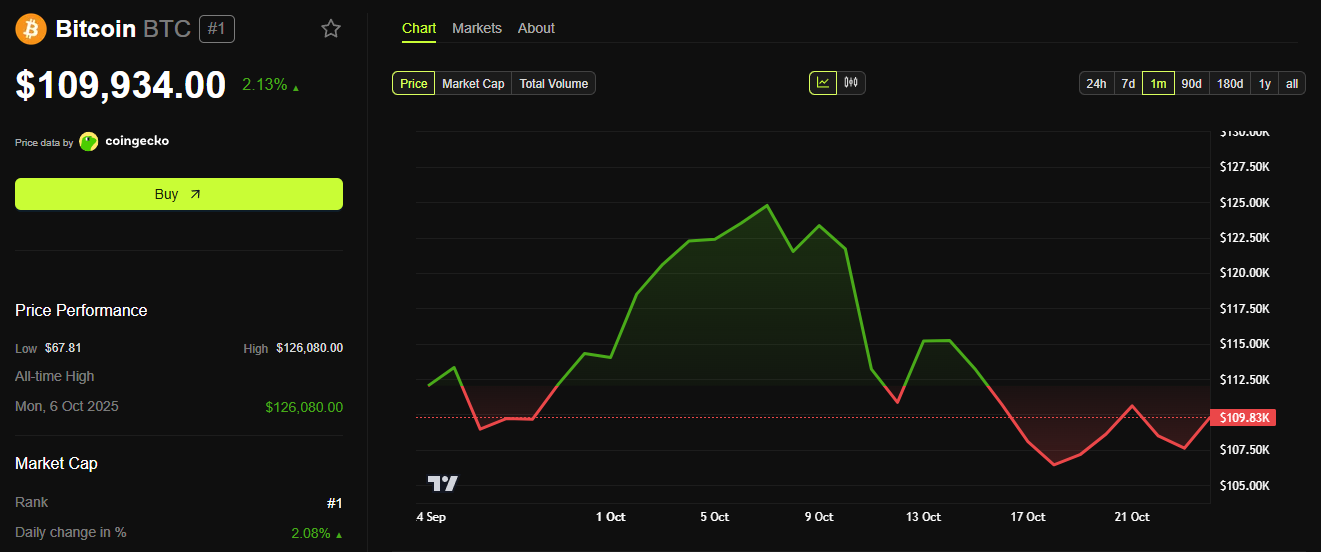
Bitcoin Price Chart In October. Source: BeInCrypto

Why the Timing Matters

The move comes as Bitcoin trades around $110,000, consolidating after a steep drop from its recent all-time high above $126,000 earlier this month. 

The market is recovering from the largest liquidation event in crypto history, with $19 billion wiped out across leveraged positions.

Sentiment remains fragile. Any signal suggesting potential sell pressure — especially from long-dormant wallets — can amplify caution. 

Still, the 150 BTC transfer represents a negligible share of daily Bitcoin trading volume, which exceeds $20 billion, making the market impact mostly psychological.
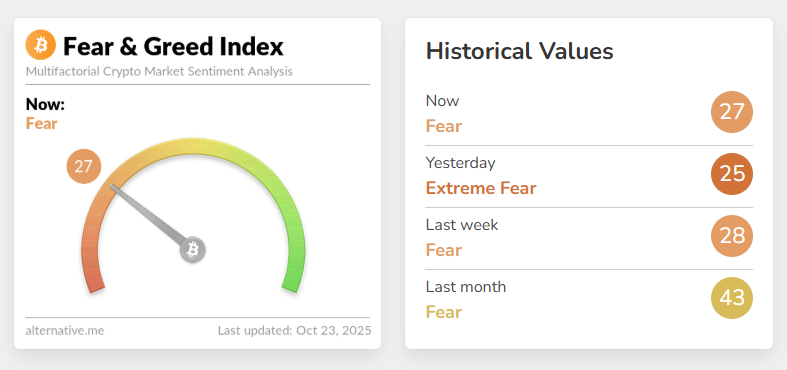
Crypto Fear and Greed Index. Source: Alternative

Possible Explanations

There are several plausible reasons behind the move. The owner could be migrating coins to a modern, secure wallet, executing estate planning, or testing transaction functionality. 

Unless the funds are later traced to exchange-linked addresses, it is unlikely that the coins were sold.

Similar awakenings in 2021 and 2023 did not lead to sustained price drops. Those transactions were eventually linked to personal reorganization rather than liquidations.

Market Context and Implications

The Bitcoin market has been volatile in recent weeks, shaped by macroeconomic tension and heightened sensitivity to on-chain data. 

With prices consolidating between $108,000 and $111,000, traders are looking for direction amid fears of further corrections.

In this environment, old-wallet movements act as symbolic reminders of Bitcoin’s early decentralization — and the immense fortunes still sitting dormant. 

For investors, unless these coins reach exchange wallets, such awakenings hold psychological weight, not market-moving power.

Bottom Line

The 14-year-old wallet’s activity is a historic anomaly rather than a harbinger of major market shifts. It reflects Bitcoin’s longevity and the vast untapped wealth from its earliest mining era. 

For now, the market continues to watch closely — but the move appears more like digital housekeeping than a signal of imminent selling.


Market Opportunity
ERA Logo
ERA Price(ERA)
$0.1499
$0.1499$0.1499
-3.29%
USD
ERA (ERA) Live Price Chart
Disclaimer: The articles reposted on this site are sourced from public platforms and are provided for informational purposes only. They do not necessarily reflect the views of MEXC. All rights remain with the original authors. If you believe any content infringes on third-party rights, please contact service@support.mexc.com for removal. MEXC makes no guarantees regarding the accuracy, completeness, or timeliness of the content and is not responsible for any actions taken based on the information provided. The content does not constitute financial, legal, or other professional advice, nor should it be considered a recommendation or endorsement by MEXC.

You May Also Like

Husky Inu (HINU) Completes Move To $0.00020688

Husky Inu (HINU) Completes Move To $0.00020688

Husky Inu (HINU) has completed its latest price jump, rising from $0.00020628 to $0.00020688. The price jump is part of the project’s pre-launch phase, which began on April 1, 2025.
Share
Cryptodaily2025/09/18 01:10
XAU/USD stalls at $5,000 with the bullish trend in play

XAU/USD stalls at $5,000 with the bullish trend in play

The post XAU/USD stalls at $5,000 with the bullish trend in play appeared on BitcoinEthereumNews.com. Gold (XAU/USD) appreciates for the second consecutive month
Share
BitcoinEthereumNews2026/02/09 21:43
SOL Rockets 30%, ADA Holds $0.90, BlockDAG Dominates With $407M Presale

SOL Rockets 30%, ADA Holds $0.90, BlockDAG Dominates With $407M Presale

The post SOL Rockets 30%, ADA Holds $0.90, BlockDAG Dominates With $407M Presale appeared on BitcoinEthereumNews.com. The recent Solana (SOL) price surge has impressed traders, but questions remain about whether it can hold support after such a sharp climb. Meanwhile, the Cardano (ADA) market trend shows steady growth, yet its gains feel slower compared to rivals, leaving many wondering if ADA can really break past resistance. So where should investors look when both face their own hurdles? That’s where BlockDAG comes in. While others rely on speculation, BlockDAG is showing proof that rewards are already flowing. Social platforms are filled with photos and unboxing clips of the X10 miner, with users setting up devices and sharing payouts. This isn’t just talk; it’s miners at home already getting paid. For anyone searching for the best crypto to invest in now, BlockDAG stands out by combining real hardware delivery with immediate earning potential. BlockDAG: Proof in the Boxes, Proof in the Rewards BlockDAG’s biggest flex right now isn’t just numbers on a dashboard; it’s the boxes arriving at people’s doors. Across social media, users are posting photos, clips, and setup videos of the X10 miner. You can see them unboxing, plugging in, and instantly starting to mine BDAG. That kind of visibility shows BlockDAG isn’t selling hype; it’s already putting real mining gear into the hands of its backers. The community is not waiting for mainnet to find out if this works; they’re already mining and sharing payouts from home. While other coins are still tied up in speculation, here you’ve got thousands of miners being delivered worldwide. That’s why people are calling it the best crypto to invest in now, because it’s showing action, not just promises. The presale itself is backing up the momentum. BlockDAG has already raised over $407 million, with $40 million pouring in just last month. More than 312,000 holders are locked in,…
Share
BitcoinEthereumNews2025/09/18 08:52