The post US Senate passes bill to reopen federal government appeared on BitcoinEthereumNews.com. The US Senate on Tuesday passed a funding bill that could end the government shutdown within days, BBC reported. The bill will head to the House of Representatives for final approval. If it passes in both chambers of Congress, it will head to US President Donald Trump to be signed into law. Trump late Monday voiced support for a bipartisan agreement to end the US shutdown. Market reaction At the time of writing, the US Dollar Index (DXY) is trading 0.05% higher on the day to trade at 99.65. US Dollar FAQs The US Dollar (USD) is the official currency of the United States of America, and the ‘de facto’ currency of a significant number of other countries where it is found in circulation alongside local notes. It is the most heavily traded currency in the world, accounting for over 88% of all global foreign exchange turnover, or an average of $6.6 trillion in transactions per day, according to data from 2022. Following the second world war, the USD took over from the British Pound as the world’s reserve currency. For most of its history, the US Dollar was backed by Gold, until the Bretton Woods Agreement in 1971 when the Gold Standard went away. The most important single factor impacting on the value of the US Dollar is monetary policy, which is shaped by the Federal Reserve (Fed). The Fed has two mandates: to achieve price stability (control inflation) and foster full employment. Its primary tool to achieve these two goals is by adjusting interest rates. When prices are rising too quickly and inflation is above the Fed’s 2% target, the Fed will raise rates, which helps the USD value. When inflation falls below 2% or the Unemployment Rate is too high, the Fed may lower interest rates, which weighs… The post US Senate passes bill to reopen federal government appeared on BitcoinEthereumNews.com. The US Senate on Tuesday passed a funding bill that could end the government shutdown within days, BBC reported. The bill will head to the House of Representatives for final approval. If it passes in both chambers of Congress, it will head to US President Donald Trump to be signed into law. Trump late Monday voiced support for a bipartisan agreement to end the US shutdown. Market reaction At the time of writing, the US Dollar Index (DXY) is trading 0.05% higher on the day to trade at 99.65. US Dollar FAQs The US Dollar (USD) is the official currency of the United States of America, and the ‘de facto’ currency of a significant number of other countries where it is found in circulation alongside local notes. It is the most heavily traded currency in the world, accounting for over 88% of all global foreign exchange turnover, or an average of $6.6 trillion in transactions per day, according to data from 2022. Following the second world war, the USD took over from the British Pound as the world’s reserve currency. For most of its history, the US Dollar was backed by Gold, until the Bretton Woods Agreement in 1971 when the Gold Standard went away. The most important single factor impacting on the value of the US Dollar is monetary policy, which is shaped by the Federal Reserve (Fed). The Fed has two mandates: to achieve price stability (control inflation) and foster full employment. Its primary tool to achieve these two goals is by adjusting interest rates. When prices are rising too quickly and inflation is above the Fed’s 2% target, the Fed will raise rates, which helps the USD value. When inflation falls below 2% or the Unemployment Rate is too high, the Fed may lower interest rates, which weighs…

US Senate passes bill to reopen federal government

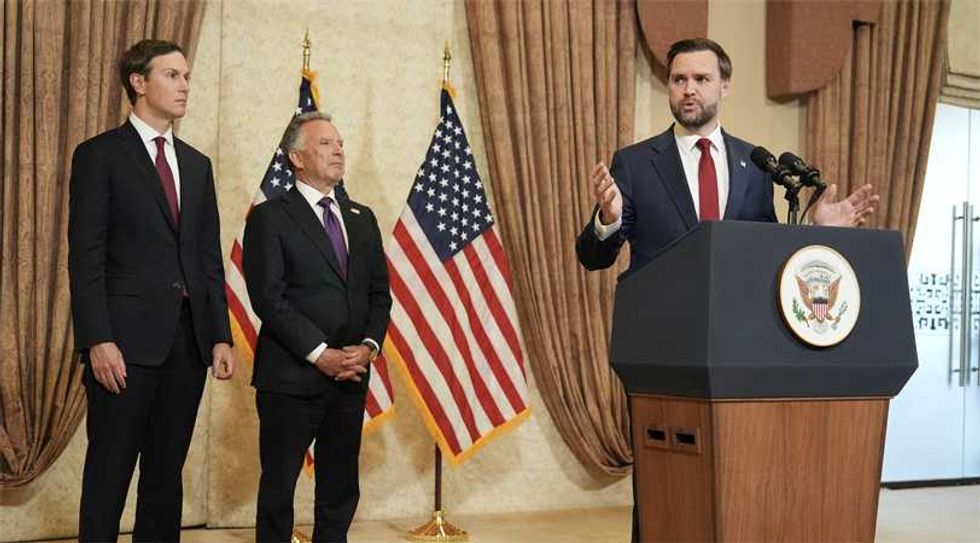
The US Senate on Tuesday passed a funding bill that could end the government shutdown within days, BBC reported. The bill will head to the House of Representatives for final approval.

If it passes in both chambers of Congress, it will head to US President Donald Trump to be signed into law. Trump late Monday voiced support for a bipartisan agreement to end the US shutdown.

Market reaction

At the time of writing, the US Dollar Index (DXY) is trading 0.05% higher on the day to trade at 99.65.

US Dollar FAQs

The US Dollar (USD) is the official currency of the United States of America, and the ‘de facto’ currency of a significant number of other countries where it is found in circulation alongside local notes. It is the most heavily traded currency in the world, accounting for over 88% of all global foreign exchange turnover, or an average of $6.6 trillion in transactions per day, according to data from 2022.
Following the second world war, the USD took over from the British Pound as the world’s reserve currency. For most of its history, the US Dollar was backed by Gold, until the Bretton Woods Agreement in 1971 when the Gold Standard went away.

The most important single factor impacting on the value of the US Dollar is monetary policy, which is shaped by the Federal Reserve (Fed). The Fed has two mandates: to achieve price stability (control inflation) and foster full employment. Its primary tool to achieve these two goals is by adjusting interest rates.
When prices are rising too quickly and inflation is above the Fed’s 2% target, the Fed will raise rates, which helps the USD value. When inflation falls below 2% or the Unemployment Rate is too high, the Fed may lower interest rates, which weighs on the Greenback.

In extreme situations, the Federal Reserve can also print more Dollars and enact quantitative easing (QE). QE is the process by which the Fed substantially increases the flow of credit in a stuck financial system.
It is a non-standard policy measure used when credit has dried up because banks will not lend to each other (out of the fear of counterparty default). It is a last resort when simply lowering interest rates is unlikely to achieve the necessary result. It was the Fed’s weapon of choice to combat the credit crunch that occurred during the Great Financial Crisis in 2008. It involves the Fed printing more Dollars and using them to buy US government bonds predominantly from financial institutions. QE usually leads to a weaker US Dollar.

Quantitative tightening (QT) is the reverse process whereby the Federal Reserve stops buying bonds from financial institutions and does not reinvest the principal from the bonds it holds maturing in new purchases. It is usually positive for the US Dollar.

Source: https://www.fxstreet.com/news/us-senate-passes-bill-to-reopen-federal-government-202511110234


Disclaimer: The articles reposted on this site are sourced from public platforms and are provided for informational purposes only. They do not necessarily reflect the views of MEXC. All rights remain with the original authors. If you believe any content infringes on third-party rights, please contact crypto.news@mexc.com for removal. MEXC makes no guarantees regarding the accuracy, completeness, or timeliness of the content and is not responsible for any actions taken based on the information provided. The content does not constitute financial, legal, or other professional advice, nor should it be considered a recommendation or endorsement by MEXC.

You May Also Like

Stunning 98.2% Drop To $26.5M Signals Security Revolution

Stunning 98.2% Drop To $26.5M Signals Security Revolution

The post Stunning 98.2% Drop To $26.5M Signals Security Revolution appeared on BitcoinEthereumNews.com. Crypto Hacking Losses Plunge: Stunning 98.2% Drop To $26
Share
BitcoinEthereumNews2026/03/02 13:10
Aave V4 roadmap signals end of multichain sprawl

Aave V4 roadmap signals end of multichain sprawl

The post Aave V4 roadmap signals end of multichain sprawl appeared on BitcoinEthereumNews.com. Aave Labs has released its official launch roadmap for V4, laying out the final steps ahead of the major upgrade’s Q4 mainnet launch.  Alongside new architectural and security improvements, the roadmap introduces a fundamental shift in how user balances are tracked and highlights a strategic pullback from economically underperforming deployments across layer-2 and alternative layer-1 networks. The V4 release moves away from aTokens’ rebasing-style mechanics toward ERC-4626-style share accounting, a change that promises cleaner integrations, easier tax treatment, and better compatibility with downstream DeFi infrastructure.  In a recent technical development update, Aave Labs confirmed that “tokenization is to remain optional and built using ERC 4626 vaults,” and that internal accounting will eliminate the use of exchange rates or scaled balances. The goal is to “further improve the overall reliability of the protocol.” ERC-4626 is a widely adopted Ethereum standard that expresses user deposits as shares of a vault rather than balances that grow over time. In Aave V3, aTokens accrue interest by increasing a user’s balance directly — behavior that resembles rebasing tokens and often confuses integrations and portfolio accounting tools.  By contrast, ERC-4626 tracks yield through a rising price-per-share metric, leaving token balances unchanged. The result is more predictable behavior for integrators, auditors and tax software, as well as a clearer cost basis for users. The roadmap also outlines a series of release milestones, including a formal codebase publication, a public testnet launch with a redesigned interface, and the completion of a multi-layered security review involving formal verification and manual audits. Aave Labs said the roadmap reflects the protocol’s “final stages of review, testing, and deployment,” and that additional documentation and launch preparation materials will be released in the coming weeks. But the most pointed strategic shift comes not from the codebase, but from Aave’s own governance forums. “Aave…
Share
BitcoinEthereumNews2025/09/18 07:40
March 2026 Marks a Defining Moment as Pi Network Signals a New Global Financial Era

March 2026 Marks a Defining Moment as Pi Network Signals a New Global Financial Era

The global Crypto landscape may be approaching a defining milestone as March 2026 emerges as a focal point for the evolution of Pi network. Within community
Share
Hokanews2026/03/02 12:53