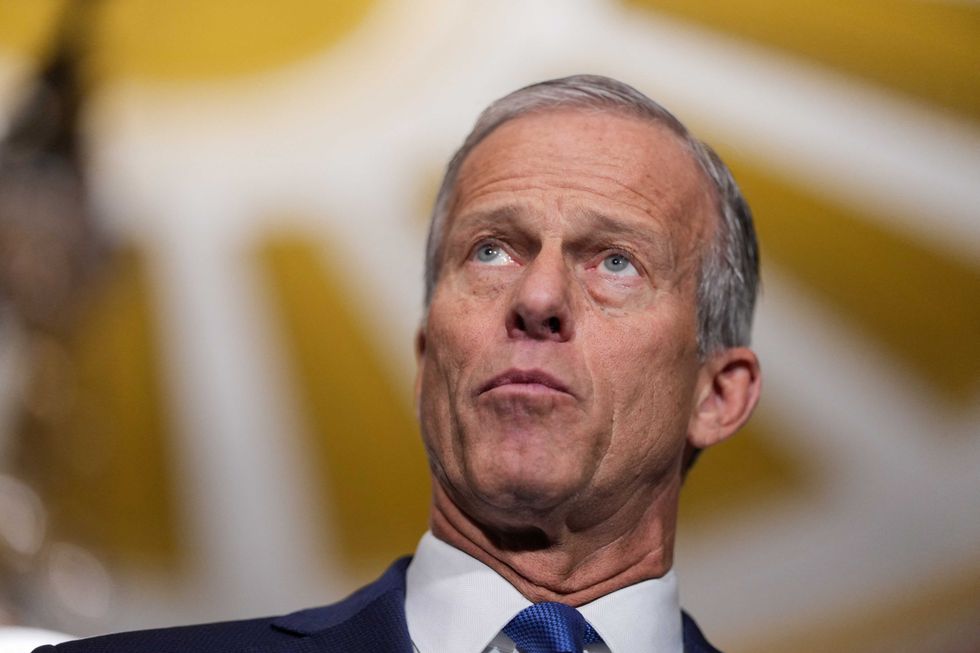
Michael Saylor says big finance hasn’t made Bitcoin wilder. Swings are narrowing as the asset base and market structure deepen. The post Bitcoin Volatility Keeps Dropping, And Michael Saylor Has the Data appeared first on Coinspeaker.Michael Saylor says big finance hasn’t made Bitcoin wilder. Swings are narrowing as the asset base and market structure deepen. The post Bitcoin Volatility Keeps Dropping, And Michael Saylor Has the Data appeared first on Coinspeaker.

Bitcoin Volatility Keeps Dropping, And Michael Saylor Has the Data

2025/11/19 15:21
3 min read
For feedback or concerns regarding this content, please contact us at crypto.news@mexc.com

Michael Saylor argues the entry of big finance hasn’t made Bitcoin wilder. If anything, he says, swings are narrowing as the asset base and market structure deepen.

In a Fox Business spot this week, the MicroStrategy executive chairman said BTC $91 654 24h volatility: 1.4% Market cap: $1.82 T Vol. 24h: $81.92 B annualized volatility has dropped from ~80% when his firm began buying in 2020 to roughly the 50% area today, and he expects further incremental declines as the market scales.

That claim isn’t out of left field. Independent research has documented a multi-year downtrend in BTC’s realized volatility: Fidelity has shown long stretches where Bitcoin’s risk is comparable to a non-trivial slice of S&P 500 constituents, while iShares likewise charts a steady glide lower. Even if BTC still runs hotter than broad equities or gold. In short: still volatile, but less so than before, and trending down.

Bitcoin price is down, but the structure is sturdier

Yes, the latest slide has been sharp. BTC has given back a chunk of 2025’s gains amid risk-off flows and ETF outflows. Still, that doesn’t automatically contradict the longer-term volatility compression Saylor describes. Recent coverage tallied a double-digit weekly drop and highlighted thinner liquidity as a key amplifier of short-term swings.
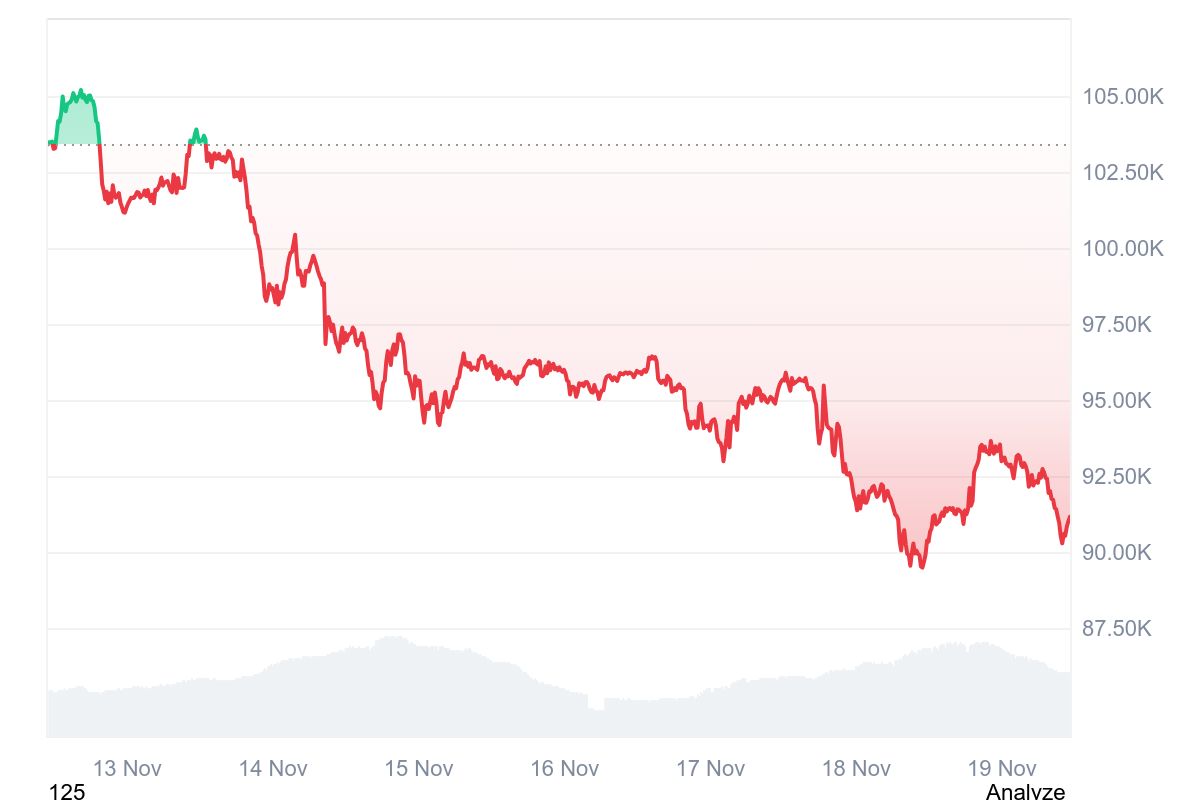
Bitcoin price in 7 days | Source: CoinMarketCap

Bitcoin price in 7 days | Source: CoinMarketCap

MicroStrategy’s exposure and the “premium”

Saylor doubled down on the claim that his company is built to weather deep drawdowns. As of this week, third-party dashboards and trade disclosures put MicroStrategy’s holdings near 649,870 BTC, after another 8,178 BTC buy, cementing its role as the largest corporate owner.

The firm’s website and trackers also display an mNAV multiple (a real-time gauge of the stock’s premium/discount to its bitcoin per-share value), which has compressed alongside the market.

A snapshot of MSTR fundamentals, including mNAV | Source: strategy.com

A snapshot of MSTR fundamentals, including mNAV | Source: strategy.com

MicroStrategy’s stock reflects that torque: MSTR often overshoots BTC both ways. Into this pullback, it has traded off with the coin. Recent closing prints and five-day moves show the dynamics: Microstrategy stock closed 5.8% up on Nov. 18 despite the sell-off.

Does lower volatility ahead make sense?

There’s a coherent case. Macro adoption (spot ETFs, institutional risk controls), deeper derivatives markets, and a wider base of long-only holders can all dampen realized volatility over time, even if episodic air-pockets remain. The researches mentioned above emphasize this pattern: declining secular volatility with cyclical spikes.

Saylor’s message isn’t that Bitcoin is suddenly “low risk,” but that the direction of travel for volatility is down as the asset matures. In that case, Wall Street’s arrival is part of the stabilization, not the problem. The latest sell-off stings, but the long-run data he points to (plus MicroStrategy’s continued accumulation and mNAV transparency) support the view that market structure is hardening even when prices aren’t.

next

The post Bitcoin Volatility Keeps Dropping, And Michael Saylor Has the Data appeared first on Coinspeaker.

Market Opportunity
Threshold Logo
Threshold Price(T)
$0.006531
$0.006531$0.006531
+0.35%
USD
Threshold (T) Live Price Chart
Disclaimer: The articles reposted on this site are sourced from public platforms and are provided for informational purposes only. They do not necessarily reflect the views of MEXC. All rights remain with the original authors. If you believe any content infringes on third-party rights, please contact crypto.news@mexc.com for removal. MEXC makes no guarantees regarding the accuracy, completeness, or timeliness of the content and is not responsible for any actions taken based on the information provided. The content does not constitute financial, legal, or other professional advice, nor should it be considered a recommendation or endorsement by MEXC.

You May Also Like

World Gold Council’s Pivotal Framework Promises Unprecedented Market Trust

World Gold Council’s Pivotal Framework Promises Unprecedented Market Trust

The post World Gold Council’s Pivotal Framework Promises Unprecedented Market Trust appeared on BitcoinEthereumNews.com. Tokenized Gold Revolution: World Gold Council
Share
BitcoinEthereumNews2026/03/20 03:58
Aave DAO to Shut Down 50% of L2s While Doubling Down on GHO

Aave DAO to Shut Down 50% of L2s While Doubling Down on GHO

The post Aave DAO to Shut Down 50% of L2s While Doubling Down on GHO appeared on BitcoinEthereumNews.com. Aave DAO is gearing up for a significant overhaul by shutting down over 50% of underperforming L2 instances. It is also restructuring its governance framework and deploying over $100 million to boost GHO. This could be a pivotal moment that propels Aave back to the forefront of on-chain lending or sparks unprecedented controversy within the DeFi community. Sponsored Sponsored ACI Proposes Shutting Down 50% of L2s The “State of the Union” report by the Aave Chan Initiative (ACI) paints a candid picture. After a turbulent period in the DeFi market and internal challenges, Aave (AAVE) now leads in key metrics: TVL, revenue, market share, and borrowing volume. Aave’s annual revenue of $130 million surpasses the combined cash reserves of its competitors. Tokenomics improvements and the AAVE token buyback program have also contributed to the ecosystem’s growth. Aave global metrics. Source: Aave However, the ACI’s report also highlights several pain points. First, regarding the Layer-2 (L2) strategy. While Aave’s L2 strategy was once a key driver of success, it is no longer fit for purpose. Over half of Aave’s instances on L2s and alt-L1s are not economically viable. Based on year-to-date data, over 86.6% of Aave’s revenue comes from the mainnet, indicating that everything else is a side quest. On this basis, ACI proposes closing underperforming networks. The DAO should invest in key networks with significant differentiators. Second, ACI is pushing for a complete overhaul of the “friendly fork” framework, as most have been unimpressive regarding TVL and revenue. In some cases, attackers have exploited them to Aave’s detriment, as seen with Spark. Sponsored Sponsored “The friendly fork model had a good intention but bad execution where the DAO was too friendly towards these forks, allowing the DAO only little upside,” the report states. Third, the instance model, once a smart…
Share
BitcoinEthereumNews2025/09/18 02:28
Shiba Inu Price Prediction 2026: SHIB Fights to Reclaim Its Glory While Pepeto Offers the 150x Early Window That SHIB Already Closed

Shiba Inu Price Prediction 2026: SHIB Fights to Reclaim Its Glory While Pepeto Offers the 150x Early Window That SHIB Already Closed

A truck driver put $650 into Shiba Inu in 2020 and quit his job after his bag grew to $1.7 million. Two brothers invested $7,900 during the COVID lockdowns and
Share
Blockonomi2026/03/20 04:32