US-traded spot Bitcoin ETFs hemorrhaged $2.57 billion in net outflows through Nov. 17, the funds’ worst monthly drawdown since their January 2024 launch. In the same month, Bitcoin dropped 14.7% and briefly touched $89,253.78 on Nov. 17, its lowest level since April, before recovering to $93,426.16, up 1.3% in 24 hours. The outflow wave crested […] The post Record $2.5 billion flees Bitcoin ETFs as BlackRock’s IBIT sheds $1.6 billion appeared first on CryptoSlate.US-traded spot Bitcoin ETFs hemorrhaged $2.57 billion in net outflows through Nov. 17, the funds’ worst monthly drawdown since their January 2024 launch. In the same month, Bitcoin dropped 14.7% and briefly touched $89,253.78 on Nov. 17, its lowest level since April, before recovering to $93,426.16, up 1.3% in 24 hours. The outflow wave crested […] The post Record $2.5 billion flees Bitcoin ETFs as BlackRock’s IBIT sheds $1.6 billion appeared first on CryptoSlate.

Record $2.5 billion flees Bitcoin ETFs as BlackRock’s IBIT sheds $1.6 billion

2025/11/19 21:30
3 min read
For feedback or concerns regarding this content, please contact us at crypto.news@mexc.com

US-traded spot Bitcoin ETFs hemorrhaged $2.57 billion in net outflows through Nov. 17, the funds’ worst monthly drawdown since their January 2024 launch.

In the same month, Bitcoin dropped 14.7% and briefly touched $89,253.78 on Nov. 17, its lowest level since April, before recovering to $93,426.16, up 1.3% in 24 hours.

The outflow wave crested on Nov. 13, when $866.7 million exited the funds in the second-worst single-day retreat on record, according to Farside Investors data. BlackRock’s IBIT bore the brunt of the following day, posting its steepest daily loss at $463.1 million.

IBIT alone accounts for nearly $1.6 billion of the month’s total redemptions.

Transmission mechanism

ETF flows translate directly into spot demand through the authorized participant creation and redemption process. When capital enters an ETF, APs must buy or source underlying Bitcoin to deliver to the fund’s custodian, generating real spot purchases.

Creation demand beyond natural sell pressure tightens the circulating supply and lifts the clearing price. The reverse holds: redemptions force funds to sell Bitcoin or unwind hedges, pressuring spot markets lower.

This mechanism operates through channels that bypass retail crypto exchanges. Retirement accounts, registered investment advisors, and wirehouse platforms funnel institutional capital that otherwise wouldn’t touch on-chain markets.

When these allocators reverse course, they remove a structural bid that had absorbed miner issuance and other cyclical supply.

Daily mining output sits around 450 BTC post-halving, and sustained net buying above that rate creates negative net new supply, a condition that typically supports price appreciation.

Additionally, timing matters. APs execute Bitcoin purchases during US market hours around share creations, while public flow data is published after the close.

Some participants hedge with CME futures before sourcing spot, fragmenting intraday price discovery between the derivatives and cash markets. Price movements can precede headline flow figures by hours.

Broader context and price dynamics

Flows don’t operate in isolation. Bitcoin can rally on outflow days if offshore leverage expands or other buyer cohorts emerge.

Conversely, inflows don’t guarantee gains if macro risk, dollar strength, or liquidations dominate.

However, over multi-week periods, persistent redemptions signal eroding durable demand and lower the price floor needed to attract sellers.

Bitcoin’s 18.6% monthly drawdown to $89,253.78 tracks the scale of ETF capital flight. The funds had functioned as a steady source of fiat-native demand, absorbing spot supply and reducing float available for sale.

November’s reversal removes that support structure precisely as miners continue producing 450 BTC daily and the market digests prior inflows that had pushed Bitcoin above $111,000 earlier in the month.

The $2.57 billion exit represents the first sustained test of whether ETF demand can stabilize during volatility or if these vehicles amplify drawdowns when allocators rotate out.

IBIT’s $1.6 billion in redemptions alone exceeds the total monthly outflows recorded in any prior period, concentrating the exodus in the largest and most liquid fund.

Although Bitcoin’s recovery above $93,000 demonstrates some buying interest at lower levels, the month’s cumulative damage reflects the withdrawal of structural demand that had underpinned the asset’s climb through 2024 and early 2025.

The post Record $2.5 billion flees Bitcoin ETFs as BlackRock’s IBIT sheds $1.6 billion appeared first on CryptoSlate.

Disclaimer: The articles reposted on this site are sourced from public platforms and are provided for informational purposes only. They do not necessarily reflect the views of MEXC. All rights remain with the original authors. If you believe any content infringes on third-party rights, please contact crypto.news@mexc.com for removal. MEXC makes no guarantees regarding the accuracy, completeness, or timeliness of the content and is not responsible for any actions taken based on the information provided. The content does not constitute financial, legal, or other professional advice, nor should it be considered a recommendation or endorsement by MEXC.

You May Also Like

CEO Sandeep Nailwal Shared Highlights About RWA on Polygon

CEO Sandeep Nailwal Shared Highlights About RWA on Polygon

The post CEO Sandeep Nailwal Shared Highlights About RWA on Polygon appeared on BitcoinEthereumNews.com. Polygon CEO Sandeep Nailwal highlighted Polygon’s lead in global bonds, Spiko US T-Bill, and Spiko Euro T-Bill. Polygon published an X post to share that its roadmap to GigaGas was still scaling. Sentiments around POL price were last seen to be bearish. Polygon CEO Sandeep Nailwal shared key pointers from the Dune and RWA.xyz report. These pertain to highlights about RWA on Polygon. Simultaneously, Polygon underlined its roadmap towards GigaGas. Sentiments around POL price were last seen fumbling under bearish emotions. Polygon CEO Sandeep Nailwal on Polygon RWA CEO Sandeep Nailwal highlighted three key points from the Dune and RWA.xyz report. The Chief Executive of Polygon maintained that Polygon PoS was hosting RWA TVL worth $1.13 billion across 269 assets plus 2,900 holders. Nailwal confirmed from the report that RWA was happening on Polygon. The Dune and https://t.co/W6WSFlHoQF report on RWA is out and it shows that RWA is happening on Polygon. Here are a few highlights: – Leading in Global Bonds: Polygon holds 62% share of tokenized global bonds (driven by Spiko’s euro MMF and Cashlink euro issues) – Spiko U.S.… — Sandeep | CEO, Polygon Foundation (※,※) (@sandeepnailwal) September 17, 2025 The X post published by Polygon CEO Sandeep Nailwal underlined that the ecosystem was leading in global bonds by holding a 62% share of tokenized global bonds. He further highlighted that Polygon was leading with Spiko US T-Bill at approximately 29% share of TVL along with Ethereum, adding that the ecosystem had more than 50% share in the number of holders. Finally, Sandeep highlighted from the report that there was a strong adoption for Spiko Euro T-Bill with 38% share of TVL. He added that 68% of returns were on Polygon across all the chains. Polygon Roadmap to GigaGas In a different update from Polygon, the community…
Share
BitcoinEthereumNews2025/09/18 01:10
Velo protocol Integrates SumPlus to Power AI-Driven Finance
Velo protocol Integrates SumPlus to Power AI-Driven Finance

Velo Protocol and SumPlus working together to enable AI-driven finance and allow autonomous agents to execute secure on-chain transactions across DeFi space.
Share
Blockchainreporter2026/03/20 05:00
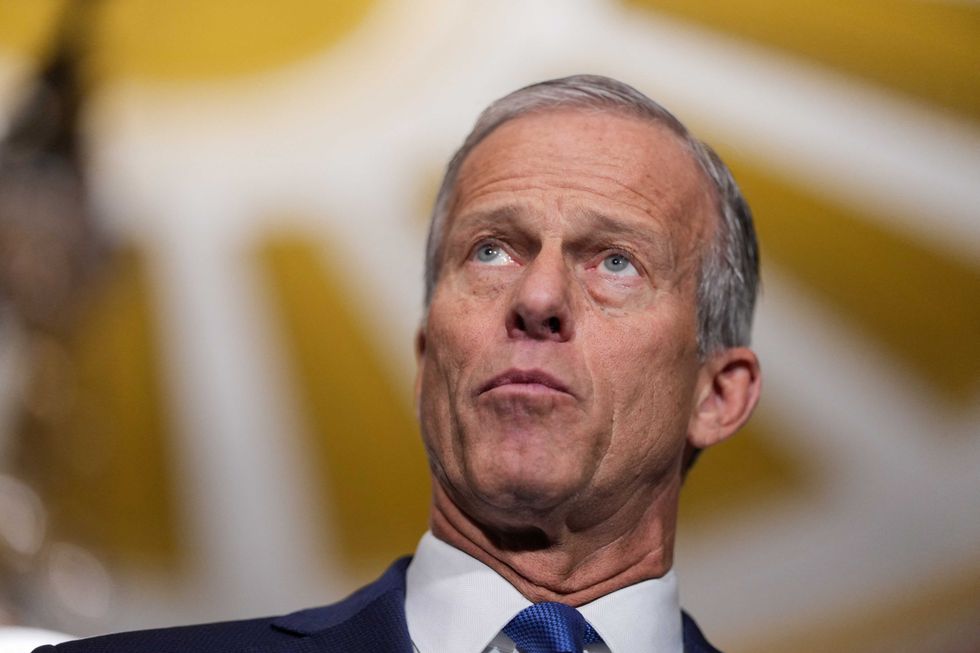
Seething House Republicans turn knives on John Thune with crude message

Seething House Republicans turn knives on John Thune with crude message

House conservatives are training their fire on a new target: their own Senate majority leader.Fed up with John Thune's (R-SD) refusal to nuke the filibuster and
Share
Rawstory2026/03/20 05:42