The post AI commerce reshapes online shopping with Onton’s 7.5M seed appeared on BitcoinEthereumNews.com. As legacy retailers double down on automation and data, ai commerce is opening space for new players to redefine how people shop online. How is Onton trying to reshape the online shopping interface? Onton has emerged as a fast-moving contender in this shifting landscape. The AI commerce startup has raised a new $7.5 million seed round led by Footwork, with participation from Liquid 2 and other investors. The company is positioning itself as the starting point for every e-commerce decision, rather than just another chat-based assistant. Co-founder and CEO Zach Hudson has spent more than a decade in e-commerce. His journey began in South Carolina before a friend convinced him to move to San Francisco, where he met co-founder Alex Gunnarson. After more than 300 investor meetings, the pair secured a $1.8 million pre-seed round and built a team of 4. Within a single year, Onton scaled from 50,000 to over 1 million monthly active users. Moreover, this growth came in parallel with an evolving consumer mindset about how online shopping should work. Hudson argues that the real opportunity is not only scale, but a foundational change in how people want to search and decide. Why is the current e-commerce experience under pressure? Despite rapid advances in infrastructure, the core online shopping interface has barely changed in 30 years. Category pages, filters, and SKU-level product pages still dominate. However, large language models were supposed to transform discovery and decision-making, yet paradoxically they have often increased the time it takes to choose. Today, many shoppers toggle between multiple retailers, chatbot experiences, and visual platforms such as Pinterest. That fragmentation has turned product discovery into a multi-tab research project. According to Hudson, this is where chat interfaces can unintentionally compound pain points instead of removing them. “Chat interfaces compound the pain points,”… The post AI commerce reshapes online shopping with Onton’s 7.5M seed appeared on BitcoinEthereumNews.com. As legacy retailers double down on automation and data, ai commerce is opening space for new players to redefine how people shop online. How is Onton trying to reshape the online shopping interface? Onton has emerged as a fast-moving contender in this shifting landscape. The AI commerce startup has raised a new $7.5 million seed round led by Footwork, with participation from Liquid 2 and other investors. The company is positioning itself as the starting point for every e-commerce decision, rather than just another chat-based assistant. Co-founder and CEO Zach Hudson has spent more than a decade in e-commerce. His journey began in South Carolina before a friend convinced him to move to San Francisco, where he met co-founder Alex Gunnarson. After more than 300 investor meetings, the pair secured a $1.8 million pre-seed round and built a team of 4. Within a single year, Onton scaled from 50,000 to over 1 million monthly active users. Moreover, this growth came in parallel with an evolving consumer mindset about how online shopping should work. Hudson argues that the real opportunity is not only scale, but a foundational change in how people want to search and decide. Why is the current e-commerce experience under pressure? Despite rapid advances in infrastructure, the core online shopping interface has barely changed in 30 years. Category pages, filters, and SKU-level product pages still dominate. However, large language models were supposed to transform discovery and decision-making, yet paradoxically they have often increased the time it takes to choose. Today, many shoppers toggle between multiple retailers, chatbot experiences, and visual platforms such as Pinterest. That fragmentation has turned product discovery into a multi-tab research project. According to Hudson, this is where chat interfaces can unintentionally compound pain points instead of removing them. “Chat interfaces compound the pain points,”…

AI commerce reshapes online shopping with Onton’s 7.5M seed

For feedback or concerns regarding this content, please contact us at crypto.news@mexc.com

As legacy retailers double down on automation and data, ai commerce is opening space for new players to redefine how people shop online.

How is Onton trying to reshape the online shopping interface?

Onton has emerged as a fast-moving contender in this shifting landscape. The AI commerce startup has raised a new $7.5 million seed round led by Footwork, with participation from Liquid 2 and other investors. The company is positioning itself as the starting point for every e-commerce decision, rather than just another chat-based assistant.

Co-founder and CEO Zach Hudson has spent more than a decade in e-commerce. His journey began in South Carolina before a friend convinced him to move to San Francisco, where he met co-founder Alex Gunnarson. After more than 300 investor meetings, the pair secured a $1.8 million pre-seed round and built a team of 4.

Within a single year, Onton scaled from 50,000 to over 1 million monthly active users. Moreover, this growth came in parallel with an evolving consumer mindset about how online shopping should work. Hudson argues that the real opportunity is not only scale, but a foundational change in how people want to search and decide.

Why is the current e-commerce experience under pressure?

Despite rapid advances in infrastructure, the core online shopping interface has barely changed in 30 years. Category pages, filters, and SKU-level product pages still dominate. However, large language models were supposed to transform discovery and decision-making, yet paradoxically they have often increased the time it takes to choose.

Today, many shoppers toggle between multiple retailers, chatbot experiences, and visual platforms such as Pinterest. That fragmentation has turned product discovery into a multi-tab research project. According to Hudson, this is where chat interfaces can unintentionally compound pain points instead of removing them.

“Chat interfaces compound the pain points,” Hudson explains. “They are impressive, but they have not solved the real problems in online shopping.” Onton aims to collapse that fractured journey by serving as a higher-level decision layer that understands both products and user intent. This is where the company believes ecommerce ai can unlock a more natural flow.

What is different about Onton’s technology approach?

Onton’s platform can infer missing attributes, validate details, and learn relationships that many retailers do not surface in their own catalogs. Moreover, its neurosymbolic engine is designed to be interpretable and self-learning, which helps reduce hallucinations that large language models frequently introduce in recommendation flows.

This architecture has allowed Onton to scale quickly in home decor and furniture, categories where shoppers often lack strong brand loyalty. That said, apparel and consumer electronics are the next targets, where decision fatigue is also acute. The team sees an opportunity to become an upstream choice engine across these verticals.

Tools such as Onton’s new Canvas feature highlight this direction. Users can upload images and collections to define a search “vibe,” emphasizing that e-commerce is not just conversational but deeply visual and emotional. According to user feedback, the platform helps validate uniqueness when comparing options and makes furnishing or restyling decisions significantly faster.

How is ai powered commerce changing consumer expectations?

The behavior that Onton is betting on is already visible at scale. Consumers are browsing visually, jumping between platforms, and expecting recommendations that feel both precise and personalized. In this environment, retailers that anticipate decisions earlier in the journey, rather than waiting at checkout, stand to capture more value.

Major incumbents are racing to keep up. Walmart and Costco, in particular, are using AI to compress friction, predict demand, and guide shoppers well before they press the buy button. These shifts set the baseline expectations that any new retail ai startup must meet or exceed.

What does Walmart’s next era say about the ai retail market?

Walmart has signaled that AI-enabled retail will define its next phase of growth. Earlier this year, the company revealed that its e-commerce division surpassed $100 billion in annualized GMV. This milestone reflects rapid adoption of AI-enhanced search, upgraded last-mile logistics, and a broader marketplace footprint across categories.

A new CEO is set to step in early 2026, underlining Walmart’s long-term commitment to data-driven operations. Moreover, Walmart’s AI systems are increasingly embedded across its fulfillment engine, merchandising stack, and customer experience. Together, these investments are transforming the retailer into a more responsive and predictive platform.

The impact is already measurable. In-store fulfilled e-commerce orders jumped nearly 50%, with about one third completed in under 3 hours. Expedited delivery demand surged 70% and now reaches 95% of U.S. households. As a result, Walmart is resetting expectations around speed, reliability, and personalization across the industry.

How is Costco using AI to modernize its marketplace?

Costco is pushing in a similar direction, albeit from a different operational base. Its early AI pilots in bakery forecasting saved roughly $100 million, demonstrating how predictive models can cut waste and better align inventory with local demand. These tests have opened the door to broader inventory modeling across its network of warehouses.

Costco has also modernized its digital marketplace and expanded its online assortment. Moreover, Costco Travel now runs an AI-powered curation layer that pulls vacation options from multiple partners, then surfaces them in a cleaner and more intuitive search experience for members. This approach mirrors what shoppers have come to expect from modern recommendation engines.

Together, the upgrades at Walmart and Costco reveal the same pattern: large retailers are using AI to collapse friction across the entire shopping journey. They are guiding decisions well before checkout, tightening operations, and reframing what counts as a good digital experience. In turn, this raises the bar for emerging platforms like Onton.

Where does Onton fit in the future of AI-driven retail?

The competitive landscape suggests that the battle will not be limited to logistics or pricing. Instead, it will center on who owns the decision interface. Onton sees an opening to become that layer, where consumers express intent through a blend of text, images, and mood rather than rigid filters.

However, incumbents are moving quickly, and the same AI technologies are available to all. Onton’s differentiation will depend on how effectively it can blend a neurosymbolic reasoning engine with a rich, visual shopping experience. If successful, it could influence how retailers think about integrating upstream decision tools into their own ecosystems.

As Walmart, Costco, and Onton push forward, the direction of online retail is becoming clearer. AI will not simply automate back-end operations; it will help define how people search, compare, and decide. The next phase of growth will likely reward platforms that reduce friction, respect user intent, and make complex decisions feel effortless.

In summary, Onton’s new funding round and rapid user growth highlight how quickly the retail interface is changing. As AI spreads from logistics into discovery and decision-making, both incumbents and startups are racing to shape the first touchpoint of the shopping journey.

Source: https://en.cryptonomist.ch/2025/11/26/ai-commerce-onton-seed-round/

Market Opportunity
null Logo
null Price(null)
--
----
USD
null (null) Live Price Chart
Disclaimer: The articles reposted on this site are sourced from public platforms and are provided for informational purposes only. They do not necessarily reflect the views of MEXC. All rights remain with the original authors. If you believe any content infringes on third-party rights, please contact crypto.news@mexc.com for removal. MEXC makes no guarantees regarding the accuracy, completeness, or timeliness of the content and is not responsible for any actions taken based on the information provided. The content does not constitute financial, legal, or other professional advice, nor should it be considered a recommendation or endorsement by MEXC.

You May Also Like

Shocking OpenVPP Partnership Claim Draws Urgent Scrutiny

Shocking OpenVPP Partnership Claim Draws Urgent Scrutiny

The post Shocking OpenVPP Partnership Claim Draws Urgent Scrutiny appeared on BitcoinEthereumNews.com. The cryptocurrency world is buzzing with a recent controversy surrounding a bold OpenVPP partnership claim. This week, OpenVPP (OVPP) announced what it presented as a significant collaboration with the U.S. government in the innovative field of energy tokenization. However, this claim quickly drew the sharp eye of on-chain analyst ZachXBT, who highlighted a swift and official rebuttal that has sent ripples through the digital asset community. What Sparked the OpenVPP Partnership Claim Controversy? The core of the issue revolves around OpenVPP’s assertion of a U.S. government partnership. This kind of collaboration would typically be a monumental endorsement for any private cryptocurrency project, especially given the current regulatory climate. Such a partnership could signify a new era of mainstream adoption and legitimacy for energy tokenization initiatives. OpenVPP initially claimed cooperation with the U.S. government. This alleged partnership was said to be in the domain of energy tokenization. The announcement generated considerable interest and discussion online. ZachXBT, known for his diligent on-chain investigations, was quick to flag the development. He brought attention to the fact that U.S. Securities and Exchange Commission (SEC) Commissioner Hester Peirce had directly addressed the OpenVPP partnership claim. Her response, delivered within hours, was unequivocal and starkly contradicted OpenVPP’s narrative. How Did Regulatory Authorities Respond to the OpenVPP Partnership Claim? Commissioner Hester Peirce’s statement was a crucial turning point in this unfolding story. She clearly stated that the SEC, as an agency, does not engage in partnerships with private cryptocurrency projects. This response effectively dismantled the credibility of OpenVPP’s initial announcement regarding their supposed government collaboration. Peirce’s swift clarification underscores a fundamental principle of regulatory bodies: maintaining impartiality and avoiding endorsements of private entities. Her statement serves as a vital reminder to the crypto community about the official stance of government agencies concerning private ventures. Moreover, ZachXBT’s analysis…
Share
BitcoinEthereumNews2025/09/18 02:13
A Netflix ‘KPop Demon Hunters’ Short Film Has Been Rated For Release

A Netflix ‘KPop Demon Hunters’ Short Film Has Been Rated For Release

The post A Netflix ‘KPop Demon Hunters’ Short Film Has Been Rated For Release appeared on BitcoinEthereumNews.com. KPop Demon Hunters Netflix Everyone has wondered what may be the next step for KPop Demon Hunters as an IP, given its record-breaking success on Netflix. Now, the answer may be something exactly no one predicted. According to a new filing with the MPA, something called Debut: A KPop Demon Hunters Story has been rated PG by the ratings body. It’s listed alongside some other films, and this is obviously something that has not been publicly announced. A short film could be well, very short, a few minutes, and likely no more than ten. Even that might be pushing it. Using say, Pixar shorts as a reference, most are between 4 and 8 minutes. The original movie is an hour and 36 minutes. The “Debut” in the title indicates some sort of flashback, perhaps to when HUNTR/X first arrived on the scene before they blew up. Previously, director Maggie Kang has commented about how there were more backstory components that were supposed to be in the film that were cut, but hinted those could be explored in a sequel. But perhaps some may be put into a short here. I very much doubt those scenes were fully produced and simply cut, but perhaps they were finished up for this short film here. When would Debut: KPop Demon Hunters theoretically arrive? I’m not sure the other films on the list are much help. Dead of Winter is out in less than two weeks. Mother Mary does not have a release date. Ne Zha 2 came out earlier this year. I’ve only seen news stories saying The Perfect Gamble was supposed to come out in Q1 2025, but I’ve seen no evidence that it actually has. KPop Demon Hunters Netflix It could be sooner rather than later as Netflix looks to capitalize…
Share
BitcoinEthereumNews2025/09/18 02:23
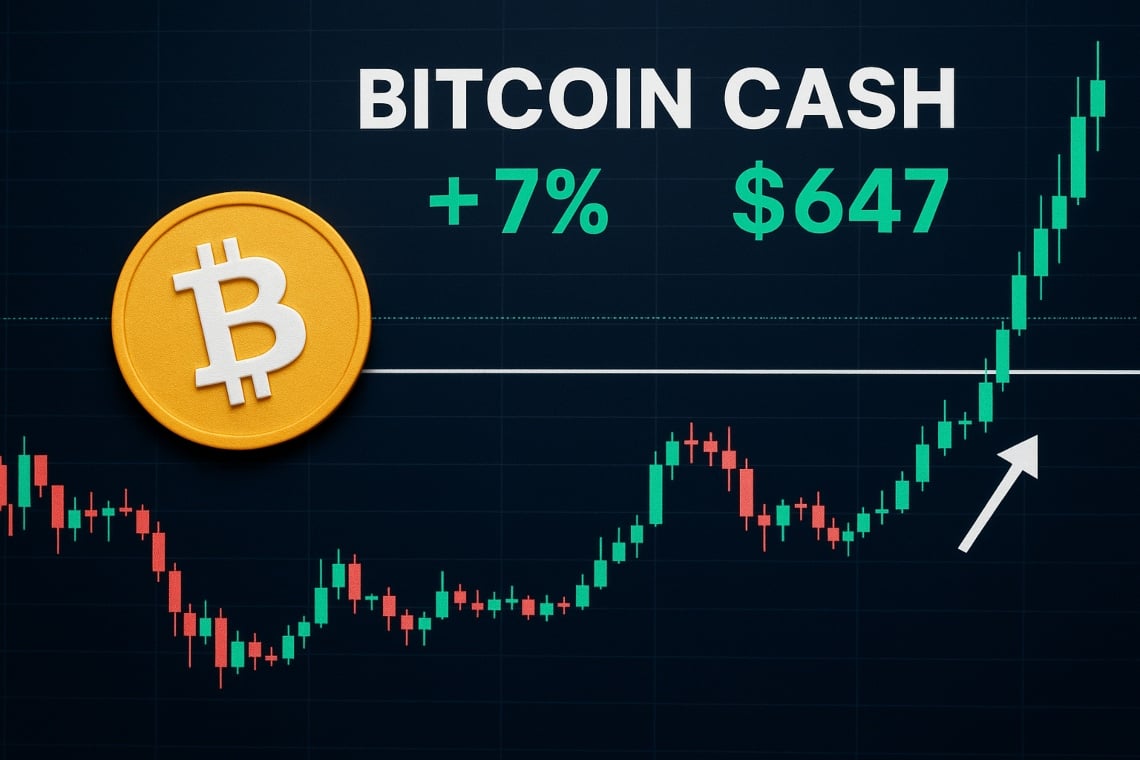
Bitcoin Cash: price +7% at $647, breakout and key levels (09/18/2025)

Bitcoin Cash: price +7% at $647, breakout and key levels (09/18/2025)

Bitcoin Cash gains 7% and reaches $647, hitting highs not seen since last April: the movement fits into a risk-on climate.
Share
The Cryptonomist2025/09/18 21:47