Medicare has negotiated steep new prices for 15 high-cost drugs, including Novo Nordisk’s blockbuster semaglutide (Wegovy and Ozempic), with negotiated prices set to take effect in 2027.The move cuts projected Medicare spending by an estimated $8.5 billion to $12 billion annually and forces drugmakers to reassess pricing, access, and strategy on the world’s largest market.The announcement arrives at a delicate political moment, reflecting both Biden-era policy continuity and Trump administration negotiating tactics that have reshaped pharmaceutical pricing expectations.​This matters because the new price structure could reshape business models across European pharma.Novo Nordisk, AstraZeneca, GSK, and Boehringer Ingelheim face pricing pressure that ripples beyond the US, forcing them to recalibrate global strategies and prepare for tougher negotiations worldwide.​Policy & market snapshot: the numbers and immediate reactionsMedicare will pay $274 monthly for semaglutide (sold as Ozempic for diabetes and Rybelsus), down from a 2024 list price of $959, a 71% reduction representing the steepest discount in the negotiation round.Wegovy for weight loss will cost $386 monthly, also down 71% from the list.The 15-drug package spans cancer, respiratory, and metabolic conditions, with discounts ranging from 38% to 85% off published list prices.The CMS estimates total Medicare Part D enrollment savings of roughly $685 million once prices take effect in 2027, though the full budget impact depends on volume and the interaction with prior separate most-favored-nation deals announced by the Trump administration.​Market reaction was muted: Novo Nordisk shares rose 4.8% on the news, with analysts noting the hit was “largely anticipated” and prior guidance already factored in a low-single-digit global sales impact of roughly 6 billion Danish crowns ($900 million) if cuts were implemented immediately.Peers fared similarly, with AstraZeneca and GSK each trading flat, as Shore Capital’s Sean Conroy noted that “cuts are already reflected in company guidance”.Novo said in a statement: “We continue to have serious concerns about the Inflation Reduction Act’s impact on innovation,” warning of potential coverage losses and higher premiums, though the company accepted the deal.​Analytical take: revenue trade-offs and strategic responsesThe real test for Novo Nordisk and European pharma is whether higher patient access and volume can offset margin compression.JPMorgan analysts said the impact was “already captured in Novo’s forecast,” implying limited surprise to earnings.However, the devil lies in execution: semaglutide is Novo’s revenue engine, the drug alone generated over $14 billion in gross Medicare costs in the past year, so even modest volume gains would need to offset significant per-unit margin loss.​Strategic responses are already emerging. Novo Nordisk has cut direct-to-consumer prices to $349 monthly for Wegovy and Ozempic, unlocking uninsured and high-deductible patients outside Medicare.The company is also accelerating pipeline launches: oral Wegovy (2026) and CagriSema (a combination therapy) could diversify revenue and restore growth if market adoption accelerates.For GSK and AstraZeneca, the pressure is narrower; their drugs represent smaller revenue streams, but both are preparing for similar payer pressure in Europe and Asia, where tender systems and health-technology-assessment bodies now cite Medicare’s rates as benchmarks for negotiation.​The broader structural risk is that negotiated Medicare prices reset payer expectations globally.Boehringer Ingelheim noted that over 80% of its US business is now subject to government-negotiated prices; the firm warned that this “siphons billions from research and development”.Yet, industry opposition has not slowed the program. The third round of Medicare negotiations begins in February 2026, with expectations that another 15 drugs will be selected.​The real question: can Novo Nordisk and European peers convert lower prices into market expansion, or will unit economics and competitive pressure force cost-cutting and slower innovation?Investors will be watching guidance updates, EU regulator reactions, and early Medicare uptake data when it arrives in 2027.The post How Medicare's new drug prices could reshape Novo Nordisk and european pharma appeared first on InvezzMedicare has negotiated steep new prices for 15 high-cost drugs, including Novo Nordisk’s blockbuster semaglutide (Wegovy and Ozempic), with negotiated prices set to take effect in 2027.The move cuts projected Medicare spending by an estimated $8.5 billion to $12 billion annually and forces drugmakers to reassess pricing, access, and strategy on the world’s largest market.The announcement arrives at a delicate political moment, reflecting both Biden-era policy continuity and Trump administration negotiating tactics that have reshaped pharmaceutical pricing expectations.​This matters because the new price structure could reshape business models across European pharma.Novo Nordisk, AstraZeneca, GSK, and Boehringer Ingelheim face pricing pressure that ripples beyond the US, forcing them to recalibrate global strategies and prepare for tougher negotiations worldwide.​Policy & market snapshot: the numbers and immediate reactionsMedicare will pay $274 monthly for semaglutide (sold as Ozempic for diabetes and Rybelsus), down from a 2024 list price of $959, a 71% reduction representing the steepest discount in the negotiation round.Wegovy for weight loss will cost $386 monthly, also down 71% from the list.The 15-drug package spans cancer, respiratory, and metabolic conditions, with discounts ranging from 38% to 85% off published list prices.The CMS estimates total Medicare Part D enrollment savings of roughly $685 million once prices take effect in 2027, though the full budget impact depends on volume and the interaction with prior separate most-favored-nation deals announced by the Trump administration.​Market reaction was muted: Novo Nordisk shares rose 4.8% on the news, with analysts noting the hit was “largely anticipated” and prior guidance already factored in a low-single-digit global sales impact of roughly 6 billion Danish crowns ($900 million) if cuts were implemented immediately.Peers fared similarly, with AstraZeneca and GSK each trading flat, as Shore Capital’s Sean Conroy noted that “cuts are already reflected in company guidance”.Novo said in a statement: “We continue to have serious concerns about the Inflation Reduction Act’s impact on innovation,” warning of potential coverage losses and higher premiums, though the company accepted the deal.​Analytical take: revenue trade-offs and strategic responsesThe real test for Novo Nordisk and European pharma is whether higher patient access and volume can offset margin compression.JPMorgan analysts said the impact was “already captured in Novo’s forecast,” implying limited surprise to earnings.However, the devil lies in execution: semaglutide is Novo’s revenue engine, the drug alone generated over $14 billion in gross Medicare costs in the past year, so even modest volume gains would need to offset significant per-unit margin loss.​Strategic responses are already emerging. Novo Nordisk has cut direct-to-consumer prices to $349 monthly for Wegovy and Ozempic, unlocking uninsured and high-deductible patients outside Medicare.The company is also accelerating pipeline launches: oral Wegovy (2026) and CagriSema (a combination therapy) could diversify revenue and restore growth if market adoption accelerates.For GSK and AstraZeneca, the pressure is narrower; their drugs represent smaller revenue streams, but both are preparing for similar payer pressure in Europe and Asia, where tender systems and health-technology-assessment bodies now cite Medicare’s rates as benchmarks for negotiation.​The broader structural risk is that negotiated Medicare prices reset payer expectations globally.Boehringer Ingelheim noted that over 80% of its US business is now subject to government-negotiated prices; the firm warned that this “siphons billions from research and development”.Yet, industry opposition has not slowed the program. The third round of Medicare negotiations begins in February 2026, with expectations that another 15 drugs will be selected.​The real question: can Novo Nordisk and European peers convert lower prices into market expansion, or will unit economics and competitive pressure force cost-cutting and slower innovation?Investors will be watching guidance updates, EU regulator reactions, and early Medicare uptake data when it arrives in 2027.The post How Medicare's new drug prices could reshape Novo Nordisk and european pharma appeared first on Invezz

How Medicare’s new drug prices could reshape Novo Nordisk and european pharma

2025/11/27 04:06
4 min read
For feedback or concerns regarding this content, please contact us at crypto.news@mexc.com

Medicare has negotiated steep new prices for 15 high-cost drugs, including Novo Nordisk’s blockbuster semaglutide (Wegovy and Ozempic), with negotiated prices set to take effect in 2027.

The move cuts projected Medicare spending by an estimated $8.5 billion to $12 billion annually and forces drugmakers to reassess pricing, access, and strategy on the world’s largest market.

The announcement arrives at a delicate political moment, reflecting both Biden-era policy continuity and Trump administration negotiating tactics that have reshaped pharmaceutical pricing expectations.​

This matters because the new price structure could reshape business models across European pharma.

Novo Nordisk, AstraZeneca, GSK, and Boehringer Ingelheim face pricing pressure that ripples beyond the US, forcing them to recalibrate global strategies and prepare for tougher negotiations worldwide.​

Policy & market snapshot: the numbers and immediate reactions

Medicare will pay $274 monthly for semaglutide (sold as Ozempic for diabetes and Rybelsus), down from a 2024 list price of $959, a 71% reduction representing the steepest discount in the negotiation round.

Wegovy for weight loss will cost $386 monthly, also down 71% from the list.

The 15-drug package spans cancer, respiratory, and metabolic conditions, with discounts ranging from 38% to 85% off published list prices.

The CMS estimates total Medicare Part D enrollment savings of roughly $685 million once prices take effect in 2027, though the full budget impact depends on volume and the interaction with prior separate most-favored-nation deals announced by the Trump administration.​

Market reaction was muted: Novo Nordisk shares rose 4.8% on the news, with analysts noting the hit was “largely anticipated” and prior guidance already factored in a low-single-digit global sales impact of roughly 6 billion Danish crowns ($900 million) if cuts were implemented immediately.

Peers fared similarly, with AstraZeneca and GSK each trading flat, as Shore Capital’s Sean Conroy noted that “cuts are already reflected in company guidance”.

Novo said in a statement: “We continue to have serious concerns about the Inflation Reduction Act’s impact on innovation,” warning of potential coverage losses and higher premiums, though the company accepted the deal.​

Analytical take: revenue trade-offs and strategic responses

The real test for Novo Nordisk and European pharma is whether higher patient access and volume can offset margin compression.

JPMorgan analysts said the impact was “already captured in Novo’s forecast,” implying limited surprise to earnings.

However, the devil lies in execution: semaglutide is Novo’s revenue engine, the drug alone generated over $14 billion in gross Medicare costs in the past year, so even modest volume gains would need to offset significant per-unit margin loss.​

Strategic responses are already emerging. Novo Nordisk has cut direct-to-consumer prices to $349 monthly for Wegovy and Ozempic, unlocking uninsured and high-deductible patients outside Medicare.

The company is also accelerating pipeline launches: oral Wegovy (2026) and CagriSema (a combination therapy) could diversify revenue and restore growth if market adoption accelerates.

For GSK and AstraZeneca, the pressure is narrower; their drugs represent smaller revenue streams, but both are preparing for similar payer pressure in Europe and Asia, where tender systems and health-technology-assessment bodies now cite Medicare’s rates as benchmarks for negotiation.​

The broader structural risk is that negotiated Medicare prices reset payer expectations globally.

Boehringer Ingelheim noted that over 80% of its US business is now subject to government-negotiated prices; the firm warned that this “siphons billions from research and development”.

Yet, industry opposition has not slowed the program. The third round of Medicare negotiations begins in February 2026, with expectations that another 15 drugs will be selected.​

The real question: can Novo Nordisk and European peers convert lower prices into market expansion, or will unit economics and competitive pressure force cost-cutting and slower innovation?

Investors will be watching guidance updates, EU regulator reactions, and early Medicare uptake data when it arrives in 2027.

The post How Medicare's new drug prices could reshape Novo Nordisk and european pharma appeared first on Invezz

Market Opportunity
Overtake Logo
Overtake Price(TAKE)
$0.01643
$0.01643$0.01643
-3.46%
USD
Overtake (TAKE) Live Price Chart
Disclaimer: The articles reposted on this site are sourced from public platforms and are provided for informational purposes only. They do not necessarily reflect the views of MEXC. All rights remain with the original authors. If you believe any content infringes on third-party rights, please contact crypto.news@mexc.com for removal. MEXC makes no guarantees regarding the accuracy, completeness, or timeliness of the content and is not responsible for any actions taken based on the information provided. The content does not constitute financial, legal, or other professional advice, nor should it be considered a recommendation or endorsement by MEXC.

You May Also Like

Shocking OpenVPP Partnership Claim Draws Urgent Scrutiny

Shocking OpenVPP Partnership Claim Draws Urgent Scrutiny

The post Shocking OpenVPP Partnership Claim Draws Urgent Scrutiny appeared on BitcoinEthereumNews.com. The cryptocurrency world is buzzing with a recent controversy surrounding a bold OpenVPP partnership claim. This week, OpenVPP (OVPP) announced what it presented as a significant collaboration with the U.S. government in the innovative field of energy tokenization. However, this claim quickly drew the sharp eye of on-chain analyst ZachXBT, who highlighted a swift and official rebuttal that has sent ripples through the digital asset community. What Sparked the OpenVPP Partnership Claim Controversy? The core of the issue revolves around OpenVPP’s assertion of a U.S. government partnership. This kind of collaboration would typically be a monumental endorsement for any private cryptocurrency project, especially given the current regulatory climate. Such a partnership could signify a new era of mainstream adoption and legitimacy for energy tokenization initiatives. OpenVPP initially claimed cooperation with the U.S. government. This alleged partnership was said to be in the domain of energy tokenization. The announcement generated considerable interest and discussion online. ZachXBT, known for his diligent on-chain investigations, was quick to flag the development. He brought attention to the fact that U.S. Securities and Exchange Commission (SEC) Commissioner Hester Peirce had directly addressed the OpenVPP partnership claim. Her response, delivered within hours, was unequivocal and starkly contradicted OpenVPP’s narrative. How Did Regulatory Authorities Respond to the OpenVPP Partnership Claim? Commissioner Hester Peirce’s statement was a crucial turning point in this unfolding story. She clearly stated that the SEC, as an agency, does not engage in partnerships with private cryptocurrency projects. This response effectively dismantled the credibility of OpenVPP’s initial announcement regarding their supposed government collaboration. Peirce’s swift clarification underscores a fundamental principle of regulatory bodies: maintaining impartiality and avoiding endorsements of private entities. Her statement serves as a vital reminder to the crypto community about the official stance of government agencies concerning private ventures. Moreover, ZachXBT’s analysis…
Share
BitcoinEthereumNews2025/09/18 02:13
A Netflix ‘KPop Demon Hunters’ Short Film Has Been Rated For Release
A Netflix ‘KPop Demon Hunters’ Short Film Has Been Rated For Release

The post A Netflix ‘KPop Demon Hunters’ Short Film Has Been Rated For Release appeared on BitcoinEthereumNews.com. KPop Demon Hunters Netflix Everyone has wondered what may be the next step for KPop Demon Hunters as an IP, given its record-breaking success on Netflix. Now, the answer may be something exactly no one predicted. According to a new filing with the MPA, something called Debut: A KPop Demon Hunters Story has been rated PG by the ratings body. It’s listed alongside some other films, and this is obviously something that has not been publicly announced. A short film could be well, very short, a few minutes, and likely no more than ten. Even that might be pushing it. Using say, Pixar shorts as a reference, most are between 4 and 8 minutes. The original movie is an hour and 36 minutes. The “Debut” in the title indicates some sort of flashback, perhaps to when HUNTR/X first arrived on the scene before they blew up. Previously, director Maggie Kang has commented about how there were more backstory components that were supposed to be in the film that were cut, but hinted those could be explored in a sequel. But perhaps some may be put into a short here. I very much doubt those scenes were fully produced and simply cut, but perhaps they were finished up for this short film here. When would Debut: KPop Demon Hunters theoretically arrive? I’m not sure the other films on the list are much help. Dead of Winter is out in less than two weeks. Mother Mary does not have a release date. Ne Zha 2 came out earlier this year. I’ve only seen news stories saying The Perfect Gamble was supposed to come out in Q1 2025, but I’ve seen no evidence that it actually has. KPop Demon Hunters Netflix It could be sooner rather than later as Netflix looks to capitalize…
Share
BitcoinEthereumNews2025/09/18 02:23
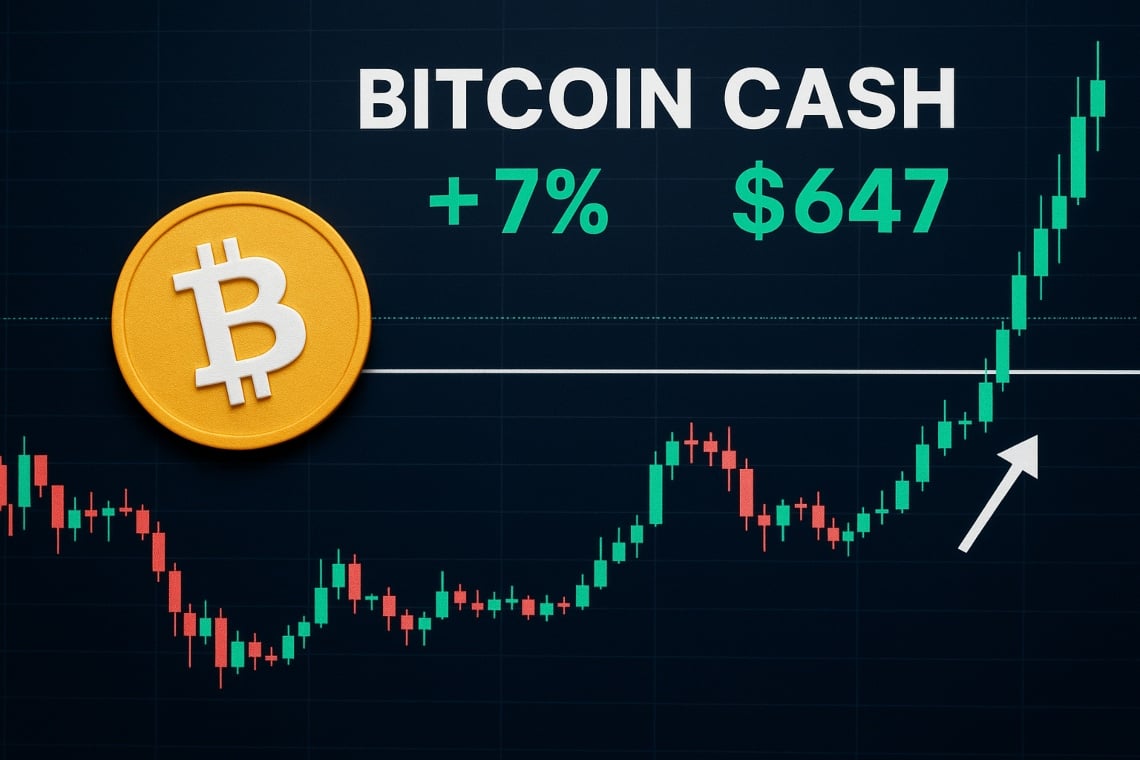
Bitcoin Cash: price +7% at $647, breakout and key levels (09/18/2025)

Bitcoin Cash: price +7% at $647, breakout and key levels (09/18/2025)

Bitcoin Cash gains 7% and reaches $647, hitting highs not seen since last April: the movement fits into a risk-on climate.
Share
The Cryptonomist2025/09/18 21:47
