Here’s how Acko’s AI-meets-empathy approach is redefining insurance in India
Traditionally, insurance in India has been fraught with friction points: from slow settlement of claims to jargon-filled policies, and the difficulty of accessing support during emergencies. Customers have faced long waits for approvals, confusion over coverage terms, and the stress of navigating multiple touchpoints just to resolve a single issue. Even simple processes, like roadside assistance or filing a medical claim, often become unnecessarily complicated due to manual workflows and fragmented systems.
For digital-first companies like Acko, these challenges represent an opportunity to tap technology. Born in the cloud and powered by AI from the ground up, Acko is transforming everything from underwriting and pricing to claims, fraud prevention, and customer engagement.
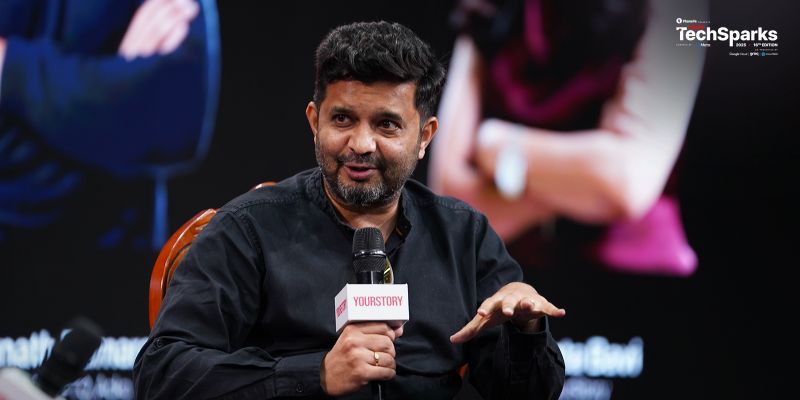
During a fireside chat titled ‘The AI stack revolution: Powering tomorrow’s insurance’ moderated by Sangeeta Bavi, COO of YourStory, at TechSparks 2025, Vishwanath Ramarao, Co-founder and CPTO of Acko, shared how AI is shaping the future of insurance, balancing speed with empathy, and personalizing experiences for a diverse customer base.
Solving real problems with a human touch
Ramarao illustrated the challenges with a personal anecdote: “When I was stuck late at night in Koramangala, Bengaluru, my car was caught on an uneven road while taking a U-turn. It was 1 am, and getting roadside assistance was a nightmare. I had to coordinate with service providers, share vehicle details, and wait for ETAs. That’s where I realised insurance could do much more, and AI is one of the tools to make that happen.”
For Acko, the challenge is not just deploying AI but ensuring it solves real customer problems while keeping empathy intact. “We’ve been using machine learning for years,” he said. “What excites people now is generative AI, but it comes with variance. In financial products, where promises have nuance and legal weight, you need control, explainability, and observability to trust the outcomes.”
While AI can accelerate processes, Ramarao stressed that human interaction remains essential. Acko experimented with a multimodal chatbot, but “not every customer wants to chat with AI. In India, with so many dialects, it’s important that technology doesn’t become soulless. Customers must have the choice to speak to a human directly,” he said.
“Voice, chat, and text aren’t mutually exclusive,” he added. “The key is combining them so the customer feels helped, not constrained.” This approach ensures that AI provides speed and efficiency without sacrificing the human element, striking a balance that is critical for real-world adoption.
Personalization and tangible ROI
For Acko, the ultimate measure of AI’s success is real business outcomes. “On the sales side, availability 24/7 with AI has improved numbers by double digits—around 15%—while post-sales efficiency has also seen similar gains,” Ramarao said.
He explained that the journey toward personalisation requires continuous iteration. “Different users have different mental models. My mother, for instance, would adopt AI in her own way. We started by perfecting text chat in English, building the knowledge base, establishing regulatory guardrails, and ensuring explainability. Only after that did we scale to other modalities and customer segments.”
Ramarao emphasized that the hard work behind AI often goes unnoticed. Many companies don’t have a clearly written policy for how certain situations should be handled.
“If you don’t have SOPs or haven’t documented knowledge in a usable way, you’re essentially asking for magic. You can’t just expect outcomes without defining processes, capturing company knowledge, and structuring unstructured data so it can be consumed effectively,” he added. “A lot of pre-work goes into deploying AI.”
He also cautioned against overhyping AI without considering real-world constraints. “Fake data, doctored inputs, and fraud are risks amplified by technology. Countering them requires robust business policies, authentication protocols, and, in some cases, industry- or national-level infrastructure.”
Iteration over perfection
The fireside chat underscored a crucial point for founders and innovators: AI’s promise is immense, but it is still an unfinished journey. “It’s easy to chase buzzwords and generative hype,” Ramarao concluded, “but the real impact comes from getting the fundamentals right—be it data, policies, or human-centred design. That’s how AI truly serves customers.”
Acko’s approach reinforces that AI in insurance isn’t just about automation. It’s about creating intelligence that adapts to people’s needs, simplifies complex processes, and blends speed with empathy. For businesses looking to harness AI, the takeaway is clear: focus on the foundations, keep the human element in mind, and embrace continuous iteration to unlock meaningful results.



You May Also Like

Strait of Hormuz Crisis: Macron’s Stark Warning Against Military Action

United Airlines (UAL) Stock Falls After Slashing 2026 Earnings Forecast