On November 28, 2025, the People's Bank of China, together with more than ten other departments, convened a coordination meeting on combating virtual currency trading and speculation (hereinafter referred to as the 1128 Meeting). The meeting emphasized the need to continue adhering to the relevant provisions of the 2021 "Notice on Further Preventing and Handling Risks of Virtual Currency Trading and Speculation" (hereinafter referred to as the 9.24 Notice), and to adopt a prohibitive policy on the commercial operation of virtual currencies in mainland my country. The meeting also stressed the need to crack down on money laundering and illegal outflow of funds using virtual currencies. Overall, the November 28th meeting was essentially a rehash of old arguments. Even the most zealous cryptocurrency media outlets could only manage to dig out a single sentence from the otherwise lackluster news feed: "Stablecoins are also a type of virtual currency." This raises serious questions: as early as September 24, 2021, the People's Bank of China explicitly stated that Tether (USDT) is a type of virtual currency. While the term "stablecoin" wasn't used, market participants never disputed or misunderstood the claim that "stablecoin-related businesses cannot be operated in mainland China." So, what exactly was the focus of the 1128 meeting? What real impact will it have on the industry? Today, the Sa Jie team will briefly discuss this with our partners. I. What were the key points of the November 28th meeting? Let me start with a strange phenomenon. When the September 24, 2021 notice was first issued, Bitcoin (BTC), the "leader" of cryptocurrencies, plummeted, causing widespread panic in the crypto world. While exchanges were simultaneously consulting with lawyers and arranging emergency overseas expansion, the November 28 meeting did virtually nothing for BTC, demonstrating its limited impact… The 1128 meeting did not receive enough attention for two reasons: firstly, it offered little new information, and secondly, it released little information and its focus was rather vague, making it difficult for those who are not long-term practitioners in the industry to grasp the true purpose of the meeting. The Sa Jie team believes that the 1128 meeting had two key points: (1) the judicial rulings were "reversed"; and (2) the illegal exchange of foreign currency using stablecoins was strictly restricted. Judicial rulings have "corrected" course. As analyzed in previous articles by the Sa Jie team, with the expansion of the virtual currency market, related transactions are increasing, and various civil disputes are frequently occurring. More and more people are taking legal action in court to seek judicial relief for civil disputes related to virtual currencies. Against this backdrop of change, Chinese courts have gradually gone through two stages: In the early stages of the implementation of the 9.24 Notice in 2021-2022, Chinese courts uniformly ruled all cryptocurrency-related legal acts invalid (including cryptocurrency exchanges, transactions, custody, and investments, as well as peripheral legal acts related to cryptocurrencies, such as mining machine sales and custody contracts), requiring all parties to the contract to bear their own risks and not supporting the return of contract payments. From 2023 to the present, with the increase in relevant judicial practice, Chinese courts have gained a deeper understanding of virtual currencies. Many scholars and participants in judicial practice have begun to question and criticize the previous "one-size-fits-all" approach. The main reason is that, with many mainstream public blockchains abandoning PoW technology, virtual currency mining is no longer as energy-intensive and environmentally polluting as it once was, and the argument of "violating public order and good morals" in many judgments has been shaken. This has led some courts to gradually form an unwritten rule when handling cryptocurrency disputes: continuing to declare contracts invalid, but no longer requiring all parties to bear the risks themselves. Especially for contracts using fiat currency, judges may order the return of a certain percentage of the paid fiat currency. At the same time, courts will actively promote pre-trial and in-trial settlements between the parties in such cases, rather than issuing direct judgments. The Sa Jie team believes that one of the important purposes of this meeting is to adjust the direction of this judicial ruling. First, a week before the meeting, Sa Jie's team received a call from a judge in a recently concluded appeal case involving a cryptocurrency investment dispute (the case was won, and the Henan Provincial Higher People's Court rejected the appeal). The judge informed them that the Supreme People's Court was paying close attention to such cases and was conducting research. Subsequently, the judge had in-depth discussions with us about the details of the case and listened to our opinions. Secondly, at the end of November, the Supreme People's Court released its 36th batch of guiding cases concerning judicial review of arbitration, comprising six cases. Among them, Guiding Case No. 199, Gao Zheyu v. Shenzhen Yun Silk Road Innovation Development Fund Enterprise and Li Bin, was specifically republished (this is actually an old case, having already been made public in 2022). Those familiar with my country's judicial system have heard the saying: "A thousand rulings, ten thousand rulings, but hard to overturn." Given the special form and legal status of arbitration, courts generally respect arbitral awards, and unless a very limited number of circumstances warrant their revocation, courts generally recognize arbitral awards. Thus, the focus of the meeting can be glimpsed from a small part. Strictly restrict the illegal exchange of foreign currency using stablecoins. This is actually a real problem that regulatory agencies must face. As we all know, my country has a relatively strict foreign exchange control system, and under normal circumstances, each person can only exchange no more than US$50,000 in foreign currency per year. Previously, people with large outbound capital needs (for example, children studying abroad incurring huge expenses) had to ask their extended family and friends to help them raise "quotas." Now, with the stablecoin market gradually expanding, application scenarios constantly broadening, and the number of cryptocurrency merchants increasing significantly, many outbound capital needs have been met by stablecoins such as USDT and USDC. Even worse, stablecoins can be used to facilitate money laundering or conceal the proceeds of crime for upstream criminals. Furthermore, in judicial practice, our team has also seen daring foreign trade merchants use USDT and USDC to circumvent UN sanctions resolutions and assist sanctioned countries in their foreign trade. Therefore, what the 1128 meeting really aimed to regulate was this kind of behavior that seriously disrupted the financial order and crossed the red line. From a judicial practice perspective, in the past year or two, the Sa Jie team has clearly felt that the Chinese judicial authorities are gradually increasing their regulation of cryptocurrency dealers, with a large number of dealers being convicted and punished for crimes such as illegal business operations, aiding and abetting fraud, money laundering, and concealing the proceeds of crime. Therefore, anyone interested in engaging in related amateur activities should exercise extreme caution. II. The Impact of the November 28th Meeting on the Industry From the perspective of cryptocurrency prices, the November 28th meeting had no impact on the cryptocurrency market. However, this is not the case. During their routine industry research, members of the Sa Jie team noticed that, according to third-party statistics, the computing power contributed by my country to various major blockchain public chains is increasing significantly and recovering to the level before the September 24, 2021 notice. Related practitioners are also showing a trend of returning to the mainland, and some "mining farms" in remote mountainous areas are starting up at full capacity. This situation is caused by a combination of factors. Firstly, as Singapore and Hong Kong have tightened restrictions on virtual asset businesses, and related regulations have been successively introduced, the cost of licensed operation has increased significantly, forcing many practitioners to seek alternatives. Secondly, my country has achieved considerable results in its governance since the issuance of the "September 24th Notice," and in recent years, there has been a certain degree of "laxity" and leniency in regulating the mining and virtual asset-related industries, leading some practitioners to believe that "the storm has passed"... The November 28th meeting was essentially sending a public signal: my country's regulatory policies remain unchanged, and people should not take chances and cross the line. However, will the November 28th meeting affect Hong Kong's open policy towards virtual assets? The Sa Jie team believes not. Hong Kong and mainland China have gradually formed a basic framework of one opening up and the other restricting virtual assets. The regulatory attitude is clear: it's not that we won't allow financial innovation, but you must innovate in the areas designated by us. Therefore, partners who are launching RWA projects or pursuing stablecoins in Hong Kong can proceed with confidence. In conclusion The Sa Jie team believes that partners don't need to be overly nervous about the November 28th meeting. While it's true that there's a need to reiterate regulatory policies and clarify regulatory norms since the implementation of the regulations on September 24th, this absolutely does not mean that alarmist claims such as "my country's policy towards virtual assets has shifted" or "the central bank will severely crack down on virtual currencies" are true. Partners should not believe or spread rumors, and should simply conduct business in compliance with regulations.On November 28, 2025, the People's Bank of China, together with more than ten other departments, convened a coordination meeting on combating virtual currency trading and speculation (hereinafter referred to as the 1128 Meeting). The meeting emphasized the need to continue adhering to the relevant provisions of the 2021 "Notice on Further Preventing and Handling Risks of Virtual Currency Trading and Speculation" (hereinafter referred to as the 9.24 Notice), and to adopt a prohibitive policy on the commercial operation of virtual currencies in mainland my country. The meeting also stressed the need to crack down on money laundering and illegal outflow of funds using virtual currencies. Overall, the November 28th meeting was essentially a rehash of old arguments. Even the most zealous cryptocurrency media outlets could only manage to dig out a single sentence from the otherwise lackluster news feed: "Stablecoins are also a type of virtual currency." This raises serious questions: as early as September 24, 2021, the People's Bank of China explicitly stated that Tether (USDT) is a type of virtual currency. While the term "stablecoin" wasn't used, market participants never disputed or misunderstood the claim that "stablecoin-related businesses cannot be operated in mainland China." So, what exactly was the focus of the 1128 meeting? What real impact will it have on the industry? Today, the Sa Jie team will briefly discuss this with our partners. I. What were the key points of the November 28th meeting? Let me start with a strange phenomenon. When the September 24, 2021 notice was first issued, Bitcoin (BTC), the "leader" of cryptocurrencies, plummeted, causing widespread panic in the crypto world. While exchanges were simultaneously consulting with lawyers and arranging emergency overseas expansion, the November 28 meeting did virtually nothing for BTC, demonstrating its limited impact… The 1128 meeting did not receive enough attention for two reasons: firstly, it offered little new information, and secondly, it released little information and its focus was rather vague, making it difficult for those who are not long-term practitioners in the industry to grasp the true purpose of the meeting. The Sa Jie team believes that the 1128 meeting had two key points: (1) the judicial rulings were "reversed"; and (2) the illegal exchange of foreign currency using stablecoins was strictly restricted. Judicial rulings have "corrected" course. As analyzed in previous articles by the Sa Jie team, with the expansion of the virtual currency market, related transactions are increasing, and various civil disputes are frequently occurring. More and more people are taking legal action in court to seek judicial relief for civil disputes related to virtual currencies. Against this backdrop of change, Chinese courts have gradually gone through two stages: In the early stages of the implementation of the 9.24 Notice in 2021-2022, Chinese courts uniformly ruled all cryptocurrency-related legal acts invalid (including cryptocurrency exchanges, transactions, custody, and investments, as well as peripheral legal acts related to cryptocurrencies, such as mining machine sales and custody contracts), requiring all parties to the contract to bear their own risks and not supporting the return of contract payments. From 2023 to the present, with the increase in relevant judicial practice, Chinese courts have gained a deeper understanding of virtual currencies. Many scholars and participants in judicial practice have begun to question and criticize the previous "one-size-fits-all" approach. The main reason is that, with many mainstream public blockchains abandoning PoW technology, virtual currency mining is no longer as energy-intensive and environmentally polluting as it once was, and the argument of "violating public order and good morals" in many judgments has been shaken. This has led some courts to gradually form an unwritten rule when handling cryptocurrency disputes: continuing to declare contracts invalid, but no longer requiring all parties to bear the risks themselves. Especially for contracts using fiat currency, judges may order the return of a certain percentage of the paid fiat currency. At the same time, courts will actively promote pre-trial and in-trial settlements between the parties in such cases, rather than issuing direct judgments. The Sa Jie team believes that one of the important purposes of this meeting is to adjust the direction of this judicial ruling. First, a week before the meeting, Sa Jie's team received a call from a judge in a recently concluded appeal case involving a cryptocurrency investment dispute (the case was won, and the Henan Provincial Higher People's Court rejected the appeal). The judge informed them that the Supreme People's Court was paying close attention to such cases and was conducting research. Subsequently, the judge had in-depth discussions with us about the details of the case and listened to our opinions. Secondly, at the end of November, the Supreme People's Court released its 36th batch of guiding cases concerning judicial review of arbitration, comprising six cases. Among them, Guiding Case No. 199, Gao Zheyu v. Shenzhen Yun Silk Road Innovation Development Fund Enterprise and Li Bin, was specifically republished (this is actually an old case, having already been made public in 2022). Those familiar with my country's judicial system have heard the saying: "A thousand rulings, ten thousand rulings, but hard to overturn." Given the special form and legal status of arbitration, courts generally respect arbitral awards, and unless a very limited number of circumstances warrant their revocation, courts generally recognize arbitral awards. Thus, the focus of the meeting can be glimpsed from a small part. Strictly restrict the illegal exchange of foreign currency using stablecoins. This is actually a real problem that regulatory agencies must face. As we all know, my country has a relatively strict foreign exchange control system, and under normal circumstances, each person can only exchange no more than US$50,000 in foreign currency per year. Previously, people with large outbound capital needs (for example, children studying abroad incurring huge expenses) had to ask their extended family and friends to help them raise "quotas." Now, with the stablecoin market gradually expanding, application scenarios constantly broadening, and the number of cryptocurrency merchants increasing significantly, many outbound capital needs have been met by stablecoins such as USDT and USDC. Even worse, stablecoins can be used to facilitate money laundering or conceal the proceeds of crime for upstream criminals. Furthermore, in judicial practice, our team has also seen daring foreign trade merchants use USDT and USDC to circumvent UN sanctions resolutions and assist sanctioned countries in their foreign trade. Therefore, what the 1128 meeting really aimed to regulate was this kind of behavior that seriously disrupted the financial order and crossed the red line. From a judicial practice perspective, in the past year or two, the Sa Jie team has clearly felt that the Chinese judicial authorities are gradually increasing their regulation of cryptocurrency dealers, with a large number of dealers being convicted and punished for crimes such as illegal business operations, aiding and abetting fraud, money laundering, and concealing the proceeds of crime. Therefore, anyone interested in engaging in related amateur activities should exercise extreme caution. II. The Impact of the November 28th Meeting on the Industry From the perspective of cryptocurrency prices, the November 28th meeting had no impact on the cryptocurrency market. However, this is not the case. During their routine industry research, members of the Sa Jie team noticed that, according to third-party statistics, the computing power contributed by my country to various major blockchain public chains is increasing significantly and recovering to the level before the September 24, 2021 notice. Related practitioners are also showing a trend of returning to the mainland, and some "mining farms" in remote mountainous areas are starting up at full capacity. This situation is caused by a combination of factors. Firstly, as Singapore and Hong Kong have tightened restrictions on virtual asset businesses, and related regulations have been successively introduced, the cost of licensed operation has increased significantly, forcing many practitioners to seek alternatives. Secondly, my country has achieved considerable results in its governance since the issuance of the "September 24th Notice," and in recent years, there has been a certain degree of "laxity" and leniency in regulating the mining and virtual asset-related industries, leading some practitioners to believe that "the storm has passed"... The November 28th meeting was essentially sending a public signal: my country's regulatory policies remain unchanged, and people should not take chances and cross the line. However, will the November 28th meeting affect Hong Kong's open policy towards virtual assets? The Sa Jie team believes not. Hong Kong and mainland China have gradually formed a basic framework of one opening up and the other restricting virtual assets. The regulatory attitude is clear: it's not that we won't allow financial innovation, but you must innovate in the areas designated by us. Therefore, partners who are launching RWA projects or pursuing stablecoins in Hong Kong can proceed with confidence. In conclusion The Sa Jie team believes that partners don't need to be overly nervous about the November 28th meeting. While it's true that there's a need to reiterate regulatory policies and clarify regulatory norms since the implementation of the regulations on September 24th, this absolutely does not mean that alarmist claims such as "my country's policy towards virtual assets has shifted" or "the central bank will severely crack down on virtual currencies" are true. Partners should not believe or spread rumors, and should simply conduct business in compliance with regulations.

Stablecoins officially defined? Lawyers interpret the meeting on virtual currency held by thirteen departments.

2025/12/01 19:00

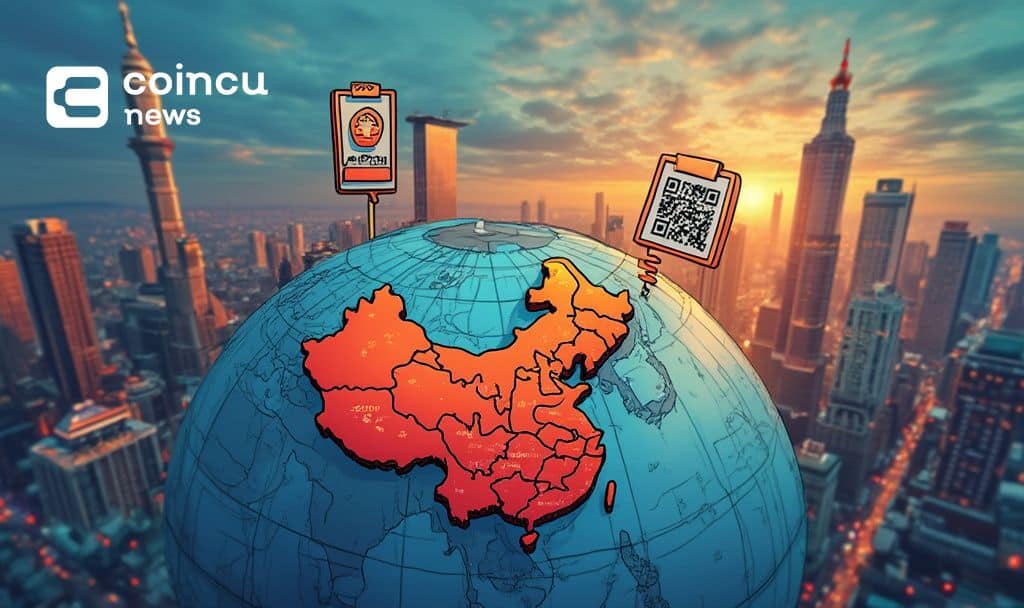
On November 28, 2025, the People's Bank of China, together with more than ten other departments, convened a coordination meeting on combating virtual currency trading and speculation (hereinafter referred to as the 1128 Meeting). The meeting emphasized the need to continue adhering to the relevant provisions of the 2021 "Notice on Further Preventing and Handling Risks of Virtual Currency Trading and Speculation" (hereinafter referred to as the 9.24 Notice), and to adopt a prohibitive policy on the commercial operation of virtual currencies in mainland my country. The meeting also stressed the need to crack down on money laundering and illegal outflow of funds using virtual currencies.

Overall, the November 28th meeting was essentially a rehash of old arguments. Even the most zealous cryptocurrency media outlets could only manage to dig out a single sentence from the otherwise lackluster news feed: "Stablecoins are also a type of virtual currency." This raises serious questions: as early as September 24, 2021, the People's Bank of China explicitly stated that Tether (USDT) is a type of virtual currency. While the term "stablecoin" wasn't used, market participants never disputed or misunderstood the claim that "stablecoin-related businesses cannot be operated in mainland China."

So, what exactly was the focus of the 1128 meeting? What real impact will it have on the industry? Today, the Sa Jie team will briefly discuss this with our partners.

I. What were the key points of the November 28th meeting?

Let me start with a strange phenomenon. When the September 24, 2021 notice was first issued, Bitcoin (BTC), the "leader" of cryptocurrencies, plummeted, causing widespread panic in the crypto world. While exchanges were simultaneously consulting with lawyers and arranging emergency overseas expansion, the November 28 meeting did virtually nothing for BTC, demonstrating its limited impact…

The 1128 meeting did not receive enough attention for two reasons: firstly, it offered little new information, and secondly, it released little information and its focus was rather vague, making it difficult for those who are not long-term practitioners in the industry to grasp the true purpose of the meeting.

The Sa Jie team believes that the 1128 meeting had two key points: (1) the judicial rulings were "reversed"; and (2) the illegal exchange of foreign currency using stablecoins was strictly restricted.

Judicial rulings have "corrected" course.

As analyzed in previous articles by the Sa Jie team, with the expansion of the virtual currency market, related transactions are increasing, and various civil disputes are frequently occurring. More and more people are taking legal action in court to seek judicial relief for civil disputes related to virtual currencies.

Against this backdrop of change, Chinese courts have gradually gone through two stages:

In the early stages of the implementation of the 9.24 Notice in 2021-2022, Chinese courts uniformly ruled all cryptocurrency-related legal acts invalid (including cryptocurrency exchanges, transactions, custody, and investments, as well as peripheral legal acts related to cryptocurrencies, such as mining machine sales and custody contracts), requiring all parties to the contract to bear their own risks and not supporting the return of contract payments.

From 2023 to the present, with the increase in relevant judicial practice, Chinese courts have gained a deeper understanding of virtual currencies. Many scholars and participants in judicial practice have begun to question and criticize the previous "one-size-fits-all" approach. The main reason is that, with many mainstream public blockchains abandoning PoW technology, virtual currency mining is no longer as energy-intensive and environmentally polluting as it once was, and the argument of "violating public order and good morals" in many judgments has been shaken. This has led some courts to gradually form an unwritten rule when handling cryptocurrency disputes: continuing to declare contracts invalid, but no longer requiring all parties to bear the risks themselves. Especially for contracts using fiat currency, judges may order the return of a certain percentage of the paid fiat currency. At the same time, courts will actively promote pre-trial and in-trial settlements between the parties in such cases, rather than issuing direct judgments.

The Sa Jie team believes that one of the important purposes of this meeting is to adjust the direction of this judicial ruling.

First, a week before the meeting, Sa Jie's team received a call from a judge in a recently concluded appeal case involving a cryptocurrency investment dispute (the case was won, and the Henan Provincial Higher People's Court rejected the appeal). The judge informed them that the Supreme People's Court was paying close attention to such cases and was conducting research. Subsequently, the judge had in-depth discussions with us about the details of the case and listened to our opinions.

Secondly, at the end of November, the Supreme People's Court released its 36th batch of guiding cases concerning judicial review of arbitration, comprising six cases. Among them, Guiding Case No. 199, Gao Zheyu v. Shenzhen Yun Silk Road Innovation Development Fund Enterprise and Li Bin, was specifically republished (this is actually an old case, having already been made public in 2022). Those familiar with my country's judicial system have heard the saying: "A thousand rulings, ten thousand rulings, but hard to overturn." Given the special form and legal status of arbitration, courts generally respect arbitral awards, and unless a very limited number of circumstances warrant their revocation, courts generally recognize arbitral awards.

Thus, the focus of the meeting can be glimpsed from a small part.

Strictly restrict the illegal exchange of foreign currency using stablecoins.

This is actually a real problem that regulatory agencies must face. As we all know, my country has a relatively strict foreign exchange control system, and under normal circumstances, each person can only exchange no more than US$50,000 in foreign currency per year.

Previously, people with large outbound capital needs (for example, children studying abroad incurring huge expenses) had to ask their extended family and friends to help them raise "quotas." Now, with the stablecoin market gradually expanding, application scenarios constantly broadening, and the number of cryptocurrency merchants increasing significantly, many outbound capital needs have been met by stablecoins such as USDT and USDC.

Even worse, stablecoins can be used to facilitate money laundering or conceal the proceeds of crime for upstream criminals. Furthermore, in judicial practice, our team has also seen daring foreign trade merchants use USDT and USDC to circumvent UN sanctions resolutions and assist sanctioned countries in their foreign trade.

Therefore, what the 1128 meeting really aimed to regulate was this kind of behavior that seriously disrupted the financial order and crossed the red line.

From a judicial practice perspective, in the past year or two, the Sa Jie team has clearly felt that the Chinese judicial authorities are gradually increasing their regulation of cryptocurrency dealers, with a large number of dealers being convicted and punished for crimes such as illegal business operations, aiding and abetting fraud, money laundering, and concealing the proceeds of crime. Therefore, anyone interested in engaging in related amateur activities should exercise extreme caution.

II. The Impact of the November 28th Meeting on the Industry

From the perspective of cryptocurrency prices, the November 28th meeting had no impact on the cryptocurrency market. However, this is not the case. During their routine industry research, members of the Sa Jie team noticed that, according to third-party statistics, the computing power contributed by my country to various major blockchain public chains is increasing significantly and recovering to the level before the September 24, 2021 notice. Related practitioners are also showing a trend of returning to the mainland, and some "mining farms" in remote mountainous areas are starting up at full capacity.

This situation is caused by a combination of factors. Firstly, as Singapore and Hong Kong have tightened restrictions on virtual asset businesses, and related regulations have been successively introduced, the cost of licensed operation has increased significantly, forcing many practitioners to seek alternatives. Secondly, my country has achieved considerable results in its governance since the issuance of the "September 24th Notice," and in recent years, there has been a certain degree of "laxity" and leniency in regulating the mining and virtual asset-related industries, leading some practitioners to believe that "the storm has passed"...

The November 28th meeting was essentially sending a public signal: my country's regulatory policies remain unchanged, and people should not take chances and cross the line.

However, will the November 28th meeting affect Hong Kong's open policy towards virtual assets? The Sa Jie team believes not. Hong Kong and mainland China have gradually formed a basic framework of one opening up and the other restricting virtual assets. The regulatory attitude is clear: it's not that we won't allow financial innovation, but you must innovate in the areas designated by us. Therefore, partners who are launching RWA projects or pursuing stablecoins in Hong Kong can proceed with confidence.

In conclusion

The Sa Jie team believes that partners don't need to be overly nervous about the November 28th meeting. While it's true that there's a need to reiterate regulatory policies and clarify regulatory norms since the implementation of the regulations on September 24th, this absolutely does not mean that alarmist claims such as "my country's policy towards virtual assets has shifted" or "the central bank will severely crack down on virtual currencies" are true. Partners should not believe or spread rumors, and should simply conduct business in compliance with regulations.

Market Opportunity
Virtuals Protocol Logo
Virtuals Protocol Price(VIRTUAL)
$1.0027
$1.0027$1.0027
-0.93%
USD
Virtuals Protocol (VIRTUAL) Live Price Chart
Disclaimer: The articles reposted on this site are sourced from public platforms and are provided for informational purposes only. They do not necessarily reflect the views of MEXC. All rights remain with the original authors. If you believe any content infringes on third-party rights, please contact service@support.mexc.com for removal. MEXC makes no guarantees regarding the accuracy, completeness, or timeliness of the content and is not responsible for any actions taken based on the information provided. The content does not constitute financial, legal, or other professional advice, nor should it be considered a recommendation or endorsement by MEXC.

You May Also Like

Will Bitcoin Make a New All-Time High Soon? Here’s What Users Think

Will Bitcoin Make a New All-Time High Soon? Here’s What Users Think

The post Will Bitcoin Make a New All-Time High Soon? Here’s What Users Think appeared on BitcoinEthereumNews.com. Bitcoin has broken out of a major horizontal channel
Share
BitcoinEthereumNews2026/01/16 05:27
SWIFT Tests Societe Generale’s MiCA-Compliant euro Stablecoin for Tokenized Bond Settlement

SWIFT Tests Societe Generale’s MiCA-Compliant euro Stablecoin for Tokenized Bond Settlement

The global banking network SWIFT successfully completed a pilot program using Societe Generale's regulated euro stablecoin to settle tokenized bonds.
Share
Brave Newcoin2026/01/16 05:30
BetFury is at SBC Summit Lisbon 2025: Affiliate Growth in Focus

BetFury is at SBC Summit Lisbon 2025: Affiliate Growth in Focus

The post BetFury is at SBC Summit Lisbon 2025: Affiliate Growth in Focus appeared on BitcoinEthereumNews.com. Press Releases are sponsored content and not a part of Finbold’s editorial content. For a full disclaimer, please . Crypto assets/products can be highly risky. Never invest unless you’re prepared to lose all the money you invest. Curacao, Curacao, September 17th, 2025, Chainwire BetFury steps onto the stage of SBC Summit Lisbon 2025 — one of the key gatherings in the iGaming calendar. From 16 to 18 September, the platform showcases its brand strength, deepens affiliate connections, and outlines its plans for global expansion. BetFury continues to play a role in the evolving crypto and iGaming partnership landscape. BetFury’s Participation at SBC Summit The SBC Summit gathers over 25,000 delegates, including 6,000+ affiliates — the largest concentration of affiliate professionals in iGaming. For BetFury, this isn’t just visibility, it’s a strategic chance to present its Affiliate Program to the right audience. Face-to-face meetings, dedicated networking zones, and affiliate-focused sessions make Lisbon the ideal ground to build new partnerships and strengthen existing ones. BetFury Meets Affiliate Leaders at its Massive Stand BetFury arrives at the summit with a massive stand placed right in the center of the Affiliate zone. Designed as a true meeting hub, the stand combines large LED screens, a sleek interior, and the best coffee at the event — but its core mission goes far beyond style. Here, BetFury’s team welcomes partners and affiliates to discuss tailored collaborations, explore growth opportunities across multiple GEOs, and expand its global Affiliate Program. To make the experience even more engaging, the stand also hosts: Affiliate Lottery — a branded drum filled with exclusive offers and personalized deals for affiliates. Merch Kits — premium giveaways to boost brand recognition and leave visitors with a lasting conference memory. Besides, at SBC Summit Lisbon, attendees have a chance to meet the BetFury team along…
Share
BitcoinEthereumNews2025/09/18 01:20