Ripple, Solana and Binance Execs Break Down Market Shifts at Binance Blockchain Week 2025
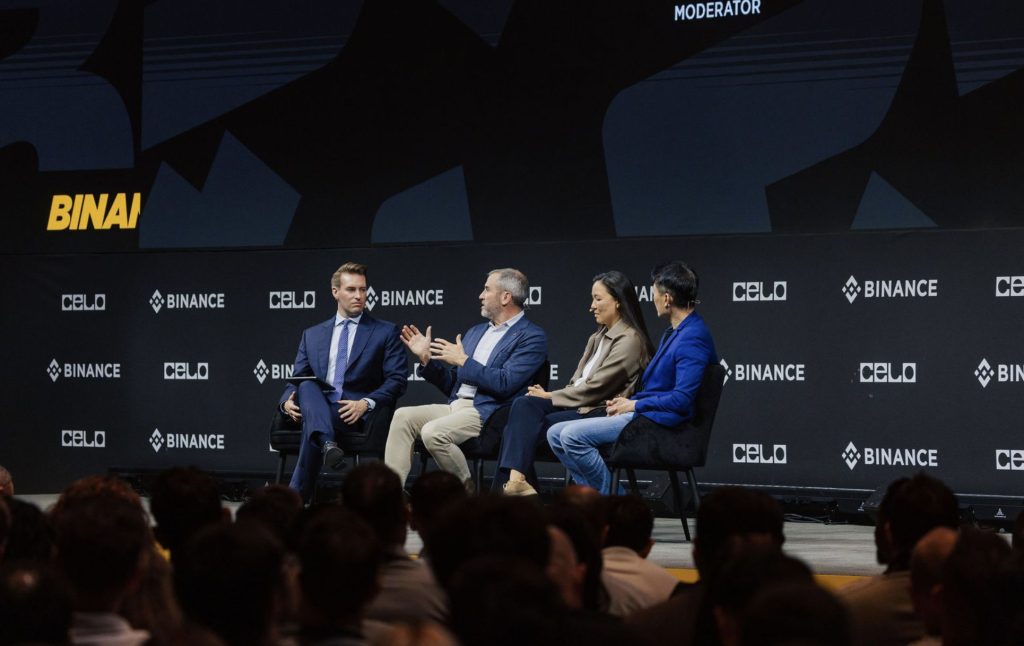
A high-profile panel at Binance Blockchain Week in Dubai brought together Brad Garlinghouse of Ripple, Lily Liu of the Solana Foundation, and Binance’s Richard Teng to dissect the latest trends shaping digital asset markets. Moderated by CNBC’s Dan Murphy, the conversation spanned Bitcoin’s recent volatility, the rapid rise of stablecoins, and institutional adoption driven by regulatory clarity.
Bitcoin’s Rebound and the Leverage Flush-Out
Murphy opened the session by recapping Bitcoin’s turbulent performance. The asset has climbed 8% over the past week to reclaim nearly $90,000, despite still sitting roughly 30% below its October peak.
The surge comes on the heels of a dramatic market reset that saw $20 billion in leverage positions wiped out across exchanges, alongside negative funding rates in Bitcoin perpetuals.
While some view this as a sign of cooling sentiment, the panel stressed that liquidity stress and rapid corrections remain natural features of the crypto cycle.
Lily Liu noted that the selloff was amplified by an “irrational liquidity window,” adding that volatility should be embraced rather than feared. “When I reread the original Bitcoin forums, I’m struck by how much clarity there was — speed, cost, programmability, and liquidity have been the themes since 2015,” she said. These fundamentals, she argued, remain the north star for long-term development.
ETFs, Institutions and the Stablecoin Economy
Despite short-term turbulence, institutional appetite remains strong. Murphy highlighted continued inflows into Bitcoin and Solana ETFs, which have helped offset the leverage wipeout. The panel agreed that the broader macro narrative is now being shaped by regulation and corporate adoption, not retail speculation.
Richard Teng stresses the surge in stablecoin usage as one of the year’s defining trends. He noted that stablecoin market capitalization has risen 50%, with wallet numbers climbing by the same margin. “I think stablecoins massively improve capital efficiency — they’re cheaper, faster, and I expect a lot of institutions to rely on them,” Teng said.
Brad Garlinghouse also pointed to regulatory clarity in the U.S. — particularly around the Gensler Act — as a turning point for institutional engagement.
“People are starting to recognize that stablecoins really are stable and much easier to manage and move, especially in this region,” he said. Ripple’s recent acquisition of G Treasury, he added, has sparked “remarkable interest from corporate customers” exploring stablecoin-based payment rails.
Solana’s Long-Term Vision and Market Infrastructure
Liu expanded on Solana’s ambition to build what she described as the “TCP/IP for money,” a unified financial layer enabling global, instantaneous capital flows. She emphasized that the next wave of adoption will depend on speed, cost efficiency, liquidity, and utility — not speculation.
Daily inflows into the Solana ETF, she said, demonstrate growing institutional validation. Liu also highlighted Solana’s goal of enabling financial inclusion across emerging markets, arguing that crypto’s role in digitizing global capital markets is only beginning to unfold.
Regulation, Market Maturation and Industry Outlook
Regulatory clarity was a recurring theme throughout the discussion. Teng pointed to developments in Abu Dhabi and Dubai, where policymakers have approved regulated stablecoins, as evidence that governments now see digital assets as part of national financial strategy.
Garlinghouse was cautiously optimistic about progress in Washington. The Clarity Act, he said, is gaining momentum and could mark a decisive shift in the U.S. regulatory landscape. Collaboration between regulators and industry leaders, he argued, is essential “to unlock the next chapter of institutional adoption.”


You May Also Like
Leandro Leviste vs Ryan Recto: Political scions clash in House over corruption claims
Lovable AI’s Astonishing Rise: Anton Osika Reveals Startup Secrets at Bitcoin World Disrupt 2025