Former Citadel employees Ian Krotinsky and Aashiq Dheeraj have secured $17 million in funding for Fin, a stablecoin-powered payments app designed to enableFormer Citadel employees Ian Krotinsky and Aashiq Dheeraj have secured $17 million in funding for Fin, a stablecoin-powered payments app designed to enable

Ex-Citadel Engineers Raise $17M for Stablecoin Payments Startup Fin

2025/12/04 16:34
4 min read
For feedback or concerns regarding this content, please contact us at crypto.news@mexc.com

Former Citadel employees Ian Krotinsky and Aashiq Dheeraj have secured $17 million in funding for Fin, a stablecoin-powered payments app designed to enable instant cross-border money transfers without the complexity of traditional crypto platforms.

According to a Fortune report, Pantera Capital led the round, with participation from Sequoia and Samsung Next, as the startup prepares to pilot with import-export businesses next month.

The funding arrives amid explosive growth in the stablecoin sector, which now exceeds $300 billion in total market capitalization.
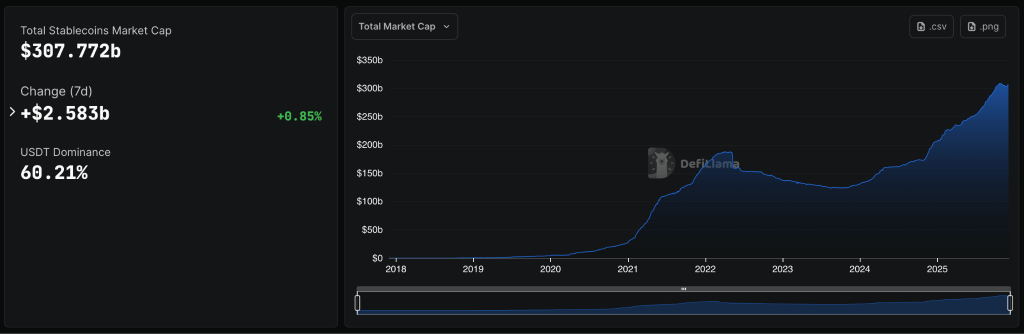
Stablecoin Total market capSource: DefiLlama

Krotinsky and Dheeraj discovered the friction in international payments while building side projects at Citadel, when they attempted to pay $50 to users who reached the front page of a Reddit-like platform they created.

Building Payment Infrastructure for Large Transfers

Fin targets a gap in existing payment systems by focusing on large-value transactions in the hundreds of thousands or millions of dollars.

The app allows users to send money to other Fin users, bank accounts, or crypto wallets, leveraging stablecoin rails to reduce transfer fees compared to traditional banking channels dramatically.

Krotinsky described the platform as “built as the payments app of the future,” emphasizing that it leverages the benefits of stablecoins “without all the complexity” and will work anywhere in the world.

The startup shared an exclusive walkthrough with Fortune, revealing a simple yet elegant design prioritizing user-friendliness over technical jargon.

Traditional wire transfers through commercial banks can take several days and incur substantial fees, particularly for international transactions between countries with different financial systems.

Fin aims to disrupt this model by offering near-instant settlement for scenarios such as Swiss watch dealers selling to US customers or domestic transfers exceeding the limits imposed by Venmo and Zelle, which cannot process payments of $100,000 instantly due to delays or verification holds.

Stablecoin Payments Startup Fin co-foundersCo-founders of Fin, Ian Krotinsky and Aashiq Dheeraj. | Source: Fortune

Revenue Model and Competitive Positioning

The company plans to generate revenue through transaction fees, though these will remain cheaper than alternatives, plus interest earned on stablecoins held in Fin wallets.

While the app has not launched publicly, the pilot program with businesses in the import-export space represents the first step toward broader commercial availability.

Krotinsky positioned his startup against major commercial banks like JPMorgan Chase and Barclays rather than crypto-native competitors.

He argued that large financial institutions have built payment products incorrectly for decades and will struggle to migrate existing systems onto stablecoin rails.

I think we have the opportunity of being the next largest payments app in the world,” Krotinsky said. “People are going to be surprised at how quickly we move to get there.

Stablecoin Sector Attracts Traditional Finance Giants

Fin’s funding follows major institutional moves into stablecoin infrastructure.

Citadel Securities, the market maker founded by Ken Griffin, invested $200 million in crypto exchange Kraken at a $20 billion valuation in November, deepening Wall Street’s commitment to digital assets after years of hesitation over regulatory uncertainty.

The firm also participated in Ripple’s $500 million funding round alongside Fortress Investment Group, which shows traditional finance is showing interest in established crypto platforms as regulatory clarity improves under the Trump administration.

Most recently, ten major European banks formed a consortium to launch a euro-backed stablecoin by mid-2026, addressing concerns about overwhelming reliance on dollar-denominated tokens, which currently account for 99.58% of the global stablecoin market.

Sony Bank is also reportedly preparing to issue a GENIUS-regulated US dollar stablecoin for American customers as early as fiscal 2026, aiming to reduce payment fees across its gaming and anime businesses.

While there is a massive ongoing innovation in stablecoins with big firms positioning themselves for what they see as the next wave of financial revolution, Standard Chartered recently warned that over $1 trillion could flow from emerging-market banks into stablecoins by 2028 as global adoption accelerates.

In fact, Federal regulators are also advancing implementation of the GENIUS Act, with the FDIC expected to publish its first stablecoin rule framework later this month.

Acting FDIC Chair Travis Hill confirmed the agency is drafting rules for how stablecoin issuers will apply for approval, with separate prudential standards planned for early next year.

Disclaimer: The articles reposted on this site are sourced from public platforms and are provided for informational purposes only. They do not necessarily reflect the views of MEXC. All rights remain with the original authors. If you believe any content infringes on third-party rights, please contact crypto.news@mexc.com for removal. MEXC makes no guarantees regarding the accuracy, completeness, or timeliness of the content and is not responsible for any actions taken based on the information provided. The content does not constitute financial, legal, or other professional advice, nor should it be considered a recommendation or endorsement by MEXC.

You May Also Like

Saudi Awwal Bank Adopts Chainlink Tools, LINK Near $23

Saudi Awwal Bank Adopts Chainlink Tools, LINK Near $23

The post Saudi Awwal Bank Adopts Chainlink Tools, LINK Near $23 appeared on BitcoinEthereumNews.com. SAB adopts Chainlink’s CCIP and CRE to expand tokenization and cross-border finance tools. SAB and Wamid target $2.32T Saudi capital markets with blockchain-based tokenization plans. LINK price falls 2.43% to $22.99 despite higher trading volume and steady liquidity ratios. Saudi Awwal Bank has added Chainlink’s Cross-Chain Interoperability Protocol (CCIP) and the Chainlink Runtime Environment (CRE) to its digital strategy. CCIP links assets and data across multiple blockchains, while CRE provides banks with a controlled framework to test and deploy new financial applications. The lender, with more than $100 billion in assets, is applying the tools to tokenized assets, cross-border settlement, and automated credit platforms. The move signals that Chainlink’s infrastructure is being adopted at scale inside regulated finance. Related: Chainlink’s Deal with SBI Is a Major Win, But Chart Shows LINK’s Battle at $27 Resistance Wamid Partnership Aims at $2.32 Trillion Markets In parallel, SAB signed an agreement with Wamid, a subsidiary of the Saudi Tadawul Group, to pilot tokenization of the Saudi Exchange’s $2.32 trillion capital markets. The focus is on equities and debt products, opening the door for blockchain-based issuance and settlement. SAB has already executed the world’s first Islamic repo on distributed ledger technology, in collaboration with Oumla earlier this year. That transaction gave regulators a template for compliant on-chain contracts. The Wamid deal builds directly on that precedent, shifting from single-instrument pilots toward broader capital markets integration. Saudi Blockchain Buildout Gains Pace Saudi institutions are building multiple layers of digital infrastructure. Oumla is working with Avalanche to develop the Kingdom’s first domestically hosted Layer 1 blockchain. SAB’s Chainlink adoption adds an interoperability and execution layer on top. Together, these projects are shaping a domestic framework for tokenization, with global connectivity added only where liquidity requires it. LINK Price and Liquidity Snapshot While institutional adoption progresses, Chainlink’s…
Share
BitcoinEthereumNews2025/09/18 08:49
Michael Saylor Pushes Digital Capital Narrative At Bitcoin Treasuries Unconference

Michael Saylor Pushes Digital Capital Narrative At Bitcoin Treasuries Unconference

The post Michael Saylor Pushes Digital Capital Narrative At Bitcoin Treasuries Unconference appeared on BitcoinEthereumNews.com. The suitcoiners are in town.  From a low-key, circular podium in the middle of a lavish New York City event hall, Strategy executive chairman Michael Saylor took the mic and opened the Bitcoin Treasuries Unconference event. He joked awkwardly about the orange ties, dresses, caps and other merch to the (mostly male) audience of who’s-who in the bitcoin treasury company world.  Once he got onto the regular beat, it was much of the same: calm and relaxed, speaking freely and with confidence, his keynote was heavy on the metaphors and larger historical stories. Treasury companies are like Rockefeller’s Standard Oil in its early years, Michael Saylor said: We’ve just discovered crude oil and now we’re making sense of the myriad ways in which we can use it — the automobile revolution and jet fuel is still well ahead of us.  Established, trillion-dollar companies not using AI because of “security concerns” make them slow and stupid — just like companies and individuals rejecting digital assets now make them poor and weak.  “I’d like to think that we understood our business five years ago; we didn’t.”  We went from a defensive investment into bitcoin, Saylor said, to opportunistic, to strategic, and finally transformational; “only then did we realize that we were different.” Michael Saylor: You Come Into My Financial History House?! Jokes aside, Michael Saylor is very welcome to the warm waters of our financial past. He acquitted himself honorably by invoking the British Consol — though mispronouncing it, and misdating it to the 1780s; Pelham’s consolidation of debts happened in the 1750s and perpetual government debt existed well before then — and comparing it to the gold standard and the future of bitcoin. He’s right that Strategy’s STRC product in many ways imitates the consols; irredeemable, perpetual debt, issued at par, with…
Share
BitcoinEthereumNews2025/09/18 02:12
XRP Price Prediction: CLARITY Act Nears April as Pepeto Presale Offers Bigger Upside

XRP Price Prediction: CLARITY Act Nears April as Pepeto Presale Offers Bigger Upside

With countless tokens to choose from in a $2.5 trillion market, the xrp price prediction stands out. This is because XRP has the cleanest regulatory path in its
Share
Techbullion2026/03/26 07:36