YPF examines crypto payments for fuel as Argentina explores new digital settlement models amid ongoing currency reforms. Argentina’s state-owned YPF is assessing a plan to allow crypto payments for gasoline and diesel at its service stations. Moreover, officials said the review is still in progress, with no solid launch timeline. YPF Evaluates Digital Payment Expansion […] The post Argentina’s YPF Studies Plan for Paying Fuel with Crypto appeared first on Live Bitcoin News.YPF examines crypto payments for fuel as Argentina explores new digital settlement models amid ongoing currency reforms. Argentina’s state-owned YPF is assessing a plan to allow crypto payments for gasoline and diesel at its service stations. Moreover, officials said the review is still in progress, with no solid launch timeline. YPF Evaluates Digital Payment Expansion […] The post Argentina’s YPF Studies Plan for Paying Fuel with Crypto appeared first on Live Bitcoin News.

Argentina’s YPF Studies Plan for Paying Fuel with Crypto

2025/12/05 00:45
3 min read
For feedback or concerns regarding this content, please contact us at crypto.news@mexc.com

YPF examines crypto payments for fuel as Argentina explores new digital settlement models amid ongoing currency reforms.

Argentina’s state-owned YPF is assessing a plan to allow crypto payments for gasoline and diesel at its service stations. Moreover, officials said the review is still in progress, with no solid launch timeline.

YPF Evaluates Digital Payment Expansion

According to reports, the company is looking at a model that would be based on an exchange intermediary. Additionally, the system would probably refer to “crypto dollar” pricing, and not the official rate. Local coverage from La Nación and sector blogs confirms that Lemon, Ripio, and Binance are among the potential partners for the intermediary layer.

Related Reading: Dogecoin News: Argentina Embraces Dogecoin Payments Amid Inflation Concerns | Live Bitcoin News

YPF’s consideration of crypto comes after it accepted payments in fuel for U.S. dollars. In addition, the company became the first in Argentina to permit the direct transactions of dollars for gasoline and diesel. This development coincided with policy measures introduced by Economy Minister Luis Caputo, which were intended to promote the internal dollarization strategy of the country.

YPF said a crypto mechanism would operate on the same structure as that deployed for dollar payments. Additionally, people with eligible accounts can already transfer dollars to YPF’s checking account at Banco Santander by scanning a QR code.
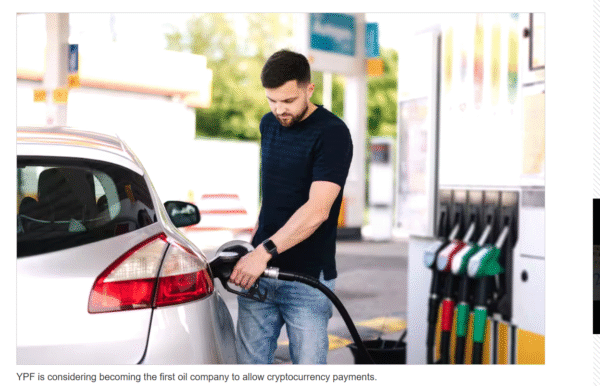
YPF examines crypto payments for fuel as Argentina explores new digital settlement models amid ongoing currency reforms.Source: La Nacion

However, YPF stressed that dollar payments are still limited to purchases within the company’s ecosystem. Moreover, the dollar system is not in the context of foreign exchange operations because there is no buying and selling of currency at all in the transaction. Therefore, a similar process for crypto would have the intermediaries handling valuation and settlement.

Regulatory and Operational Considerations Increase

The company clarified that the crypto markets are not using the official exchange rate of Argentina. Consequently, intermediaries may be required to convert crypto values into settlement amounts as they flow through the payment. Reports indicate that through the discussions, possible exchanges referenced might be able to provide pricing feeds and custody functionality.

Meanwhile, YPF also increased its technological initiatives for 2025. The company introduced a self-service fueling system where customers fill up without the help of staff. Additionally, the users receive 3% discount thanks to the lower operating costs, a model replicated from international retail fuel practices.

Energy analysts say that crypto payments can help diversify payment channels during economic transitions. Furthermore, industry watchers think flexibility would help support stations in tourist areas, where crypto adoption is growing steadily. However, they also warn that settlement risks and technical integration remain complicated for large-scale rollouts.

Financial experts add that pricing based on “crypto dollars” could make Argentina less reliant on its patchy exchange landscape. Nevertheless, any operational model needs to meet compliance, volatility protection, and custody standards via regulated intermediaries.

Broader Effects on Argentina’s Payment Modernization

As YPF is researching crypto settlement, there is speculation that wider payment reforms could be contingent on patterns of adoption in the wider retail sector. Additionally, the company’s focus on digital tools suggests a broader strategic shift in the fuel sector. Unless crypto acceptance deals are to stop, daily settlement processes, which may be subject to liquidation, may increase in levels of automation through exchange-backed channels. As a result, the payment ecosystem in Argentina could enter a more diversified and technology-driven stage.

The post Argentina’s YPF Studies Plan for Paying Fuel with Crypto appeared first on Live Bitcoin News.


Market Opportunity
Fuel Logo
Fuel Price(FUEL)
$0.00092
$0.00092$0.00092
+3.37%
USD
Fuel (FUEL) Live Price Chart
Disclaimer: The articles reposted on this site are sourced from public platforms and are provided for informational purposes only. They do not necessarily reflect the views of MEXC. All rights remain with the original authors. If you believe any content infringes on third-party rights, please contact crypto.news@mexc.com for removal. MEXC makes no guarantees regarding the accuracy, completeness, or timeliness of the content and is not responsible for any actions taken based on the information provided. The content does not constitute financial, legal, or other professional advice, nor should it be considered a recommendation or endorsement by MEXC.

You May Also Like

Dovish patience with geopolitical risks – TD Securities

Dovish patience with geopolitical risks – TD Securities

The post Dovish patience with geopolitical risks – TD Securities appeared on BitcoinEthereumNews.com. TD Securities analysts characterize the Bank of Canada’s (
Share
BitcoinEthereumNews2026/04/02 21:22
Cashing In On University Patents Means Giving Up On Our Innovation Future

Cashing In On University Patents Means Giving Up On Our Innovation Future

The post Cashing In On University Patents Means Giving Up On Our Innovation Future appeared on BitcoinEthereumNews.com. “It’s a raid on American innovation that would deliver pennies to the Treasury while kneecapping the very engine of our economic and medical progress,” writes Pipes. Getty Images Washington is addicted to taxing success. Now, Commerce Secretary Howard Lutnick is floating a plan to skim half the patent earnings from inventions developed at universities with federal funding. It’s being sold as a way to shore up programs like Social Security. In reality, it’s a raid on American innovation that would deliver pennies to the Treasury while kneecapping the very engine of our economic and medical progress. Yes, taxpayer dollars support early-stage research. But the real payoff comes later—in the jobs created, cures discovered, and industries launched when universities and private industry turn those discoveries into real products. By comparison, the sums at stake in patent licensing are trivial. Universities collectively earn only about $3.6 billion annually in patent income—less than the federal government spends on Social Security in a single day. Even confiscating half would barely register against a $6 trillion federal budget. And yet the damage from such a policy would be anything but trivial. The true return on taxpayer investment isn’t in licensing checks sent to Washington, but in the downstream economic activity that federally supported research unleashes. Thanks to the bipartisan Bayh-Dole Act of 1980, universities and private industry have powerful incentives to translate early-stage discoveries into real-world products. Before Bayh-Dole, the government hoarded patents from federally funded research, and fewer than 5% were ever licensed. Once universities could own and license their own inventions, innovation exploded. The result has been one of the best returns on investment in government history. Since 1996, university research has added nearly $2 trillion to U.S. industrial output, supported 6.5 million jobs, and launched more than 19,000 startups. Those companies pay…
Share
BitcoinEthereumNews2025/09/18 03:26
Unpacking The ‘Extreme Fear’ Gripping Digital Asset Markets

Unpacking The ‘Extreme Fear’ Gripping Digital Asset Markets

The post Unpacking The ‘Extreme Fear’ Gripping Digital Asset Markets appeared on BitcoinEthereumNews.com. Crypto Fear & Greed Index Plummets To 9: Unpacking The
Share
BitcoinEthereumNews2026/04/03 09:13

Starter Gold Rush: Win $2,500!

Starter Gold Rush: Win $2,500!Starter Gold Rush: Win $2,500!

Start your first trade & capture every Alpha move