

Er is opnieuw instroom in de Amerikaanse SOL ETF’s: op 11 december kwam meer dan $1 miljoen nieuw kapitaal binnen, waarmee een reeks positieve dagen werd verlengdEr is opnieuw instroom in de Amerikaanse SOL ETF’s: op 11 december kwam meer dan $1 miljoen nieuw kapitaal binnen, waarmee een reeks positieve dagen werd verlengd
De SOL ETF’s stromen vol: de Solana koers zoekt een balans op weg naar $150
For feedback or concerns regarding this content, please contact us at crypto.news@mexc.com
Er is opnieuw instroom in de Amerikaanse SOL ETF’s: op 11 december kwam meer dan $1 miljoen nieuw kapitaal binnen, waarmee een reeks positieve dagen werd verlengd. Sinds de start bedraagt de totale instroom ongeveer $671 miljoen. Tegelijk is bekendgemaakt dat de SOL tokens direct verhandelbaar worden voor een gebruikersgroep van meer dan 100 miljoen accounts via Coinbase. Kan de Solana koers hierdoor in een stabielere fase terechtkomen? Check onze Discord Connect met "like-minded" crypto enthousiastelingen Leer gratis de basis van Bitcoin & trading - stap voor stap, zonder voorkennis. Krijg duidelijke uitleg & charts van ervaren analisten. Sluit je aan bij een community die samen groeit. Nu naar Discord Solana koers volgt de stabilisatie van de totale marktwaarde. De Solana koers volgt duidelijk het gedrag van de totale marktwaarde. Tijdens één handelsdag zakte de marktwaarde snel van ongeveer $78.000.000.000 richting het gebied rond $74.000.000.000. Die daling verliep zonder lange pauzes, wat wijst op een gedwongen verkoop, vaak veroorzaakt door leverageposities die automatisch gesloten werden. Na het bereiken van het gebied tussen $73.500.000.000 en $74.000.000.000 veranderde het beeld. De koersdaling stopte en de marktwaarde bleef binnen een smallere bandbreedte bewegen. Zo’n beweging heet basevorming. Dat betekent dat de bulls en bears elkaar in evenwicht houden. De Solana koers reageerde hierop met een smaller handelsbereik en minder sterke uitslagen. Sindsdien beweegt de marktwaarde vooral tussen circa $74.000.000.000 en $75.000.000.000. In deze zone is de volatiliteit laag en is er geen duidelijke dominantie van de bulls of bears. Dit bevestigt dat de eerdere SOL verkoopdruk is afgenomen, zonder dat er sprake is van een duidelijke ommekeer. Welke crypto nu kopen?Lees onze uitgebreide gids en leer welke crypto nu kopen verstandig kan zijn! Welke crypto nu kopen? De Federal Reserve heeft zoals verwacht de rentes verlaagd, en dus zullen er deze maand weer kansen gaan ontstaan op de cryptomarkt. Dit is erg bullish voor crypto, en dus gaan wereldberoemde traders ineens all-in op altcoins als XRP. Eén vraag komt telkens terug: welke crypto moet je nu kopen? In dit… Continue reading De SOL ETF’s stromen vol: de Solana koers zoekt een balans op weg naar $150 document.addEventListener('DOMContentLoaded', function() { var screenWidth = window.innerWidth; var excerpts = document.querySelectorAll('.lees-ook-description'); excerpts.forEach(function(description) { var excerpt = description.getAttribute('data-description'); var wordLimit = screenWidth wordLimit) { var trimmedDescription = excerpt.split(' ').slice(0, wordLimit).join(' ') + '...'; description.textContent = trimmedDescription; } }); }); De 4-uurs structuur laat geen SOL trendomslag zien Op de 4-uurs grafiek blijft de grotere structuur van Solana intact. De SOL koers beweegt nog steeds binnen een patroon van lagere toppen en lagere bodems. Dit patroon begon na de piek eerder in de Solana cyclus, rond het prijsgebied boven $220. Dit wordt vaak gezien als een correctiefase. Na het recente dieptepunt rond het prijsgebied van $120 beweegt de SOL prijs zijwaarts. De candles wisselen elkaar af binnen een bandbreedte van ongeveer $125 tot $135. Dit gedrag past bij een consolidatie na een snelle daling, wat betekent dat de markt tijd nodig heeft om nieuwe SOL posities op te bouwen. De voortschrijdende gemiddelden op deze timeframe wijzen nog omlaag. De Solana prijs blijft onder deze lijnen bewegen. Dat laat zien dat de langere trend nog niet is gekanteld. Zolang dit zo blijft, overheerst er een neutrale tot voorzichtige technische structuur, zonder sterke signalen voor versnelling. Het afgenomen SOL volume bevestigt een afkoeling na verkoopdruk Het SOL handelsvolume is duidelijk lager dan tijdens de koersdaling. Tijdens deze snelle terugval was het volume hoog, wat past bij liquidaties. Daarna liep het volume terug. Dit betekent dat er minder urgentie is bij zowel de bulls als bears. Een lagere volumefase na een scherpe koersbeweging wordt vaak gezien als een stabilisatiefase. De markt verwerkt dan de eerdere transacties. In deze fase ontstaan vaak nieuwe prijszones waarin de crypto tokens zonder grote prijsveranderingen van eigenaar wisselen. Voor de Solana koers betekent dit dat prijsbewegingen kleiner blijven zolang het SOL volume laag blijft. Dit ondersteunt het beeld van consolidatie in plaats van trendvorming. De ETF instroom ondersteunt een structurele vraag naar SOL tokens De gemelde SOL ETF instroom is relevant omdat deze plaatsvindt tijdens een periode zonder sterke Solana prijsstijging. Dat laat zien dat instellingen niet alleen instappen bij momentum, maar ook bij stabilisatie. De instroom van meer dan $671.000.000 sinds de lancering bevestigt een aanhoudende interesse. Daarnaast speelt toegankelijkheid ook een voorname rol. Door de directe verhandelbaarheid voor tientallen miljoenen gebruikers wordt de liquiditeit vergroot. Meer liquiditeit betekent dat grotere orders makkelijker, zonder extreme prijsschommelingen, verwerkt kunnen worden. Deze factoren werken niet als directe katalysator voor snelle koersbewegingen, maar dragen wel bij aan een stevigere marktstructuur. Voor de Solana koers betekent dit dat neerwaartse koersbewegingen vaker door de structurele vraag worden opgevangen. Solana koers blijft gevangen tussen technische rust en fundamentele steun De Solana koers bevindt zich momenteel tussen twee krachten. Aan de ene kant is er een neerwaartse technische trend op hogere timeframes. Aan de andere kant zijn er controleerbare signalen van institutionele betrokkenheid en een groeiende markttoegang. Zolang de SOL prijs binnen de huidige bandbreedte blijft en het volume laag blijft, verandert dit evenwicht niet. De Solana markt toont geen tekenen van paniek, maar ook geen duidelijke impuls omhoog. Dit wijst op een overgangsfase waarin eerdere koersdalingen worden verwerkt. De combinatie van een stabiliserende marktwaarde, lagere volatiliteit en aanhoudende SOL ETF instroom maakt duidelijk dat Solana zich niet in een versnellende neerwaartse fase bevindt. Vooruitblik op basis van een meetbare Solana marktstructuur De basis van het huidige Solana beeld is stabilisatie. De sterke koersdaling werd gevolgd door basevorming rond een vaste marktwaarde zone. De 4-uurs structuur van SOL blijft neerwaarts, maar versnelt niet verder. Het volume bevestigt een afkoeling. Tegelijkertijd blijft institutioneel kapitaal via ETF producten binnenstromen en neemt de toegankelijkheid van de SOL tokens toe. Al deze feiten samen wijzen op een markt die eerst balans zoekt voordat een nieuwe koersrichting ontstaat. Best wallet - betrouwbare en anonieme wallet Best wallet - betrouwbare en anonieme wallet Meer dan 60 chains beschikbaar voor alle crypto Vroege toegang tot nieuwe projecten Hoge staking belongingen Lage transactiekosten Best wallet review Koop nu via Best Wallet Let op: cryptocurrency is een zeer volatiele en ongereguleerde investering. Doe je eigen onderzoek.
Het bericht De SOL ETF’s stromen vol: de Solana koers zoekt een balans op weg naar $150 is geschreven door Dirk van Haaster en verscheen als eerst op Bitcoinmagazine.nl.
Market Opportunity
Solana Price(SOL)
$84.31
$84.31$84.31
USD
Solana (SOL) Live Price Chart
Disclaimer: The articles reposted on this site are sourced from public platforms and are provided for informational purposes only. They do not necessarily reflect the views of MEXC. All rights remain with the original authors. If you believe any content infringes on third-party rights, please contact crypto.news@mexc.com for removal. MEXC makes no guarantees regarding the accuracy, completeness, or timeliness of the content and is not responsible for any actions taken based on the information provided. The content does not constitute financial, legal, or other professional advice, nor should it be considered a recommendation or endorsement by MEXC.
You May Also Like
Unlocking Trust Dice’s 2026 No-Deposit Bonus: A Player’s
Cryptsy - Latest Cryptocurrency News and Predictions Cryptsy - Latest Cryptocurrency News and Predictions - Experts in Crypto Casinos Imagine a world where you
Share
Cryptsy2026/03/30 15:01
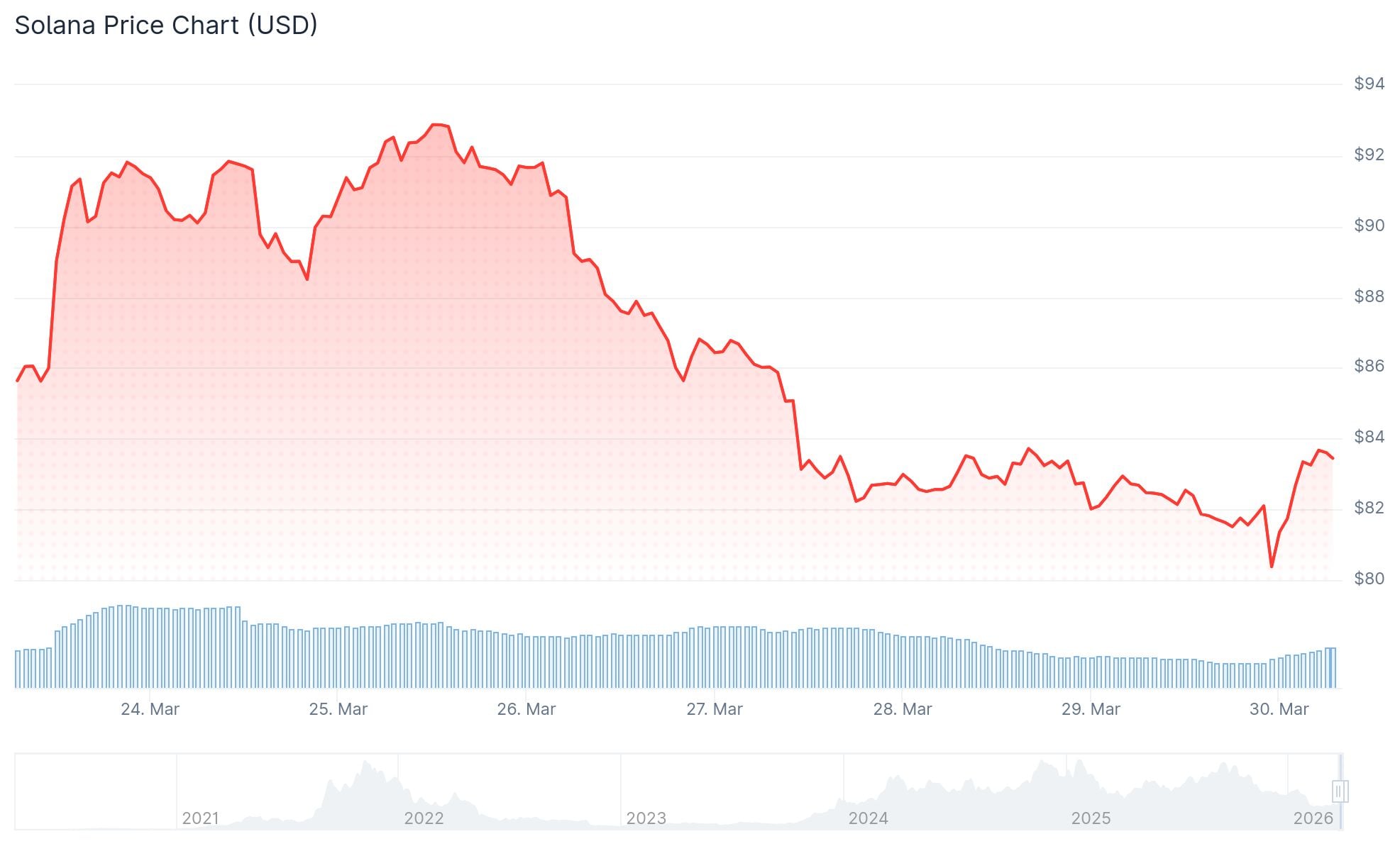
Solana (SOL) Price: Analyst Sees $45–$75 Buy Zone as ETF Outflows Hit Fourth-Largest on Record
TLDR Solana rose over 2% on Monday after four straight days of losses totaling a 5% drop last week. US spot Solana ETFs recorded $7.84 million in outflows on Friday
Share
Coincentral2026/03/30 15:06

Metaplanet raises $1.4B to fuel BTC purchases and U.S. subsidiary launch
Metaplanet Inc. has formalized the subsidiary in Miami, Florida, naming it Metaplanet Income Corp.
Share
Cryptopolitan2025/09/17 23:34

