👨🏿🚀TechCabal Daily – The 50 most consequential people in African tech
Happy mid-week. 
What does it mean to be a builder?
A builder is a person who turns uncertainty into systems, ideas into infrastructure, and ambition into execution. They are the operators fixing broken processes, the founders pushing impactful products from zero to one, opening up new markets, enablers creating the right environment for innovation to thrive, and the leaders making technology useful in everyday life.
2025 has been a solid year for tech: funding flows to Africa increased compared to last year, and founders and operators kept building through policy whiplash and tough operating markets. This year, TechCabal longlisted over 600 builders whose work delivered tangible results and advanced Africa’s tech ecosystem. After multiple rounds of rigorous evaluation and external consultations, we identified 50 names that stand out for their significant impact.
Today, we will publish the Builder’s List, the “TechCabal50,” spotlighting the most consequential people building Africa’s technology future. Keep an eye out for this and share widely when we publish.
- Kenya’s pay-TV market grows
- BasiGo opens charging station
- Luno, AltSchool announce new course
- World Wide Web 3
- Opportunities
Streaming
Kenya’s pay-TV market is growing, and MultiChoice is leading the rebound
 Image source: MultiChoice
Despite the news, it might not be all gloom for MultiChoice, at least in Kenya.
The country’s pay-TV market posted a rebound in the first quarter of the 2025/26 financial year, with broadcasting subscriptions climbing 13.7% quarter-on-quarter to 1.68 million active users by the end of September 2025.
The growth drivers: The recovery was driven largely by MultiChoice Kenya, a subsidiary of the South African pay-TV giant, whose DStv and GOtv brands recorded strong growth after a bruising period earlier in the year. GOtv led the charge in the Digital Terrestrial Television (DTT) segment, as subscriptions jumped by 41.2% due to flexible pricing and localised content that continues to resonate beyond urban centres.
On the Direct-to-Home (DTH) satellite segment, DStv crossed 270,000 subscribers, a 43% increase from the last quarter, helped by the return of major sports leagues, especially the English Premier League (EPL), and steady demand for live content.
Why does this matter? This growth follows a reset. Earlier declines were amplified by a change in how “active” subscriptions were counted. In the previous quarter, the Communications Authority of Kenya (CA) defined active subscription as accounts that had generated revenue within the last 90 days.
This made the reported figures for DStv plummet to a low of 188,824, along with inflation pressure and repeated price hikes. The latest numbers suggest stabilisation and growth, a sign that a core base of users is sticking around despite the implementation of new price tiers in July 2025.
Powering African Businesses Through the Busiest Season of the Year.
Your peak season needs fast and reliable payments. Collect, pay, and settle across Africa in the right currencies without delays. Create your Fincra account in 3 minutes.
Mobility
BasiGo adds a new fast-charging site to Kenya’s EV sector
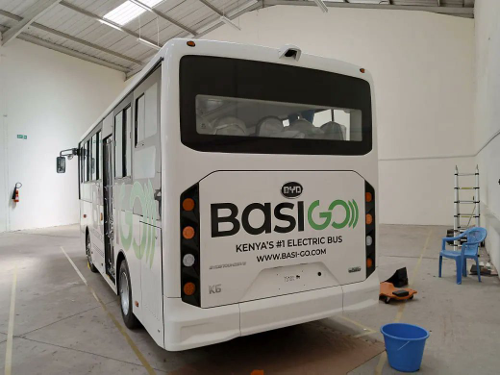 Image Source: BasiGo
BasiGo, a Kenyan electric bus company, has opened a new electric vehicle fast-charging site at Shell Athi River, a key commuter and logistics corridor in the country. The site becomes BasiGo’s third charging location hosted by Vivo Energy Kenya, a pan-African retailer and distributor of fuels and lubricants, following earlier rollouts along Shell Waiyaki Way and Shell New Gatitu in Thika, and is aimed at supporting electric buses already operating on the Nairobi–Kitengela–Machakos route.
New station specs: The new station can charge up to four vehicles at once and supports multiple charging standards, making it compatible with a wide range of electric buses. The focus is speed and reliability, and reducing downtime for public service operators by making electric buses workable on tight daily schedules.
Why this matters: Charging remains a bottleneck for commercial electric vehicle (EV) adoption as buses need predictable access to power while en route. The move also places BasiGo among a growing field. Roam rolled out fast-charging depots for electric motorcycles and buses in November. On December 8, Ampersand Energy, a Tanzania-based e-mobility startup, launched a new battery-swapping expansion and is betting on fast battery swaps over plugs for two-wheelers. As more EV charging models come online in Kenya, the more the country’s EV sector starts to look more operational and infrastructure-ready.
Enjoy smooth payments while you’re home this Detty December

Coming home for Detty December? Enjoy smooth payments every day with your Paga US account. Transfer to any bank instantly. Don’t miss out, get started now.
Cryptocurrency
Luno, AltSchool partner to teach 15,000 Nigerians about crypto
 Luno’s office building in Cape Town, South Africa/Image Source: News24
If your crypto education came from WhatsApp broadcasts, Twitter threads, and one unlucky friend who “entered early,” Luno thinks it is time for an intervention.
The UK-based crypto firm, which operates in four African countries, has partnered with AltSchool Africa, the Nigerian edtech platform, to train 15,000 Nigerians through a fully funded beginner course called “Demystifying Crypto for Africans,” which kicks off in March 2026 and will run in three cohorts across the year.
State of play: Luno’s rationale for a consumer-facing learning programme hinges on two considerations: crypto adoption in Nigeria is high, yet understanding is uneven. Many users know how to buy and sell, but not how wallets work, how to assess risk, or how scams actually happen. It says that this gap is expensive.
Between the lines: The course is designed to last three to four weeks and focuses on practical use. Learners will interact with wallets, exchanges, stablecoins, and research tools like CoinGecko and Etherscan. Once learners complete the course and pass the assessments, they receive an AltSchool certificate.
Luno frames this as a safety play. The company says better education leads to safer participation, especially as more Nigerians use crypto for savings, remittances, and cross-border payments.
Yet there are limits. Luno is opening the course to 15,000 students, which is a small number relative to Nigeria’s crypto population, and education alone will not clean up an industry full of bad actors. But formal, structured learning is still better than guessing. At the very least, fewer people may have to learn the hard way.
Stay up to date with Paystack news!

Subscribe to Paystack for a curated dose of product updates, insights, event invites and more. Subscribe here →.
CRYPTO TRACKER
The World Wide Web3
Source:

|
Coin Name |
Current Value |
Day |
Month |
|---|---|---|---|
| Bitcoin | $86,369 |
+ 0.48% |
– 9.19% |
| Ether | $2,923 |
+ 0.27% |
– 8.20% |
| Theoriq | $0.07428 |
– 58.47% |
– 58.47% |
| Solana | $127.30 |
+ 0.92% |
– 9.30% |
* Data as of 06.30 AM WAT, December 17, 2025.
Get tickets to experience Motherland this Detty December!

The Motherland journey begins on December 18 and 19. Two full days of exploring, tasting, shopping, connecting, and celebrating. From chef showcases to panels, curated marketplaces, fashion showcases, and evening parties, Motherland is a world of its own with something for everyone. You’ll need an Experience Pass to enter! December 20 is the grand finale with your favorite artists closing out the festival in a big way. You don’t want to miss a thing! Get your tickets →.
OPPORTUNITIES
- The Growth Talent Accelerator Programme (GTAP) is alGROWithm’s flagship training experience designed to turn ambitious professionals, operators, and teams into world-class Growth Engineers. If you’re an individual looking to upskill and become indispensable in 2026, or a company looking to strengthen your team, optimise operations, and increase revenue, GTAP 2026 is the right place to start. Apply for the Lite stream as an individual or nominate your team for the Pro stream.
- Win $30 Weekly This Christmas! This December, cross-border payment company Accrue is giving away $30 weekly, and you could be one of the lucky winners! Getting started is simple: just download the Accrue app from the App Store or Google Play Store and jump right into the challenge, and maybe even snag a little holiday cash while you’re at it.
- We mapped the world’s hottest data centres
- Big bets and broken unicorns: Tiger Global’s rise and reckoning
- Francophone Weekly: What Senegal’s tech ecosystem can teach Francophone Africa about scale
- How Swypt turns M-PESA payments into stablecoins without changing how Kenyans pay
Written by: Emmanuel Nwosu and Opeyemi Kareem
Edited by: Emmanuel Nwosu & Ganiu Oloruntade
Want more of TechCabal?
Sign up for our insightful newsletters on the business and economy of tech in Africa.
- The Next Wave: futuristic analysis of the business of tech in Africa.
- Francophone Weekly by TechCabal: insider insights and analysis of Francophone’s tech ecosystem
P:S If you’re often missing TC Daily in your inbox, check your Promotions folder and move any edition of TC Daily from “Promotions” to your “Main” or “Primary” folder and TC Daily will always come to you.

You May Also Like

Russia’s Central Bank Prepares Crackdown on Crypto in New 2026–2028 Strategy

IMX Technical Analysis Mar 27