

The Rise of Perpetual Exchanges in Cryptocurrency Markets: What You Need to Know
Unlocking the Potential of Perpetual Exchanges for Long-Term Crypto Gains
The world of cryptocurrency trading has undergone significant transformations in recent years, with the advent of perpetual exchanges being one of the most notable shifts. These platforms have quickly gained popularity, attracting both retail and institutional investors. Offering a unique financial instrument known as perpetual contracts, these exchanges allow traders to speculate on the future price of cryptocurrencies without ever having to own the underlying asset.
Perpetual ExchangesPerpetual exchanges represent a revolutionary approach to trading digital assets, providing an alternative to traditional spot markets. But how exactly do these platforms work? What are the benefits and risks? And why are they becoming a crucial component of the cryptocurrency ecosystem?
What Are Perpetual Exchanges?
Perpetual exchanges allow users to trade perpetual contracts, a type of derivative contract that mimics the behavior of traditional futures contracts. However, unlike regular futures contracts, perpetual contracts do not have an expiration date. This means that traders can hold positions for as long as they want, provided they meet margin requirements, without worrying about contract expiration.
Key Characteristics of Perpetual Contracts:
- No Expiry Date: Unlike traditional futures contracts that have fixed expiration dates, perpetual contracts allow traders to keep positions open indefinitely.
- Leverage: Perpetual exchanges offer leveraged trading, enabling users to control a larger position with a smaller capital outlay. This amplifies both potential gains and risks.
- Funding Rate: A unique feature of perpetual contracts is the funding rate. This is a periodic payment exchanged between buyers and sellers to ensure that the perpetual price closely aligns with the spot price of the underlying asset.
- 24/7 Trading: Since crypto markets operate continuously, perpetual exchanges allow for round-the-clock trading, giving users flexibility to enter or exit trades at any time.
How Perpetual Contracts Work
1. Price Tracking
Perpetual contracts are designed to closely mirror the price of the underlying asset, whether Bitcoin, Ethereum, or another cryptocurrency. This tracking is typically achieved through oracles or index prices that aggregate data from multiple spot exchanges to provide an accurate market reference.
2. Funding Rates
Unlike traditional futures, which settle on a fixed date, perpetual contracts use funding rates to maintain price alignment with the underlying asset. Funding rates are periodic payments exchanged between long and short positions:
- Positive Funding Rate: Traders holding long positions pay those holding short positions.
- Negative Funding Rate: Traders holding short positions pay those holding long positions.
Funding rates incentivize traders to correct price discrepancies, ensuring that the perpetual contract price remains close to the spot market price.
3. Leverage
Perpetual exchanges allow traders to use leverage, meaning they can control larger positions with a fraction of the capital. For example, using 10x leverage, a trader can hold a $10,000 position with only $1,000 of capital. Leverage amplifies both potential profits and losses, making risk management crucial.
4. Mark Price and Liquidation
To prevent unfair liquidations due to market manipulation or volatility, exchanges use a mark price — a reference price derived from spot prices — to calculate unrealized profits, losses, and liquidation thresholds. If a trader’s margin falls below the maintenance margin requirement, the position is automatically liquidated to prevent negative balances.
Why Perpetual Exchanges Have Gained Popularity
1. Continuous Trading Without Expiration
Traditional futures contracts have fixed expiration dates, requiring traders to roll over positions or settle them periodically. Perpetual contracts eliminate this constraint, allowing traders to maintain positions as long as they can meet margin requirements. This continuous trading model is highly attractive to both retail and institutional traders.
2. High Liquidity
Leading perpetual exchanges offer deep liquidity, reducing slippage and enabling large trades without significantly impacting market prices. High liquidity also facilitates the use of advanced trading strategies, including arbitrage, hedging, and market-making.
3. Leverage and Capital Efficiency
Perpetual exchanges allow traders to deploy capital efficiently through leverage. This means traders can amplify returns with a smaller initial investment, attracting high-volume speculators and professional traders. Leverage also enhances the potential for market growth by increasing trading volumes and engagement.
4. Hedging Opportunities
Enterprises, crypto miners, and institutional investors use perpetual contracts to hedge exposure to cryptocurrency price fluctuations. For example, a Bitcoin miner may short BTC perpetual contracts to offset the risk of a sudden price decline, stabilizing revenues and financial planning.
5. Speculative Opportunities
Perpetual contracts attract speculative traders who seek to profit from both upward and downward price movements. Short selling is facilitated without requiring borrowing of the underlying asset, simplifying the process and providing traders with more flexibility to capitalize on market volatility.
The Growth and Popularity of Perpetual Exchanges
- Leverage and High Potential Returns
Perpetual exchanges attract traders with the ability to use leverage, allowing them to amplify their positions and potential profits. For example, using 10x leverage, a trader can control a $10,000 position with just $1,000 of capital. While this can increase returns on small price movements, it also magnifies losses, making leveraged trading more suitable for experienced traders who can manage the associated risks.
2. Access to 24/7 Markets
Unlike traditional stock exchanges with fixed trading hours, perpetual exchanges operate around the clock. This allows traders to respond immediately to price movements, news, or global events, providing continuous opportunities to buy or sell assets and maximize trading potential in the highly dynamic cryptocurrency market.
3. No Expiry or Delivery Dates
Perpetual contracts differ from traditional futures because they have no expiration or settlement dates. Traders can hold positions indefinitely without the pressure of rolling over contracts, which benefits both short-term traders looking to capitalize on trends and long-term holders who wish to maintain positions without time constraints.
4. Advanced Trading Features
Perpetual exchanges often provide tools like stop-loss and take-profit orders, margin trading, and support for strategies such as grid trading or scalping. These advanced features help traders manage risk more effectively and automate strategies, making high-leverage trading more manageable and appealing to both retail and professional traders.
Advantages of Perpetual Exchanges
- Increased Liquidity
Perpetual contracts are traded on high-volume platforms, offering greater liquidity than traditional futures markets. This ensures that traders can enter and exit positions quickly with minimal slippage, which is especially important for large-cap cryptocurrencies like Bitcoin (BTC) and Ethereum (ETH), reducing the risk in volatile markets.
2. Efficient Hedging
Traders can use perpetual contracts to hedge against market risks. For instance, an investor holding Bitcoin can open a short position to offset potential losses if the price declines. This risk management capability is particularly beneficial for institutional investors with large cryptocurrency exposures.
3. Flexibility and Scalability
Perpetual exchanges allow traders to go long or short on a wide range of cryptocurrencies, enabling profit opportunities in both bullish and bearish markets. Their scalability also allows traders to adjust positions easily based on market conditions or risk tolerance, offering flexibility for diverse trading strategies.
4. Global Access
Many perpetual exchanges are accessible worldwide, enabling traders from different countries to participate without geographic restrictions. This global reach is crucial in regions with limited access to traditional financial markets, creating a continuous, inclusive trading environment.
Challenges and Risks of Perpetual Exchanges
- High Risk of Liquidation
Leverage amplifies both gains and losses, and adverse market movements can trigger the liquidation of a trader’s position. This is a significant risk in volatile cryptocurrency markets, particularly for inexperienced traders, who may face substantial losses if positions are not managed carefully.
2. Funding Rate Volatility
The funding rate, used to align perpetual contract prices with the spot market, can fluctuate frequently, leading to additional costs for holding positions. During periods of high volatility, these rates can be high or negative, affecting the profitability of long or short positions.
3. Regulatory Uncertainty
The evolving regulatory landscape for cryptocurrency derivatives introduces uncertainty, as laws differ across jurisdictions. Changes in regulations or enforcement can impact market access, platform availability, or trading legality, which may affect traders and investors alike.
4. Market Manipulation and Pump-and-Dump Schemes
Perpetual exchanges, particularly those with low-liquidity altcoins, are vulnerable to market manipulation and coordinated pump-and-dump schemes. Traders must exercise caution, conduct thorough research, and avoid positions in manipulated markets to mitigate potential losses.
Examples of Popular Perpetual Exchanges
Several perpetual exchanges have become leaders in the crypto derivatives market:
- Binance Futures — Offers a wide range of perpetual contracts with high liquidity and leverage options up to 125x.
- BitMEX — One of the earliest platforms to popularize perpetual contracts, known for high-leverage trading.
- Bybit — Focuses on perpetual trading with advanced features and professional-grade trading tools.
- FTX (prior to collapse) — Offered innovative perpetual products including tokenized indices and leveraged tokens.
- Deribit — Specializes in perpetual and options trading, catering to professional traders seeking derivatives exposure.
These platforms illustrate the growing demand for perpetual derivatives and the sophistication of the infrastructure supporting them.
The Future of Perpetual Exchanges
The popularity of perpetual exchanges is expected to grow as cryptocurrency adoption increases and institutional participation expands. Key trends shaping the future include:
- Integration with Decentralized Finance (DeFi) — Decentralized perpetual exchanges on Ethereum, Solana, and other blockchains provide non-custodial trading, reducing counterparty risk and increasing transparency.
- Institutional Adoption — Hedge funds, asset managers, and corporate treasuries are increasingly using perpetual contracts for hedging and risk management.
- Advanced Risk Management Tools — Exchanges are developing tools such as automated liquidation prevention, dynamic leverage adjustments, and real-time analytics to enhance trader safety.
- Regulatory Clarity — Clearer regulatory frameworks will allow perpetual exchanges to operate legally in more jurisdictions, encouraging institutional and retail participation.
Conclusion
The rise of perpetual exchanges in the cryptocurrency market represents a major shift in how traders engage with digital assets. With advantages like leverage, flexibility, and 24/7 access, these platforms provide appealing opportunities for both retail and institutional investors. However, they come with significant risks, including the potential for liquidation, funding rate volatility, and regulatory uncertainties. As the market evolves and more sophisticated tools become available, perpetual exchanges are poised to offer even greater opportunities for speculation, hedging, and portfolio diversification though traders must be prepared to navigate their complexities and risks.
The Rise of Perpetual Exchanges in Cryptocurrency Markets: What You Need to Know was originally published in Coinmonks on Medium, where people are continuing the conversation by highlighting and responding to this story.


You May Also Like

Bitcoin etfs snap four-month slump as March inflows reach $1.32B

Strategy CEO Says Company Plans to Grow Bitcoin and Bitcoin Per Share
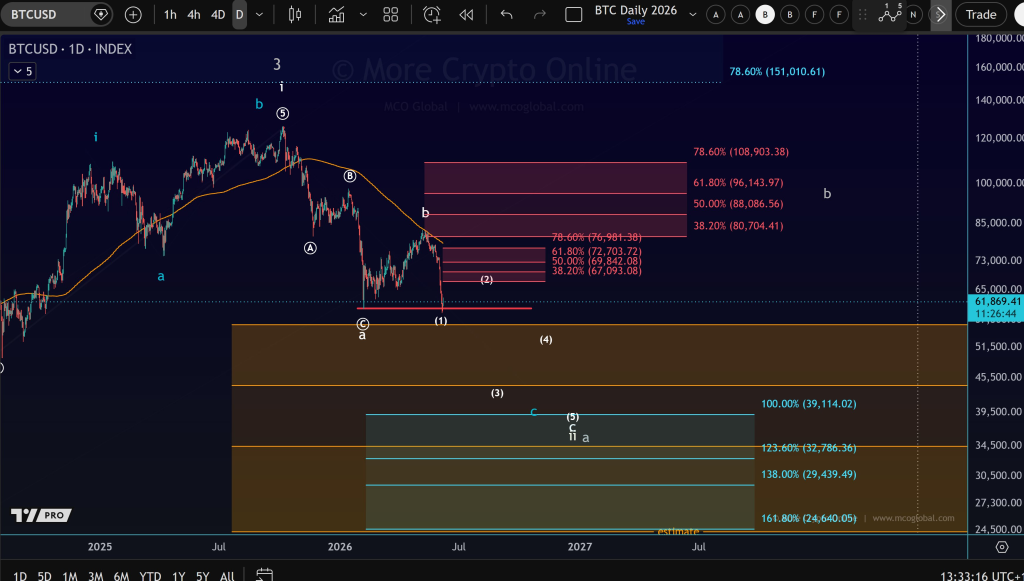
Bitcoin Price News: Worst Week Since FTX for BTC, but Crypto Analyst Warns of C‑Wave Lower to $50K



