

Revolutionary: How Operating Room AI Solves Healthcare’s $2 Billion Coordination Crisis
BitcoinWorld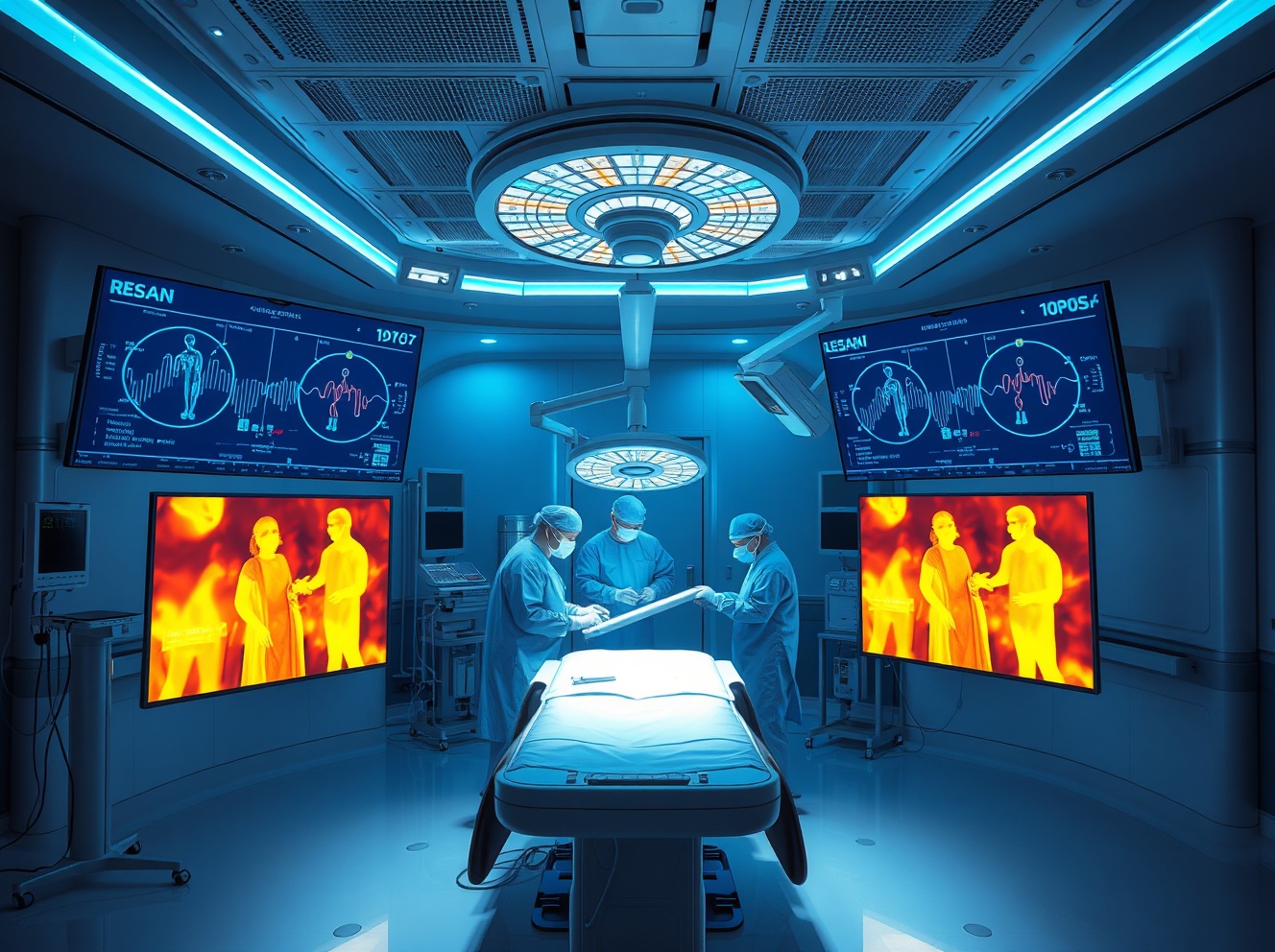
Revolutionary: How Operating Room AI Solves Healthcare’s $2 Billion Coordination Crisis
Imagine a world where surgical delays vanish, operating rooms run with precision, and hospitals save millions annually. While cryptocurrency markets capture headlines with their volatility, another technological revolution is quietly transforming healthcare infrastructure. The operating room, long considered the pinnacle of medical expertise, is now becoming the frontier for artificial intelligence implementation. According to Akara CEO Conor McGinn, the real bottleneck in healthcare isn’t surgical skill or medical technology—it’s the chaotic coordination between procedures that costs hospitals up to four hours of valuable OR time daily. This inefficiency represents a multi-billion dollar problem that AI is uniquely positioned to solve.
Why Operating Room AI Represents Healthcare’s Next Frontier
The statistics are staggering. Hospitals lose between two to four hours of operating room time every single day, not during surgeries themselves, but in the transitions between them. This coordination chaos—from manual scheduling errors to unpredictable room turnover—creates a domino effect of delays, canceled procedures, and frustrated medical staff. While robots in surgery have captured public imagination, the infrastructure supporting these procedures remains surprisingly analog. Akara’s pivot from cleaning robots to ambient sensing technology reveals a crucial insight: the most valuable AI applications in healthcare might not be in the surgery itself, but in optimizing everything around it.
The Thermal Sensor Breakthrough in Healthcare Automation
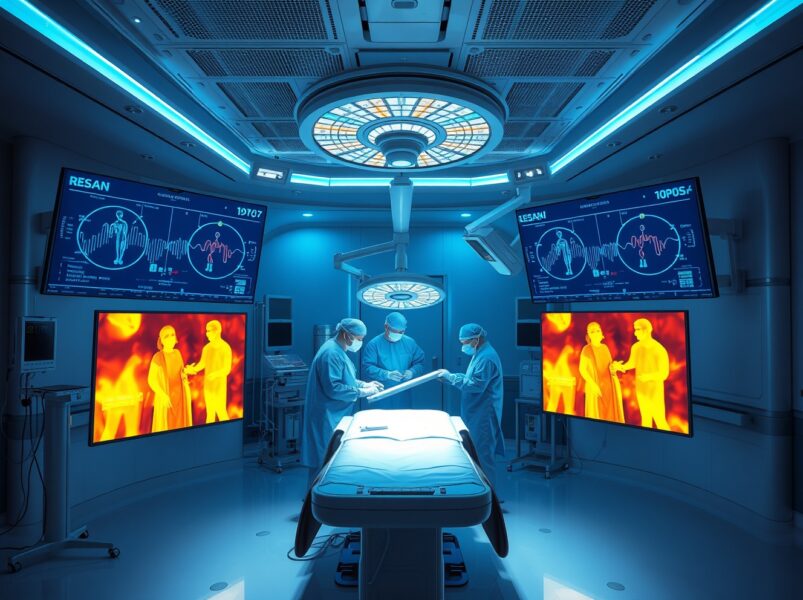
Privacy concerns have long hampered digital transformation in operating rooms. How do you monitor surgical procedures without violating patient confidentiality or creating surveillance concerns? Akara’s solution is elegant in its simplicity: thermal sensors. These devices can track movement, occupancy, and procedural stages without capturing identifiable images or personal data. “Think of it as air traffic control for hospitals,” explains McGinn. The system uses heat signatures rather than visual data, allowing hospitals to document surgical workflows, predict room turnover times, and optimize scheduling without privacy violations. This approach has proven particularly valuable as healthcare systems face increasing pressure to digitize while maintaining strict privacy standards.
| Metric | Traditional System | AI-Optimized System |
|---|---|---|
| Daily OR Time Lost | 2-4 hours | 30-60 minutes |
| Room Turnover Prediction Accuracy | 40-60% | 85-95% |
| Staff Coordination Time | 45 minutes per procedure | 15 minutes per procedure |
| Annual Cost Impact (Medium Hospital) | $1.2-2.4 million | $300-600,000 |
Solving Hospital Coordination Chaos with Ambient Intelligence
The real innovation in Akara’s approach isn’t just the technology itself, but how it integrates into existing hospital workflows. The system functions as an ambient intelligence layer that requires minimal staff training and no changes to surgical protocols. This has allowed for surprisingly rapid adoption, including through what McGinn calls “the NHS backdoor”—using validation from the UK’s National Health Service to gain credibility with US hospital systems. The coordination problem extends beyond scheduling to include:
- Instrument sterilization and preparation timing
- Staff availability and shift transitions
- Patient transport and pre-op preparation
- Post-operative cleaning and room reset
- Supply chain management for surgical materials
The Infrastructure Bottleneck Holding Back Medical Robotics
Here’s the surprising truth: the limitation for advanced medical robotics isn’t the robots themselves. “The spoiler isn’t the robots, it’s the infrastructure,” McGinn emphasizes during his Equity podcast interview. Even the most sophisticated surgical robots require:
- Precisely timed staff availability
- Properly prepared and sterilized equipment
- Accurate patient scheduling and preparation
- Efficient room turnover between procedures
- Coordinated supply chain for specialized components
Without these foundational elements in place, even billion-dollar robotic systems operate at a fraction of their potential efficiency. This infrastructure gap represents both a challenge and an opportunity for healthcare automation.
The Nursing Crisis and Healthcare Automation Imperative
The timing for operating room AI couldn’t be more critical. Healthcare systems face what McGinn describes as an “existential workforce crisis,” with projections suggesting 40% of the nursing workforce could leave within five years. This exodus isn’t just about retirement—it’s about burnout, administrative burden, and the frustration of spending more time on coordination than patient care. Automation in healthcare isn’t about replacing medical professionals; it’s about removing the administrative friction that drives them away. By automating scheduling, documentation, and coordination tasks, hospitals can:
- Reduce administrative burden on clinical staff
- Improve job satisfaction and retention
- Allow medical professionals to focus on patient care
- Create more predictable and manageable workloads
- Enable better work-life balance for healthcare workers
From Concept to Reality: Akara’s Path to Time’s Best Inventions
Akara’s recognition on Time’s Best Inventions of 2025 list validates a crucial shift in healthcare technology priorities. The company’s journey—from cleaning robots to operating room intelligence—mirrors a broader industry realization: sometimes the most valuable technology isn’t the most visually impressive. The thermal sensor system represents what might be called “invisible infrastructure”—technology that works so seamlessly in the background that users barely notice it, yet whose absence would create immediate chaos. This approach has allowed for rapid scaling, with systems now deployed in multiple healthcare networks.
FAQs: Understanding Operating Room AI Implementation
What specific problem does Akara’s technology solve?
Akara addresses the coordination chaos in operating rooms that costs hospitals 2-4 hours of valuable time daily through manual scheduling errors, unpredictable room turnover, and inefficient staff coordination.
How do thermal sensors address privacy concerns in healthcare settings?
Thermal sensors detect heat signatures rather than visual images, allowing the system to track movement, occupancy, and procedural stages without capturing identifiable patient data or violating privacy regulations.
Who is Conor McGinn and what’s his background?
Conor McGinn is the co-founder and CEO of Akara, a startup focused on healthcare automation. He previously worked on robotics and AI applications before pivoting to healthcare infrastructure optimization.
What validation has Akara received for its technology?
Akara was named to Time’s Best Inventions of 2025 list and has gained validation through NHS (National Health Service) adoption, which provided credibility for expansion into US hospital systems.
How does this technology relate to broader trends in medical robotics?
Akara’s work addresses the infrastructure bottleneck that limits advanced medical robotics. Even sophisticated surgical robots require efficient coordination, scheduling, and room management to operate effectively.
What percentage of nursing staff might leave healthcare, and why does this matter for automation?
Industry projections suggest 40% of the nursing workforce could leave within five years due to burnout and administrative burden, creating an urgent need for automation that reduces coordination tasks and allows medical professionals to focus on patient care.
The Future of Healthcare: Intelligent Infrastructure as Competitive Advantage
The operating room represents just the beginning. As healthcare systems embrace digital transformation, the principles behind Akara’s approach—ambient intelligence, privacy-preserving sensors, and infrastructure-first automation—will likely expand to emergency departments, inpatient units, and outpatient clinics. The companies that succeed in this space won’t necessarily create the most advanced surgical robots, but rather the most intelligent coordination systems that make everything else work better.
The transformation happening in operating rooms today offers a blueprint for healthcare’s digital future. By focusing on the unglamorous but critical infrastructure of coordination and scheduling, AI can deliver immediate, measurable improvements in efficiency, cost savings, and staff satisfaction. As healthcare faces unprecedented workforce challenges and financial pressures, this type of practical, infrastructure-focused automation may prove more valuable than any single medical device or surgical innovation.
To learn more about the latest AI in healthcare trends, explore our article on key developments shaping medical automation and institutional adoption.
This post Revolutionary: How Operating Room AI Solves Healthcare’s $2 Billion Coordination Crisis first appeared on BitcoinWorld.


You May Also Like

'I'm sorry, what?' White House faith advisor stuns with gaffe about Trump at Sunday school

The $1.3 Trillion Race: Bitcoin’s Critical Quantum Security Crossroads




