Even as Russia gears up to launch its digital ruble, some of the country’s top bankers still aren’t sold on the idea. As Russia moves closer to launching its own digital currency, questions are starting to grow louder about whether…Even as Russia gears up to launch its digital ruble, some of the country’s top bankers still aren’t sold on the idea. As Russia moves closer to launching its own digital currency, questions are starting to grow louder about whether…

Russia’s biggest state-backed bank sees no use for CBDC, so why push ahead anyway?

Even as Russia gears up to launch its digital ruble, some of the country’s top bankers still aren’t sold on the idea.

As Russia moves closer to launching its own digital currency, questions are starting to grow louder about whether the country really needs a central bank digital currency. And most importantly, these concerns are coming not from critics abroad, but from within the country’s own financial system.

One of those questions is now being raised by one of the most influential bankers in Russia.

German Gref, the CEO of Russia’s largest state-controlled lender Sberbank, reportedly told reporters on the sidelines of the Bank of Russia’s annual Financial Congress that he didn’t see any scenario where the digital ruble would lead to a large-scale transformation of the economy.

Gref’s comments stand out not only because he leads Sberbank — what might be viewed as major indicator of Russia’s financial health given that it has over 100 million clients alone, or nearly 69% of the country’s population — but also because the bank is expected to play a central role in launching the digital ruble.

The Bank of Russia, however, sees things differently. It argues that the digital ruble — as a third form of national currency alongside cash and cashless money — could bring huge benefits over time.

In its recent research report on the digital ruble pilot, the central bank highlighted several potential benefits: faster, more transparent, and more secure financial transactions. However, these advantages appear to serve authorities more than ordinary citizens, as the digital ruble primarily offers new tools for state-level financial management and expanding financial inclusion.

Russia already has a solid digital payment setup, with its own versions of Visa/Mastercard plus some pretty advanced mobile banking apps. So, from a user’s point of view, it’s still not clear why anyone would really care to switch to a new payment method.

Cashbacks, but for lenders

Still, the Bank of Russia continues to highlight what it sees as long-term benefits. It plans to begin mass adoption of the digital ruble on September 1, 2026, and expects the system to become a regular part of financial life within five to seven years.

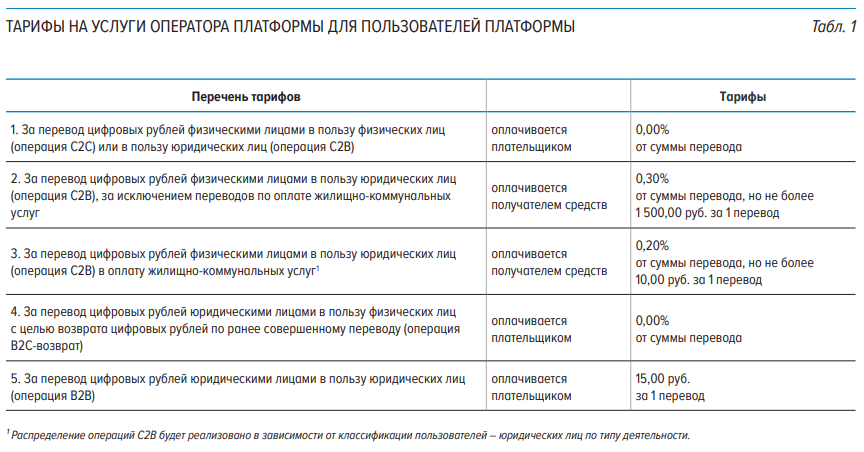
To make the digital ruble more appealing — especially for everyday users — the central bank is waiving all fees on transfers between individuals. Businesses still have to pay commissions, but they’re lower than what current payment systems or card services charge.
Russia's biggest state-backed bank sees no use for CBDC, so why push ahead anyway? - 1

For example, sending money from a private user to a business comes with a max fee of 1,500 rubles (around $19) or 0.3% of the transfer amount. Utility payments cost even less, capped at 10 rubles or 0.2%.

The central bank also offers incentives to banks and other participants helping to operate the digital ruble platform. These partners will receive small commissions for facilitating various types of transactions, although the amounts are tightly regulated. Payments are made in digital rubles and handled directly through the platform’s centralized accounting system.

Long shot

The Bank of Russia insists this is about the future. The digital ruble isn’t just another payment tool, the central bank says, emphasizing that it’s a step toward a more modern and flexible financial system. Officials believe the platform could make government payments more efficient, help track public funds more transparently, and even pave the way for new types of smart contracts and automation in finance.

But the Sberbank CEO isn’t convinced, at least not yet. There’s still time for the picture to shift.

The pilot phase for the digital ruble has been ongoing since August 2023, and more functionality is being tested gradually. Some might suggest that the real value of the digital ruble may only become apparent as international payment systems become more fragmented, and Russia seeks new tools to bypass sanctions and simplify trade with select foreign partners.

In that scenario, the digital ruble might not change everyday life for most Russians, but could still become a useful instrument for the state. One way or another, the Bank of Russia appears determined to stay the course, even as some of the country’s most powerful bankers openly question what it’s all for.


Market Opportunity
Threshold Logo
Threshold Price(T)
$0.009241
$0.009241$0.009241
+0.41%
USD
Threshold (T) Live Price Chart
Disclaimer: The articles reposted on this site are sourced from public platforms and are provided for informational purposes only. They do not necessarily reflect the views of MEXC. All rights remain with the original authors. If you believe any content infringes on third-party rights, please contact service@support.mexc.com for removal. MEXC makes no guarantees regarding the accuracy, completeness, or timeliness of the content and is not responsible for any actions taken based on the information provided. The content does not constitute financial, legal, or other professional advice, nor should it be considered a recommendation or endorsement by MEXC.

You May Also Like

Polygon Tops RWA Rankings With $1.1B in Tokenized Assets

Polygon Tops RWA Rankings With $1.1B in Tokenized Assets

The post Polygon Tops RWA Rankings With $1.1B in Tokenized Assets appeared on BitcoinEthereumNews.com. Key Notes A new report from Dune and RWA.xyz highlights Polygon’s role in the growing RWA sector. Polygon PoS currently holds $1.13 billion in RWA Total Value Locked (TVL) across 269 assets. The network holds a 62% market share of tokenized global bonds, driven by European money market funds. The Polygon POL $0.25 24h volatility: 1.4% Market cap: $2.64 B Vol. 24h: $106.17 M network is securing a significant position in the rapidly growing tokenization space, now holding over $1.13 billion in total value locked (TVL) from Real World Assets (RWAs). This development comes as the network continues to evolve, recently deploying its major “Rio” upgrade on the Amoy testnet to enhance future scaling capabilities. This information comes from a new joint report on the state of the RWA market published on Sept. 17 by blockchain analytics firm Dune and data platform RWA.xyz. The focus on RWAs is intensifying across the industry, coinciding with events like the ongoing Real-World Asset Summit in New York. Sandeep Nailwal, CEO of the Polygon Foundation, highlighted the findings via a post on X, noting that the TVL is spread across 269 assets and 2,900 holders on the Polygon PoS chain. The Dune and https://t.co/W6WSFlHoQF report on RWA is out and it shows that RWA is happening on Polygon. Here are a few highlights: – Leading in Global Bonds: Polygon holds 62% share of tokenized global bonds (driven by Spiko’s euro MMF and Cashlink euro issues) – Spiko U.S.… — Sandeep | CEO, Polygon Foundation (※,※) (@sandeepnailwal) September 17, 2025 Key Trends From the 2025 RWA Report The joint publication, titled “RWA REPORT 2025,” offers a comprehensive look into the tokenized asset landscape, which it states has grown 224% since the start of 2024. The report identifies several key trends driving this expansion. According to…
Share
BitcoinEthereumNews2025/09/18 00:40
OpenVPP accused of falsely advertising cooperation with the US government; SEC commissioner clarifies no involvement

OpenVPP accused of falsely advertising cooperation with the US government; SEC commissioner clarifies no involvement

PANews reported on September 17th that on-chain sleuth ZachXBT tweeted that OpenVPP ( $OVPP ) announced this week that it was collaborating with the US government to advance energy tokenization. SEC Commissioner Hester Peirce subsequently responded, stating that the company does not collaborate with or endorse any private crypto projects. The OpenVPP team subsequently hid the response. Several crypto influencers have participated in promoting the project, and the accounts involved have been questioned as typical influencer accounts.
Share
PANews2025/09/17 23:58
Will XRP Price Increase In September 2025?

Will XRP Price Increase In September 2025?

Ripple XRP is a cryptocurrency that primarily focuses on building a decentralised payments network to facilitate low-cost and cross-border transactions. It’s a native digital currency of the Ripple network, which works as a blockchain called the XRP Ledger (XRPL). It utilised a shared, distributed ledger to track account balances and transactions. What Do XRP Charts Reveal? […]
Share
Tronweekly2025/09/18 00:00