BitcoinWorld 4 in 10 Americans Ready for Regulated DeFi: A Pivotal Survey on DeFi Regulation The world of decentralized finance, or DeFi, is often seen as a frontier, exciting but perhaps a little wild. However, a groundbreaking survey from the DeFi Education Fund reveals a surprising truth: a significant portion of Americans are ready to embrace DeFi regulation. This isn’t just a niche interest; it’s a clear signal that mainstream adoption hinges on establishing clear, thoughtful rules for this innovative financial ecosystem. What’s the Buzz Around DeFi Regulation? Imagine a financial system that’s open, transparent, and accessible to everyone, everywhere. That’s the promise of DeFi. Yet, for many, the lack of established guidelines has been a major hurdle. The recent survey sheds light on this hesitation, indicating that nearly half of all Americans are willing to dive into DeFi, but only if it operates within a regulated framework. Key Finding: 42% of respondents would use DeFi under a regulated framework. This figure highlights a strong desire for security and clarity. Payment Services Potential: Among those willing, a remarkable 84% expressed readiness to try DeFi-based payment services. This suggests a massive untapped market for innovative payment solutions. This data points to a crucial intersection where innovation meets consumer protection. It suggests that appropriate DeFi regulation could unlock a new era of financial services for millions. Why Are Americans Eyeing Regulated DeFi? It’s not just about curiosity; there’s a deeper reason behind this willingness to engage with regulated DeFi. The survey also uncovered a significant lack of trust in existing financial systems. Only 29% of respondents believe the current U.S. financial system is truly safe. This sentiment is powerful. It indicates that people are actively seeking alternatives that offer greater transparency, security, and fairness. DeFi regulation, when done right, can provide the assurance needed for individuals to confidently explore these new avenues. It’s about building bridges of trust between cutting-edge technology and everyday users. Consider the benefits: enhanced consumer protection, reduced fraud risks, and a level playing field for all participants. These are the pillars upon which a trusted financial system, traditional or decentralized, must stand. The Promise of Regulated DeFi Payments The enthusiasm for DeFi isn’t limited to just financial products like lending or borrowing. A significant portion of the surveyed group expressed a strong interest in using DeFi for everyday transactions. The idea of regulated DeFi-based payment services is particularly appealing. Faster Transactions: Imagine sending money globally in minutes, not days. Lower Fees: Bypassing traditional intermediaries can significantly reduce costs. Greater Control: Users maintain more direct control over their funds. These advantages, combined with the security provided by clear DeFi regulation, could revolutionize how we think about and use money daily. It’s about creating more efficient, inclusive, and user-centric payment experiences. Navigating the Path to Mainstream DeFi Regulation While the demand for regulated DeFi is evident, the path to achieving it is complex. Regulators face the challenge of understanding a rapidly evolving technology while simultaneously protecting consumers and fostering innovation. This isn’t a simple task, but the survey provides a clear mandate for action. Key Considerations for Effective DeFi Regulation: Clarity: Establishing clear definitions and legal frameworks for DeFi protocols and assets. Consumer Protection: Implementing safeguards against scams, hacks, and financial exploitation. Innovation: Crafting rules that don’t stifle technological advancement and growth. Global Coordination: Harmonizing regulations across different jurisdictions to prevent arbitrage and ensure market stability. The future of finance could very well be decentralized, but its widespread adoption depends heavily on thoughtful and effective DeFi regulation. It’s a collaborative effort between innovators, users, and policymakers to build a financial system that serves everyone. Summary: A Clear Call for Action The survey from the DeFi Education Fund delivers a compelling message: Americans are ready for DeFi, but they want it to be safe and sound. The willingness of 4 in 10 respondents to engage with regulated DeFi, coupled with the strong interest in payment services, underscores the immense potential of this technology. It also highlights a critical opportunity for regulators to step up and provide the clarity and oversight necessary to unlock DeFi’s full promise. The future of finance is evolving, and DeFi regulation will be a cornerstone of its mainstream success. Frequently Asked Questions About Regulated DeFi Q1: What is DeFi? A1: DeFi, or decentralized finance, refers to financial services built on blockchain technology. These services, like lending, borrowing, and trading, operate without traditional intermediaries such as banks, using smart contracts instead. Q2: Why do Americans want DeFi to be regulated? A2: Americans desire regulation for DeFi primarily for security and trust. Many are wary of unregulated financial systems due to potential risks like fraud, hacks, and lack of consumer protection. Regulation can provide a framework of safety and legitimacy. Q3: What benefits could regulated DeFi offer? A3: Regulated DeFi could offer several benefits, including enhanced consumer protection, reduced risks of scams, greater transparency, potentially faster and cheaper financial services (especially payments), and increased trust, leading to broader adoption. Q4: How does DeFi regulation compare to traditional finance regulation? A4: Traditional finance operates under well-established, comprehensive regulatory frameworks. DeFi regulation is still evolving and aims to apply similar principles of consumer protection and market integrity to a decentralized, blockchain-based environment, often requiring new approaches due to its unique technological characteristics. Q5: What are the challenges in implementing DeFi regulation? A5: Challenges include the decentralized and global nature of DeFi, which makes enforcement difficult; the rapid pace of technological innovation; defining which entities are responsible for compliance; and ensuring regulations foster innovation rather than stifling it. Found this article insightful? Share it with your friends, colleagues, and anyone interested in the future of finance and the exciting potential of regulated DeFi! Your shares help spread awareness and foster important conversations. To learn more about the latest crypto market trends, explore our article on key developments shaping DeFi institutional adoption. This post 4 in 10 Americans Ready for Regulated DeFi: A Pivotal Survey on DeFi Regulation first appeared on BitcoinWorld.BitcoinWorld 4 in 10 Americans Ready for Regulated DeFi: A Pivotal Survey on DeFi Regulation The world of decentralized finance, or DeFi, is often seen as a frontier, exciting but perhaps a little wild. However, a groundbreaking survey from the DeFi Education Fund reveals a surprising truth: a significant portion of Americans are ready to embrace DeFi regulation. This isn’t just a niche interest; it’s a clear signal that mainstream adoption hinges on establishing clear, thoughtful rules for this innovative financial ecosystem. What’s the Buzz Around DeFi Regulation? Imagine a financial system that’s open, transparent, and accessible to everyone, everywhere. That’s the promise of DeFi. Yet, for many, the lack of established guidelines has been a major hurdle. The recent survey sheds light on this hesitation, indicating that nearly half of all Americans are willing to dive into DeFi, but only if it operates within a regulated framework. Key Finding: 42% of respondents would use DeFi under a regulated framework. This figure highlights a strong desire for security and clarity. Payment Services Potential: Among those willing, a remarkable 84% expressed readiness to try DeFi-based payment services. This suggests a massive untapped market for innovative payment solutions. This data points to a crucial intersection where innovation meets consumer protection. It suggests that appropriate DeFi regulation could unlock a new era of financial services for millions. Why Are Americans Eyeing Regulated DeFi? It’s not just about curiosity; there’s a deeper reason behind this willingness to engage with regulated DeFi. The survey also uncovered a significant lack of trust in existing financial systems. Only 29% of respondents believe the current U.S. financial system is truly safe. This sentiment is powerful. It indicates that people are actively seeking alternatives that offer greater transparency, security, and fairness. DeFi regulation, when done right, can provide the assurance needed for individuals to confidently explore these new avenues. It’s about building bridges of trust between cutting-edge technology and everyday users. Consider the benefits: enhanced consumer protection, reduced fraud risks, and a level playing field for all participants. These are the pillars upon which a trusted financial system, traditional or decentralized, must stand. The Promise of Regulated DeFi Payments The enthusiasm for DeFi isn’t limited to just financial products like lending or borrowing. A significant portion of the surveyed group expressed a strong interest in using DeFi for everyday transactions. The idea of regulated DeFi-based payment services is particularly appealing. Faster Transactions: Imagine sending money globally in minutes, not days. Lower Fees: Bypassing traditional intermediaries can significantly reduce costs. Greater Control: Users maintain more direct control over their funds. These advantages, combined with the security provided by clear DeFi regulation, could revolutionize how we think about and use money daily. It’s about creating more efficient, inclusive, and user-centric payment experiences. Navigating the Path to Mainstream DeFi Regulation While the demand for regulated DeFi is evident, the path to achieving it is complex. Regulators face the challenge of understanding a rapidly evolving technology while simultaneously protecting consumers and fostering innovation. This isn’t a simple task, but the survey provides a clear mandate for action. Key Considerations for Effective DeFi Regulation: Clarity: Establishing clear definitions and legal frameworks for DeFi protocols and assets. Consumer Protection: Implementing safeguards against scams, hacks, and financial exploitation. Innovation: Crafting rules that don’t stifle technological advancement and growth. Global Coordination: Harmonizing regulations across different jurisdictions to prevent arbitrage and ensure market stability. The future of finance could very well be decentralized, but its widespread adoption depends heavily on thoughtful and effective DeFi regulation. It’s a collaborative effort between innovators, users, and policymakers to build a financial system that serves everyone. Summary: A Clear Call for Action The survey from the DeFi Education Fund delivers a compelling message: Americans are ready for DeFi, but they want it to be safe and sound. The willingness of 4 in 10 respondents to engage with regulated DeFi, coupled with the strong interest in payment services, underscores the immense potential of this technology. It also highlights a critical opportunity for regulators to step up and provide the clarity and oversight necessary to unlock DeFi’s full promise. The future of finance is evolving, and DeFi regulation will be a cornerstone of its mainstream success. Frequently Asked Questions About Regulated DeFi Q1: What is DeFi? A1: DeFi, or decentralized finance, refers to financial services built on blockchain technology. These services, like lending, borrowing, and trading, operate without traditional intermediaries such as banks, using smart contracts instead. Q2: Why do Americans want DeFi to be regulated? A2: Americans desire regulation for DeFi primarily for security and trust. Many are wary of unregulated financial systems due to potential risks like fraud, hacks, and lack of consumer protection. Regulation can provide a framework of safety and legitimacy. Q3: What benefits could regulated DeFi offer? A3: Regulated DeFi could offer several benefits, including enhanced consumer protection, reduced risks of scams, greater transparency, potentially faster and cheaper financial services (especially payments), and increased trust, leading to broader adoption. Q4: How does DeFi regulation compare to traditional finance regulation? A4: Traditional finance operates under well-established, comprehensive regulatory frameworks. DeFi regulation is still evolving and aims to apply similar principles of consumer protection and market integrity to a decentralized, blockchain-based environment, often requiring new approaches due to its unique technological characteristics. Q5: What are the challenges in implementing DeFi regulation? A5: Challenges include the decentralized and global nature of DeFi, which makes enforcement difficult; the rapid pace of technological innovation; defining which entities are responsible for compliance; and ensuring regulations foster innovation rather than stifling it. Found this article insightful? Share it with your friends, colleagues, and anyone interested in the future of finance and the exciting potential of regulated DeFi! Your shares help spread awareness and foster important conversations. To learn more about the latest crypto market trends, explore our article on key developments shaping DeFi institutional adoption. This post 4 in 10 Americans Ready for Regulated DeFi: A Pivotal Survey on DeFi Regulation first appeared on BitcoinWorld.

4 in 10 Americans Ready for Regulated DeFi: A Pivotal Survey on DeFi Regulation

BitcoinWorld
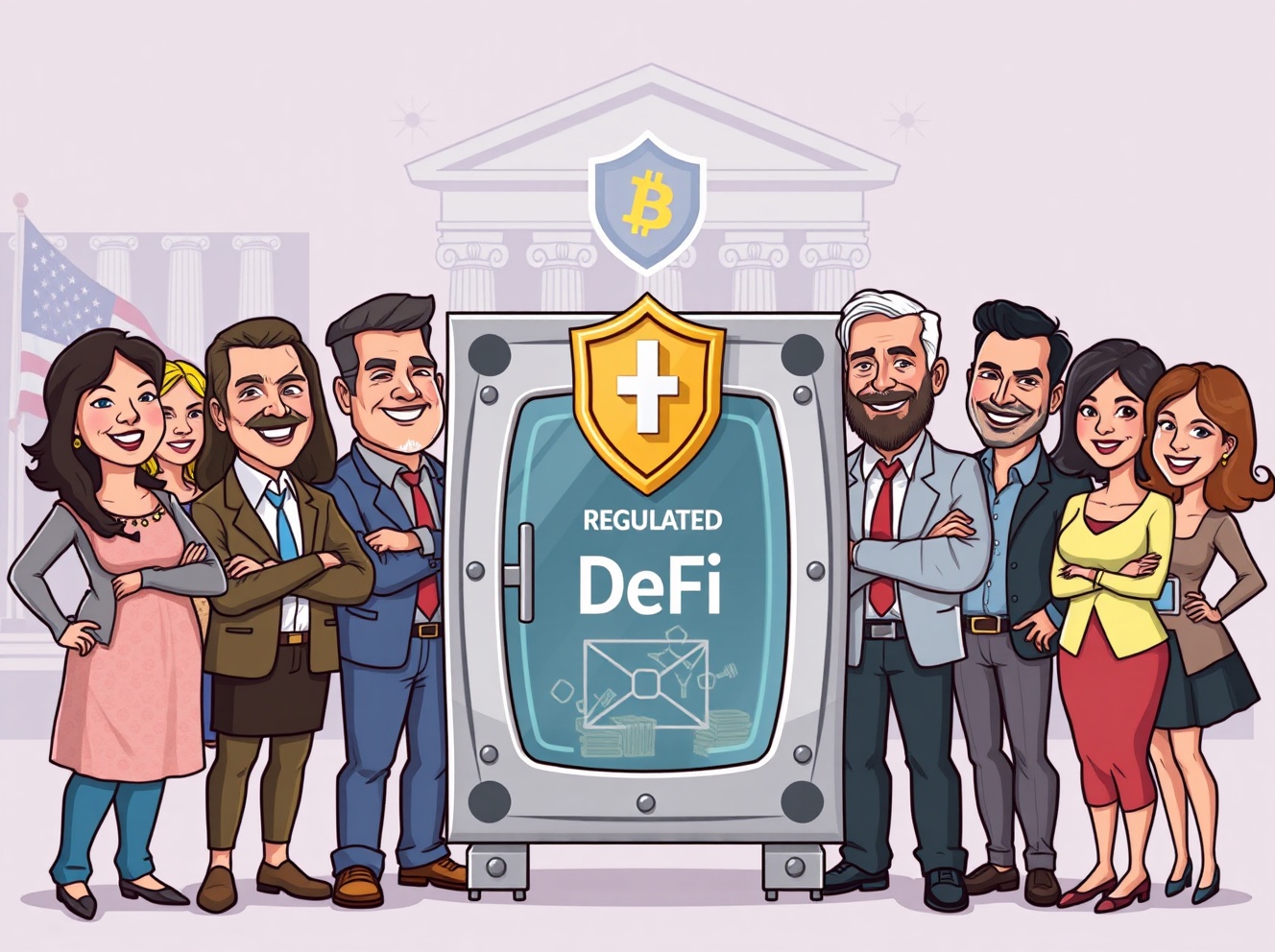
4 in 10 Americans Ready for Regulated DeFi: A Pivotal Survey on DeFi Regulation

The world of decentralized finance, or DeFi, is often seen as a frontier, exciting but perhaps a little wild. However, a groundbreaking survey from the DeFi Education Fund reveals a surprising truth: a significant portion of Americans are ready to embrace DeFi regulation. This isn’t just a niche interest; it’s a clear signal that mainstream adoption hinges on establishing clear, thoughtful rules for this innovative financial ecosystem.

What’s the Buzz Around DeFi Regulation?

Imagine a financial system that’s open, transparent, and accessible to everyone, everywhere. That’s the promise of DeFi. Yet, for many, the lack of established guidelines has been a major hurdle. The recent survey sheds light on this hesitation, indicating that nearly half of all Americans are willing to dive into DeFi, but only if it operates within a regulated framework.

  • Key Finding: 42% of respondents would use DeFi under a regulated framework. This figure highlights a strong desire for security and clarity.
  • Payment Services Potential: Among those willing, a remarkable 84% expressed readiness to try DeFi-based payment services. This suggests a massive untapped market for innovative payment solutions.

This data points to a crucial intersection where innovation meets consumer protection. It suggests that appropriate DeFi regulation could unlock a new era of financial services for millions.

Why Are Americans Eyeing Regulated DeFi?

It’s not just about curiosity; there’s a deeper reason behind this willingness to engage with regulated DeFi. The survey also uncovered a significant lack of trust in existing financial systems. Only 29% of respondents believe the current U.S. financial system is truly safe.

This sentiment is powerful. It indicates that people are actively seeking alternatives that offer greater transparency, security, and fairness. DeFi regulation, when done right, can provide the assurance needed for individuals to confidently explore these new avenues. It’s about building bridges of trust between cutting-edge technology and everyday users.

Consider the benefits: enhanced consumer protection, reduced fraud risks, and a level playing field for all participants. These are the pillars upon which a trusted financial system, traditional or decentralized, must stand.

The Promise of Regulated DeFi Payments

The enthusiasm for DeFi isn’t limited to just financial products like lending or borrowing. A significant portion of the surveyed group expressed a strong interest in using DeFi for everyday transactions. The idea of regulated DeFi-based payment services is particularly appealing.

  • Faster Transactions: Imagine sending money globally in minutes, not days.
  • Lower Fees: Bypassing traditional intermediaries can significantly reduce costs.
  • Greater Control: Users maintain more direct control over their funds.

These advantages, combined with the security provided by clear DeFi regulation, could revolutionize how we think about and use money daily. It’s about creating more efficient, inclusive, and user-centric payment experiences.

While the demand for regulated DeFi is evident, the path to achieving it is complex. Regulators face the challenge of understanding a rapidly evolving technology while simultaneously protecting consumers and fostering innovation. This isn’t a simple task, but the survey provides a clear mandate for action.

Key Considerations for Effective DeFi Regulation:

  • Clarity: Establishing clear definitions and legal frameworks for DeFi protocols and assets.
  • Consumer Protection: Implementing safeguards against scams, hacks, and financial exploitation.
  • Innovation: Crafting rules that don’t stifle technological advancement and growth.
  • Global Coordination: Harmonizing regulations across different jurisdictions to prevent arbitrage and ensure market stability.

The future of finance could very well be decentralized, but its widespread adoption depends heavily on thoughtful and effective DeFi regulation. It’s a collaborative effort between innovators, users, and policymakers to build a financial system that serves everyone.

Summary: A Clear Call for Action

The survey from the DeFi Education Fund delivers a compelling message: Americans are ready for DeFi, but they want it to be safe and sound. The willingness of 4 in 10 respondents to engage with regulated DeFi, coupled with the strong interest in payment services, underscores the immense potential of this technology. It also highlights a critical opportunity for regulators to step up and provide the clarity and oversight necessary to unlock DeFi’s full promise. The future of finance is evolving, and DeFi regulation will be a cornerstone of its mainstream success.

Frequently Asked Questions About Regulated DeFi

Q1: What is DeFi?
A1: DeFi, or decentralized finance, refers to financial services built on blockchain technology. These services, like lending, borrowing, and trading, operate without traditional intermediaries such as banks, using smart contracts instead.

Q2: Why do Americans want DeFi to be regulated?
A2: Americans desire regulation for DeFi primarily for security and trust. Many are wary of unregulated financial systems due to potential risks like fraud, hacks, and lack of consumer protection. Regulation can provide a framework of safety and legitimacy.

Q3: What benefits could regulated DeFi offer?
A3: Regulated DeFi could offer several benefits, including enhanced consumer protection, reduced risks of scams, greater transparency, potentially faster and cheaper financial services (especially payments), and increased trust, leading to broader adoption.

Q4: How does DeFi regulation compare to traditional finance regulation?
A4: Traditional finance operates under well-established, comprehensive regulatory frameworks. DeFi regulation is still evolving and aims to apply similar principles of consumer protection and market integrity to a decentralized, blockchain-based environment, often requiring new approaches due to its unique technological characteristics.

Q5: What are the challenges in implementing DeFi regulation?
A5: Challenges include the decentralized and global nature of DeFi, which makes enforcement difficult; the rapid pace of technological innovation; defining which entities are responsible for compliance; and ensuring regulations foster innovation rather than stifling it.

Found this article insightful? Share it with your friends, colleagues, and anyone interested in the future of finance and the exciting potential of regulated DeFi! Your shares help spread awareness and foster important conversations.

To learn more about the latest crypto market trends, explore our article on key developments shaping DeFi institutional adoption.

This post 4 in 10 Americans Ready for Regulated DeFi: A Pivotal Survey on DeFi Regulation first appeared on BitcoinWorld.

Market Opportunity
Threshold Logo
Threshold Price(T)
$0.009972
$0.009972$0.009972
-2.11%
USD
Threshold (T) Live Price Chart
Disclaimer: The articles reposted on this site are sourced from public platforms and are provided for informational purposes only. They do not necessarily reflect the views of MEXC. All rights remain with the original authors. If you believe any content infringes on third-party rights, please contact service@support.mexc.com for removal. MEXC makes no guarantees regarding the accuracy, completeness, or timeliness of the content and is not responsible for any actions taken based on the information provided. The content does not constitute financial, legal, or other professional advice, nor should it be considered a recommendation or endorsement by MEXC.

You May Also Like

Jerome Powell & A Hard Money Moment

Jerome Powell & A Hard Money Moment

With Trump teeing up a personally controlled Federal Reserve, hard money seems like an easy bet, but Bitcoin and gold aren't behaving the same.
Share
Coinstats2026/01/15 06:30
MetaMask Token: Exciting Launch Could Be Sooner Than Expected

MetaMask Token: Exciting Launch Could Be Sooner Than Expected

BitcoinWorld MetaMask Token: Exciting Launch Could Be Sooner Than Expected The cryptocurrency community is buzzing with exciting news: a native MetaMask token might arrive sooner than many anticipated. This development could reshape how users interact with the popular Web3 wallet and the broader decentralized ecosystem. It signals a significant step forward for one of the most widely used tools in the blockchain space. What’s Fueling the MetaMask Token Buzz? Joseph Lubin, the CEO of ConsenSys, the company behind MetaMask, recently shared insights that ignited this excitement. According to reports from The Block, Lubin indicated that a MetaMask token could launch ahead of previous expectations. This isn’t the first time the idea has surfaced; Dan Finlay, one of MetaMask’s founders, had previously mentioned the possibility of issuing such a token. ConsenSys has been a pivotal player in the Ethereum ecosystem, developing essential infrastructure and applications. MetaMask, their flagship wallet, serves millions of users, providing a gateway to decentralized applications (dApps), NFTs, and various blockchain networks. Therefore, any move to introduce a native token is a major event for the entire Web3 community. Why is a MetaMask Token So Anticipated? The prospect of a MetaMask token generates immense interest because it could introduce new layers of utility and community governance. Users often speculate about the benefits such a token could offer. Here are some key reasons for the high anticipation: Governance Rights: A token could empower users to participate in the future direction and development of MetaMask. This means voting on new features, upgrades, or even changes to the platform’s policies. Ecosystem Rewards: Tokens might be distributed as rewards for active participation, using certain features, or contributing to the MetaMask community. This incentivizes engagement and loyalty. Enhanced Utility: The token could unlock premium features, reduce transaction fees, or provide exclusive access to services within the MetaMask ecosystem or partnered dApps. Decentralization: Introducing a token often aligns with the broader Web3 ethos of decentralization, distributing control and ownership among its users rather than centralizing it within ConsenSys. Consequently, a token launch is seen as a way to deepen user involvement and foster a more robust, community-driven ecosystem around the wallet. Exploring the Potential Impact of a MetaMask Token The introduction of a MetaMask token could have far-reaching implications for the decentralized finance (DeFi) and Web3 landscape. Firstly, it could set a new standard for how popular infrastructure tools engage with their user base. By providing a tangible stake, MetaMask might strengthen its position as a community-governed platform. Moreover, a token could significantly boost the wallet’s visibility and adoption, attracting new users eager to participate in its governance or benefit from its utility. This could also lead to innovative integrations with other blockchain projects, creating a more interconnected and efficient Web3 experience. Ultimately, the success of such a token will depend on its design, utility, and how effectively it engages the global MetaMask community. What Challenges Could a MetaMask Token Face? While the excitement is palpable, launching a MetaMask token also presents several challenges that ConsenSys must navigate carefully. One primary concern is regulatory scrutiny. The classification of cryptocurrency tokens varies across jurisdictions, and ensuring compliance is crucial for long-term success. Furthermore, designing a fair and equitable distribution model is paramount. Ensuring that the token provides genuine utility beyond mere speculation will be another hurdle. A token must integrate seamlessly into the MetaMask experience and offer clear value to its holders. Additionally, managing community expectations and preventing market manipulation will require robust strategies. Addressing these challenges effectively will be key to the token’s sustainable growth and positive reception. What’s Next for the MetaMask Ecosystem? The prospect of a MetaMask token signals an evolving strategy for ConsenSys and the future of Web3 wallets. It reflects a growing trend where foundational tools seek to empower their communities through tokenization. Users are keenly watching for official announcements regarding the token’s mechanics, distribution, and launch timeline. This development could solidify MetaMask’s role not just as a wallet, but as a central pillar of decentralized identity and interaction. The potential for a sooner-than-expected launch adds an element of urgency and excitement, encouraging users to stay informed about every new detail. It represents a significant milestone for a platform that has become synonymous with accessing the decentralized web. Conclusion The hints from ConsenSys CEO Joseph Lubin regarding an earlier launch for the MetaMask token have undoubtedly captured the attention of the entire crypto world. This potential development promises to bring enhanced governance, utility, and community engagement to millions of MetaMask users. While challenges exist, the underlying potential for a more decentralized and user-driven ecosystem is immense. The coming months will likely reveal more about this highly anticipated token, marking a new chapter for one of Web3’s most vital tools. Frequently Asked Questions (FAQs) Q1: What is a MetaMask token? A MetaMask token would be a native cryptocurrency issued by ConsenSys, the company behind the MetaMask wallet. It is expected to offer various utilities, including governance rights, rewards, and access to special features within the MetaMask ecosystem. Q2: Why is ConsenSys considering launching a MetaMask token? ConsenSys is likely exploring a token launch to further decentralize the MetaMask platform, empower its user community with governance rights, incentivize active participation, and potentially unlock new forms of utility and growth for the ecosystem. Q3: What benefits could users gain from a MetaMask token? Users could gain several benefits, such as the ability to vote on MetaMask’s future developments, earn rewards for using the wallet, access exclusive features, or potentially reduce transaction fees. It also provides a direct stake in the platform’s success. Q4: When is the MetaMask token expected to launch? While no official launch date has been confirmed, ConsenSys CEO Joseph Lubin has indicated that the launch could happen sooner than previously expected. The exact timeline remains subject to official announcements from ConsenSys. Q5: How would a MetaMask token impact the broader Web3 ecosystem? A MetaMask token could significantly impact Web3 by setting a precedent for user-owned and governed infrastructure tools. It could drive further decentralization, foster innovation, and strengthen the connection between users and the platforms they rely on, ultimately contributing to a more robust and participatory decentralized internet. To learn more about the latest crypto market trends, explore our article on key developments shaping Ethereum institutional adoption. This post MetaMask Token: Exciting Launch Could Be Sooner Than Expected first appeared on BitcoinWorld.
Share
Coinstats2025/09/19 15:40
The $800 Billion Crisis Enterprises Can’t Ignore In 2026

The $800 Billion Crisis Enterprises Can’t Ignore In 2026

The post The $800 Billion Crisis Enterprises Can’t Ignore In 2026 appeared on BitcoinEthereumNews.com. AI Security Nightmare: The $800 Billion Crisis Enterprises
Share
BitcoinEthereumNews2026/01/15 07:12