

ChatGPT Health Unveiled: OpenAI’s Ambitious Leap into Healthcare AI for 230 Million Weekly Users
BitcoinWorld
ChatGPT Health Unveiled: OpenAI’s Ambitious Leap into Healthcare AI for 230 Million Weekly Users
On Wednesday, May 21, 2025, OpenAI announced a significant expansion of its ecosystem with the launch of ChatGPT Health, a dedicated platform designed to handle the over 230 million health-related queries it receives weekly. This move formalizes a massive existing user behavior, aiming to create a secure, context-aware space for health conversations while navigating the complex realities of AI in medicine.
ChatGPT Health Addresses a Massive Unmet User Need
OpenAI’s data reveals a staggering demand. Consequently, the company is building a dedicated product to serve this need. The core premise is simple: users already turn to ChatGPT for health information. Therefore, ChatGPT Health creates a specialized environment for these sensitive discussions. Importantly, conversations within this section are siloed from general chats. This design protects user privacy by preventing health context from appearing in other interactions.
Furthermore, the AI will actively guide users. If someone begins discussing a medical issue in the standard chat, the system will nudge them to the Health section. Once inside, the assistant leverages a unique, bidirectional context model. For instance, if you previously discussed marathon training in a general chat, ChatGPT Health will understand your fitness background when you ask about recovery techniques.
Integration and Privacy: A Dual Promise
The platform’s functionality extends beyond conversation. OpenAI plans integrations with major wellness apps like Apple Health, Function, and MyFitnessPal. This could allow the AI to reference personal health data with user permission. Crucially, the company makes a firm privacy commitment. OpenAI states it will not use Health conversations to train its models. This policy directly addresses widespread concerns about sensitive data usage in AI development.
The Driving Vision Behind OpenAI’s Healthcare Foray
Fidji Simo, CEO of Applications at OpenAI, articulated the strategic vision in a detailed blog post. She positioned ChatGPT Health as a response to systemic healthcare challenges. These include high costs, access barriers, overbooked clinicians, and fragmented care continuity. Simo envisions the tool as a complementary resource, not a replacement for professional medical care.
However, this ambition collides with the inherent limitations of Large Language Models (LLMs). Experts consistently note that LLMs like ChatGPT operate on prediction, not factual verification. They generate the most statistically likely response, not a guaranteed correct answer. This leads to the well-documented risk of AI hallucinations—confidently stated falsehoods.
| Feature | Benefit | Consideration |
|---|---|---|
| Dedicated Health Space | Isolates sensitive conversations, enhances privacy. | Relies on user compliance to use the correct section. |
| Bidirectional Context | Provides personalized, continuous dialogue. | Raises questions about data boundaries and user control. |
| Wellness App Integration | Could enable highly personalized insights. | Introduces new data security and permission complexities. |
| No Training Data Use | Builds user trust regarding sensitive information. | May limit the model’s ability to improve specifically for health tasks. |
Navigating the Inherent Risks of AI Medical Advice
OpenAI’s own terms of service contain a critical disclaimer. The company explicitly states its models are “not intended for use in the diagnosis or treatment of any health condition.” This legal safeguard highlights the core tension. While building a health-specific product, the company must manage liability and user expectations. The medical community remains cautious. Professionals warn that AI should support, not supplant, clinical judgment.
Potential benefits are significant. For example, the tool could help users:
- Understand common medical terminology after a diagnosis.
- Develop personalized wellness or fitness plans.
- Track symptoms and prepare questions for a doctor’s visit.
- Access reliable health information in a structured, conversational format.
Conversely, the risks are equally clear. Users might misinterpret AI suggestions as definitive medical advice. Moreover, they could delay seeking essential professional care. The rollout, expected in the coming weeks, will be a critical test of this balance.
The Broader Landscape of AI in Healthcare
OpenAI is not operating in a vacuum. Other tech giants and startups are exploring similar terrain. However, ChatGPT Health’s scale is unprecedented, given its built-in user base of hundreds of millions. Its success or failure will likely influence regulatory approaches and public perception for years. Consequently, its design choices around safety, transparency, and accuracy are under immense scrutiny.
Conclusion
The launch of ChatGPT Health marks a pivotal moment in the convergence of AI and consumer healthcare. By creating a dedicated space for 230 million weekly health inquiries, OpenAI is attempting to channel existing behavior into a more structured and privacy-conscious product. The initiative promises greater access and continuity but must carefully navigate the fundamental limitations of LLMs and the paramount need for patient safety. Its evolution will be a key case study in whether general-purpose AI can responsibly serve the nuanced, high-stakes domain of human health.
FAQs
Q1: What is ChatGPT Health?
ChatGPT Health is a new, dedicated section within OpenAI’s ChatGPT platform designed specifically for conversations about health, wellness, and medical topics. It separates these sensitive discussions from general chats.
Q2: Will my ChatGPT Health conversations be used to train AI?
No. OpenAI has explicitly stated that conversations within the ChatGPT Health section will not be used to train or improve its AI models, a key privacy measure for sensitive health data.
Q3: Can ChatGPT Health diagnose me or give medical advice?
No. OpenAI’s terms of service clearly state its models are not for diagnosis or treatment. ChatGPT Health is intended for informational and support purposes only, not as a substitute for professional medical care.
Q4: How does ChatGPT Health know about my general health interests?
The feature uses a bidirectional context model. If you discuss related topics (like running) in standard ChatGPT, it can reference that context within the Health section to provide more continuous, personalized dialogue.
Q5: When will ChatGPT Health be available?
OpenAI announced the feature is expected to roll out to users in the coming weeks, following its initial announcement in May 2025.
This post ChatGPT Health Unveiled: OpenAI’s Ambitious Leap into Healthcare AI for 230 Million Weekly Users first appeared on BitcoinWorld.


You May Also Like
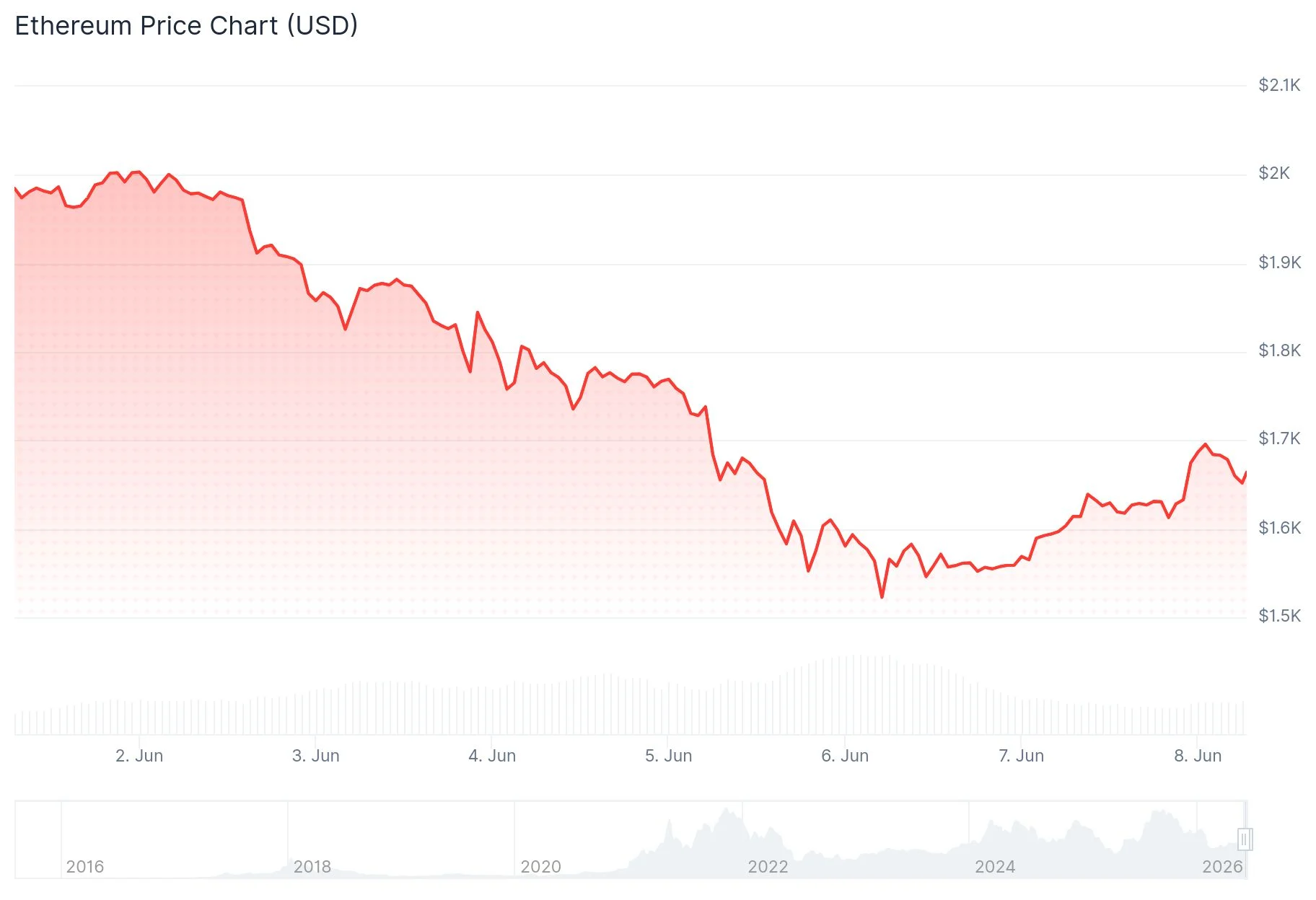
Ethereum (ETH) Crashes to $1,500 — Can Bulls Defend or Is $1,000 Coming?

Arthur Hayes says ‘I Didn’t Buy’ amid $2M HYPE transfer

Bitcoin Options Skew Turns Bearish: What the $60K Put Wall Says After the Washout



