

Altcoin Season Index Plummets to 29: A Stark Signal of Bitcoin’s Resurgent Dominance
BitcoinWorld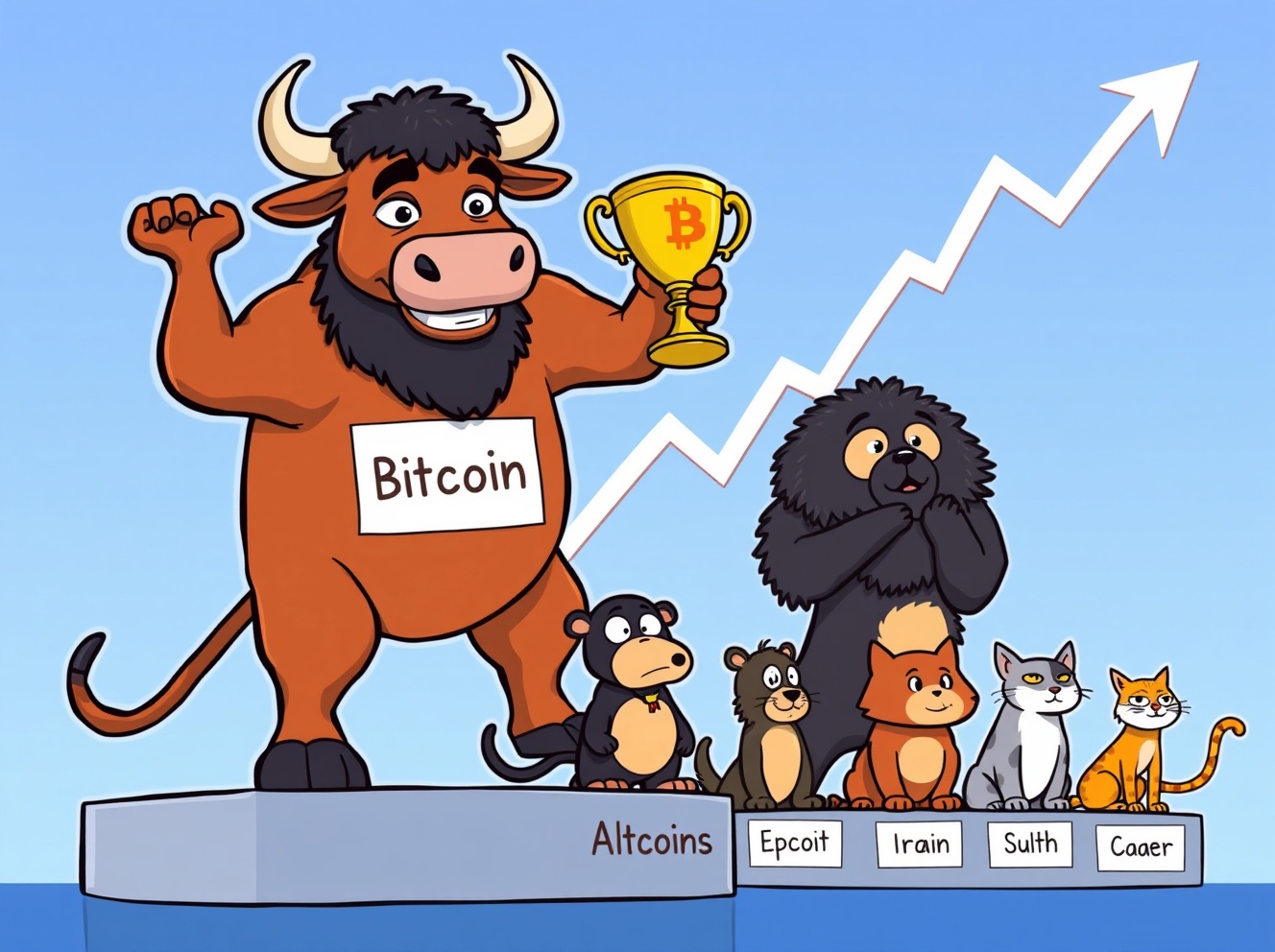
Altcoin Season Index Plummets to 29: A Stark Signal of Bitcoin’s Resurgent Dominance
Global cryptocurrency markets witnessed a significant shift in momentum this week as CoinMarketCap’s closely watched Altcoin Season Index fell to a score of 29, a clear signal of Bitcoin’s strengthening grip on the digital asset landscape. This one-point decline from the previous day’s reading underscores a broader trend of capital rotation that has profound implications for investors and the entire blockchain ecosystem. Market analysts are now scrutinizing this movement, comparing it to historical cycles to gauge potential future trajectories for both Bitcoin and alternative cryptocurrencies.
Understanding the Altcoin Season Index and Its Critical Decline
The Altcoin Season Index serves as a vital barometer for market sentiment. CoinMarketCap calculates this metric by analyzing the 90-day performance of the top 100 cryptocurrencies, deliberately excluding stablecoins and wrapped assets. The core function of the index is to measure how many of these major altcoins are outperforming Bitcoin, the market’s original benchmark. A score approaching 100 indicates a strong ‘altcoin season,’ where the majority of projects are generating higher returns. Conversely, a lower score, such as the current 29, points decisively toward a ‘Bitcoin season.’ This environment typically sees capital flowing into the perceived safety and established narrative of Bitcoin, often at the expense of smaller, more speculative assets. The threshold for a confirmed altcoin season is notably high, requiring 75% of the top altcoins to beat Bitcoin’s returns over the measured period.
The Mechanics Behind the Metric
To fully grasp the index’s message, one must understand its construction. The calculation is refreshingly straightforward yet powerful. Firstly, it establishes a simple binary test for each eligible altcoin: did it outperform Bitcoin over the last quarter? The index then represents the percentage of altcoins that passed this test. This methodology provides a clean, unambiguous snapshot of relative strength. For example, an index score of 50 would mean exactly half of the top altcoins are beating Bitcoin. The recent drop to 29, therefore, indicates that only about 29 out of 100 major altcoins are currently keeping pace with or exceeding Bitcoin’s performance, a notable retreat from broader market participation.
Historical Context and the Cyclical Nature of Crypto Markets
The current reading of 29 is not an anomaly but part of a well-documented cyclical pattern within cryptocurrency markets. Historically, bull markets often begin with a surge in Bitcoin’s price and dominance, drawing in institutional and retail capital focused on the flagship asset. Subsequently, as confidence grows, investors frequently seek higher returns by diversifying into altcoins, triggering an ‘altcoin season.’ The index acts as a quantitative confirmation of this psychological and capital flow pattern. Reviewing past data reveals that sustained periods above the 75 threshold are relatively rare and often precede market corrections or major rotations. For instance, the prolonged altcoin season of early 2021, which saw the index remain elevated for months, was followed by a significant consolidation phase where Bitcoin reasserted its dominance.
This cyclical behavior is driven by several fundamental factors. Initially, Bitcoin benefits from its first-mover advantage, brand recognition, and its evolving narrative as ‘digital gold.’ Consequently, during periods of macroeconomic uncertainty or when new institutional products like ETFs are launched, Bitcoin is the primary beneficiary. Subsequently, as the overall market cap expands and investor appetite for risk increases, capital trickles down to projects with specific use cases in decentralized finance (DeFi), non-fungible tokens (NFTs), or layer-1 scalability. The Altcoin Season Index effectively tracks this trickle-down effect in real-time.
Comparing Current Data to Previous Cycles
A comparative analysis provides crucial context. The table below illustrates key index levels and their corresponding market phases from recent history:
| Period | Altcoin Season Index (Approx.) | Market Phase Description |
|---|---|---|
| Q4 2020 | 15-30 | Bitcoin-led rally post-halving, institutional accumulation. |
| Q1-Q2 2021 | 75-95 | Peak altcoin season, with massive gains in DeFi and meme coins. |
| Q3 2021 | 40-60 | Transition phase, Bitcoin dominance recovering. |
| Q4 2023 / Q1 2024 | 20-40 | Bitcoin ETF approval anticipation and trading. |
| Current Reading (2025) | 29 | Consolidation and rotation post-ETF integration, potential macro uncertainty. |
This historical lens suggests the current low index is characteristic of a market phase where Bitcoin consolidates its gains and establishes a new support base. Furthermore, it often precedes a period where fundamentally strong altcoins begin to differentiate themselves from the crowd.
Implications for Investors and the Broader Market Ecosystem
The declining Altcoin Season Index carries actionable intelligence for various market participants. For portfolio managers, a low index suggests a strategic overweight in Bitcoin or Bitcoin-correlated assets might be prudent. However, it also signals a potential opportunity for disciplined altcoin accumulation. Historically, periods of extreme Bitcoin dominance have created valuation disparities, where promising altcoin projects trade at a significant discount relative to their long-term potential. Consequently, savvy investors use these phases for fundamental research and strategic dollar-cost averaging into select assets.
For the broader blockchain ecosystem, a prolonged Bitcoin season can have mixed effects. On one hand, it may slow venture capital funding and user adoption for newer layer-1 and layer-2 networks as attention focuses elsewhere. On the other hand, it forces projects to demonstrate real utility and development progress rather than relying solely on speculative market tailwinds. This environment can separate projects with robust fundamentals and active communities from those that are merely riding a hype cycle. Key areas to watch during such phases include:
- Developer Activity: Are GitHub commits and network upgrades continuing?
- Network Utility: Is Total Value Locked (TVL) in DeFi protocols stable or growing?
- On-Chain Metrics: Are transaction counts and active addresses holding steady?
The Role of Macroeconomic Factors and Regulation
External factors invariably influence the index. Rising interest rates or inflationary pressures have traditionally driven capital toward Bitcoin’s hard-capped supply narrative. Conversely, a risk-on macroeconomic environment fueled by liquidity can accelerate a shift into altcoins. Additionally, regulatory clarity, or the lack thereof, for specific altcoin categories like DeFi or tokenized securities can suppress their performance relative to Bitcoin, which now operates within a more defined regulatory framework in major economies like the United States and the European Union. The current index level may partially reflect a market that is pricing in a cautious regulatory outlook for certain crypto subsectors.
Conclusion
The Altcoin Season Index’s drop to 29 provides a clear, data-driven snapshot of a cryptocurrency market in a state of transition, firmly favoring Bitcoin dominance. This movement is a normal and expected part of the market’s cyclical rhythm, offering both warnings and opportunities. While it signals reduced short-term momentum for the broader altcoin universe, it also sets the stage for the next phase of growth by highlighting projects with enduring fundamentals. Investors should interpret this not as a signal to abandon altcoins entirely, but as a cue to refine their strategies, emphasizing research, risk management, and a clear understanding of market cycles. The index remains an indispensable tool for navigating the complex and often emotional landscape of digital asset investing.
FAQs
Q1: What does an Altcoin Season Index of 29 actually mean?
An index score of 29 means that only about 29% of the top 100 cryptocurrencies (excluding stablecoins) have outperformed Bitcoin over the past 90 days. This indicates a market environment strongly dominated by Bitcoin’s performance.
Q2: Is a low Altcoin Season Index bad for the crypto market?
Not necessarily. It indicates a specific market phase, not the health of the entire market. Low index periods often see Bitcoin strengthening its base, which can provide stability for a future broader rally. They also allow investors to identify fundamentally strong altcoins that are resilient during Bitcoin dominance.
Q3: How is the Altcoin Season Index different from Bitcoin Dominance?
Bitcoin Dominance measures Bitcoin’s market capitalization as a percentage of the total crypto market cap. The Altcoin Season Index measures performance (price return) over time. An altcoin can lose dominance (market cap share) but still outperform Bitcoin in price gains, which the index would capture.
Q4: Should I sell my altcoins when the index is this low?
A low index is a signal for analysis, not an automatic sell trigger. The decision should be based on the fundamentals of each specific altcoin in your portfolio. Historically, this phase can be an accumulation period for high-conviction altcoin holdings, not just an exit point.
Q5: How often is the Altcoin Season Index updated?
CoinMarketCap updates the Altcoin Season Index daily, providing a near real-time gauge of the shifting performance dynamics between Bitcoin and the major alternative cryptocurrencies.
This post Altcoin Season Index Plummets to 29: A Stark Signal of Bitcoin’s Resurgent Dominance first appeared on BitcoinWorld.


You May Also Like

MyCroatianCharter places Croatia as leading destination for family luxury yacht charters in 2026

What Is “Real Pi”? Understanding Mainnet Migration and Ownership in Pi Network




