The post Bitcoin Price Could Reclaim $95,000 After $3.2B in Smart Money Inflows appeared on BitcoinEthereumNews.com. Key Insights: Bitcoin (BTC) price only needsThe post Bitcoin Price Could Reclaim $95,000 After $3.2B in Smart Money Inflows appeared on BitcoinEthereumNews.com. Key Insights: Bitcoin (BTC) price only needs

Bitcoin Price Could Reclaim $95,000 After $3.2B in Smart Money Inflows

Key Insights:

  • Bitcoin (BTC) price only needs to reclaim $95,000 to steady the market again, said a top analyst.
  • Whales and shark wallets kept buying and have added over 36,322 BTC to their portfolio over the past nine days.
  • Santiment said retail wallets holding less than 0.01 BTC sold 132 BTC over the same stretch, worth roughly $11.66 million.

Bitcoin (BTC) price only needs to reclaim $95,000 to steady the market again, a top analyst said, as traders look for a clean reset after the latest chop.

At the same time, Santiment pointed to a striking split in behavior. While smaller holders sold into the weakness, whales and shark wallets kept buying. Over the past nine days, that group added 36,322 BTC.

That kind of steady accumulation matters because it often shows up before the price responds. Santiment said the aggressive buying could be setting up a long-term bullish divergence, leaving crypto in what it described as optimal conditions for a breakout.

Whales Stack 36,322 BTC as Bitcoin Price Fights to Reclaim $95K

Santiment said Bitcoin whales and shark wallets are still in buying mode. The firm shared the update on X on Tuesday, even as Bitcoin slid 4.55% over the past 24 hours and traded near $89,110 at the time.

That buying showed up clearly in the data. Between January 10 and January 19, wallets holding between 10 and 10,000 BTC, often seen as smart money, added about $3.21 billion worth of Bitcoin.

Meanwhile, smaller players moved the other way. Santiment said retail wallets holding less than 0.01 BTC sold 132 Bitcoin over the same stretch, worth roughly $11.66 million.

Bitcoin Whale & Shark Wallets Activity | Source: Santiment

Santiment said crypto tends to break out when smart money keeps buying while retail traders keep selling.

Santiment said the noise around geopolitics hasn’t changed the bigger setup. Whales are still buying while retail keeps selling, and that split is continuing to build what the firm described as a long-term bullish divergence.

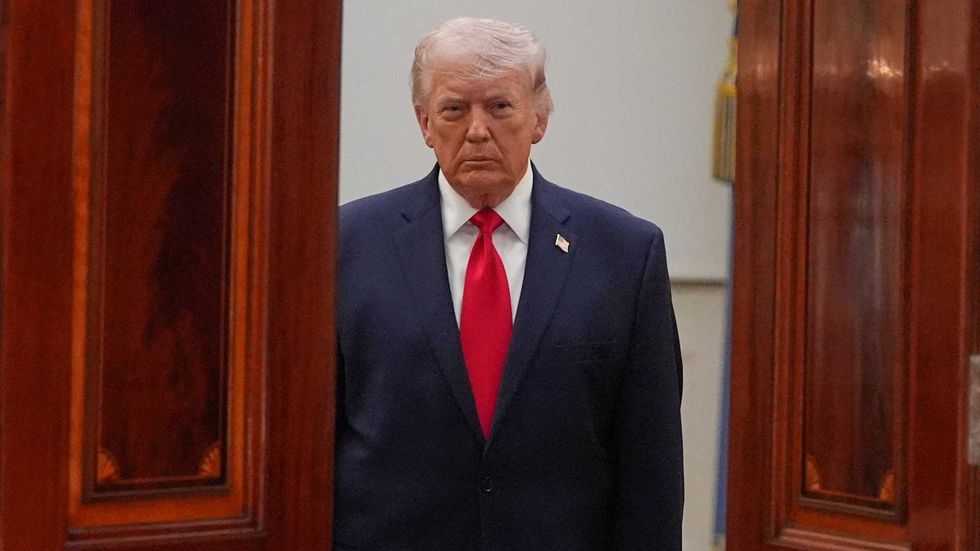
That backdrop matters because Bitcoin price has been headline-sensitive since Donald Trump returned to office in January 2025. When he starts talking tariffs, traders don’t wait around. Risk comes off the table, and Bitcoin USD often jerks lower before the dust settles.

The same pattern showed up again on Monday. Trump raised the idea of tariffs on eight European countries as part of his push to claim Greenland, and Bitcoin quickly slid almost 7%.

CryptoQuant CEO Ki Young Ju said last week that most retail traders have drifted out of the Bitcoin market, even as whales keep adding to their positions.

Even so, Bitcoin USD hasn’t faded from the spotlight. Santiment said on Tuesday that online crypto chatter around BTC has picked up sharply, putting it back at the center of the conversation.

Much of that chatter now links Bitcoin to traditional safe havens. Traders keep comparing it to gold and silver, especially after both metals hit fresh all-time highs on Monday as geopolitical tensions climbed.

Market Sentiment Softens as Bitcoin USD Dominates Attention

Other signals show traders are still playing defense. Bitcoin price today is still the main event.

Everything else is fighting for attention, and traders aren’t showing the same level of conviction outside BTC price.

That caution shows up in sentiment data. The Crypto Fear & Greed Index printed a fear reading of 32 in Tuesday’s update.

That Bitcoin-first mood shows up in the numbers, too. The Altcoin Season Index still tilts strongly toward BTC, with a Bitcoin score of 29 out of 100 after comparing the top 100 altcoins against Bitcoin over the past 90 days.

Delaware Life Brings Bitcoin Into a Retirement Annuity Offering

Delaware Life Insurance Company is bringing a small dose of Bitcoin exposure into its retirement annuity portfolio using an index built by BlackRock.

The new index mixes U.S. stocks with a modest, risk-managed Bitcoin allocation. Instead of buying and holding Bitcoin USD directly, investors get that exposure through BlackRock’s iShares Bitcoin Trust ETF.

The index pairs U.S. stocks with a managed slice of Bitcoin (BTC) exposure. It also uses volatility controls meant to keep swings near 12%, which helps smooth out sharp moves.

Delaware Life said this setup lets policyholders track Bitcoin price action indirectly, while still keeping their principal protected under the annuity’s rules.

The company plans to roll the index out across three of its fixed indexed annuity products. These are insurance-based retirement plans that protect the original investment and let gains grow tax-deferred.

Instead of owning assets outright, the return is linked to how a chosen market index performs.

Source: https://www.thecoinrepublic.com/2026/01/21/bitcoin-price-could-reclaim-95000-after-3-2b-in-smart-money-inflows/


Market Opportunity
Bitcoin Logo
Bitcoin Price(BTC)
$89,956.24
$89,956.24$89,956.24
-0.36%
USD
Bitcoin (BTC) Live Price Chart
Disclaimer: The articles reposted on this site are sourced from public platforms and are provided for informational purposes only. They do not necessarily reflect the views of MEXC. All rights remain with the original authors. If you believe any content infringes on third-party rights, please contact service@support.mexc.com for removal. MEXC makes no guarantees regarding the accuracy, completeness, or timeliness of the content and is not responsible for any actions taken based on the information provided. The content does not constitute financial, legal, or other professional advice, nor should it be considered a recommendation or endorsement by MEXC.

You May Also Like

Fed Acts on Economic Signals with Rate Cut

Fed Acts on Economic Signals with Rate Cut

In a significant pivot, the Federal Reserve reduced its benchmark interest rate following a prolonged ten-month hiatus. This decision, reflecting a strategic response to the current economic climate, has captured attention across financial sectors, with both market participants and policymakers keenly evaluating its potential impact.Continue Reading:Fed Acts on Economic Signals with Rate Cut
Share
Coinstats2025/09/18 02:28
Iran’s Central Bank Spends $500M on Crypto Amid Rial Crisis

Iran’s Central Bank Spends $500M on Crypto Amid Rial Crisis

Iran's Central Bank has reportedly acquired more than $500 million in cryptocurrency assets over the past year to mitigate the ongoing currency crisis.
Share
coinlineup2026/01/22 08:59
Unlocking Massive Value: Curve Finance Revenue Sharing Proposal for CRV Holders

Unlocking Massive Value: Curve Finance Revenue Sharing Proposal for CRV Holders

BitcoinWorld Unlocking Massive Value: Curve Finance Revenue Sharing Proposal for CRV Holders The dynamic world of decentralized finance (DeFi) is constantly evolving, bringing forth new opportunities and innovations. A significant development is currently unfolding at Curve Finance, a leading decentralized exchange (DEX). Its founder, Michael Egorov, has put forth an exciting proposal designed to offer a more direct path for token holders to earn revenue. This initiative, centered around a new Curve Finance revenue sharing model, aims to bolster the value for those actively participating in the protocol’s governance. What is the “Yield Basis” Proposal and How Does it Work? At the core of this forward-thinking initiative is a new protocol dubbed Yield Basis. Michael Egorov introduced this concept on the CurveDAO governance forum, outlining a mechanism to distribute sustainable profits directly to CRV holders. Specifically, it targets those who stake their CRV tokens to gain veCRV, which are essential for governance participation within the Curve ecosystem. Let’s break down the initial steps of this innovative proposal: crvUSD Issuance: Before the Yield Basis protocol goes live, $60 million in crvUSD will be issued. Strategic Fund Allocation: The funds generated from the sale of these crvUSD tokens will be strategically deployed into three distinct Bitcoin-based liquidity pools: WBTC, cbBTC, and tBTC. Pool Capping: To ensure balanced risk and diversified exposure, each of these pools will be capped at $10 million. This carefully designed structure aims to establish a robust and consistent income stream, forming the bedrock of a sustainable Curve Finance revenue sharing mechanism. Why is This Curve Finance Revenue Sharing Significant for CRV Holders? This proposal marks a pivotal moment for CRV holders, particularly those dedicated to the long-term health and governance of Curve Finance. Historically, generating revenue for token holders in the DeFi space can often be complex. The Yield Basis proposal simplifies this by offering a more direct and transparent pathway to earnings. By staking CRV for veCRV, holders are not merely engaging in governance; they are now directly positioned to benefit from the protocol’s overall success. The significance of this development is multifaceted: Direct Profit Distribution: veCRV holders are set to receive a substantial share of the profits generated by the Yield Basis protocol. Incentivized Governance: This direct financial incentive encourages more users to stake their CRV, which in turn strengthens the protocol’s decentralized governance structure. Enhanced Value Proposition: The promise of sustainable revenue sharing could significantly boost the inherent value of holding and staking CRV tokens. Ultimately, this move underscores Curve Finance’s dedication to rewarding its committed community and ensuring the long-term vitality of its ecosystem through effective Curve Finance revenue sharing. Understanding the Mechanics: Profit Distribution and Ecosystem Support The distribution model for Yield Basis has been thoughtfully crafted to strike a balance between rewarding veCRV holders and supporting the wider Curve ecosystem. Under the terms of the proposal, a substantial portion of the value generated by Yield Basis will flow back to those who contribute to the protocol’s governance. Returns for veCRV Holders: A significant share, specifically between 35% and 65% of the value generated by Yield Basis, will be distributed to veCRV holders. This flexible range allows for dynamic adjustments based on market conditions and the protocol’s performance. Ecosystem Reserve: Crucially, 25% of the Yield Basis tokens will be reserved exclusively for the Curve ecosystem. This allocation can be utilized for various strategic purposes, such as funding ongoing development, issuing grants, or further incentivizing liquidity providers. This ensures the continuous growth and innovation of the platform. The proposal is currently undergoing a democratic vote on the CurveDAO governance forum, giving the community a direct voice in shaping the future of Curve Finance revenue sharing. The voting period is scheduled to conclude on September 24th. What’s Next for Curve Finance and CRV Holders? The proposed Yield Basis protocol represents a pioneering approach to sustainable revenue generation and community incentivization within the DeFi landscape. If approved by the community, this Curve Finance revenue sharing model has the potential to establish a new benchmark for how decentralized exchanges reward their most dedicated participants. It aims to foster a more robust and engaged community by directly linking governance participation with tangible financial benefits. This strategic move by Michael Egorov and the Curve Finance team highlights a strong commitment to innovation and strengthening the decentralized nature of the protocol. For CRV holders, a thorough understanding of this proposal is crucial for making informed decisions regarding their staking strategies and overall engagement with one of DeFi’s foundational platforms. FAQs about Curve Finance Revenue Sharing Q1: What is the main goal of the Yield Basis proposal? A1: The primary goal is to establish a more direct and sustainable way for CRV token holders who stake their tokens (receiving veCRV) to earn revenue from the Curve Finance protocol. Q2: How will funds be generated for the Yield Basis protocol? A2: Initially, $60 million in crvUSD will be issued and sold. The funds from this sale will then be allocated to three Bitcoin-based pools (WBTC, cbBTC, and tBTC), with each pool capped at $10 million, to generate profits. Q3: Who benefits from the Yield Basis revenue sharing? A3: The proposal states that between 35% and 65% of the value generated by Yield Basis will be returned to veCRV holders, who are CRV stakers participating in governance. Q4: What is the purpose of the 25% reserve for the Curve ecosystem? A4: This 25% reserve of Yield Basis tokens is intended to support the broader Curve ecosystem, potentially funding development, grants, or other initiatives that contribute to the platform’s growth and sustainability. Q5: When is the vote on the Yield Basis proposal? A5: A vote on the proposal is currently underway on the CurveDAO governance forum and is scheduled to run until September 24th. If you found this article insightful and valuable, please consider sharing it with your friends, colleagues, and followers on social media! Your support helps us continue to deliver important DeFi insights and analysis to a wider audience. To learn more about the latest DeFi market trends, explore our article on key developments shaping decentralized finance institutional adoption. This post Unlocking Massive Value: Curve Finance Revenue Sharing Proposal for CRV Holders first appeared on BitcoinWorld.
Share
Coinstats2025/09/18 00:35