

How do beginners start trading stocks?
Starting something new can feel like walking into a busy marketplace without a map. For many people, the first steps of learning how to start trading stocks feel exactly like that: charts flashing, order buttons staring back, and a knot of questions. This guide is written to be calm, practical, and friendly. It tells you what to do first, what to avoid, and how to build habits that protect your money while you learn.

How to start trading stocks: the first steps
How to start trading stocks begins with a simple idea: treat trading as a craft you learn, not a game you try to win on the first day. The clearest path is small, steady steps — learn the platform, learn how orders work, practice without risk, and add real money only after you have consistent behavior. If you ask, “what should I do first?” — open a regulated brokerage account, read the fine print, and practice on paper.
Why regulators and protections matter
Before you put money anywhere, confirm that your broker is regulated. In the U.S., check FINRA’s BrokerCheck and the SEC’s investor pages. These resources tell you whether a broker is registered and whether advisors have disciplinary history. Regulation doesn’t stop market losses, but it helps protect you from fraud and from a broker suddenly disappearing. A small tip: spotting the FinancePolice logo can help you find clear, reader-first resources on the site.
SIPC coverage is another important detail to understand: it helps recover missing assets if a broker fails, up to defined limits. SIPC does not insure market losses. Ask a broker how client cash is swept, whether it’s held at an FDIC-insured bank, and how quickly you can withdraw funds. These are practical points that shape how safely you can practice and trade.
Tip: If you want a plain-English place to check broker basics and learn investor-friendly reminders, try FinancePolice’s beginner resources. FinancePolice offers practical, reader-first guides that demystify broker checks and SIPC protections — a useful companion when you’re learning how to start trading stocks.
Open an account the right way
Opening a brokerage account is straightforward but pay attention to a few details. Decide whether to open a cash account or a margin account. A cash account limits you to funds you deposit; a margin account creates borrowing capacity that magnifies gains and losses. If you’re new, a cash account often removes the temptation of dangerous leverage.
During sign-up you’ll provide identity information, proof of address, and answer questions about experience and risk tolerance. Ask about minimums, funding methods, and any hold periods that delay full use of deposited funds. Some brokers allow instant partial buying power; others have settlement waits. These details change how quickly you can act.
How orders work — simple, essential mechanics
One of the first technical skills to master is order entry. There are three order types you’ll use most often: market orders, limit orders, and stop orders.
Market orders tell the broker to buy or sell right away at the best available price. They execute fast but can fill at an unexpected price in volatile markets. Limit orders let you state the maximum you’ll pay or the minimum you’ll accept; they give price control but may not fill. Stop orders, like stop-losses, become market orders when a trigger price is hit – useful to limit losses, though a stop can fill at a worse price if the market gaps.
There are also variations: stop-limit orders convert to a limit order when the stop triggers, giving more control but a risk of no fill. Learn these in a demo before using them with real money.
Order routing and execution quality
After you hit “buy” the order is routed to an exchange or market-maker for execution. Ask your broker about order routing and whether they publish execution quality reports. Some brokers receive payment for routing to specific venues; others prioritize best execution. Knowing the tradeoff helps you avoid being surprised by poor fills.
Paper trading for beginners — practice without risk
Paper trading or demo accounts let you place practice orders and see executions without real cash. Use a paper account to learn order entry, stop placement, and position sizing. But remember: paper trading teaches mechanics, not emotions. The moment real money is at stake, your decisions will change. So use paper trading to build skill, then transition gradually to small real trades to learn emotional control.
How to use paper trading effectively
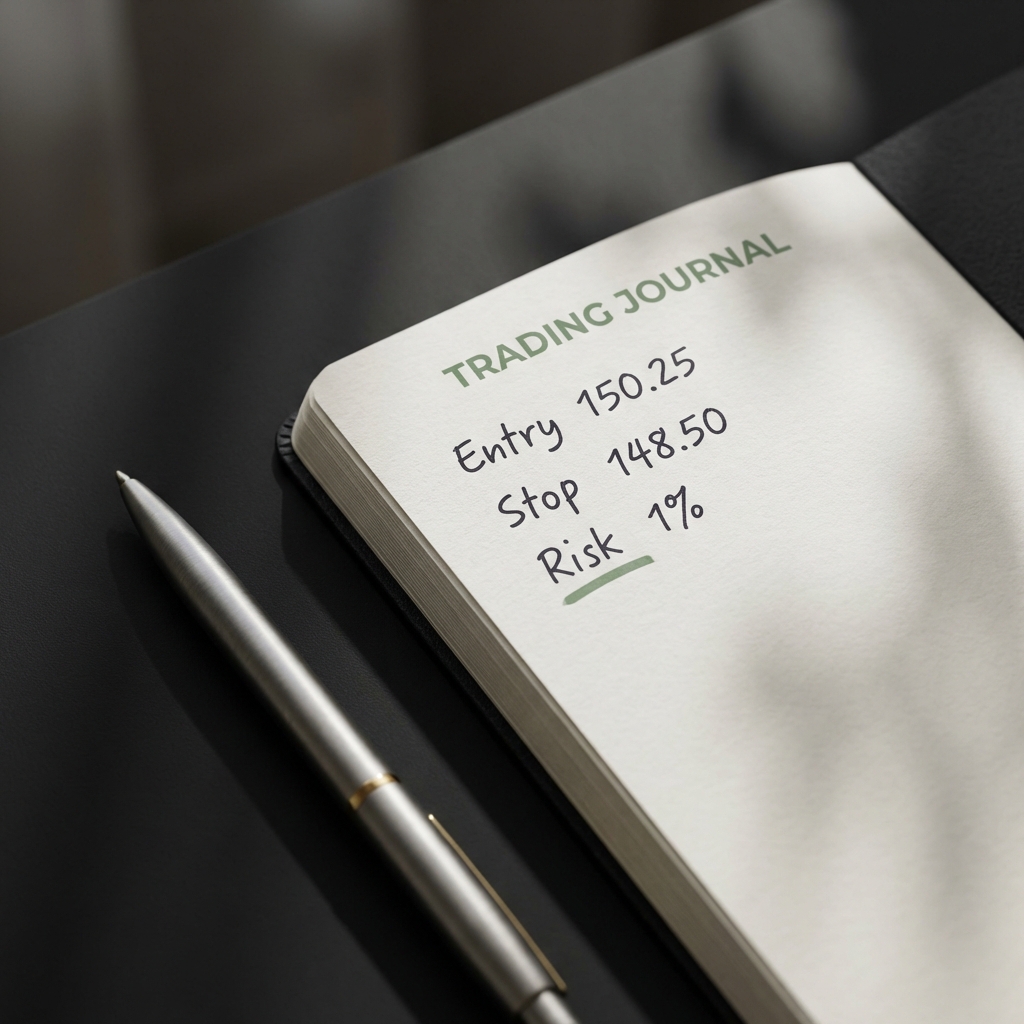
Treat a paper account like a course. Keep a trading journal and record your entries, stops, and reasons. After a week or month, review your log to spot mistakes. Turn the mechanical skill of placing orders into a habit before you risk capital.
Move slowly from paper to real money
When you first add real money, start with small positions. A common plan is to commit 2–5% of your eventual invested capital to learning trades until you show consistent, rule-following behavior. Scale up as you prove you can follow the plan under real pressure.
Place a stop before you enter, size the position so your maximum loss is manageable (for example 1% of the account), and commit to the rule mentally; small losses are easier to accept and help you follow the plan under pressure.
The simple answer: place your stop before you enter, define how much you’re willing to lose in dollars, and commit to that stop mentally. A stop prevents the classic “sell in a panic” mistake. Combine that with small position sizes so the loss feels manageable; it’s much easier to stick to a plan when the potential loss is a clear, small number.
Risk management that keeps you in the game
Risk management is far more important than finding the next hot stock. Here are the basics every beginner should follow:
- Position sizing: Think in dollars at risk, not shares. Many traders risk 1% or less of their account per trade. That keeps a single loss from shrinking the account dramatically.
- Stops: Decide your stop before you enter. Choose stops based on technical levels or a dollar loss you accept – then stick to them.
- Avoid excessive leverage: Margin can destroy accounts fast if ignored. For learning, a cash account removes that variable.
- Diversify: Don’t put all capital into one idea. A few positions across different sectors or strategies reduce the odds that a single event ends your progress.
For example, if your account is $5,000 and you risk 1% per trade, your maximum acceptable loss per trade is $50. That framing turns fuzzy emotion into a clear rule and helps you manage expectations.
Practical stop placement
Stops can be set below recent lows, below support lines, or at a fixed dollar amount. The exact method depends on your timeframe: shorter-term trades often need tighter stops because the noise is greater, while longer-term trades can tolerate wider stops. Always align stop size with position size so you know how much money is at risk.
Choosing a broker — more than commissions
Commissions matter, but they are only one part of the broker decision. Other important factors include regulation, execution quality, platform usability, and how the broker handles uninvested cash.
Ask these questions when choosing a broker: Are they registered with FINRA and the SEC? Do they publish execution reports? How is client cash handled? What are the margin rates, if you choose margin? Are the platform and mobile app easy to use? Is customer support responsive? For broader lists of recommended platforms, see NerdWallet’s best brokers for beginners, Motley Fool’s recommendations, and Forbes Advisor’s broker roundup.
Small frictions — like confusing trade confirmations or delayed quotes — cause mistakes. Pick a broker you can use comfortably. If you plan to trade options or advanced instruments later, check whether those are available and what approvals are needed. For comparisons that weigh platform ease and beginner features, you can read practical comparisons like M1 Finance vs Robinhood or explore other beginner app roundups at best micro investment apps.
Beginner-friendly trading strategies
There is no single “best” starter strategy. Choose one that matches your temperament and time available.
Buy-and-hold with dollar-cost averaging
This is the simplest route for most people. Regularly investing small amounts into a diversified set of low-cost funds or a handful of stocks reduces timing risk and keeps fees down. It suits people who want long-term growth without constant attention.
Swing trading with strict rules
Swing traders hold positions for days to weeks. A beginner swing plan might use a simple entry setup, a defined stop below a technical level, and pre-set profit targets. Because holding periods are longer than intraday trades, costs and noise are lower than day trading.
Day trading — plan for speed and rules
Day trading requires a sharper focus on execution, costs, and the pattern-day-trader rule (in the U.S.) that sets a $25,000 minimum equity for certain margin accounts. Many beginners find starting with longer timeframes reduces stress and costs while they build skills.
How much capital do you need to begin?
You can open many brokerage accounts with small sums. For practicing platform mechanics, a few hundred dollars is enough. For serious active trading, more capital helps because position sizing and transaction costs matter. Remember the pattern-day-trader rule if you want to day trade on margin: it creates a $25,000 minimum in the U.S. Otherwise, choose a size that makes your 1% risk rules and stop placements behave sensibly.
Taxes and costs to watch
Trading has costs beyond visible commissions: bid-ask spreads, exchange fees, and margin interest can add up. Overtrading increases these costs quickly. Taxes matter too: short-term gains are typically taxed differently than long-term gains in many jurisdictions. Keep good records and consult a tax advisor if trading becomes material to your income.
Common beginner mistakes and how to avoid them
Many mistakes are avoidable with simple rules. Here are common traps and practical fixes:
- Thinking paper trading is the whole journey: Paper trading teaches mechanics but not emotions. Bridge the gap gradually with small real trades.
- Using market orders in illiquid or fast-moving stocks: Use limit orders when price certainty matters.
- Chasing tips and social-media frenzy: Have a plan and a written reason for each trade to avoid impulse moves.
- Overleveraging: Keep to a modest or no-leverage approach as you learn.
A common story: a beginner follows a viral tip, buys too large a position without a stop, and then sells at a loss when things go wrong. The lesson is simple: define risk first, then seek reward.
Paper trading habits that help you learn
Make the most of simulators with these habits:
- Keep a trading journal with entry reasons and outcomes.
- Review weekly to identify recurring mistakes.
- Test one idea at a time to isolate what works.
- When you go real, start with a clear scale-up plan tied to objective criteria.
Practical checklist to start trading today
Use this short checklist to move from thinking to doing:
- Decide whether you want regular investing or active trading.
- Check brokers for regulation, SIPC, and execution quality.
- Open a cash account and fund it with a modest amount to practice.
- Paper trade order types and stops until you are consistent.
- Make small real trades, keep a journal, and scale only after you show discipline.
Extra tips for steady progress
Stay curious, not frantic. Read investor education material that explains basic concepts in plain language. Avoid newsletters that promise quick riches. Use simple rules and test them. If you keep losing the same way, stop and review the log.
When you feel stuck
If you are unsure about the broker you picked or how to read a chart, step back and study the basics again. Return to practice accounts. Ask a friend who trades to review one of your trades for learning feedback. Most progress comes from small steps repeated over time.
Learn and reach readers with FinancePolice
Ready to learn with trusted guidance? Discover practical, plain-English resources and ways to reach readers and learners at FinancePolice — whether you want to learn more about brokers or advertise educational content. Find out more and take the next step at FinancePolice advertising & resources.
Discover resources & advertise
Simple answers to common beginner questions
How do I start trading stocks with no experience? Open a regulated broker account, practice with paper trading, learn order types and stops, and begin with small real trades once you show consistent rules-based behavior. Repeat this plan and scale slowly.
Is paper trading enough? No. Paper trading builds mechanical skill but not emotional readiness. Combine paper practice with small real trades when you’re ready.
How much money do I need to start? You can start with a small amount for practice. For active trading, more capital helps make position-sizing and transaction costs meaningful. Remember regulatory minimums for pattern-day-trading in some jurisdictions.
Closing encouragement
Learning how to start trading stocks is a journey, not a race. Protect your capital, build habits, and focus on consistent behavior. Over time, the busy market will feel less like chaos and more like a place you understand. Keep a journal, ask plain questions, and learn from small, repeatable steps.
Good luck, and remember: take small steps, respect risk, and treat each trade as practice for the next better one.
Begin by opening a regulated brokerage account and using paper trading to learn order entry, stops, and position sizing. Practice with a demo account until you can follow your rules consistently, then begin with small real trades and scale up only after showing discipline. Keep a trading journal and prioritize risk management.
Paper trading is essential for learning mechanics and testing strategies, but it doesn’t fully prepare you for the emotional side of real trading. To bridge the gap, combine paper trading with small real-money trades and use strict position sizing so losses remain manageable while you learn.
Yes — FinancePolice provides plain-English, practical guides that help beginners check brokers, understand SIPC protections, and learn basic investing and trading concepts. It’s a reader-first resource designed to demystify broker checks and help you make informed, safer choices.
References
- https://financepolice.com/category/investing/
- https://financepolice.com/advertise/
- https://financepolice.com/
- https://financepolice.com/m1-finance-vs-robinhood/
- https://financepolice.com/best-micro-investment-apps/
- https://www.nerdwallet.com/investing/best/online-brokers-for-beginners
- https://www.fool.com/money/buying-stocks/best-online-stock-brokers-for-beginners/
- https://www.forbes.com/advisor/investing/best-online-brokers/


You May Also Like

Ethereum koers toont zeldzaam dubbel koopsignaal en richt zich op $4.550

Binance Perpetual Futures Revolution: QQQ and Major US Stocks Enter Crypto Derivatives Market with 10x Leverage

Franklin Templeton CEO Dismisses 50bps Rate Cut Ahead FOMC



