Pi Network Price Prediction: Kraken’s $345M SPAC IPO Kicks Off Presale Season, Pi Hangs in the Balance, and DeepSnitch AI Readies for Launch With Explosive 2026 Returns
The end of January has seen some pretty impactful developments, including that Kraken-backed KRAK Acquisition Corp wrapped a $345 million Nasdaq IPO, giving the US-based exchange a new public foothold.
Meanwhile, in Europe, regulators are tightening screws from another angle, as the DAC8 tax regime will pull custodians and exchanges into OECD reporting rules. DeFi sits outside the framework for now, pending future classification debates.
Pi Network price predictions are indicative of a token stuck in the mud, while projects with tangible tools and clear ecosystem development early on are rising up. Among these, DeepSnitch AI is blazing toward launch, having surpassed $1.4 million in presale. It’s still priced low, 150% up from its starting price, and at $0.03755 as of late January. Its tools are proven, and as it’s launching soon, it’s gearing up to make a powerful Q1 moonshot.

Kraken SPAC listing and DeFi regulation
Kraken’s $345 million SPAC debut fits into a wider push by crypto firms toward public markets. Ledger is reportedly weighing a US IPO that could value the company north of $4 billion, while digital asset custodian Copper is also exploring a listing after rival BitGo’s NYSE debut.
Regulation in Europe is tightening along clearer lines at the same time. The new DAC8 tax regime focuses on entities that regulators can realistically enforce against, including custodians and exchanges. DeFi remains outside the net for now, but former OECD adviser Colby Mangels noted that tax authorities are increasingly leaning on AML frameworks to determine where responsibility begins and ends.
Pi Network roadmap updates are focusing on how Pi remains stuck in testnet limbo with no clear mainnet launch date. And in the 2026 market, a lack of trust, certainty, and something to rely on just won’t do. But that’s precisely why, when a rare token like DeepSnitch AI comes along, you can so easily see the value of its demonstrable utility.
Live intelligence infrastructure undercuts testnet promises
- DeepSnitch AI gears for launch
DeepSnitch AI is turning DYOR into a short, repeatable checklist instead of guesswork, with tools to make trading simpler, easier, and more direct. Retail losses versus whale wins usually come down to two things: who gets information first and whether a project is structurally sound. And DeepSnitch AI tackles both, offering real ecosystem development rather than vague mining progress promises that never translate into usable tools.
The platform will run five Snitches as one intelligence layer. SnitchFeed highlights tokens and alerts as they develop, Token Explorer pulls risk scores, holder concentration, liquidity data, and sentiment into a single view, and AuditSnitch delivers clear contract verdicts.
Paste an address, and you get CLEAN, CAUTION, or SKETCHY based on ownership control, liquidity locks, taxes, transfer limits, and known exploit patterns. SnitchGPT then explains what that data actually means without forcing you to decode dashboards.
Dynamic uncapped staking is already live, with APR rising as participation grows, and tools are accessible during presale rather than a vague smoke-and-mirrors promise, as is so often the case among early-stage tokens.
Evidently, DeepSnitch AI has the utility and credibility that justify its anticipated 1000x run in early 2026 after it launches, and that launch is approaching hastily. So, there’s no better time to buy, while it’s still priced low at $0.03755, with a moonshot on the horizon.
- Pi Network price prediction
The Pi Network price prediction has become increasingly complicated as the project remains stuck in testnet without a clear mainnet launch date. Pi Network is currently trading around $0.17, after having risen 2.69% over 24 hours between January 29 and 30, though it remains down 8.25% for the week and 18% over the month.
January 30th’s minor rebound comes amid broader crypto weakness, with technical factors playing a key role: Pi’s 7-day RSI hit 12.17 (deepest oversold level since mainnet launch), which led to short-term buying, though weak volume suggests limited conviction.
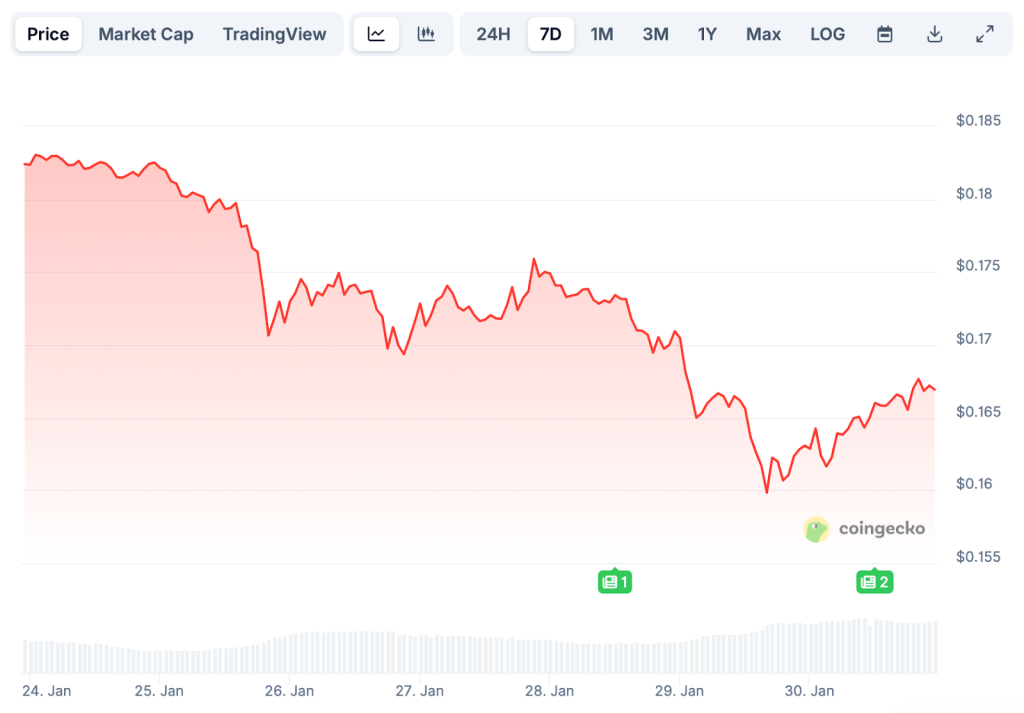
The Pi Network price prediction also faces structural headwinds that overshadow any technical bounce. While 2.02 million PI left exchanges on January 30th (reducing immediate sell-side liquidity), 1.3 billion PI, or 15% of supply, will unlock over the next 12 months, maintaining chronic bearish pressure. February’s looming 171 million token unlock is also bringing some near-term risk.
Time will tell whether PI can hold $0.16 support ahead of February 12th’s 35 million token unlock, though a breakdown here risks retesting the $0.15 all-time low.
- Immutable X against market headwinds
Immutable X sits around $0.21 right now, in an awkward position despite strong gaming and NFT infrastructure. Forecasts actually point to around $0.16 by the end of the year, at roughly a 24% decline from current rates.
Long-term models don’t look much brighter either, not least because the broader NFT market cooling is creating headwinds that infrastructure projects can’t easily overcome.
Final thoughts
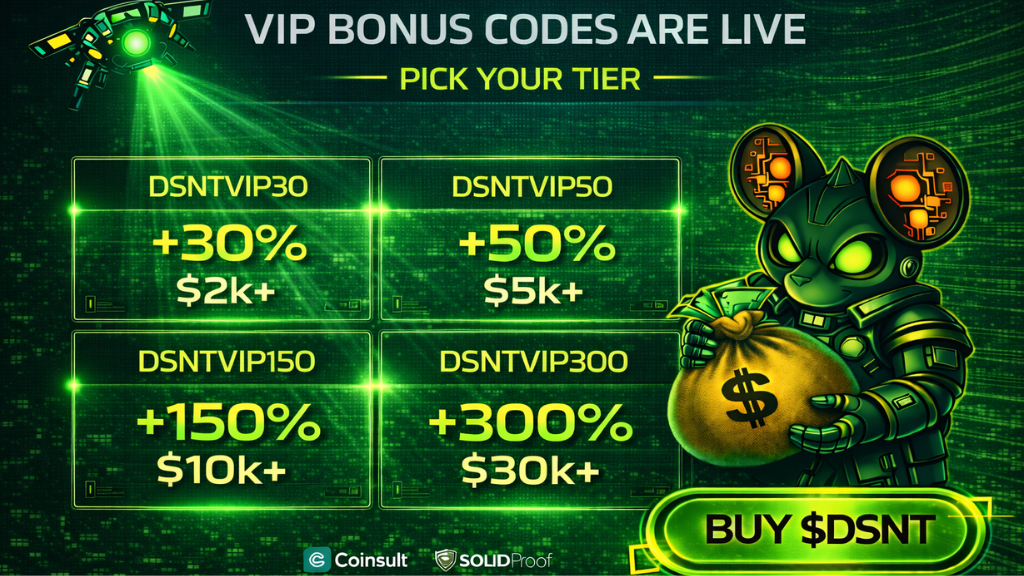
Pi Network price predictions are intensely speculative without a mainnet launch to latch onto, but DeepSnitch AI has its launch coming up quickly, and its tools are already live. It’s rewarding early buyers with bonus codes right now as well.
These bonuses work alongside dynamic staking APR, which scales upward as participation grows, creating a dual advantage. The compounding effect combines uncapped staking rewards with early platform access, positioning holders to reap the gains when exchange liquidity arrives and the broader market catches on.
Buying now, while tools ship in presale and before imminent launch, creates an access asymmetry that compounds in multiple directions. And if it’s not time to buy because of these codes, it’s definitely time to buy ahead of its upcoming launch, after which DeepSnitch AI could plausibly make a moonshot.
Before that, you can secure early access by buying into the presale on the official website. You can also join the community on X and Telegram for more.
FAQs
What is the Pi Network price prediction for 2026?
Pi Network price predictions remain largely speculative without a confirmed mainnet launch to anchor expectations. DeepSnitch AI, by contrast, offers stronger moonshot potential at $0.03755, with live tools already in use, a launch just days away, and an intelligence infrastructure that remains valuable regardless of broader market conditions.
Which crypto will explode in 2026?
If you’re exploring alternatives to speculative testnet projects, DeepSnitch AI combines presale pricing with demonstrable utility and live platform access, positioning it for 100x upside before exchange launch arrives.
Beyond the Pi Network price prediction, what are the best crypto presales in 2026?
DeepSnitch AI ranks among the top opportunities through proprietary AI agents, launching right around the corner, and exclusive presale access rewarding early adopters before the major announcement drops.
DISCLAIMER: CAPTAINALTCOIN DOES NOT ENDORSE INVESTING IN ANY PROJECT MENTIONED IN SPONSORED ARTICLES. EXERCISE CAUTION AND DO THOROUGH RESEARCH BEFORE INVESTING YOUR MONEY. CaptainAltcoin takes no responsibility for its accuracy or quality. This content was not written by CaptainAltcoin’s team. We strongly advise readers to do their own thorough research before interacting with any featured companies. The information provided is not financial or legal advice. Neither CaptainAltcoin nor any third party recommends buying or selling any financial products. Investing in crypto assets is high-risk; consider the potential for loss. Any investment decisions made based on this content are at the sole risk of the readCaptainAltcoin is not liable for any damages or losses from using or relying on this content.
The post Pi Network Price Prediction: Kraken’s $345M SPAC IPO Kicks Off Presale Season, Pi Hangs in the Balance, and DeepSnitch AI Readies for Launch With Explosive 2026 Returns appeared first on CaptainAltcoin.


You May Also Like

Bitcoin, Gold, and U.S. Stocks Dive as Trump Pledges to Hit Iran ‘Extremely Hard’

One Kash Patel comment 'made the hair on the back of my neck stand up': ex-FBI deputy