BitcoinWorld CLARITY Act: Senate Democrats’ Crucial Closed-Door Meeting Sparks Hope for US Crypto Regulation In a significant development for digital asset policyBitcoinWorld CLARITY Act: Senate Democrats’ Crucial Closed-Door Meeting Sparks Hope for US Crypto Regulation In a significant development for digital asset policy

CLARITY Act: Senate Democrats’ Crucial Closed-Door Meeting Sparks Hope for US Crypto Regulation

6 min read
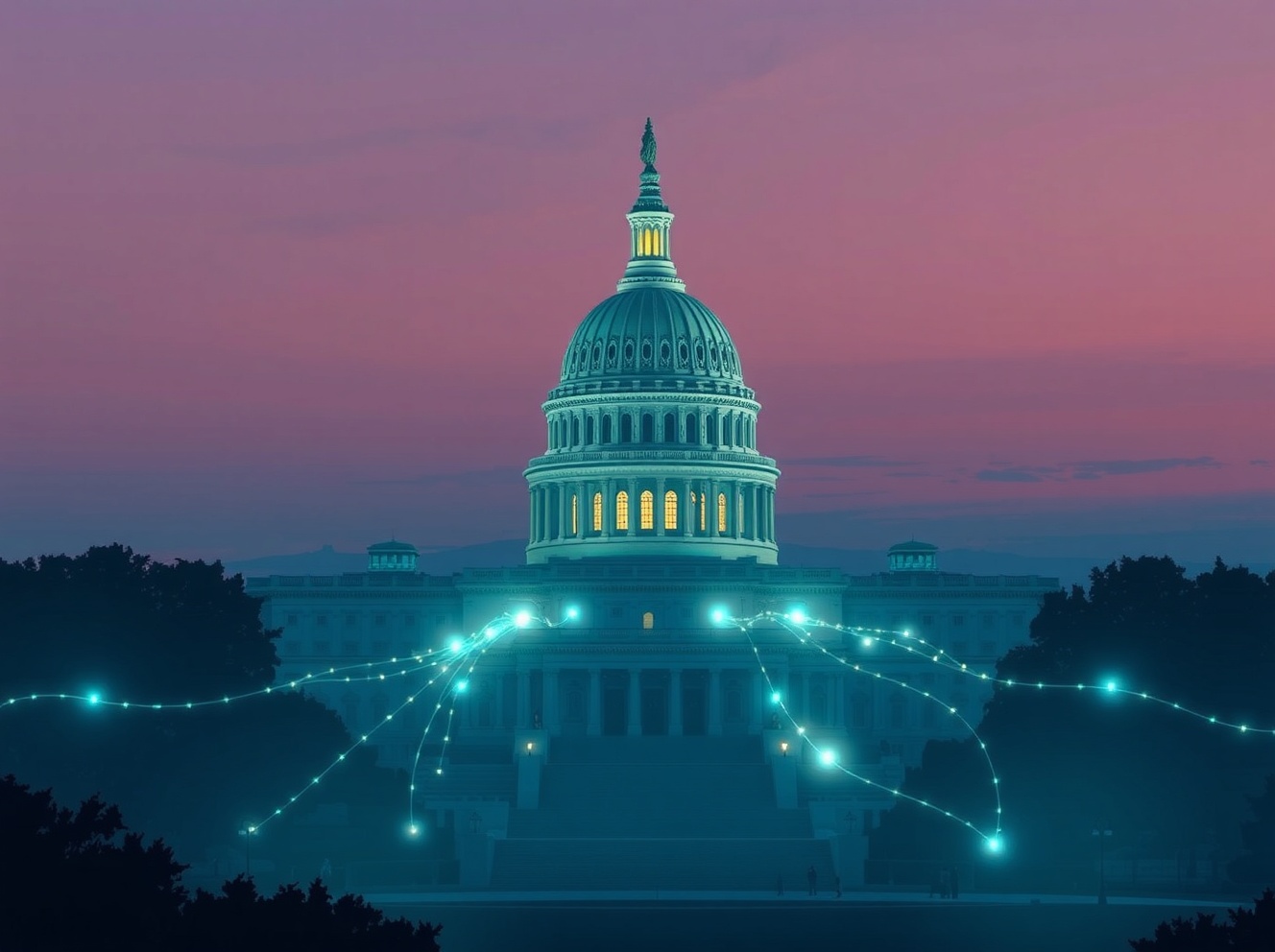
US Senate Democrats discuss the CLARITY Act in a pivotal meeting for cryptocurrency regulation.

BitcoinWorld

CLARITY Act: Senate Democrats’ Crucial Closed-Door Meeting Sparks Hope for US Crypto Regulation

In a significant development for digital asset policy, U.S. Senate Democrats will convene a closed-door meeting on February 4th, 2025, to deliberate the proposed CLARITY Act, a move that could define America’s regulatory approach to cryptocurrency for years to come. This pivotal gathering, first reported by journalist Eleanor Terrett, represents the first Democratic caucus discussion on the subject since a parallel Republican meeting was postponed last month, highlighting the growing urgency and complexity surrounding crypto legislation in Washington D.C.

The CLARITY Act Takes Center Stage

The upcoming meeting focuses squarely on the Crypto-Asset Reporting, Liquidity, and Integrity Transparency (CLARITY) Act. This legislative proposal aims to establish a comprehensive federal framework for digital assets. Consequently, lawmakers seek to address critical issues that have long plagued the industry and regulators alike. The act’s provisions likely cover market integrity, consumer protection, and tax reporting requirements. Furthermore, the closed-door nature of the discussion suggests senators desire candid conversation about technical details and political strategy away from public scrutiny.

This legislative effort follows years of regulatory ambiguity where different federal agencies, including the Securities and Exchange Commission (SEC) and the Commodity Futures Trading Commission (CFTC), have often presented conflicting views. The CLARITY Act represents a congressional attempt to provide definitive guidance. For instance, a clear classification system for digital assets could determine which agency holds primary oversight authority, a fundamental question that has stalled numerous policy initiatives.

Political Context and Legislative Timeline

The Democratic caucus meeting does not occur in a vacuum. It follows a postponed Republican Senate discussion on similar topics, indicating bipartisan, though potentially divergent, interest in crafting crypto law. The 118th Congress has seen several digital asset bills introduced, but none have achieved significant momentum. Analysts note that closed-door caucus meetings often serve as precursors to drafting formal amendments or building consensus before a bill reaches committee markup.

A clear timeline of recent events underscores the meeting’s importance:

  • Late 2024: Multiple draft versions of comprehensive crypto regulation circulate among congressional staff.
  • January 2025: A planned Republican Senate caucus meeting on digital asset policy is unexpectedly postponed.
  • February 4, 2025: Senate Democrats schedule their first dedicated caucus meeting on the CLARITY Act.
  • Q1 2025 (Projected): Potential introduction of a revised CLARITY Act bill for public debate.

This sequence suggests lawmakers are entering a more active phase of negotiation. The outcome of this meeting could signal whether the CLARITY Act moves forward as a bipartisan compromise or becomes a more partisan legislative vehicle.

Expert Analysis on Regulatory Impacts

Financial policy experts emphasize the high stakes of this regulatory push. “The CLARITY Act, or legislation like it, is not merely about rules for crypto exchanges,” explains Dr. Anya Sharma, a Georgetown University law professor specializing in fintech regulation. “It is about determining how the U.S. financial system integrates a fundamentally new technological paradigm. The decisions made now will influence capital formation, innovation, and financial sovereignty for decades.”

Industry stakeholders are watching closely. Clear rules could unlock institutional investment by reducing legal uncertainty. Conversely, overly restrictive measures might push development and talent overseas. The meeting’s agenda likely balances these competing concerns, weighing consumer safety against economic competitiveness. Evidence from other jurisdictions, like the European Union’s Markets in Crypto-Assets (MiCA) framework, provides a real-world case study for senators to consider regarding implementation challenges and market effects.

Key Provisions and Potential Challenges

While the full text of the discussed draft remains confidential, based on prior legislative trends, the CLARITY Act is expected to tackle several core areas. A comparative view of likely provisions versus current state highlights the potential shift:

Regulatory AreaCurrent State (Pre-CLARITY)Potential CLARITY Act Direction
Asset ClassificationDetermined by agency enforcement actions and court cases (e.g., SEC vs. Ripple).Statutory definitions to classify assets as securities, commodities, or a new category.
Exchange OversightFragmented; depends on services offered (SEC, CFTC, state money transmitter laws).Unified federal licensing regime for trading platforms and custodians.
Consumer ProtectionReactive, often after platform failures (e.g., FTX).Proactive rules on disclosures, asset custody, and conflict-of-interest management.
Tax ReportingRelies on existing IRS guidance; compliance is complex for users.Standardized reporting framework for brokers and users to simplify compliance.

Major challenges persist. Reaching consensus on the precise definition of a “decentralized” network is a formidable technical and legal hurdle. Additionally, integrating new rules with existing banking and securities laws without creating contradictions requires meticulous drafting. The closed-door format allows senators to debate these nuanced issues freely before presenting a more polished position to the public.

Conclusion

The February 4th closed-door meeting on the CLARITY Act marks a critical juncture in the long journey toward comprehensive U.S. cryptocurrency regulation. While the meeting itself is private, its consequences will be highly public, potentially shaping market structure, investor confidence, and the nation’s role in the global digital economy. The path forward requires balancing innovation with protection, a task that demands clear legislative vision. As Senate Democrats deliberate, the entire crypto industry and its observers await signals of the regulatory clarity that has been sought for years.

FAQs

Q1: What is the CLARITY Act?
The Crypto-Asset Reporting, Liquidity, and Integrity Transparency (CLARITY) Act is a proposed U.S. federal bill designed to create a clear regulatory framework for digital assets, addressing classification, exchange oversight, and consumer protection.

Q2: Why is the Senate meeting closed-door?
Closed-door caucus meetings allow lawmakers to discuss complex, technical legislation candidly without public posturing, facilitating more frank debate on policy details and political strategy before formal public proceedings.

Q3: How does this meeting relate to the postponed Republican meeting?
It indicates both parties are actively working on crypto policy. The sequential scheduling suggests the issue is a priority, though the approaches and details may differ between the caucuses.

Q4: What are the potential impacts of the CLARITY Act?
If passed, it could provide legal certainty for crypto businesses, enhance consumer and investor protections, establish clear tax reporting rules, and define the roles of federal regulators like the SEC and CFTC.

Q5: When could the CLARITY Act become law?
The legislative process is lengthy. This meeting is an early step. The bill must be introduced, pass through committee hearings and votes in both the House and Senate, and receive the President’s signature, a process that could extend into 2026 or beyond.

This post CLARITY Act: Senate Democrats’ Crucial Closed-Door Meeting Sparks Hope for US Crypto Regulation first appeared on BitcoinWorld.


Disclaimer: The articles reposted on this site are sourced from public platforms and are provided for informational purposes only. They do not necessarily reflect the views of MEXC. All rights remain with the original authors. If you believe any content infringes on third-party rights, please contact service@support.mexc.com for removal. MEXC makes no guarantees regarding the accuracy, completeness, or timeliness of the content and is not responsible for any actions taken based on the information provided. The content does not constitute financial, legal, or other professional advice, nor should it be considered a recommendation or endorsement by MEXC.

You May Also Like

The Role of Blockchain in Building Safer Web3 Gaming Ecosystems

The Role of Blockchain in Building Safer Web3 Gaming Ecosystems

The gaming industry is in the midst of a historic shift, driven by the rise of Web3. Unlike traditional games, where developers and publishers control assets and dictate in-game economies, Web3 gaming empowers players with ownership and influence. Built on blockchain technology, these ecosystems are decentralized by design, enabling true digital asset ownership, transparent economies, and a future where players help shape the games they play. However, as Web3 gaming grows, security becomes a focal point. The range of security concerns, from hacking to asset theft to vulnerabilities in smart contracts, is a significant issue that will undermine or erode trust in this ecosystem, limiting or stopping adoption. Blockchain technology could be used to create security processes around secure, transparent, and fair Web3 gaming ecosystems. We will explore how security is increasing within gaming ecosystems, which challenges are being overcome, and what the future of security looks like. Why is Security Important in Web3 Gaming? Web3 gaming differs from traditional gaming in that players engage with both the game and assets with real value attached. Players own in-game assets that exist as tokens or NFTs (Non-Fungible Tokens), and can trade and sell them. These game assets usually represent significant financial value, meaning security failure could represent real monetary loss. In essence, without security, the promises of owning “something” in Web3, decentralized economies within games, and all that comes with the term “fair” gameplay can easily be eroded by fraud, hacking, and exploitation. This is precisely why the uniqueness of blockchain should be emphasized in securing Web3 gaming. How Blockchain Ensures Security in Web3 Gaming?
  1. Immutable Ownership of Assets Blockchain records can be manipulated by anyone. If a player owns a sword, skin, or plot of land as an NFT, it is verifiably in their ownership, and it cannot be altered or deleted by the developer or even hacked. This has created a proven track record of ownership, providing control back to the players, unlike any centralised gaming platform where assets can be revoked.
  2. Decentralized Infrastructure Blockchain networks also have a distributed architecture where game data is stored in a worldwide network of nodes, making them much less susceptible to centralised points of failure and attacks. This decentralised approach makes it exponentially more difficult to hijack systems or even shut off the game’s economy.
  3. Secure Transactions with Cryptography Whether a player buys an NFT or trades their in-game tokens for other items or tokens, the transactions are enforced by cryptographic algorithms, ensuring secure, verifiable, and irreversible transactions and eliminating the risks of double-spending or fraudulent trades.
  4. Smart Contract Automation Smart contracts automate the enforcement of game rules and players’ economic exchanges for the developer, eliminating the need for intermediaries or middlemen, and trust for the developer. For example, if a player completes a quest that promises a reward, the smart contract will execute and distribute what was promised.
  5. Anti-Cheating and Fair Gameplay The naturally transparent nature of blockchain makes it extremely simple for anyone to examine a specific instance of gameplay and verify the economic outcomes from that play. Furthermore, multi-player games that enforce smart contracts on things like loot sharing or win sharing can automate and measure trustlessness and avoid cheating, manipulations, and fraud by developers.
  6. Cross-Platform Security Many Web3 games feature asset interoperability across platforms. This interoperability is made viable by blockchain, which guarantees ownership is maintained whenever assets transition from one game or marketplace to another, thereby offering protection to players who rely on transfers for security against fraud. Key Security Dangers in Web3 Gaming Although blockchain provides sound first principles of security, the Web3 gaming ecosystem is susceptible to threats. Some of the most serious threats include:
Smart Contract Vulnerabilities: Smart contracts that are poorly written or lack auditing will leave openings for exploitation and thereby result in asset loss. Phishing Attacks: Unintentionally exposing or revealing private keys or signing transactions that are not possible to reverse, under the assumption they were genuine transaction requests. Bridge Hacks: Cross-chain bridges, which allow players to move their assets between their respective blockchains, continually face hacks, requiring vigilance from players and developers. Scams and Rug Pulls: Rug pulls occur when a game project raises money and leaves, leaving player assets worthless. Regulatory Ambiguity: Global regulations remain unclear; risks exist for players and developers alike. While blockchain alone won’t resolve every issue, it remediates the responsibility of the first principles, more so when joined by processes such as auditing, education, and the right governance, which can improve their contribution to the security landscapes in game ecosystems. Real Life Examples of Blockchain Security in Web3 Gaming Axie Infinity (Ronin Hack): The Axie Infinity game and several projects suffered one of the biggest hacks thus far on its Ronin bridge; however, it demonstrated the effectiveness of multi-sig security and the effective utilization of decentralization. The industry benefited through learning and reflection, thus, as projects have implemented changes to reduce the risks of future hacks or misappropriation. Immutable X: This Ethereum scaling solution aims to ensure secure NFT transactions for gaming, allowing players to trade an asset without the burden of exorbitant fees and fears of being a victim of fraud. Enjin: Enjin is providing a trusted infrastructure for Web3 games, offering secure NFT creation and transfer while reiterating that ownership and an asset securely belong to the player. These examples indubitably illustrate that despite challenges to overcome, blockchain remains the foundational layer on which to build more secure Web3 gaming environments. Benefits of Blockchain Security for Players and Developers For Players: Confidence in true ownership of assets Transparency in in-game economies Protection against nefarious trades/scams For Developers: More trust between players and the platform Less reliance on centralized infrastructure Ability to attract wealth and players based on provable fairness By incorporating blockchain security within the mechanics of game design, developers can create and enforce resilient ecosystems where players feel reassured in investing time, money, and ownership within virtual worlds. The Future of Secure Web3 Gaming Ecosystems As the wisdom of blockchain technology and industry knowledge improves, the future for secure Web3 gaming looks bright. New growing trends include: Zero-Knowledge Proofs (ZKPs): A new wave of protocols that enable private transactions and secure smart contracts while managing user privacy with an element of transparency. Decentralized Identity Solutions (DID): Helping players control their identities and decrease account theft risks. AI-Enhanced Security: Identifying irregularities in user interactions by sampling pattern anomalies to avert hacks and fraud by time-stamping critical events. Interoperable Security Standards: Allowing secured and seamless asset transfers across blockchains and games. With these innovations, blockchain will not only secure gaming assets but also enhance the overall trust and longevity of Web3 gaming ecosystems. Conclusion Blockchain is more than a buzzword in Web3; it is the only way to host security, fairness, and transparency. With blockchain, players confirm immutable ownership of digital assets, there is a decentralized infrastructure, and finally, it supports smart contracts to automate code that protects players and developers from the challenges of digital economies. The threats, vulnerabilities, and scams that come from smart contracts still persist, but the industry is maturing with better security practices, cross-chain solutions, and increased formal cryptographic tools. In the coming years, blockchain will remain the base to digital economies and drive Web3 gaming environments that allow players to safely own, trade, and enjoy their digital experiences free from fraud and exploitation. While blockchain and gaming alone entertain, we will usher in an era of secure digital worlds where trust complements innovation. The Role of Blockchain in Building Safer Web3 Gaming Ecosystems was originally published in Coinmonks on Medium, where people are continuing the conversation by highlighting and responding to this story
Share
Medium2025/09/18 14:40
Vitalik Buterin Challenges Ethereum’s Layer 2 Paradigm

Vitalik Buterin Challenges Ethereum’s Layer 2 Paradigm

Vitalik Buterin challenges the role of layer 2 solutions in Ethereum's ecosystem. Layer 2's slow progress and Ethereum’s L1 scaling impact future strategies.
Share
Coinstats2026/02/04 04:08
USAA Names Dan Griffiths Chief Information Officer to Drive Secure, Simplified Digital Member Experiences

USAA Names Dan Griffiths Chief Information Officer to Drive Secure, Simplified Digital Member Experiences

SAN ANTONIO–(BUSINESS WIRE)–USAA today announced the appointment of Dan Griffiths as Chief Information Officer, effective February 5, 2026. A proven financial‑services
Share
AI Journal2026/02/04 04:15