

Spain Bans Social Media for Under-16s, Following UK’s Lead
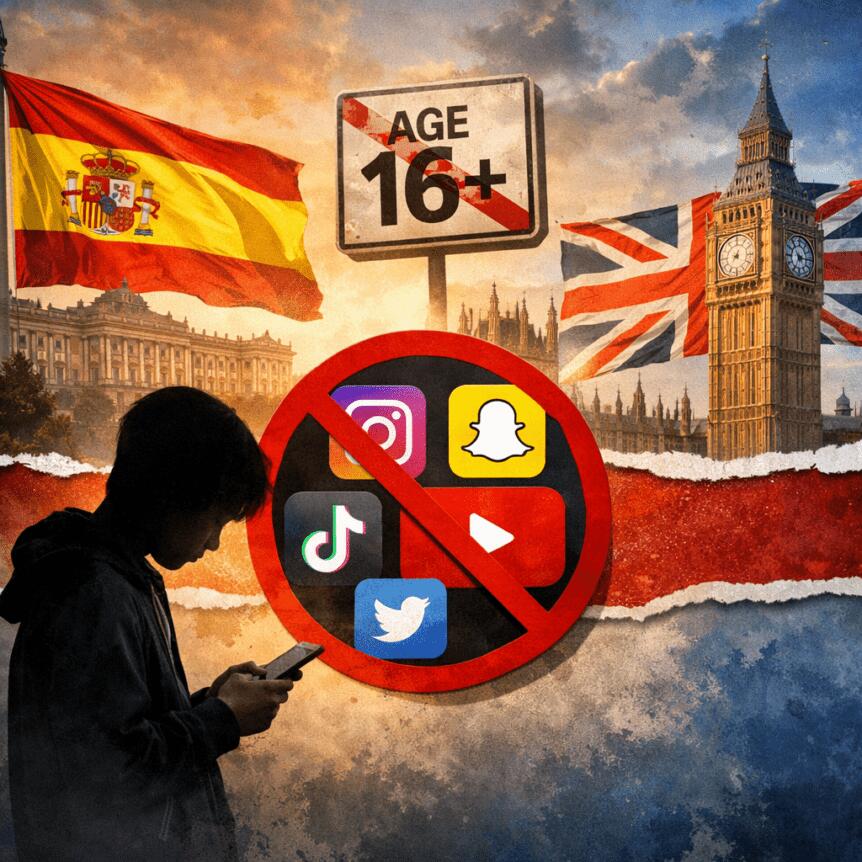
Spain is moving to tighten online safety rules with a multi-pronged approach that could redefine platform liability and user access. In a high-profile address at the World Governments Summit in Dubai, Prime Minister Pedro Sánchez outlined plans to bar minors under 16 from accessing social media and to require platforms to deploy “real barriers that work” to enforce age limitations. The initiative also signals a broader crackdown on what authorities describe as disinformation, algorithmic manipulation, and harmful content, with potential criminal liability for executives who fail to comply with content-removal obligations. The statements align with a growing global conversation about safeguarding children online while balancing innovation and free expression. The rollout is slated to begin next week, according to Sánchez, as Spain embarks on a wave of regulatory actions that connect social media safety to Europe’s broader crypto and tech oversight framework.
Key takeaways
- Spain aims to ban under-16s from mainstream social networks and requires platforms to implement verifiable age checks that authorities deem effective.
- Executives could face criminal liability if platforms fail to remove illegal or hateful content, underscoring a shift from civil to potential criminal enforcement.
- The announcements followed investigations into Grok, Instagram, and TikTok as part of a broader effort to curb disinformation and manipulation online.
- Spain’s plan sits within the EU’s MiCA regulatory context, which requires crypto platforms to comply with a unified set of rules by mid-year to avoid disruption.
- Regulators in other major economies have signaled similar concerns, reflecting a global trend toward stronger online-safety and platform accountability measures.
Tickers mentioned:
Market context: Spain’s move is being framed against a backdrop of EU-wide regulation and a tightening global stance on digital platforms. As a member state, Spain participates in the Markets in Crypto Assets (MiCA) framework that was codified in 2023 to standardize oversight of crypto firms across the European Union. The rulebook requires operators that had been active before December 2024 to align with MiCA by June 30 to continue offering services, or else wind down. Spain’s regulator released detailed expectations for crypto companies in December, outlining the necessary authorizations, notifications, and ongoing compliance measures. This regulatory cadence complements the social-media safety push, signaling that tech policy is increasingly interwoven with financial-market oversight and consumer protection goals.
The United Kingdom has also been weighing under-16 social-media restrictions, and observers note a pattern in which policymakers across regions seek to curb youth access while intensifying scrutiny of platform governance. Australia has already moved to bar minors under 16 from opening social-media accounts, illustrating that multiple jurisdictions are converging on similar safety objectives, even as tech firms advocate for clearer rules and more predictable enforcement.
In parallel, Spain’s MiCA alignment underscores the broader regulatory convergence taking shape in Europe. The MiCA framework, created to harmonize crypto-asset regulation across the bloc, has become a touchstone for how national authorities calibrate their approach to online platforms, content moderation, and digital-financial services. The interplay between online safety measures and crypto-asset rules highlights the multidimensional risk landscape facing global tech firms that operate cross-border platforms, with authorities seeking to hold executives and boards more directly accountable for compliance failures.
Amid these developments, observers continue to monitor how regulators will balance protection with innovation. The Wednesday/Tuesday remarks at the Dubai summit underscored a proportionality between protective safeguards and the practical realities of enforcing age checks at scale, particularly given the global reach of platforms that host content and user data with minimal friction. The emergence of criminal-liability provisions for executives signals a potential shift in risk calculus for platform leadership, potentially affecting how firms structure compliance functions, governance, and incident-response playbooks. In this evolving environment, the line between responsibility for user safety and corporate liability becomes a defining feature of the regulatory landscape for digital platforms.
As Sánchez framed it, “Today, our children are exposed to a space they were never meant to navigate alone,” a sentiment he tied to protecting youth from what he described as an addictive, exploitative, and sometimes violent digital environment. The plan envisions a combination of real barriers and robust verification, designed to prevent a scenario in which minors could readily access platforms that, in his view, require heightened safeguards. While the specifics of enforcement mechanisms and penalties remain to be fully fleshed out, the public posture emphasizes a zero-tolerance stance toward content that authorities deem illegal or hateful and a willingness to pursue criminal accountability for platform executives who shirk their responsibilities.
Why it matters
The proposed changes in Spain illustrate a broader trend in which digital safety, platform governance, and financial regulation increasingly intersect. For users, the measures promise greater protection from harmful online content, but they also raise questions about the practicality of age verification at scale and the potential for overreach in content moderation. For investors and builders, the policy mix signals heightened regulatory risk, especially for social-media companies and other online services that monetize data or depend on global user bases. Compliance costs could rise, and firms may reassess product design, age-verification technology, and data-handling practices to ensure alignment with evolving standards across multiple jurisdictions.
From a market perspective, the emphasis on platform accountability dovetails with growing scrutiny of the digital ecosystem’s resilience and governance. While MiCA primarily targets crypto-asset markets, the same regulatory guardrails—transparency, reporting, and license-to-operate criteria—are being extended to other digital services. The global context includes ongoing debates about data sovereignty, content moderation standards, and child-protection measures that could influence investor and consumer confidence in digital platforms and related services. In short, Spain’s actions are not isolated policy moves; they reflect a wider shift toward stronger governance frameworks for the digital economy, with potential ripple effects across tech-enabled markets and crypto-related startups focused on compliance tech, identity verification, and risk analytics.
What to watch next
- Details on the rollout schedule and practical implementation timelines for age verification and access-restriction measures, including any pilot programs and testing phases next week.
- Setting out the penalties and criminal-liability thresholds for executives, including court processes and appeal mechanisms that could shape enforcement over the coming months.
- Results of the investigations into Grok, Instagram, and TikTok, including any policy changes or remedial actions announced by the platforms themselves.
- MiCA compliance milestones for Spanish crypto operators and any cross-border coordination with EU regulators as the June 30 deadline approaches.
- Regulatory responses from other major markets, including the UK and Australia, and how these developments might influence Europe’s enforcement posture and innovation climate.
Sources & verification
- Sánchez’s remarks at the World Governments Summit in Dubai, as reflected in his X post: https://x.com/sanchezcastejon/status/2018649760580718738
- Spain sets out MiCA expectations and regulatory guidance for crypto firms: https://cointelegraph.com/news/spain-sets-out-mica-expectations
- UK prime minister on minors’ social-media access policy: https://cointelegraph.com/news/uk-mulls-under-16-social-media-ban-amid-rising-online-id-push
- EU MiCA framework and compliance timelines for crypto platforms: official EU and regulatory communications referenced in coverage
- Australia’s move to bar minors from social-media accounts as part of online-safety measures (policy references noted in coverage)
Spain’s online-safety push and MiCA alignment: what it signals for the digital economy
The convergence of online-safety initiatives with crypto-asset regulation marks a notable inflection point for Europe’s digital policy. By tying age-restriction enforcement to broader accountability standards for platform leadership, Spain positions itself at the intersection of consumer protection and corporate governance. The MiCA context underlines that the European Union is pursuing a holistic approach to the digital landscape—one that treats platform behavior, content moderation, and financial-technology activities as parts of a single regulatory ecosystem. As the next phase of this policy evolution unfolds, observers will watch not only how Spain implements these measures but also how other jurisdictions adapt their enforcement models, balancing the imperative to shield young users with the need to preserve innovation and open markets for crypto and digital services.
This article was originally published as Spain Bans Social Media for Under-16s, Following UK’s Lead on Crypto Breaking News – your trusted source for crypto news, Bitcoin news, and blockchain updates.


You May Also Like
Rubio presidency would be an 'unmitigated disaster': conservative insider

DBP Q1 income up 26%

Analyst: XRP Will Rise to $7.49 By June 22 and Down to $5.60 July 20. Here’s how and why



