

Fidelity Launches Digital Dollar Stablecoin FIDD
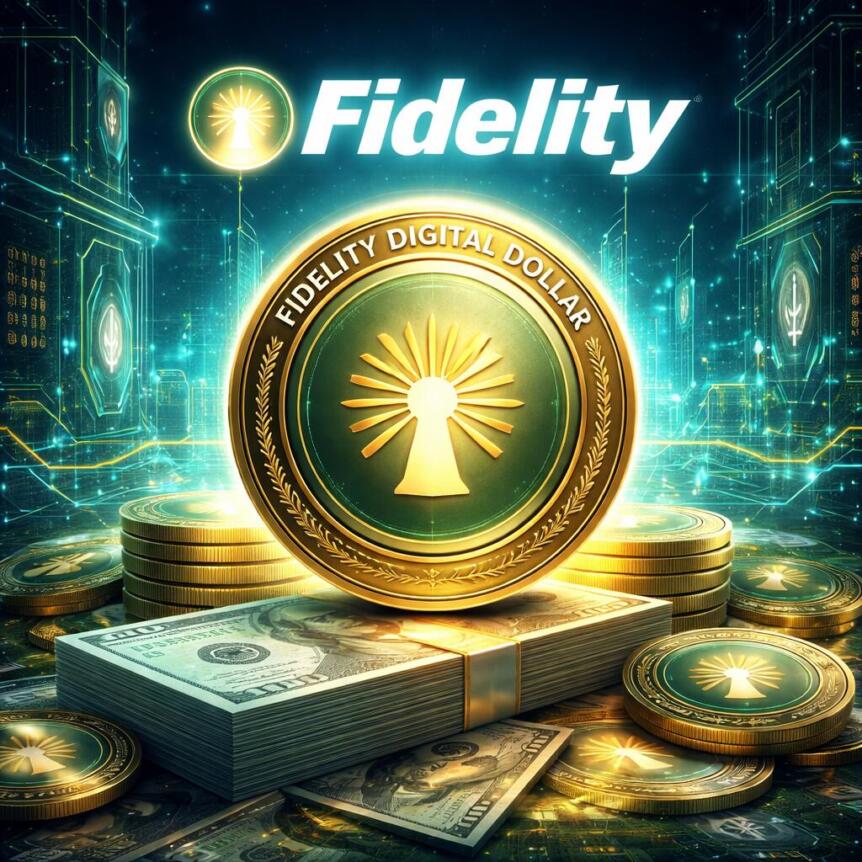
Fidelity Investments has entered the stablecoin market with the launch of Fidelity Digital Dollar (FIDD), marking a significant step by one of the world’s largest asset managers into on-chain dollar instruments. Announced on February 4, 2026, the new stablecoin is issued by Fidelity Digital Assets, National Association, and is available to both retail and institutional clients. Each token is redeemable at a 1:1 ratio with the U.S. dollar, positioning FIDD as a regulated, institutionally managed alternative in a stablecoin market that now exceeds $316 billion in total capitalization.
Key takeaways
- Fidelity has launched its first U.S. dollar-backed stablecoin, Fidelity Digital Dollar (FIDD), available to retail and institutional clients.
- FIDD can be purchased or redeemed directly through Fidelity platforms at a fixed rate of $1 per token.
- Reserve assets are managed internally, leveraging Fidelity’s long-standing asset management infrastructure.
- The stablecoin operates on the Ethereum mainnet and can be transferred to any compatible address.
- Daily disclosures provide transparency on circulating supply and reserve net asset value.
- The launch follows new U.S. regulatory clarity for payment stablecoins.
Sentiment: Neutral
Market context: The launch comes as regulatory clarity in the United States improves and traditional financial institutions increase their participation in tokenized cash, custody, and blockchain-based settlement infrastructure.
Why it matters
Fidelity’s move into stablecoin issuance signals a broader shift in how traditional asset managers approach blockchain-based financial infrastructure. Rather than relying solely on third-party stablecoins, Fidelity is now offering a proprietary digital dollar backed by its own balance sheet processes and operational standards.
For institutional investors, the availability of a stablecoin issued and managed by a globally recognized financial institution may reduce counterparty concerns that have historically limited stablecoin adoption in regulated environments. Retail users, meanwhile, gain access to an on-chain dollar that integrates directly with existing Fidelity platforms.
More broadly, the launch highlights how stablecoins are increasingly viewed as foundational financial plumbing rather than speculative crypto assets. As asset managers, banks, and payment firms adopt similar models, competition may shift toward transparency, reserve management, and regulatory alignment.
What to watch next
- Whether FIDD expands beyond Ethereum to additional blockchain networks.
- Potential exchange listings and liquidity growth outside Fidelity platforms.
- Regulatory reporting standards applied to Fidelity-issued stablecoins.
- Adoption by wealth managers and institutional treasury operations.
Sources & verification
- Fidelity’s official announcement dated February 4, 2026.
- Daily reserve and supply disclosures published on Fidelity’s website.
- Statements from Fidelity Digital Assets leadership regarding regulatory alignment.
Fidelity Digital Dollar enters the regulated stablecoin landscape
Fidelity Investments’ decision to issue a proprietary stablecoin represents a notable evolution in the firm’s digital asset strategy. The new token, Fidelity Digital Dollar (FIDD), is designed to function as a blockchain-based representation of the U.S. dollar while remaining closely integrated with Fidelity’s existing financial infrastructure.
Issued by Fidelity Digital Assets, National Association, FIDD is available to eligible retail and institutional investors through Fidelity Digital Assets, Fidelity Crypto, and Fidelity Crypto for Wealth Managers. Clients can purchase or redeem the stablecoin directly with Fidelity at a fixed price of one U.S. dollar per token, a structure intended to mirror the operational simplicity of traditional cash balances.
Unlike many stablecoins that rely on external reserve managers or opaque custodial arrangements, FIDD’s reserve assets are managed by Fidelity Management & Research Company LLC. This internal structure allows Fidelity to apply the same portfolio oversight, risk controls, and compliance standards used across its traditional asset management business.
Transparency is a central component of the product’s design. Fidelity publishes daily disclosures detailing FIDD’s circulating supply and the net asset value of its reserves as of each business day’s close. This approach aligns with growing regulatory expectations for stablecoin issuers and aims to address long-standing concerns around reserve sufficiency and disclosure practices in the sector.
From a technical perspective, FIDD is issued on the Ethereum mainnet, enabling holders to transfer tokens to any compatible Ethereum address. This design choice allows the stablecoin to integrate with existing decentralized finance infrastructure while remaining accessible through centralized platforms.
Fidelity Digital Assets President Mike O’Reilly described the launch as the result of years of internal research into stablecoins and blockchain-based financial systems. According to the firm, the goal is to provide investors with on-chain utility without sacrificing the stability and operational rigor associated with traditional financial products.
The timing of the launch is closely tied to regulatory developments in the United States. Recent legislation establishing clearer rules for payment stablecoins has reduced legal uncertainty for large financial institutions considering issuance. Fidelity has positioned FIDD as a response to this evolving framework, emphasizing compliance and investor protection alongside technological innovation.
Stablecoins have become a critical component of digital asset markets, facilitating trading, settlement, and cross-border transfers. With total market capitalization now exceeding $316 billion, the sector has attracted increasing scrutiny from regulators and policymakers. Fidelity’s entry reflects a broader trend of established financial firms seeking to bring stablecoin activity within regulated, institutionally managed environments.
Fidelity’s broader digital asset strategy provides important context for the move. The firm has been building blockchain-related infrastructure since 2014, long before digital assets became mainstream. Its offerings now include custody, trading, research, and investment products tailored to institutional clients, intermediaries, and retail investors.
By adding a proprietary stablecoin to this lineup, Fidelity is effectively extending its ecosystem into on-chain cash management. For wealth managers and institutional clients already using Fidelity’s digital asset services, FIDD may serve as a settlement layer that reduces reliance on external stablecoin issuers.
The launch also raises questions about how competition in the stablecoin market may evolve. As more traditional financial institutions issue their own tokens, differentiation may increasingly depend on regulatory status, transparency, and integration with existing financial services rather than yield incentives or aggressive growth strategies.
While Fidelity has not disclosed immediate plans for expanding FIDD beyond Ethereum or adding advanced programmable features, the infrastructure chosen leaves room for future development. Potential use cases could include on-chain settlement for tokenized securities, collateral management, or integration with institutional payment systems.
For now, Fidelity Digital Dollar stands as a signal that stablecoins are moving deeper into the core of traditional finance. Rather than operating at the margins of the financial system, regulated digital dollars issued by major asset managers may become standard tools for both crypto-native and traditional investors navigating an increasingly hybrid financial landscape.
This article was originally published as Fidelity Launches Digital Dollar Stablecoin FIDD on Crypto Breaking News – your trusted source for crypto news, Bitcoin news, and blockchain updates.


You May Also Like

BNB slips below $590 as Trump threatens to strike Iranian power plants
RWA Marketplace SurgeXRP Announces SGP Presale Before Q3 2026 XRPL Launch




