South Korea’s government is set to fast-track pro-business crypto reforms, including stablecoin regulations. The South Korean newspaper Metro Seoul reported that the Presidential Committee on State Affairs announced its plans at a public briefing on August 13. South Korea Crypto Reform Taking Shape The committee spoke of a five-year plan for state administration, naming 123 state affairs-related tasks. Among these tasks named were “the construction of a digital asset ecosystem” and “developing the domestic cryptoasset market.” Both were identified as “key national tasks” for the administration, which took office in early June this year following the election of President Lee Jae-myung. President Lee Jae Myung on Wednesday laid out a sweeping five-year policy agenda, detailing 123 national tasks ranging from constitutional reform to industrial growth and market fairness. https://t.co/52cb7gzOvi — The Korea JoongAng Daily (@JoongAngDaily) August 13, 2025 Lee has spoken repeatedly about his intention to build up the domestic crypto sector, with deregulation and stablecoin regulation high on his agenda. The President appears keen to let domestic firms issue won-pegged stablecoins . Leading banks and IT companies have reacted by registering scores of stablecoin-related trademarks . Others are hurriedly rolling out crypto-related business plans, aware that this may allow non-financial firms to develop advanced payment platforms. However, one of President Lee’s key campaign pledges was left off the five-year plan, namely the dissolution of the Financial Services Commission (FSC). The FSC is the nation’s top financial regulator. Its Financial Intelligence Unit (FIU) polices the country’s crypto exchanges , issuing operating permits and conducting periodic on-site inspections. It also enforces anti-money laundering and terrorist financing protocols at the trading platforms. The Government Complex Building in Seoul, South Korea. (Source: Seoul Institute [CC BY 4.0]) FSC: Vociferous Critic No More? In previous years, the FSC has been a vociferous critic of the crypto sector. But in recent years, as governments have relaxed their hardline stance to the industry, it has spoken in favor of reform. Under the proposal, FSC’s supervisory duties were to transfer to the Financial Supervisory Service. The FSC’s policy-related tasks were due to transfer to the Ministry of Strategy and Finance. But Lee’s plan to scrap the FSC proved controversial, even among senior ministers. While his offices have yet to confirm that the President has shelved the policy, the five-year plan appeared to suggest the proposal may have moved to the back burner. There was no mention of the regulatory reorganization move on the plan. And seven of the 123 tasks were assigned to the FSC. The newspaper added that crypto reforms are a “key focus” for both the government and the National Assembly this year. As such, reforms are “expected to gain momentum” in the weeks ahead, Metro Seoul wrote. ‘Time to Play Catch-up’ Political leaders are concerned that South Korea is being left behind. They note that over the past two years, the global crypto market has expanded by about 262%. While crypto investment has spiked in the US, the European Union, and Japan, driven by institutionalization drives, the same cannot be said for Seoul. The outlet wrote: “Delayed institutional reforms and a lack of legislation in South Korea have left the domestic cryptoasset market significantly lagging in terms of competitiveness.” South Korea says President Lee Jae Myung to visit Japan this month https://t.co/PmtmRcPibF — Nikkei Asia (@NikkeiAsia) August 13, 2025 The FSC has prioritized its plan to allow corporations to buy and sell crypto. It also wants to tak a “more relaxed approach” to regulations. The regulator has previously spoken of its intention to roll out crypto-related regulations before the end of this year. However, skeptics say that a final decision on the fate of the FSC is yet to be taken. Talks to abolish the regulator “may resume in the future,” the newspaper explained. Unnamed financial sector officials opined that the debate over the reorganization of the financial regulators would “continue until the end of the year.” Earlier this month, the Seoul district of Gangnam announced it had recouped $144,057 in unpaid taxes in the first half of this year by seizing coins from tax evaders .South Korea’s government is set to fast-track pro-business crypto reforms, including stablecoin regulations. The South Korean newspaper Metro Seoul reported that the Presidential Committee on State Affairs announced its plans at a public briefing on August 13. South Korea Crypto Reform Taking Shape The committee spoke of a five-year plan for state administration, naming 123 state affairs-related tasks. Among these tasks named were “the construction of a digital asset ecosystem” and “developing the domestic cryptoasset market.” Both were identified as “key national tasks” for the administration, which took office in early June this year following the election of President Lee Jae-myung. President Lee Jae Myung on Wednesday laid out a sweeping five-year policy agenda, detailing 123 national tasks ranging from constitutional reform to industrial growth and market fairness. https://t.co/52cb7gzOvi — The Korea JoongAng Daily (@JoongAngDaily) August 13, 2025 Lee has spoken repeatedly about his intention to build up the domestic crypto sector, with deregulation and stablecoin regulation high on his agenda. The President appears keen to let domestic firms issue won-pegged stablecoins . Leading banks and IT companies have reacted by registering scores of stablecoin-related trademarks . Others are hurriedly rolling out crypto-related business plans, aware that this may allow non-financial firms to develop advanced payment platforms. However, one of President Lee’s key campaign pledges was left off the five-year plan, namely the dissolution of the Financial Services Commission (FSC). The FSC is the nation’s top financial regulator. Its Financial Intelligence Unit (FIU) polices the country’s crypto exchanges , issuing operating permits and conducting periodic on-site inspections. It also enforces anti-money laundering and terrorist financing protocols at the trading platforms. The Government Complex Building in Seoul, South Korea. (Source: Seoul Institute [CC BY 4.0]) FSC: Vociferous Critic No More? In previous years, the FSC has been a vociferous critic of the crypto sector. But in recent years, as governments have relaxed their hardline stance to the industry, it has spoken in favor of reform. Under the proposal, FSC’s supervisory duties were to transfer to the Financial Supervisory Service. The FSC’s policy-related tasks were due to transfer to the Ministry of Strategy and Finance. But Lee’s plan to scrap the FSC proved controversial, even among senior ministers. While his offices have yet to confirm that the President has shelved the policy, the five-year plan appeared to suggest the proposal may have moved to the back burner. There was no mention of the regulatory reorganization move on the plan. And seven of the 123 tasks were assigned to the FSC. The newspaper added that crypto reforms are a “key focus” for both the government and the National Assembly this year. As such, reforms are “expected to gain momentum” in the weeks ahead, Metro Seoul wrote. ‘Time to Play Catch-up’ Political leaders are concerned that South Korea is being left behind. They note that over the past two years, the global crypto market has expanded by about 262%. While crypto investment has spiked in the US, the European Union, and Japan, driven by institutionalization drives, the same cannot be said for Seoul. The outlet wrote: “Delayed institutional reforms and a lack of legislation in South Korea have left the domestic cryptoasset market significantly lagging in terms of competitiveness.” South Korea says President Lee Jae Myung to visit Japan this month https://t.co/PmtmRcPibF — Nikkei Asia (@NikkeiAsia) August 13, 2025 The FSC has prioritized its plan to allow corporations to buy and sell crypto. It also wants to tak a “more relaxed approach” to regulations. The regulator has previously spoken of its intention to roll out crypto-related regulations before the end of this year. However, skeptics say that a final decision on the fate of the FSC is yet to be taken. Talks to abolish the regulator “may resume in the future,” the newspaper explained. Unnamed financial sector officials opined that the debate over the reorganization of the financial regulators would “continue until the end of the year.” Earlier this month, the Seoul district of Gangnam announced it had recouped $144,057 in unpaid taxes in the first half of this year by seizing coins from tax evaders .

South Korea Takes Another Step Toward Crypto Reform Amid Talk of Regulatory Shake-up

South Korea’s government is set to fast-track pro-business crypto reforms, including stablecoin regulations.

The South Korean newspaper Metro Seoul reported that the Presidential Committee on State Affairs announced its plans at a public briefing on August 13.

South Korea Crypto Reform Taking Shape

The committee spoke of a five-year plan for state administration, naming 123 state affairs-related tasks.

Among these tasks named were “the construction of a digital asset ecosystem” and “developing the domestic cryptoasset market.”

Both were identified as “key national tasks” for the administration, which took office in early June this year following the election of President Lee Jae-myung.

Lee has spoken repeatedly about his intention to build up the domestic crypto sector, with deregulation and stablecoin regulation high on his agenda.

The President appears keen to let domestic firms issue won-pegged stablecoins. Leading banks and IT companies have reacted by registering scores of stablecoin-related trademarks.

Others are hurriedly rolling out crypto-related business plans, aware that this may allow non-financial firms to develop advanced payment platforms.

However, one of President Lee’s key campaign pledges was left off the five-year plan, namely the dissolution of the Financial Services Commission (FSC).

The FSC is the nation’s top financial regulator. Its Financial Intelligence Unit (FIU) polices the country’s crypto exchanges, issuing operating permits and conducting periodic on-site inspections.

It also enforces anti-money laundering and terrorist financing protocols at the trading platforms.
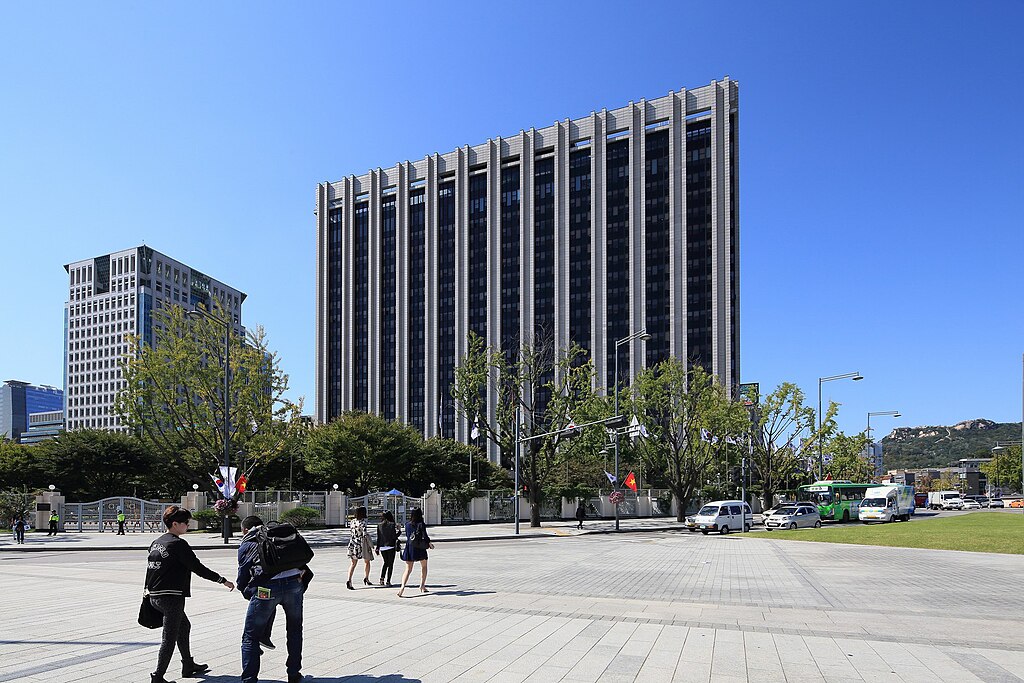
The Government Complex Building in Seoul, South Korea, where South Korea crypto reform is taking a step forward.The Government Complex Building in Seoul, South Korea. (Source: Seoul Institute [CC BY 4.0])

FSC: Vociferous Critic No More?

In previous years, the FSC has been a vociferous critic of the crypto sector. But in recent years, as governments have relaxed their hardline stance to the industry, it has spoken in favor of reform.

Under the proposal, FSC’s supervisory duties were to transfer to the Financial Supervisory Service.

The FSC’s policy-related tasks were due to transfer to the Ministry of Strategy and Finance.

But Lee’s plan to scrap the FSC proved controversial, even among senior ministers. While his offices have yet to confirm that the President has shelved the policy, the five-year plan appeared to suggest the proposal may have moved to the back burner.

There was no mention of the regulatory reorganization move on the plan. And seven of the 123 tasks were assigned to the FSC.

The newspaper added that crypto reforms are a “key focus” for both the government and the National Assembly this year.

As such, reforms are “expected to gain momentum” in the weeks ahead, Metro Seoul wrote.

‘Time to Play Catch-up’

Political leaders are concerned that South Korea is being left behind. They note that over the past two years, the global crypto market has expanded by about 262%.

While crypto investment has spiked in the US, the European Union, and Japan, driven by institutionalization drives, the same cannot be said for Seoul. The outlet wrote:

The FSC has prioritized its plan to allow corporations to buy and sell crypto. It also wants to tak a “more relaxed approach” to regulations.

The regulator has previously spoken of its intention to roll out crypto-related regulations before the end of this year.

However, skeptics say that a final decision on the fate of the FSC is yet to be taken. Talks to abolish the regulator “may resume in the future,” the newspaper explained.

Unnamed financial sector officials opined that the debate over the reorganization of the financial regulators would “continue until the end of the year.”

Earlier this month, the Seoul district of Gangnam announced it had recouped $144,057 in unpaid taxes in the first half of this year by seizing coins from tax evaders.


Disclaimer: The articles reposted on this site are sourced from public platforms and are provided for informational purposes only. They do not necessarily reflect the views of MEXC. All rights remain with the original authors. If you believe any content infringes on third-party rights, please contact service@support.mexc.com for removal. MEXC makes no guarantees regarding the accuracy, completeness, or timeliness of the content and is not responsible for any actions taken based on the information provided. The content does not constitute financial, legal, or other professional advice, nor should it be considered a recommendation or endorsement by MEXC.

You May Also Like

How to earn from cloud mining: IeByte’s upgraded auto-cloud mining platform unlocks genuine passive earnings

How to earn from cloud mining: IeByte’s upgraded auto-cloud mining platform unlocks genuine passive earnings

The post How to earn from cloud mining: IeByte’s upgraded auto-cloud mining platform unlocks genuine passive earnings appeared on BitcoinEthereumNews.com. contributor Posted: September 17, 2025 As digital assets continue to reshape global finance, cloud mining has become one of the most effective ways for investors to generate stable passive income. Addressing the growing demand for simplicity, security, and profitability, IeByte has officially upgraded its fully automated cloud mining platform, empowering both beginners and experienced investors to earn Bitcoin, Dogecoin, and other mainstream cryptocurrencies without the need for hardware or technical expertise. Why cloud mining in 2025? Traditional crypto mining requires expensive hardware, high electricity costs, and constant maintenance. In 2025, with blockchain networks becoming more competitive, these barriers have grown even higher. Cloud mining solves this by allowing users to lease professional mining power remotely, eliminating the upfront costs and complexity. IeByte stands at the forefront of this transformation, offering investors a transparent and seamless path to daily earnings. IeByte’s upgraded auto-cloud mining platform With its latest upgrade, IeByte introduces: Full Automation: Mining contracts can be activated in just one click, with all processes handled by IeByte’s servers. Enhanced Security: Bank-grade encryption, cold wallets, and real-time monitoring protect every transaction. Scalable Options: From starter packages to high-level investment contracts, investors can choose the plan that matches their goals. Global Reach: Already trusted by users in over 100 countries. Mining contracts for 2025 IeByte offers a wide range of contracts tailored for every investor level. From entry-level plans with daily returns to premium high-yield packages, the platform ensures maximum accessibility. Contract Type Duration Price Daily Reward Total Earnings (Principal + Profit) Starter Contract 1 Day $200 $6 $200 + $6 + $10 bonus Bronze Basic Contract 2 Days $500 $13.5 $500 + $27 Bronze Basic Contract 3 Days $1,200 $36 $1,200 + $108 Silver Advanced Contract 1 Day $5,000 $175 $5,000 + $175 Silver Advanced Contract 2 Days $8,000 $320 $8,000 + $640 Silver…
Share
BitcoinEthereumNews2025/09/17 23:48
China Blocks Nvidia’s RTX Pro 6000D as Local Chips Rise

China Blocks Nvidia’s RTX Pro 6000D as Local Chips Rise

The post China Blocks Nvidia’s RTX Pro 6000D as Local Chips Rise appeared on BitcoinEthereumNews.com. China Blocks Nvidia’s RTX Pro 6000D as Local Chips Rise China’s internet regulator has ordered the country’s biggest technology firms, including Alibaba and ByteDance, to stop purchasing Nvidia’s RTX Pro 6000D GPUs. According to the Financial Times, the move shuts down the last major channel for mass supplies of American chips to the Chinese market. Why Beijing Halted Nvidia Purchases Chinese companies had planned to buy tens of thousands of RTX Pro 6000D accelerators and had already begun testing them in servers. But regulators intervened, halting the purchases and signaling stricter controls than earlier measures placed on Nvidia’s H20 chip. Image: Nvidia An audit compared Huawei and Cambricon processors, along with chips developed by Alibaba and Baidu, against Nvidia’s export-approved products. Regulators concluded that Chinese chips had reached performance levels comparable to the restricted U.S. models. This assessment pushed authorities to advise firms to rely more heavily on domestic processors, further tightening Nvidia’s already limited position in China. China’s Drive Toward Tech Independence The decision highlights Beijing’s focus on import substitution — developing self-sufficient chip production to reduce reliance on U.S. supplies. “The signal is now clear: all attention is focused on building a domestic ecosystem,” said a representative of a leading Chinese tech company. Nvidia had unveiled the RTX Pro 6000D in July 2025 during CEO Jensen Huang’s visit to Beijing, in an attempt to keep a foothold in China after Washington restricted exports of its most advanced chips. But momentum is shifting. Industry sources told the Financial Times that Chinese manufacturers plan to triple AI chip production next year to meet growing demand. They believe “domestic supply will now be sufficient without Nvidia.” What It Means for the Future With Huawei, Cambricon, Alibaba, and Baidu stepping up, China is positioning itself for long-term technological independence. Nvidia, meanwhile, faces…
Share
BitcoinEthereumNews2025/09/18 01:37
Stablecoin rewards provisions face industry test in Senate crypto bill

Stablecoin rewards provisions face industry test in Senate crypto bill

With the CLARITY Act scheduled for a markup on Thursday, some lawmakers could still be at odds over decentralized finance, stablecoins and ethical concerns.As US
Share
Coinstats2026/01/14 01:52





