

ECB Sets 2029 Target for Digital Euro Launch as Legislative Process Advances
TLDR:
- ECB targets mid-2029 for digital euro issuance pending legislative approval with pilot launch in 2027.
- Nearly 70% of European card transactions rely on non-European processors raising sovereignty concerns.
- Digital euro will use encrypted codes ensuring ECB cannot identify individual payers or transaction recipients.
- Waterfall mechanism and holding limits designed to prevent bank deposit outflows and maintain stability.
The European Central Bank continues development of the digital euro despite other central banks pausing similar projects.
Piero Cipollone, ECB Executive Board member, explained the currency’s purpose and timeline in a recent interview.
The digital euro aims to provide a pan-European payment solution while reducing reliance on non-European payment processors. Cipollone emphasized that legislation must be completed before any issuance occurs.
Timeline and Legislative Progress Move Forward
The digital euro project has reached critical legislative stages. Cipollone clarified the current status: “We have not yet issued a digital euro and we will not do so until we have the legislation in place.”
The European Commission issued its original proposal in June 2023. The Council of the European Union reached agreement in December 2025.
The European Parliament is expected to vote on its position in May 2026. Negotiations between institutions should conclude by year-end.
The ECB targets mid-2029 for potential issuance if legislation passes. “We are already working to be prepared to be able to issue the digital euro, if the legislation is in place, by mid-2029,” Cipollone stated.
A pilot program will begin in 2027 to test payment functionality. The infrastructure development timeline matches the legislative process duration.
The ECB is preparing internal systems simultaneously. This parallel approach ensures readiness when legal frameworks are established.
The legislative process involves multiple stakeholders. The European Parliament is currently reviewing amendments. The Council and Commission have aligned their positions. All parties must reach consensus before implementation proceeds.
Addressing Banking Concerns and Privacy Protections
Financial institutions have raised liquidity concerns about potential deposit outflows. The ECB designed safeguards to maintain banking stability. Cipollone explained: “The stability of banks is a major concern for the ECB, as our monetary policy transmits via banks.” The digital euro will not pay interest, removing incentives for large-scale transfers.
A waterfall mechanism will automatically draw funds from bank accounts during transactions. Users won’t need to prefund their digital euro wallets for online payments.
Offline payments require pre-loaded funds in the wallet. Holding limits will further restrict the maximum balance per user.
The specific holding limit remains under discussion. The ECB, European Commission, and Council will determine this jointly.
The process ensures no sudden changes can occur. “Even for relatively high holding limits, we don’t see any financial instability,” Cipollone noted.
Privacy protections form a core design principle. “We have built the whole project around privacy,” Cipollone stated. The ECB will only see encrypted codes, not personal identities.
“All the ECB will see is encrypted codes that represent the payer and the payee, but we will not be able to identify the individuals behind these codes,” he explained.
European payment systems currently rely heavily on non-European processors. “Almost 70% of card-initiated transactions are processed by non-European companies,” Cipollone revealed.
The digital euro addresses this dependency. Merchants, especially small businesses, face high costs from international card schemes. The ECB will not charge scheme fees, reducing transaction costs substantially.
The post ECB Sets 2029 Target for Digital Euro Launch as Legislative Process Advances appeared first on Blockonomi.


You May Also Like
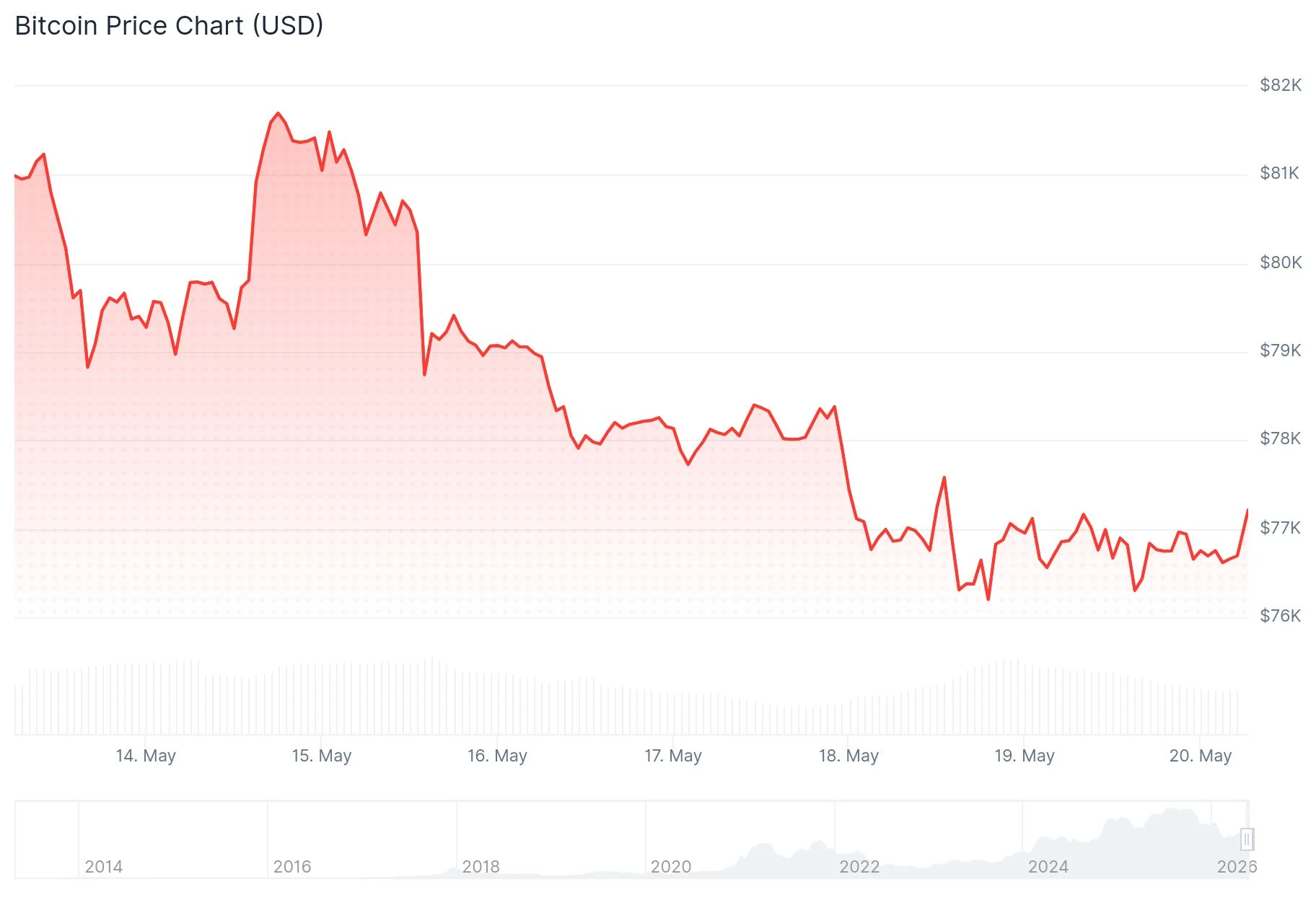
Bitcoin (BTC) Hovers Above $77K Amid Iran Diplomacy and Rising Treasury Yields

Beyond Cleaning: What Else You Must Check Before Moving Out




