

Forex Today: US Dollar Finds Crucial Stability After Dramatic Decline
BitcoinWorld
Forex Today: US Dollar Finds Crucial Stability After Dramatic Decline
Global currency markets witnessed a significant development on Thursday as the US Dollar demonstrated remarkable stability following its sharpest weekly decline since early 2024. The Dollar Index (DXY), which measures the greenback against a basket of six major currencies, held firm above the critical 104.50 support level after plunging nearly 2% over the previous five trading sessions. This stabilization occurred despite ongoing concerns about Federal Reserve policy divergence and mixed economic data from major economies.
Forex Today: Technical Analysis of Dollar Recovery
Technical analysts observed several key developments during the US Dollar’s stabilization phase. The Dollar Index found immediate support at 104.52, a level that previously acted as resistance in late 2024. Furthermore, the 50-day moving average provided additional technical reinforcement around 104.30. Market participants closely monitored these levels throughout the trading session. Meanwhile, the EUR/USD pair retreated from its recent highs near 1.0950 to consolidate around 1.0880. Similarly, the GBP/USD pair pulled back from 1.2800 resistance to trade near 1.2720. Japanese Yen pairs showed particular strength, with USD/JPY holding above 150.00 despite intervention concerns.
Several factors contributed to this stabilization pattern. First, Federal Reserve officials maintained their cautious tone regarding future rate cuts. Second, European Central Bank commentary suggested potential policy divergence. Third, technical indicators showed oversold conditions in dollar pairs. Fourth, month-end portfolio rebalancing flows provided natural support. Finally, geopolitical developments in the Middle East created safe-haven demand. These combined elements created a complex market environment where multiple forces influenced currency valuations simultaneously.
Central Bank Policy Divergence and Market Impact
Central bank communications played a crucial role in the forex market’s recent dynamics. Federal Reserve Governor Christopher Waller emphasized the need for “several more months” of inflation data before considering rate adjustments. His comments contrasted with market expectations for earlier monetary easing. European Central Bank officials, conversely, maintained their dovish stance despite persistent inflation concerns. Bank of England policymakers faced particularly challenging circumstances with conflicting economic signals. The Bank of Japan continued its ultra-accommodative policy framework while monitoring yen weakness.
Economic Data and Currency Correlations
Recent economic indicators revealed important trends affecting currency valuations. US Gross Domestic Product growth moderated to 2.1% annualized in the fourth quarter of 2024. Eurozone inflation surprised to the upside at 2.8% year-over-year. UK retail sales showed unexpected strength with a 1.2% monthly increase. Japanese wage growth accelerated to 2.5%, the fastest pace in three decades. These data points created complex trading conditions where traditional correlations temporarily broke down. Commodity currencies faced additional pressure from declining oil prices, while safe-haven flows supported traditional reserve currencies.
The following table illustrates key currency pair movements during the stabilization period:
| Currency Pair | Previous Close | Current Level | Daily Change |
|---|---|---|---|
| EUR/USD | 1.0925 | 1.0880 | -0.41% |
| GBP/USD | 1.2780 | 1.2720 | -0.47% |
| USD/JPY | 150.80 | 151.20 | +0.27% |
| AUD/USD | 0.6650 | 0.6600 | -0.75% |
| USD/CAD | 1.3450 | 1.3500 | +0.37% |
Market Structure and Trading Volume Analysis
Trading volume patterns revealed important insights about the US Dollar’s stabilization. Aggregate forex volume increased approximately 15% above the 30-day average during the Asian and European sessions. However, North American trading saw more moderate activity. Institutional flows showed particular interest in option-related hedging around key technical levels. Meanwhile, retail positioning data indicated continued long dollar exposure despite recent declines. Market depth improved significantly at major bank trading desks, suggesting improved liquidity conditions. Cross-currency basis swaps normalized after earlier widening, indicating reduced funding stress.
Several structural factors supported the dollar’s recovery. First, corporate hedging activity increased ahead of month-end. Second, real money accounts rebalanced currency exposures. Third, systematic funds adjusted positions based on momentum signals. Fourth, sovereign wealth funds maintained their dollar allocations. Fifth, reserve managers continued their gradual diversification programs. These diverse participants created a complex market microstructure where different time horizons and objectives interacted continuously throughout the trading day.
Geopolitical Developments and Safe-Haven Flows
Geopolitical developments contributed to the US Dollar’s stabilization through safe-haven channels. Escalating tensions in multiple regions increased demand for traditional reserve currencies. Middle Eastern developments particularly affected energy markets and currency correlations. Additionally, trade policy announcements created uncertainty about global growth prospects. Diplomatic discussions between major economies yielded limited progress on key issues. These factors combined to support the dollar’s role as the primary global safe-haven asset despite its recent weakness.
Technical Indicators and Chart Patterns
Technical analysis provided clear signals about potential market direction. The Dollar Index formed a bullish hammer candlestick pattern on the daily chart. Relative Strength Index readings recovered from oversold territory below 30. Moving Average Convergence Divergence histograms showed diminishing bearish momentum. Fibonacci retracement levels identified key resistance areas between 105.00 and 105.50. Volume profile analysis revealed high-volume nodes around current price levels. These technical factors suggested potential for further stabilization or modest recovery in coming sessions.
Key technical levels to monitor include:
- DXY Support: 104.30 (50-day MA) and 104.00 (psychological level)
- DXY Resistance: 105.00 (previous support) and 105.50 (38.2% Fibonacci)
- EUR/USD Resistance: 1.0950 (recent high) and 1.1000 (psychological)
- USD/JPY Intervention Zone: 152.00 (2024 high) and 155.00 (1990 level)
Conclusion
The US Dollar demonstrated crucial stability following its recent sharp decline, with technical support levels holding firm against selling pressure. Multiple factors contributed to this stabilization, including central bank communications, economic data releases, and geopolitical developments. Market participants now focus on upcoming economic indicators and policy announcements for further direction. The Dollar Index’s ability to maintain levels above 104.50 suggests potential for consolidation or gradual recovery. However, traders should monitor key technical levels and fundamental developments closely. Forex markets remain sensitive to policy divergence narratives and global risk sentiment shifts. This stabilization phase provides important context for understanding broader currency market dynamics and potential future trends.
FAQs
Q1: What caused the US Dollar’s sharp decline before this stabilization?
The dollar declined due to shifting expectations about Federal Reserve policy, better-than-expected economic data from other regions, technical breakdowns of key support levels, and month-end portfolio rebalancing flows that favored non-dollar currencies.
Q2: Which technical levels are most important for the Dollar Index currently?
The most critical technical levels are the 104.50 immediate support, the 50-day moving average at 104.30, and the 105.00 resistance level. These represent key areas where market participants concentrate their attention and trading activity.
Q3: How do central bank policies affect forex market movements?
Central bank policies influence currency values through interest rate differentials, forward guidance about future policy, quantitative easing or tightening programs, and currency intervention activities. Policy divergence between major central banks particularly drives forex trends.
Q4: What economic indicators should traders watch for dollar direction?
Traders should monitor US inflation data (CPI and PCE), employment reports, GDP revisions, manufacturing surveys (ISM), and Federal Reserve communications. Comparative data from other major economies also significantly impacts dollar valuations through relative growth expectations.
Q5: How does geopolitical risk affect currency markets?
Geopolitical risk typically supports traditional safe-haven currencies like the US Dollar, Swiss Franc, and Japanese Yen while pressuring risk-sensitive currencies from commodity-exporting nations and emerging markets. The specific impact depends on the nature, location, and potential economic consequences of geopolitical developments.
This post Forex Today: US Dollar Finds Crucial Stability After Dramatic Decline first appeared on BitcoinWorld.


You May Also Like
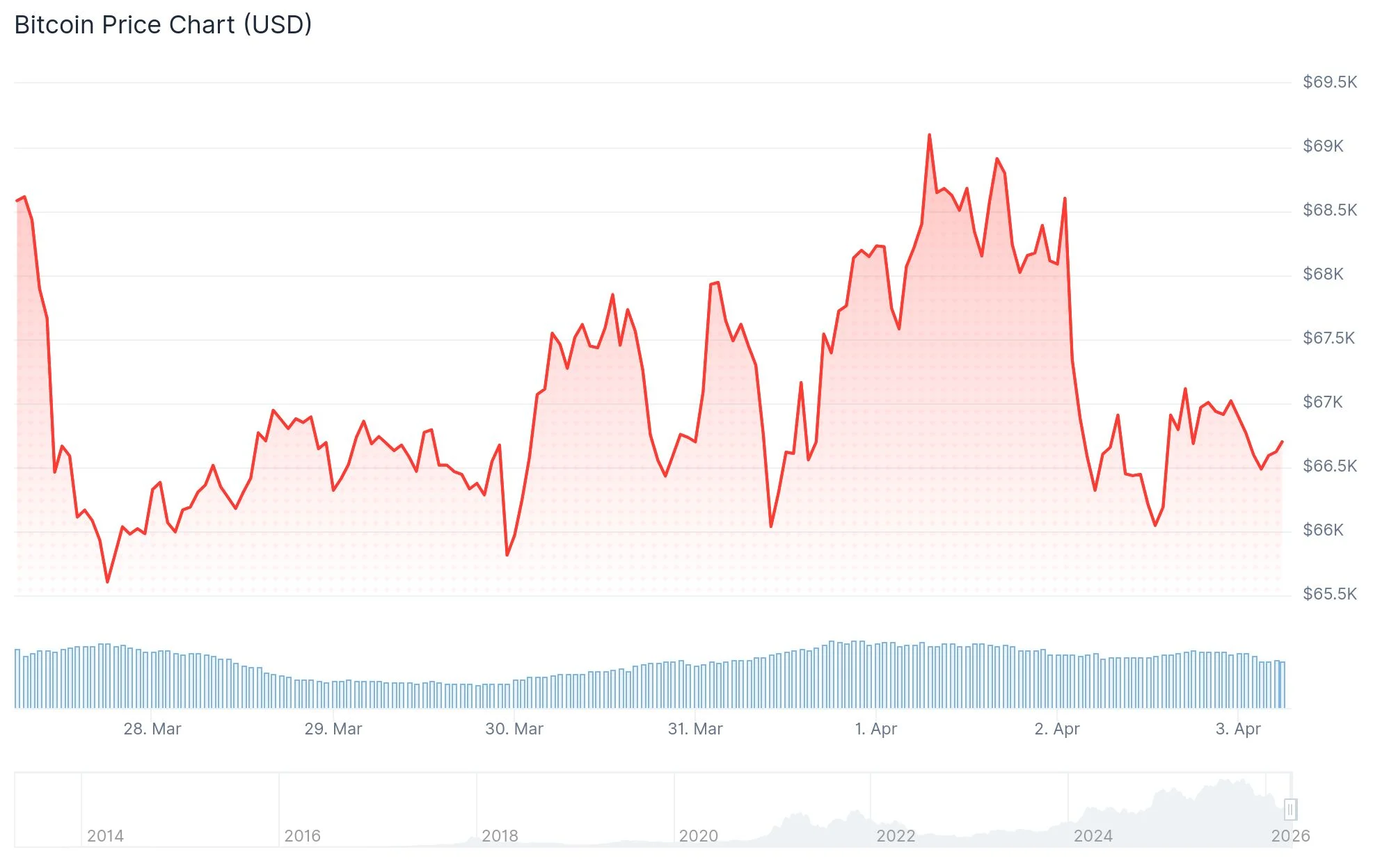
Bitcoin (BTC) Dips Below $67K as Markets Enter Easter Break While Oil Hits 11% Single-Day Surge

Trump's revenge tour will come back to bite him in the you-know-what

Ethereum price today $2,130 — bearish below $2,150; $2,116 key



