Windtree Therapeutics Delisted From Nasdaq After BNB Treasury Strategy Fails
TLDR
- Windtree Therapeutics fell 77% after receiving Nasdaq delisting notice for failing to maintain $1 minimum bid price
- The biotech company adopted a BNB treasury strategy in July, becoming the first Nasdaq-listed firm to do so
- Company announced plans to purchase up to $200 million in BNB tokens through agreements with Build and Build Corp
- Stock dropped from initial gains after BNB announcement to close at 11 cents following delisting news
- Windtree will transition to over-the-counter trading while BNB itself hit new all-time highs
Windtree Therapeutics saw its stock plummet 77% on Wednesday after receiving notice that Nasdaq would delist the company for failing to meet minimum price requirements. The biotech firm had positioned itself as the first Nasdaq-listed company to adopt a BNB treasury strategy just weeks earlier.
 Source: Google Finance
The delisting stems from Windtree’s inability to maintain the $1 minimum bid price required under Nasdaq Listing Rule 5550(a)(2). Trading of WINT shares will be suspended on Thursday, August 21, according to a filing with the Securities and Exchange Commission.
Windtree shares closed at 11 cents following the announcement, down from 48 cents before the delisting news broke. The stock had already been struggling since late July despite initial gains from its crypto treasury announcement.
The company’s troubles began after it unveiled ambitious plans to build a BNB treasury in mid-July. Windtree announced a $60 million securities purchase agreement with blockchain infrastructure investor Build and Build Corp on July 16.
The agreement included options for an additional $140 million purchase, potentially bringing the total BNB investment to $200 million. Shares initially surged more than 20% in pre-market trading following the announcement.
About a week later, Windtree expanded its crypto strategy by signing a $500 million equity line of credit with an unidentified investor. The company also entered a separate $20 million stock purchase agreement with Build and Build Corp to acquire more BNB tokens.
Stock Performance Declined Despite Crypto Strategy
The initial market enthusiasm for Windtree’s BNB strategy proved short-lived. WINT shares rose 32.2% over two days following the July 16 announcement before beginning a steep decline.
From a July 18 peak, the stock has fallen more than 90%. The company has not disclosed how much BNB it currently holds or whether it plans to continue its treasury strategy.
CEO Jed Latkin stated in the filing that Windtree would continue meeting its reporting obligations despite the delisting. The company expects to transition to over-the-counter trading under the existing “WINT” symbol, though it cannot guarantee this plan will succeed.
BNB Reaches New Heights While Windtree Struggles
While Windtree faced delisting, BNB itself performed well on Wednesday. The cryptocurrency rose 5.6% to $876.26, setting a new all-time high as the broader crypto market recovered from a two-week low.
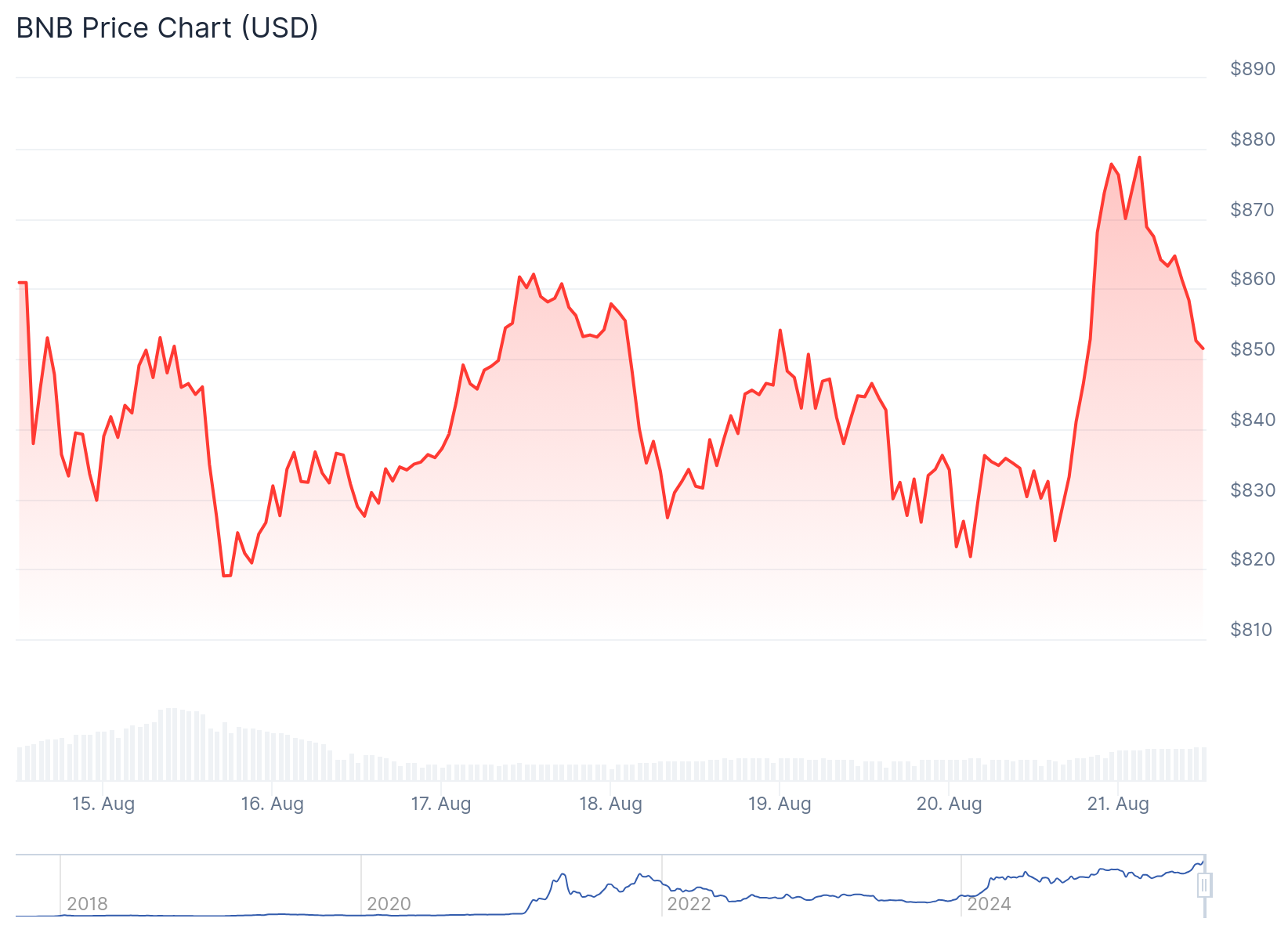 BNB Price
BNB stands as one of the few large altcoins to reach new highs during the current market cycle. Other cryptocurrencies like Ethereum, Dogecoin, Chainlink and Cardano remain below their 2021 peaks.
Some crypto firms have successfully returned to Nasdaq after addressing compliance issues. Argo Blockchain, for example, was suspended from Nasdaq but later regained its listing after meeting requirements.
The Warrington, Pennsylvania-based biotech’s situation contrasts sharply with other companies that have adopted crypto treasury strategies. MicroStrategy, which pioneered the corporate bitcoin treasury model, remains a Nasdaq-listed company and has seen its stock benefit from crypto exposure.
Windtree’s delisting relegates it to over-the-counter markets, which typically offer less visibility and limited access to institutional investors compared to major exchanges.
The post Windtree Therapeutics Delisted From Nasdaq After BNB Treasury Strategy Fails appeared first on CoinCentral.


You May Also Like

Megan Holdings Secures $8.3 Million in Follow-On Public Offering to Expand Aquaculture Operations

Majesco Launches Spring ’26 Release, Redefining What Insurers Should Expect from Their Core Solutions in an Intelligent Era of Insurance